

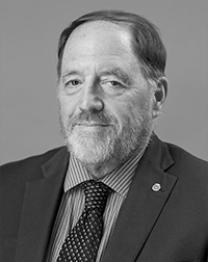
James Kenneth Galbraith is an American economist. He is currently a professor at the Lyndon B. Johnson School of Public Affairs and at the Department of Government, University of Texas at Austin. He is also a Senior Scholar with the Levy Economics Institute of Bard College and part of the executive committee of the World Economics Association, created in 2011.
Galbraith holds degrees from Harvard University (BA) and in economics from Yale University (MA, M.Phil, PhD). He was Executive Director of the Joint Economic Committee of the United States Congress in the early 1980s. He chaired the board of Economists for Peace and Security from 1996 to 2016 and directs the University of Texas Inequality Project. He is a managing editor of Structural Change and Economic Dynamics.
In 2010, he was elected to the Accademia Nazionale dei Lincei. In 2014 he was co-winner with Angus Deaton of the Leontief Prize for Advancing the Frontiers of Economics. In 2020 he received the Veblen-Commons Award of the Association for Evolutionary Economics.
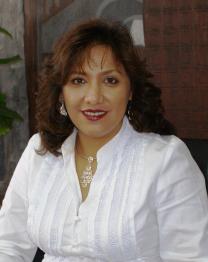
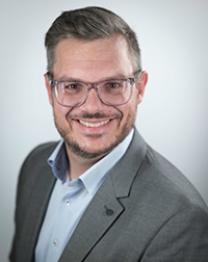
Sven Gallasch is a Senior Lecturer at Deakin Law School, Melbourne.
Originally educated in Germany (Trier and Augsburg), Sven holds a German Diploma in Law, as well as a LLM in Competition Law and Policy (2009) and a PhD in Law (2014) from the University of East Anglia, Norwich, United Kingdom.
Having frequently published in the area of pharmaceutical antitrust, his research interest has shifted in recent years.
Sven is now focusing on the impact of ‘culture’ on the convergence of competition law and policy in a transnational context, providing useful insights for capacity building activities at as well as informal cooperation activities between competition authorities.
Sven is also coordinating the review of the commentaries of the UNCTAD Model Law on Competition for the UNCTAD secretariat.
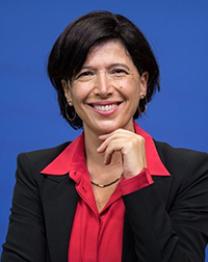
Ana Gallego is the Director-General for Justice and Consumers at the European Commission since November 2021. Before joining the European Commission she was Director-General of International Legal Cooperation and Human Rights in the Ministry of Justice in Spain.
She has a degree in law from the University of Granada, Spain and studies in Translation and Interpretation from the same university.

H. E. Mr. Gustavo Gallón. Ambassador of Colombia to the United Nations in Geneva since December 2022.
Lawyer from the Universidad Externado de Colombia, specialized in Public Law, with a Master's Degree in Political Science (University of París 1) and postgraduate studies in Political Sociology (Ecole des Hautes Etudes en Sciences Sociales de París). Director and founder of the Colombian Commission ofJurists (1988–2022).
He was Independent Expert ofthe United Nations Human Rights Council on Haití (2013–2017) and Special Representative of the United Nations Commission on Human Rights for Equatorial Guinea (1999–2002). Judge of the Constitutional Court (1993 and 2009). Columnist at newspaper El Espectador (Bogotá, 2010–2023). Professor of Public Law and Human Rights at various universities in Colombia (since 1979: Externado, Los Andes, Nacional and Javeriana) and visiting researcher at the Kellogg Institute of the University of Notre Dame (Indiana, United States, January 1998-May 1999).
Researcher at the Think tank Centro de Investigación y Educación Popular -Cinep- (1981–1989). Founder and director ofthe magazine Cien Días vistos por Cinep (1988). Author and editor of several publications on human rights and the State in Colombia, such as "Quince años de estado de sitio en Colombia: 1958–1978" (1979), and "Desafiando la intransigencia" (2013), among others.

Fabiola Gamboa is a Trade Facilitation Advisor at the Ministry of Foreign Trade of Costa Rica. She is part of the Technical Secretariat of the National Trade Facilitation Committee, responsible for implementing the Trade Facilitation Agreement. She also oversees the Regulatory Commission of said Committee and is qualified as commercial negotiator for international trade agreements, focused on provisions related to Trade Facilitation and Customs Procedures.
Her role in trade facilitation also extends to projects for coordinated border management, infrastructure modernization, regulatory reform, representation of Costa Rica at the World Trade Organization, among others.
Fabiola is a lawyer, graduated from the University of Costa Rica, with a specialty in Banking Law and finance.
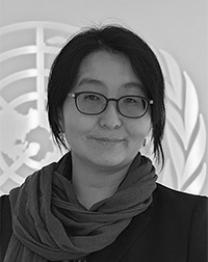
Uyanga Gankhuyag is a development economist specialized in extractive industries policies. She leads UNDP’s work on extractive industries for sustainable development and managing the ACP-EU Development Minerals Programme implemented by UNDP. She worked for over 10 years in policy analysis and programming in extractive industries, serving mineral-producing developing countries. Her current work is focused on African, Caribbean and Pacific countries. In Asia Pacific, she led regional capacity development initiatives on extractive industries, climate and natural resource modelling, and the coordination of the Asia Pacific Economists network. Uyanga has authored or contributed to multiple publications in areas of managing mining for sustainable development, natural resource revenue-sharing, fiscal transfers, poverty and inequality, financing social services using extractives revenues, and conflict prevention in resource-rich countries. She also served in New York where she has worked on UNDP’s strategy and programming on extractive industries for sustainable development, as well as wider economic development and poverty reduction. Coming from Mongolia, a country that relies on mining for its development, she is passionate about resource-rich and resource-dependent countries advancing their development in a sustainable manner.
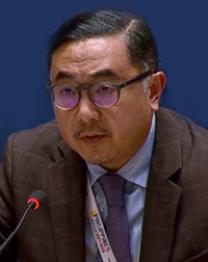
Mr. Jesus Enrique Garcia is Minister at the Permanent Mission of the Philippines, with over 20 years’ experience as a diplomat.
He was one of the Group of 77 and China’s Coordinators for the 4th International Conference on Financing for Development.
Last year, he negotiated the Global Digital Compact adopted at the Summit of the Future, resolutions on “ICTs for Sustainable Development” and “International Migration and Development,” and facilitated “Implementation of the Third UN Decade for the Eradication of Poverty.”
He led processes on governance, human rights and climate change, combatting trafficking in persons, and World Heritage, during postings at the United Nations in Geneva and UNESCO in Paris.
In Manila, as Deputy Assistant Secretary for the UN and International Organizations, he contributed to the Philippines’ UN Sustainable Development Cooperation Framework (2024-2028) and UN Joint Program on Human Rights.