

Developing countries have renewed their collective commitment to strengthening South–South trade cooperation under the Global System of Trade Preferences among Developing Countries (GSTP), signalling political momentum to bring a long-awaited preferential trade agreement into force at a time of heightened global uncertainty.
In a joint communiqué, Ministers from GSTP participating countries underscored the importance of the GSTP as a strategic instrument to boost economic resilience, diversification and inclusive development across the Global South. The joint communiqué marks the first collective political statement at the ministerial level under the GSTP since 2012, reflecting a shared determination to translate past commitments into concrete trade outcomes.
At the centre of the renewed push is the São Paulo Round Protocol, the latest round of tariff concessions negotiated under the GSTP. Once implemented, the Protocol would reduce tariffs across a wide range of products traded among participating developing countries, lowering market entry barriers and expanding opportunities for exporters, particularly small and medium-sized enterprises.
The renewed commitment comes amid persistent disruptions to global trade, rising geopolitical tensions and increasing vulnerability of developing economies to external shocks. Against this backdrop, GSTP members emphasized that deeper South–South cooperation can help diversify trade partners, strengthen regional and interregional value chains and reduce dependence on a limited number of markets.
Countries participating in the communiqué highlighted their intention to enhance the value of the GSTP for their economies and deepen South-South trade cooperation and solidarity, recognizing the special needs of the least developed country (LDC) Participants.
UNCTAD has played a central role in supporting the GSTP since its inception, providing technical assistance, analytical work and a platform for dialogue among members. Recent UNCTAD studies under the GSTP framework illustrate how tariff reductions negotiated in the São Paulo Round could generate tangible benefits for developing economies. For example, lower tariffs on agricultural and fisheries products could improve market access for small exporters, enhance competitiveness and support job creation in sectors critical for food security and rural livelihoods.
Such gains are particularly relevant for least developed and vulnerable economies, where South–South trade already represents a significant share of exports and where preferential access can help firms move up value chains. By reducing trade costs and encouraging diversification, the GSTP can contribute to more resilient production structures and more inclusive growth.
The joint communiqué underscores that the GSTP is not only a trade agreement, but also a platform for solidarity and shared development among developing countries. Participants reaffirmed their commitment to working collectively to ensure that the system delivers meaningful results, aligned with broader sustainable development objectives.
As countries move from renewed political commitment to implementation, the focus will be on turning the promise of the São Paulo Round into real opportunities for businesses and communities across the Global South. In doing so, the GSTP can play a renewed role in strengthening South–South trade at a moment when cooperation among developing countries has never been more important.
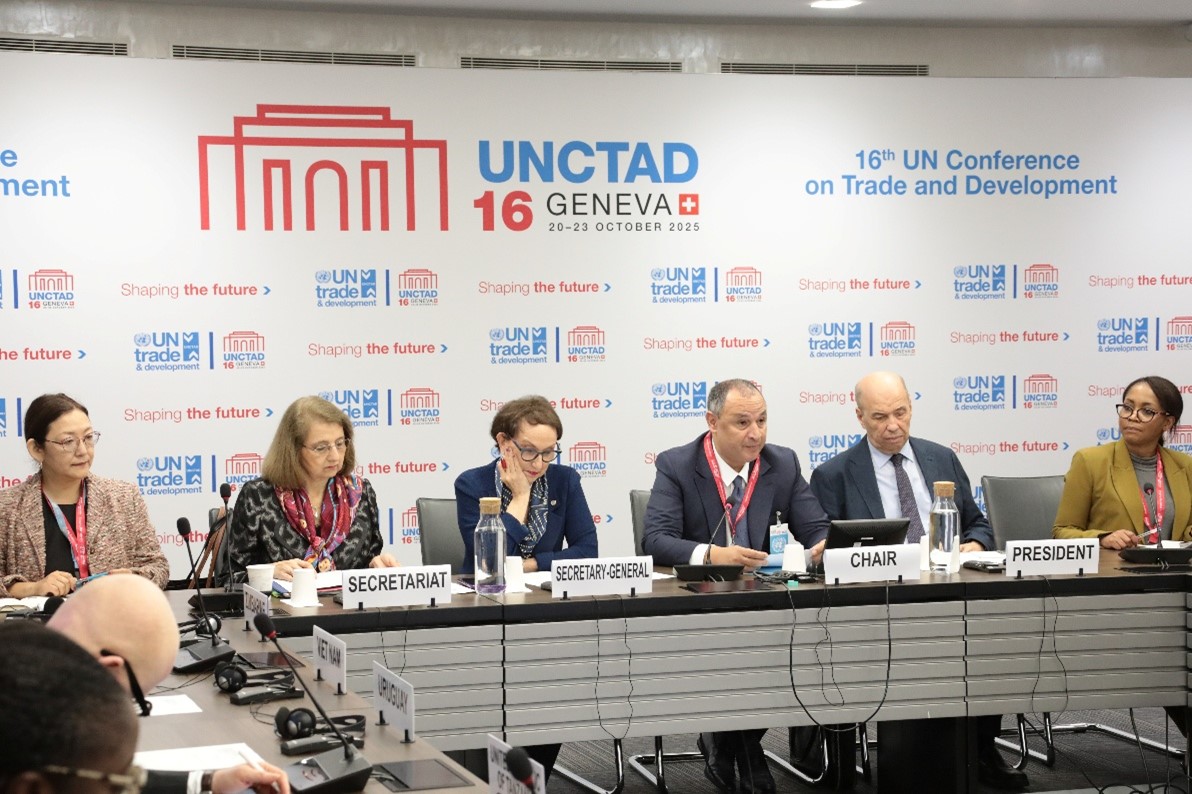
At the special ministerial session of the Committee of Participants of the Global System of Trade Preferences among Developing Countries (GSTP), Ministers from 42 participating countries will reaffirm their commitment to the GSTP’s unique inter-regional partnership framework and outline a path for deeper and more effective trade cooperation.
The GSTP Ministerial Meeting will serve as a platform for the members to showcase their solidarity and reaffirm their shared commitment to trade-led sustainable development, as a means to counter the growing trade policy uncertainty that disproportionately impacts economies with limited market power.
