

The continent drew about $70 billion in international investment in 2025, its third-highest year since 1990, as investors circle energy, minerals and infrastructure.
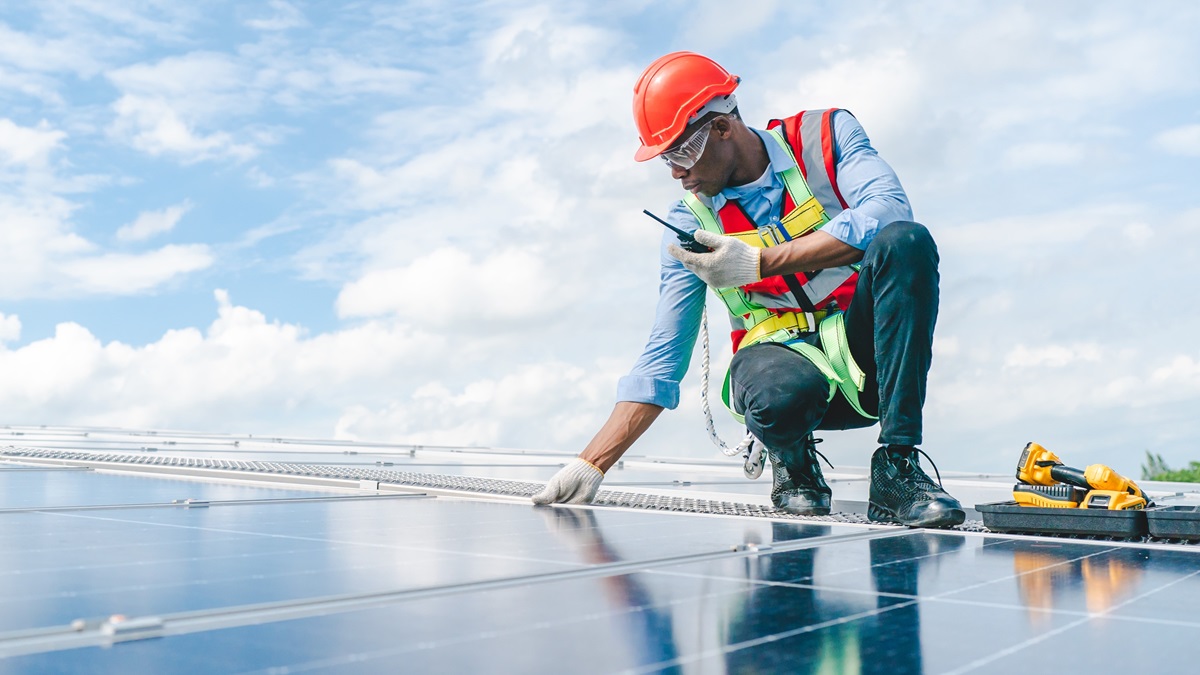
© Shutterstock/Chokniti-Studio | An engineer maintains solar panels on a rooftop.
Africa attracted less foreign direct investment (FDI) in 2025 than the exceptional levels of the year before. The bigger story is that investors keep positioning themselves in sectors that are becoming more important to the global economy.
According to the World Investment Report 2026 by UN Trade and Development (UNCTAD), FDI inflows to Africa reached about $70 billion in 2025, below the $94 billion recorded in 2024, when a small number of large transactions boosted totals.
Still, it was the third-highest level since 1990 and roughly a third above the continent's long-term average.
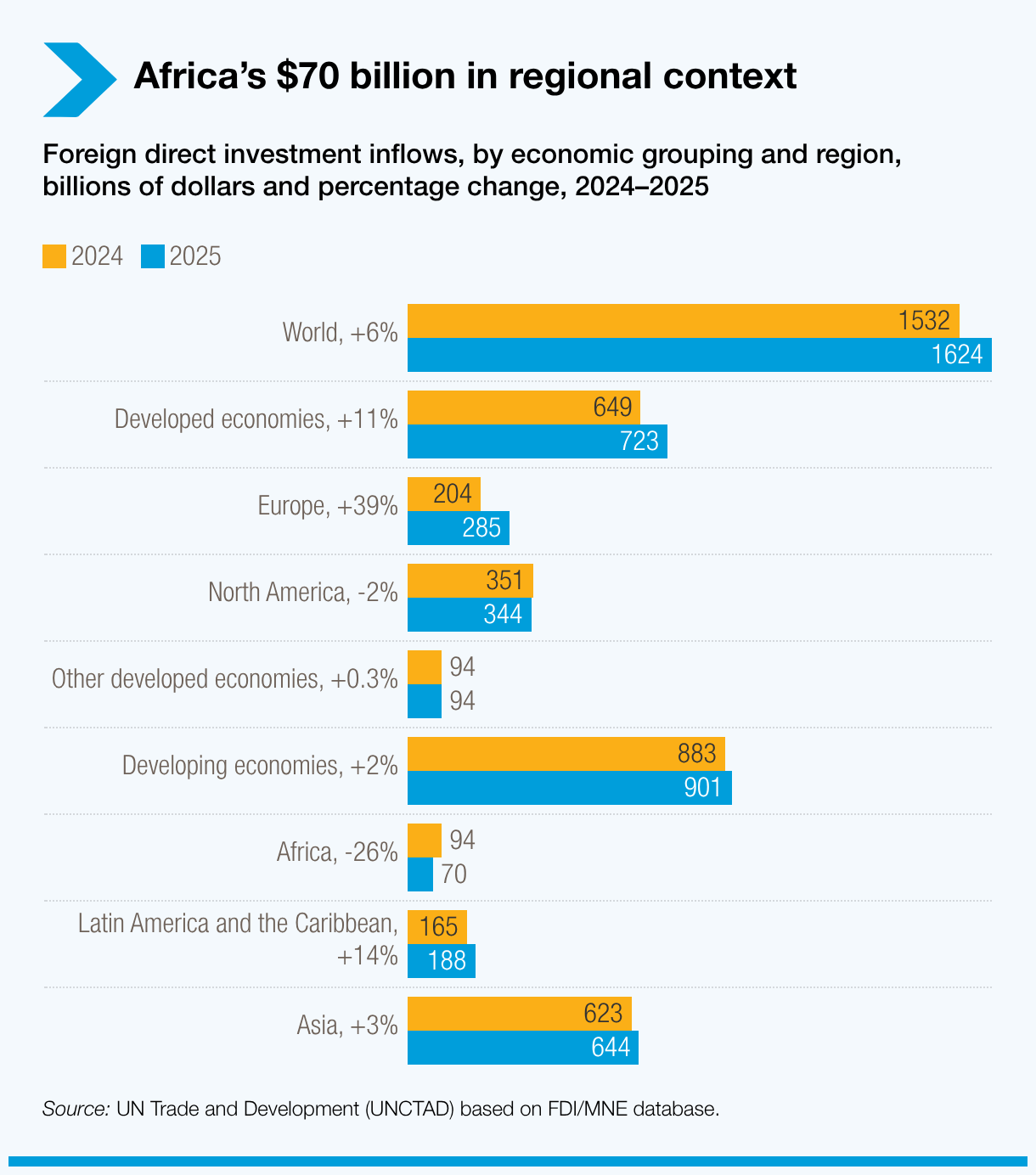
Egypt remained Africa's largest recipient, at about $15 billion, keeping North Africa the continent's largest recipient subregion.
African least developed countries took in about $33 billion, concentrated in a handful of economies tied to natural resources, energy and infrastructure.
Smaller projects, broader reach
Greenfield project values fell by almost a third, but the number of announced projects increased, a sign that companies are still committing capital through smaller projects even amid geopolitical tension and a more selective global investment climate.
Much of the interest traces to three overlapping drivers: demand for energy infrastructure, critical minerals needed for batteries and advanced manufacturing, and new industrial and logistics locations as supply chains reconfigure.
Egypt, Morocco and South Africa continue to draw investment linked to industrial development, hydrogen production and renewable energy.
Namibia and other resource-rich economies are drawing attention for battery and renewable-energy minerals.
Investors from the Gulf and other Asian economies are becoming an increasingly important source of that capital.
The gains remain narrow, concentrated in a limited number of countries and sectors.
As the report puts it, Africa's next development chapter depends not only on how much investment arrives, but on how effectively countries turn it into jobs, technology transfer and industrial upgrading - through project preparation, risk-sharing mechanisms, reliable power and transport infrastructure, and regional corridors linking smaller markets to larger production systems.
World Investment Forum 2026
That is the agenda the World Investment Forum was built to advance. Registration is open on the forum’s official website.
The forum convenes in Doha, Qatar, from 25 to 27 October under the theme "Investing in the Future," where the Investment Promotion and Special Economic Zones track focuses on partnerships for "the industries of tomorrow, from digital to energy transitions," including a session on accelerating the energy transition project pipeline, and the Climate, Environment and Oceans track drives investment in climate-strategic sectors and nature finance.
A dedicated plenary on building critical minerals investment partnerships speaks directly to the question Africa's own numbers are asking: how strategic-sector interest becomes lasting industrial capacity.