


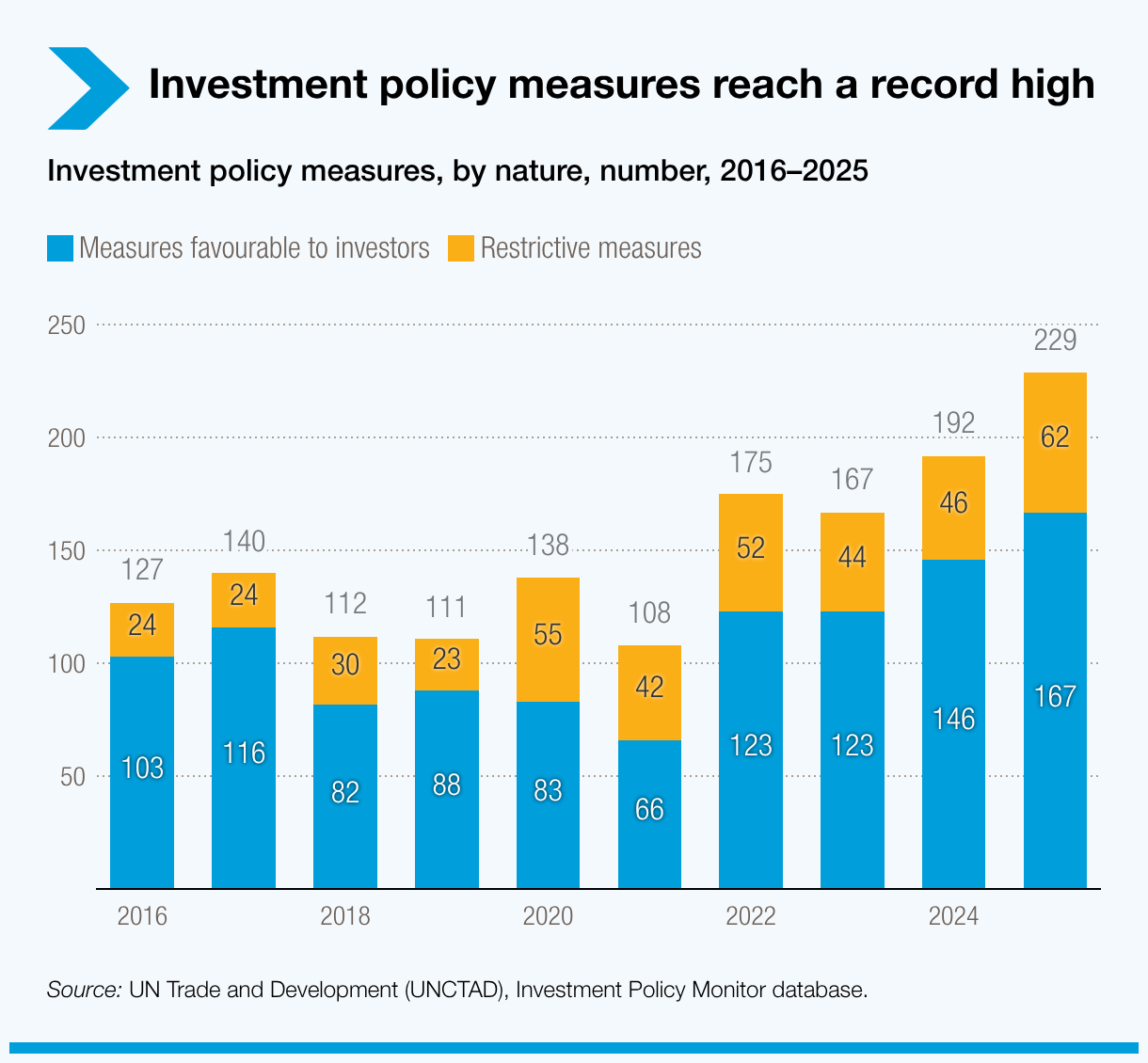
- Governments adopted a record 229 investment policy measures in 2025.
- Most measures remained favourable to investors, but increasingly targeted strategic sectors and national priorities.
- Incentives accounted for half of favourable measures, with growing focus on digital infrastructure, advanced manufacturing, energy-transition technologies and critical minerals.
- The number of economies with investment screening regimes rose from 21 in 2016 to 52 in 2025, while outright rejections remained rare.
- Old-generation investment agreements remain central to disputes, strengthening the case for reform that preserves policy space while maintaining predictability for investors.

© Shutterstock | Engineers test an artificial intelligence-driven robotic arm in a modern factory.
Foreign investment is not falling out of favour with governments. But the rules governing it are changing.
According to the World Investment Report 2026 by UN Trade and Development (UNCTAD), governments adopted a record 229 investment policy measures in 2025.
While most remained favourable to investors, policymakers are increasingly steering investment towards industries they see as critical for growth, resilience, technological leadership and economic security.
The shift reflects a broader change in how countries view investment. The question is no longer simply how to attract more capital. Increasingly, it is how to attract investment that supports national priorities.
For developing countries, the challenge is to remain open and competitive while preserving policy space, strengthening domestic value creation and avoiding a costly race for projects they cannot realistically win.
Countries are rewriting the rules of competition
The record number of measures adopted in 2025 was not driven by a return to protectionism.
Of the 229 measures introduced worldwide, 167 were favourable to investors, accounting for 73% of the total. But unlike previous decades, when governments often focused on broad liberalization, today's measures are increasingly designed to channel investment towards specific sectors, technologies and activities.
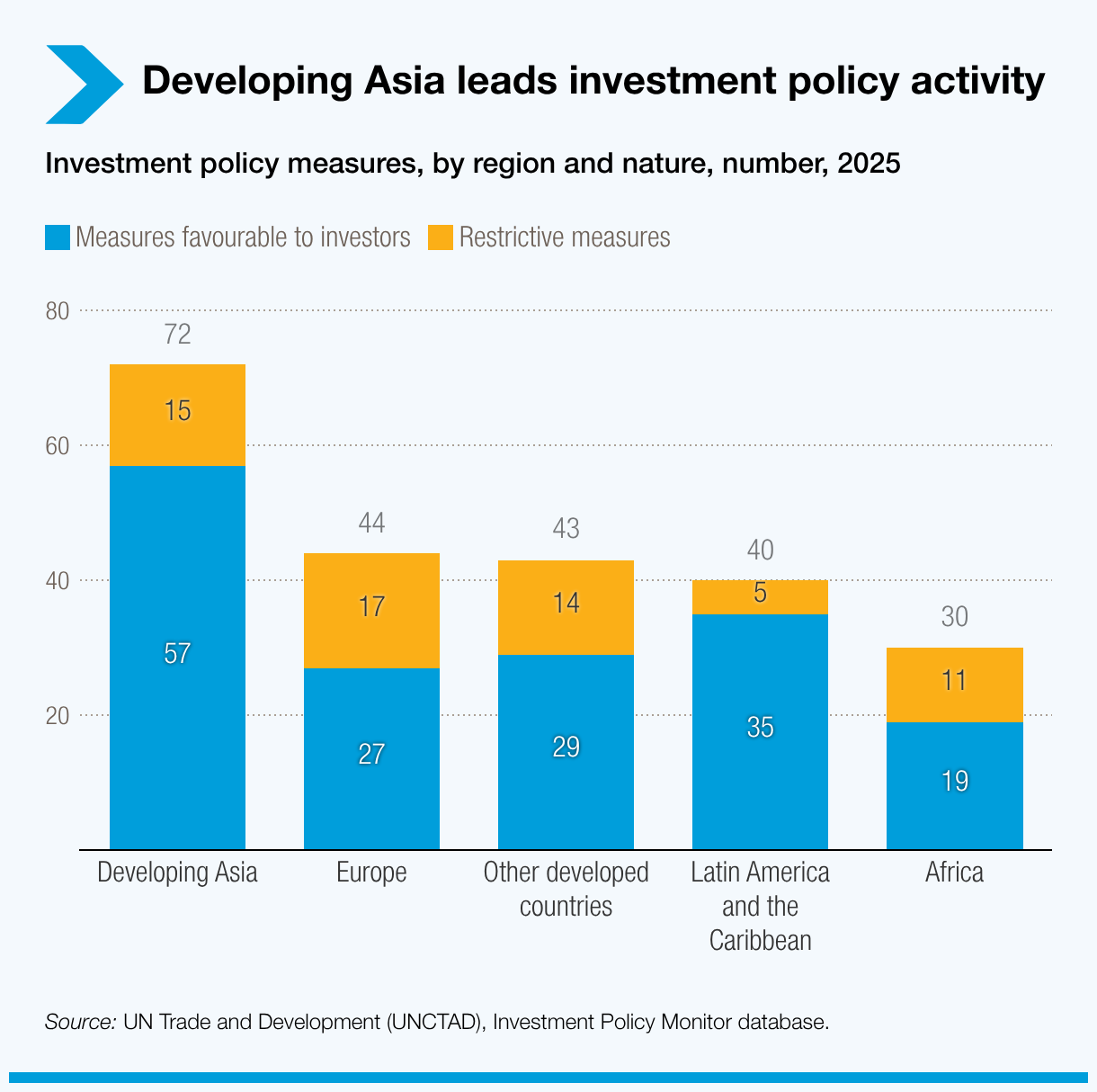
Developing Asia remained the most active region, with policies focused on industrial upgrading, digital transformation and green investment. Europe concentrated on industrial policy initiatives and investment screening, while Latin America and the Caribbean continued to emphasize investment facilitation and investor retention. In Africa, favourable measures also outnumbered restrictive ones.
Security concerns are becoming part of investment policy
At the same time, governments are paying closer attention to where investment comes from and what sectors it targets.
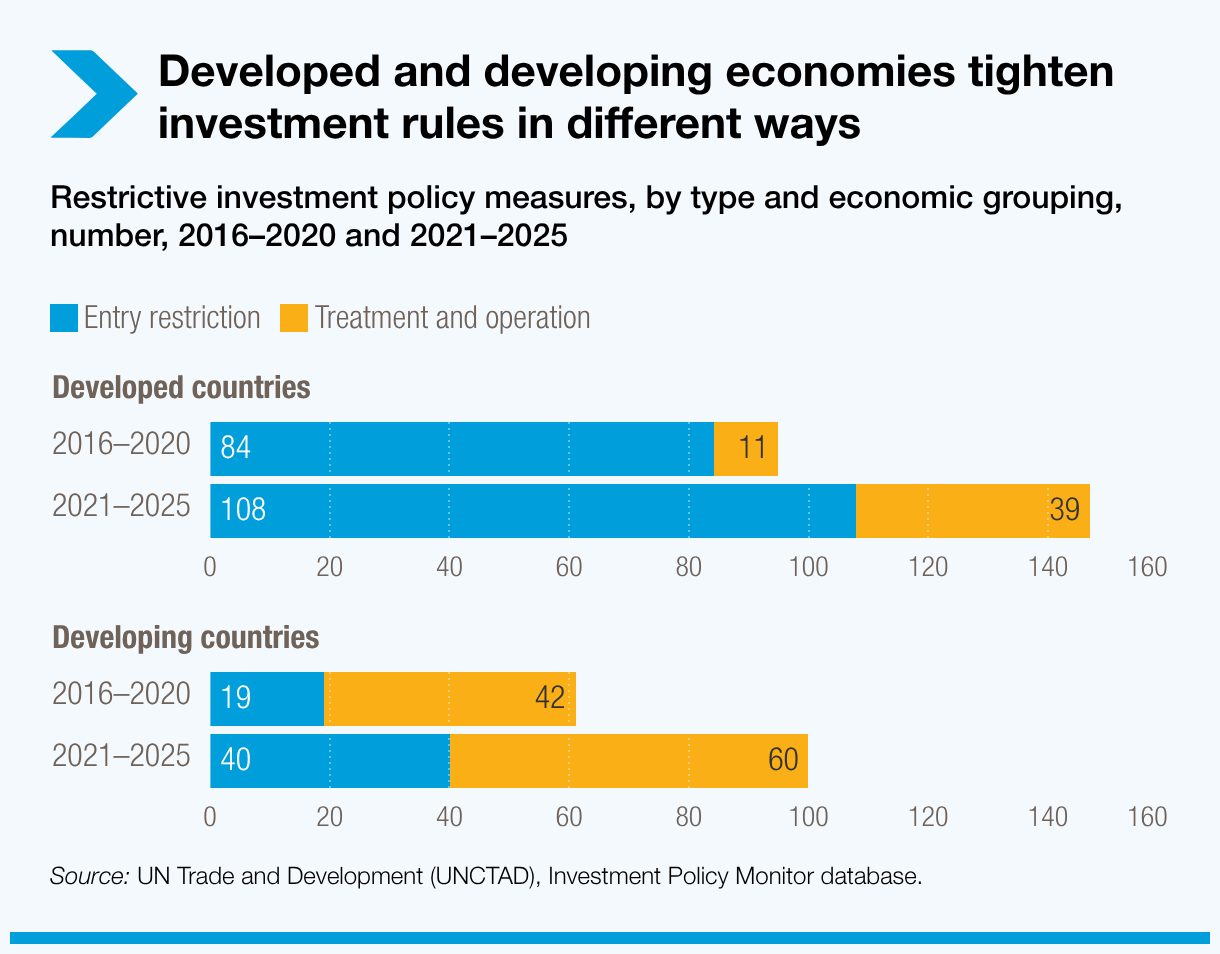
Restrictive measures accounted for 27% of all policy changes in 2025, up from 19% in 2016. Much of that increase was linked to investment screening and national security concerns. The number of economies operating investment screening regimes rose from 21 in 2016 to 52 in 2025.
Screening has expanded particularly in sectors involving critical technologies, sensitive data, infrastructure and strategic assets.
Yet the report also finds that outright rejection remains uncommon. Fewer than 1% of screened projects were blocked, suggesting that most governments continue to balance security concerns with the need to attract investment.
The policy challenge is to keep screening transparent, targeted and risk-based, so governments can protect legitimate security interests without creating unnecessary uncertainty or closing off development opportunities.
Incentives are becoming more targeted
One of the clearest changes is the growing use of incentives.
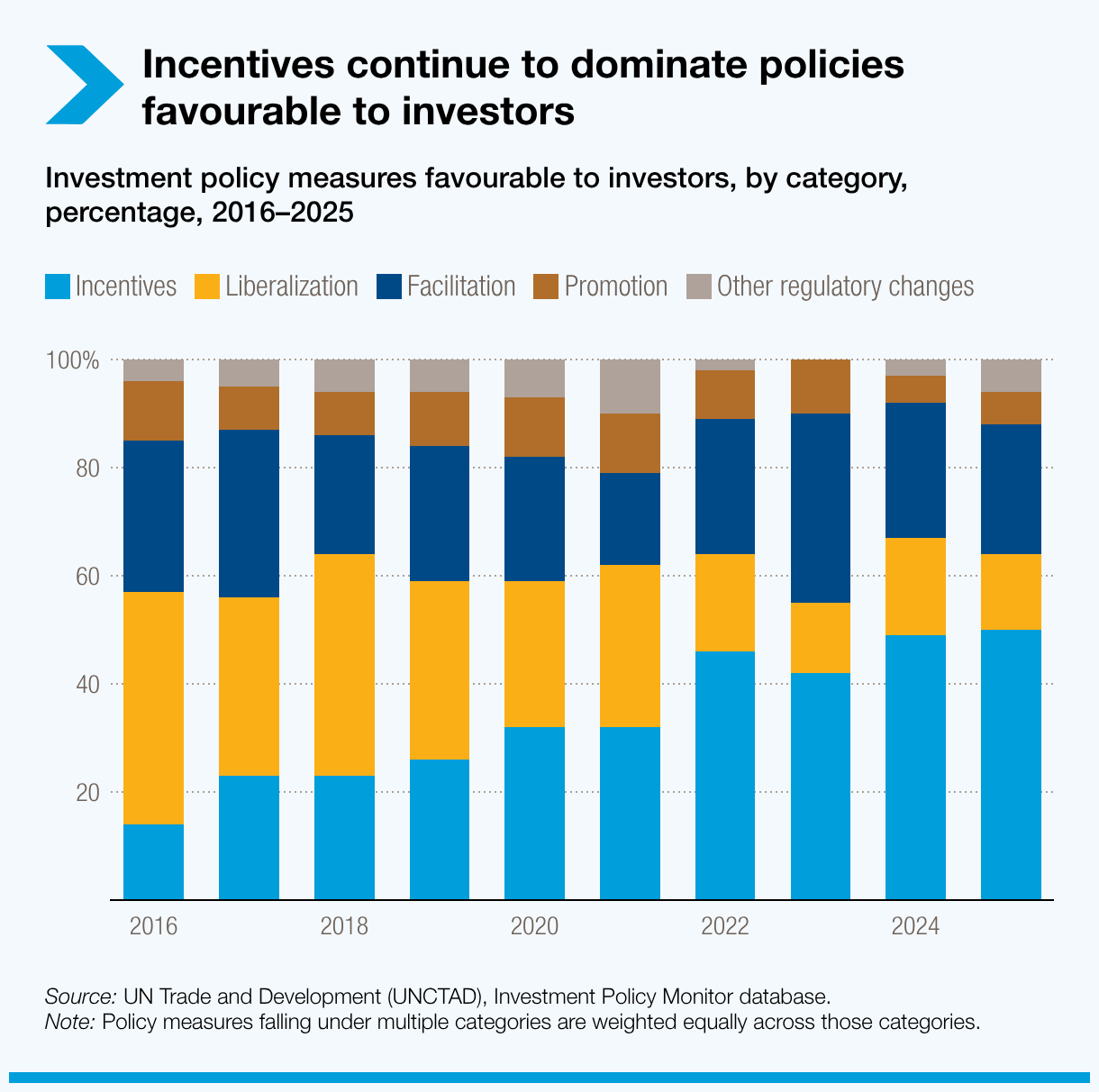
Incentives represented the largest category of favourable measures, accounting for 50% of the total. Governments increasingly linked support to specific objectives such as energy-transition technologies, digital infrastructure, advanced manufacturing and critical minerals.
Examples include incentives for data centres in Brazil, support for electronics manufacturing and critical minerals recycling in India, and European measures for renewable hydrogen, industrial decarbonization and low-carbon technology production.
Policymakers are sending a clear signal: investment is welcome, but increasingly on terms that support broader economic objectives.
Older investment rules face new pressures
The shift towards strategic and security-sensitive investment is also putting pressure on the international investment agreement system. Countries signed 44 investment agreements in 2025, with newer treaties increasingly emphasizing facilitation and cooperation. But disputes continue to rely heavily on old-generation treaties.
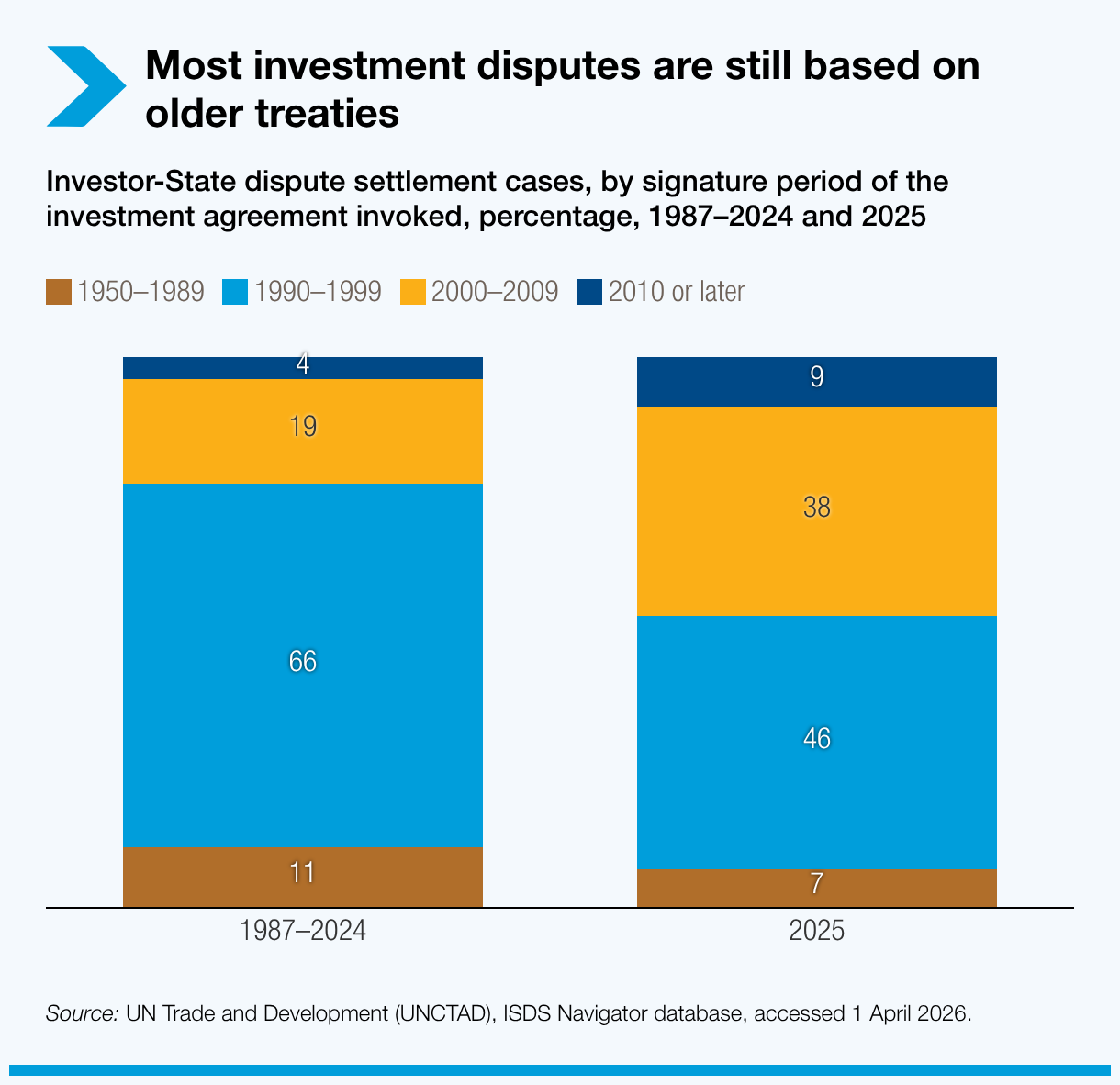
Investors initiated 56 investor–State dispute settlement cases in 2025, and about 80% of new cases were brought against developing countries.
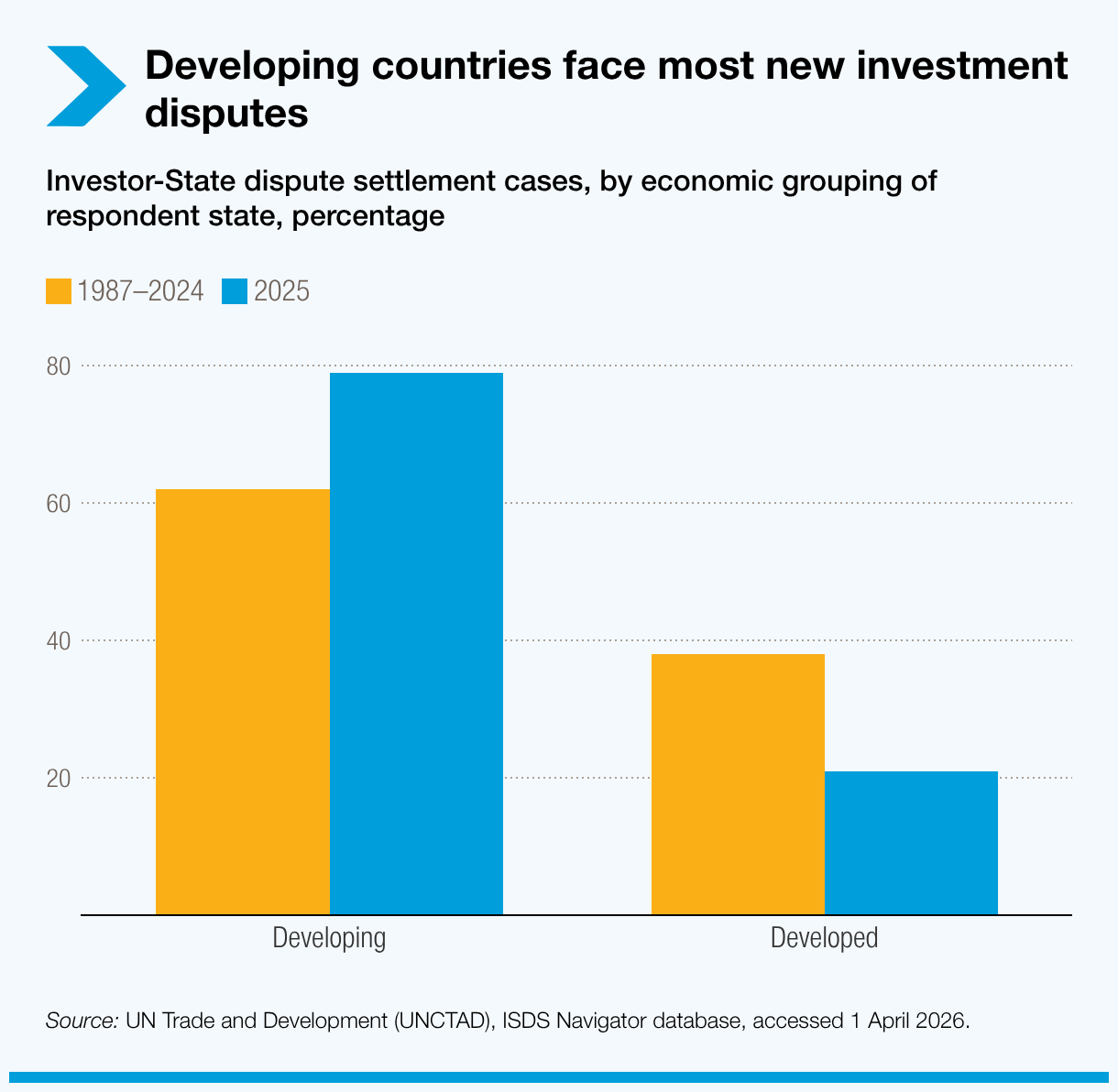
This strengthens the case for reform that preserves governments’ ability to regulate in the public interest while maintaining predictability for investors.
The policy challenge is now more complex
As investment becomes concentrated in artificial intelligence, semiconductors, critical minerals, advanced manufacturing and energy-transition technologies, governments are using investment policy not only to attract capital, but to shape industrial development, resilience and economic security.
For developing countries, the report argues that the priority is not to compete with the largest economies through costly subsidy programmes. Instead, countries need to identify realistic entry points into evolving value chains and focus scarce resources on the conditions that make investment viable: reliable infrastructure, energy access, skills, investment facilitation, supplier development, standards readiness and regional connectivity.
This requires stronger coordination across investment, industrial, trade and technology policies. Incentives and screening measures need to be selective, transparent and proportionate, so they support national priorities without creating unnecessary uncertainty for investors.
Investment promotion agencies also have a larger role to play. Stronger facilitation, aftercare and investor-retention services can help prevent viable projects from being lost to uncertainty, while supplier development, standards readiness and regional connectivity can link foreign investment more closely to domestic firms and productive upgrading.
Investment agreements also need updating, so they support sustainable investment while preserving the policy space needed for development, security and resilience.