


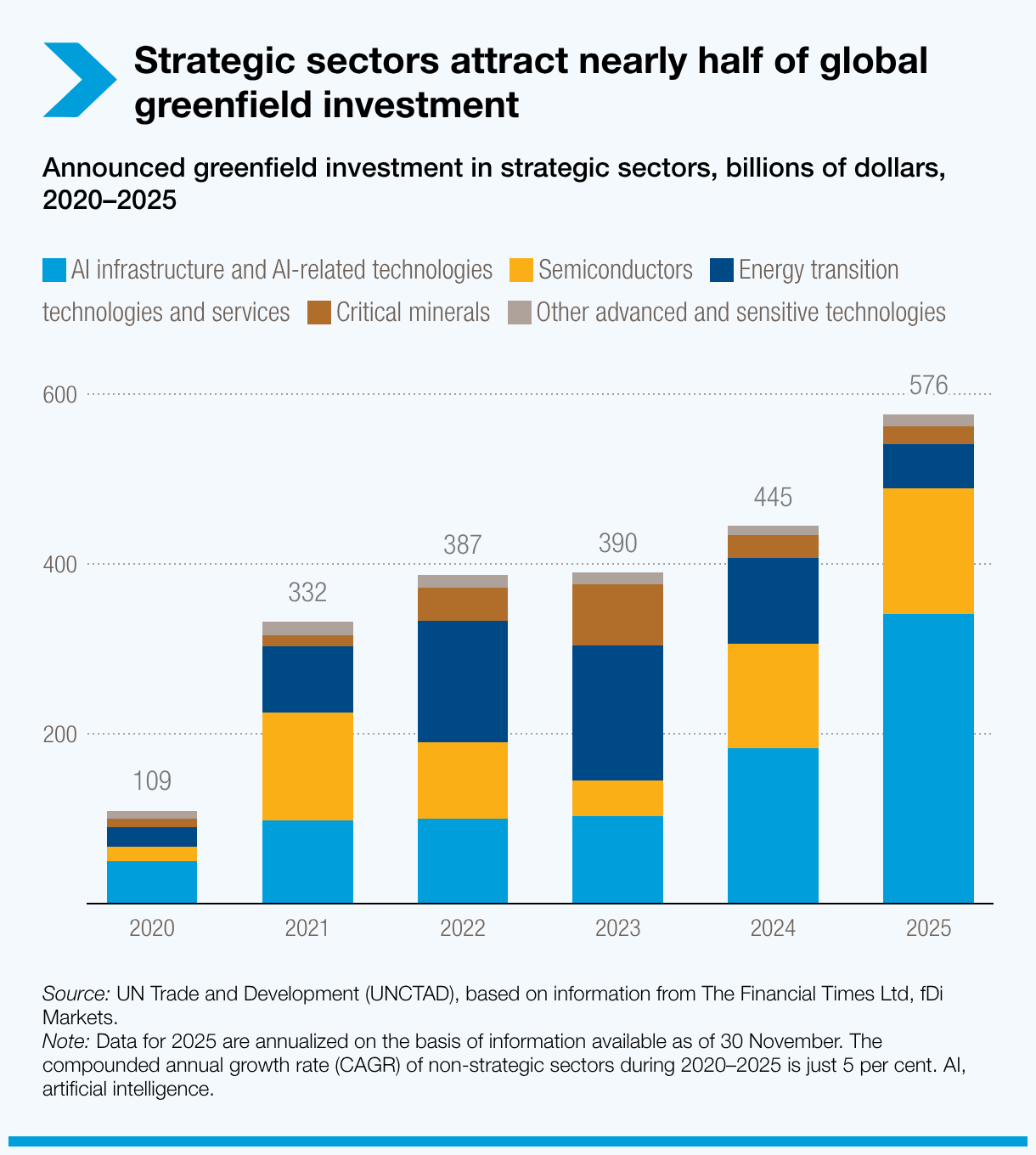
- Strategic sectors accounted for 44% of global greenfield investment in 2025, up from 16% in 2020.
- The value of announced projects in these sectors rose from $109 billion to $576 billion over five years.
- In 2025, the top three investor economies accounted for 72% of strategic-sector project values, while the top three recipients captured 56%.
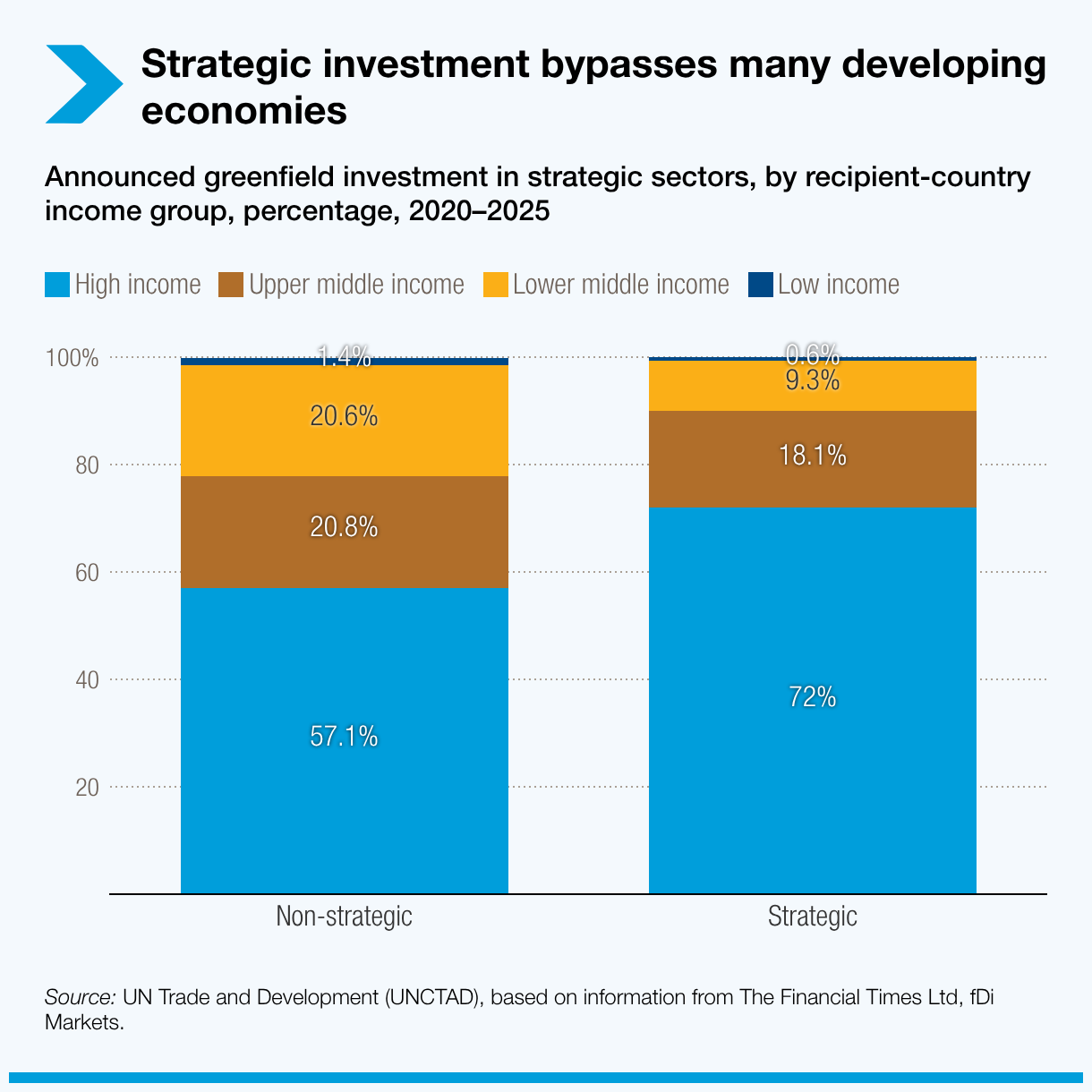
- Low-income and lower-middle-income economies attracted only about 10% of global greenfield investment in strategic sectors between 2020 and 2025, compared with more than 20% in other sectors.
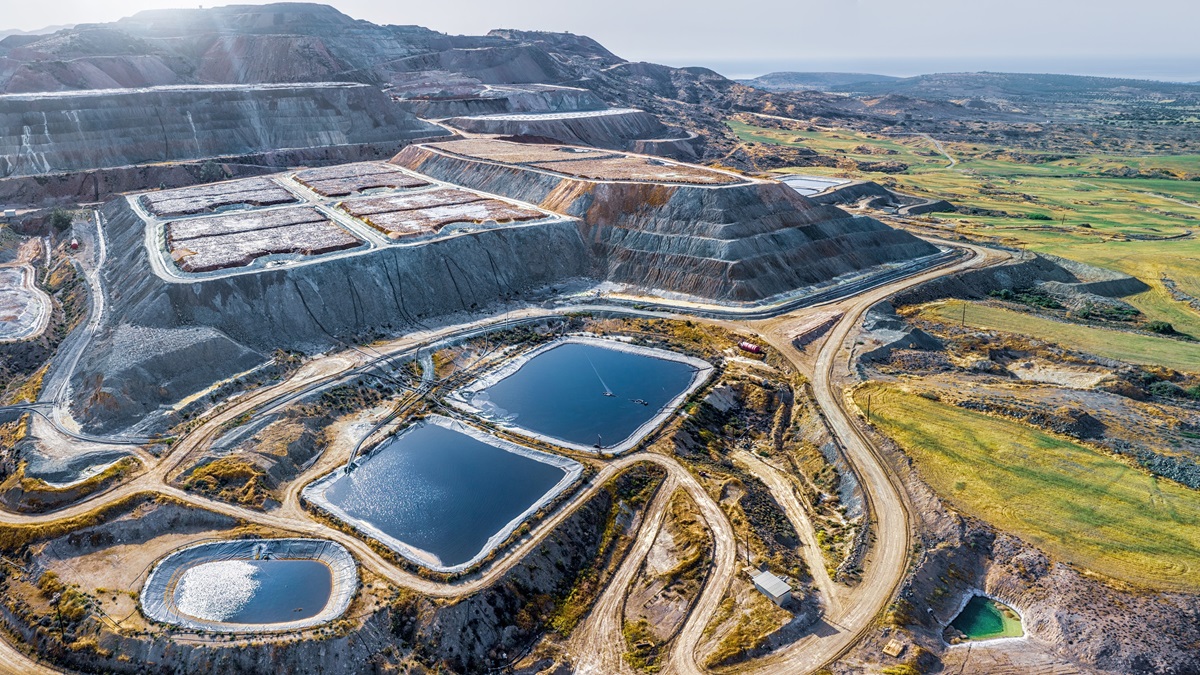
© Shutterstock/ Anna Kucherova | A copper mine in Skouriotissa, Cyprus.
The industries attracting the world's capital are changing fast. International investment in artificial intelligence infrastructure, semiconductors, critical minerals and energy-transition technologies and services has surged over the past five years, becoming one of the clearest signs of how global production is being reshaped.
According to the World Investment Report 2026 by UN Trade and Development (UNCTAD), strategic sectors accounted for 44% of global greenfield investment in 2025, up from 16% in 2020. The value of announced projects in these sectors rose from $109 billion to $576 billion over the same period.
The report identifies five strategic sectors: AI infrastructure and related technologies; advanced and sensitive technologies; critical minerals; energy-transition technologies and services; and semiconductors.
This matters because these industries are likely to shape where future growth, technology and industrial capacity are located. But the boom is not spreading evenly.
From data centres to chips, capital follows strategic capabilities
The investment surge is being driven by a small group of sectors with growing economic and strategic importance.
AI infrastructure and related technologies are the largest segment, supported by investment in data centres, cloud infrastructure and the digital backbone needed for AI deployment. Semiconductors are the fastest-growing segment, expanding by an average of 54% annually between 2020 and 2025. The wider boom reflects the strategic importance of chips, demand for critical minerals and policy support for technologies seen as essential to future competitiveness.
The geography of the boom differs by sector. The United States dominates outward investment in AI and advanced technologies, while Europe has emerged as the main recipient location. In critical minerals, China plays a leading role both as an investor and across downstream supply chains.
These patterns show how investment is increasingly shaped by technology, market size, industrial policy and access to critical inputs.
The winners are becoming more visible
The concentration is striking.
Across the strategic sectors analyzed, the top three investor economies accounted, on average, for 72% of global greenfield project values in 2025, and the top three recipient economies for 56%. Concentration was much lower in other sectors.
That concentration reflects both business realities and policy choices. Strategic industries often require large markets, deep capital, advanced skills, reliable energy, specialized suppliers and strong public support. Countries that already have these advantages are better placed to attract the next wave of investment.
The traditional manufacturing ladder is weakening
The rise of strategic sectors is happening as other investment paths become harder.
The value of announced greenfield investment in manufacturing outside strategic sectors was 17% lower in 2021–2025 than in 2015–2019.
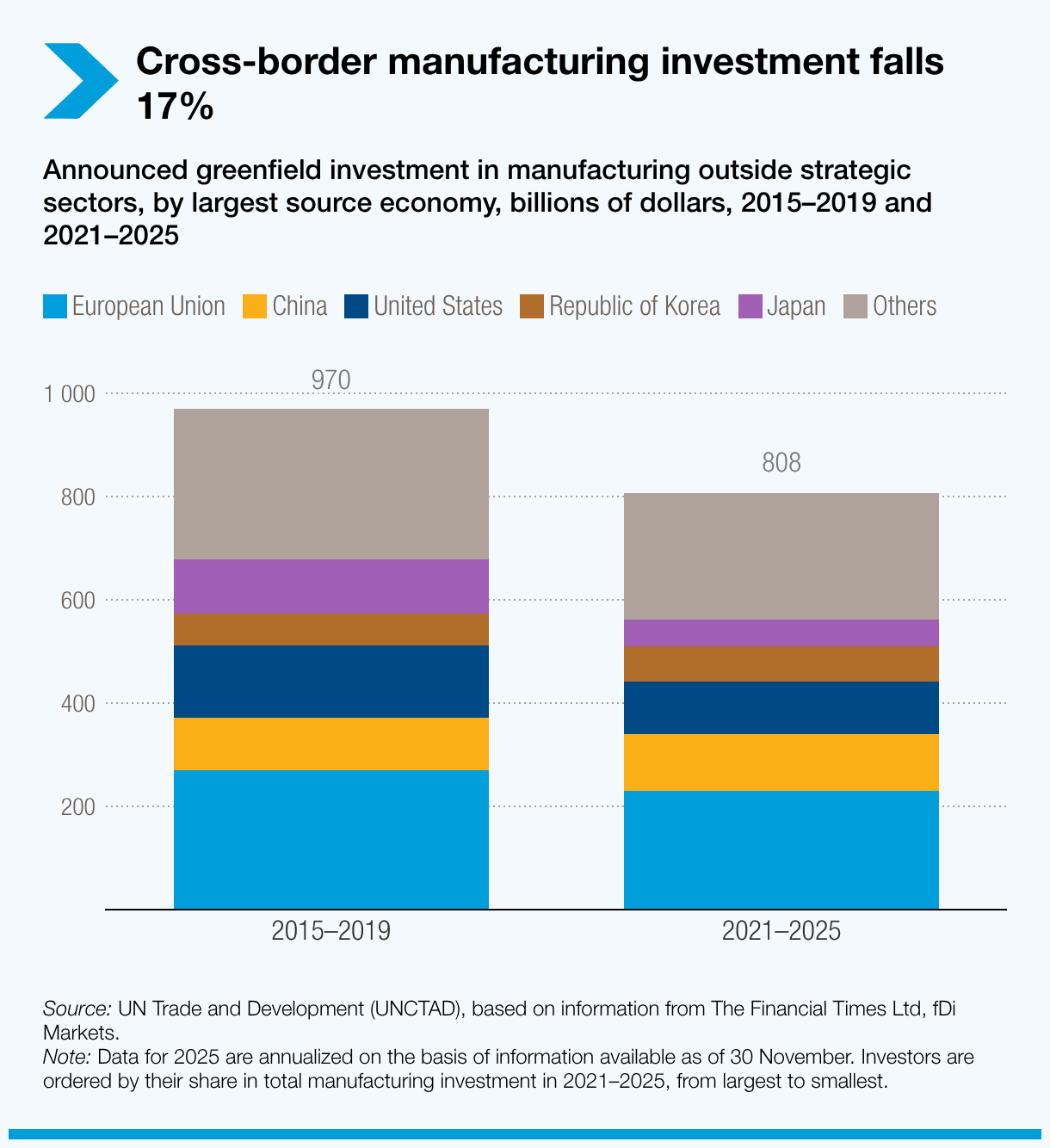
The decline was sharper in developing economies and steepest in least developed countries.
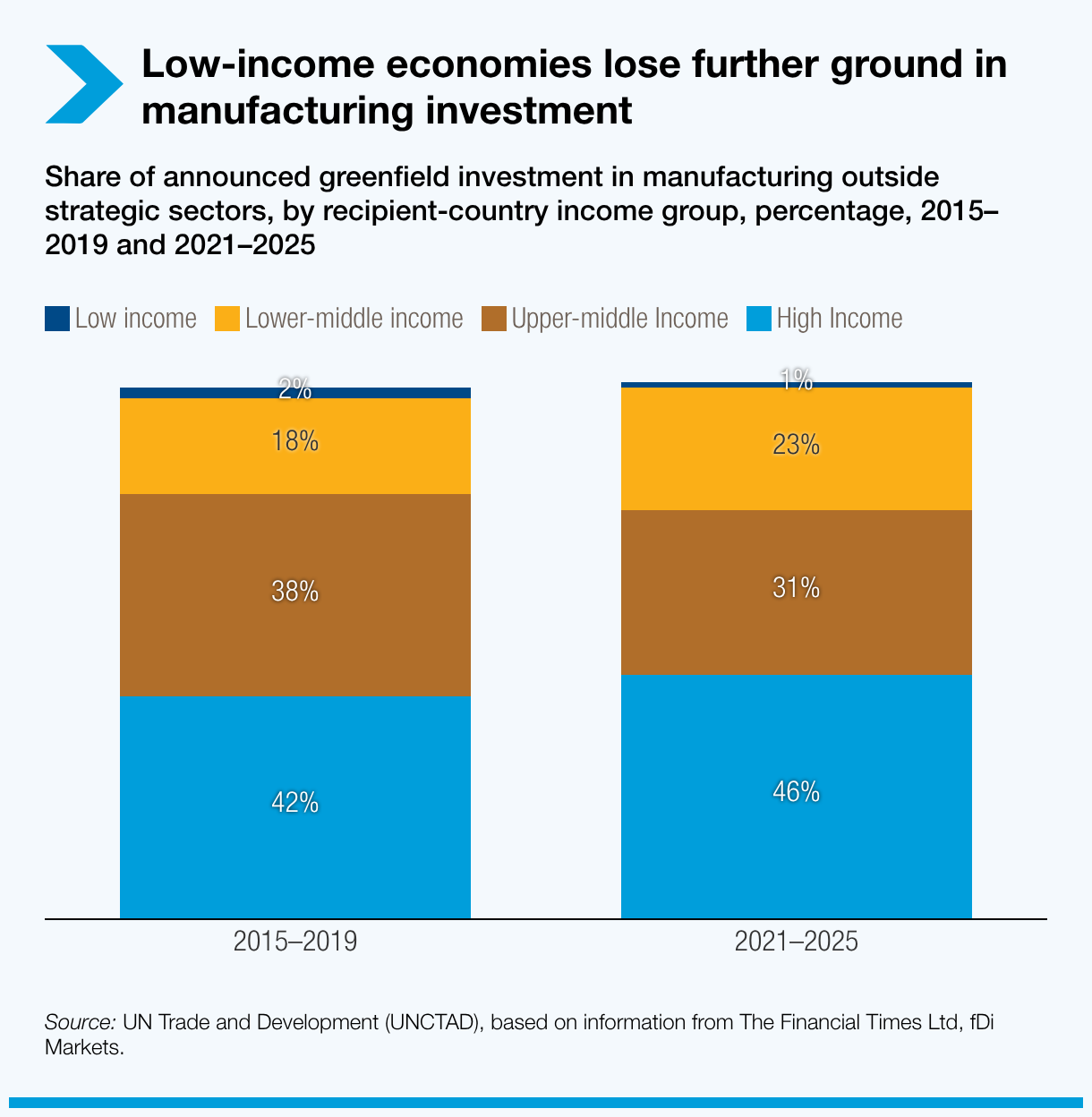
For countries that have traditionally relied on manufacturing investment to build productive capacity, create jobs and enter global value chains, this is a serious warning. The fastest-growing investment is moving towards sectors that often require capabilities many economies are still trying to build.
For others, the gap is widening. Low-income and lower-middle-income economies attracted only 10% of global greenfield investment in strategic sectors between 2020 and 2025, compared with more than 20% in other sectors.
Competing without massive subsidy programmes
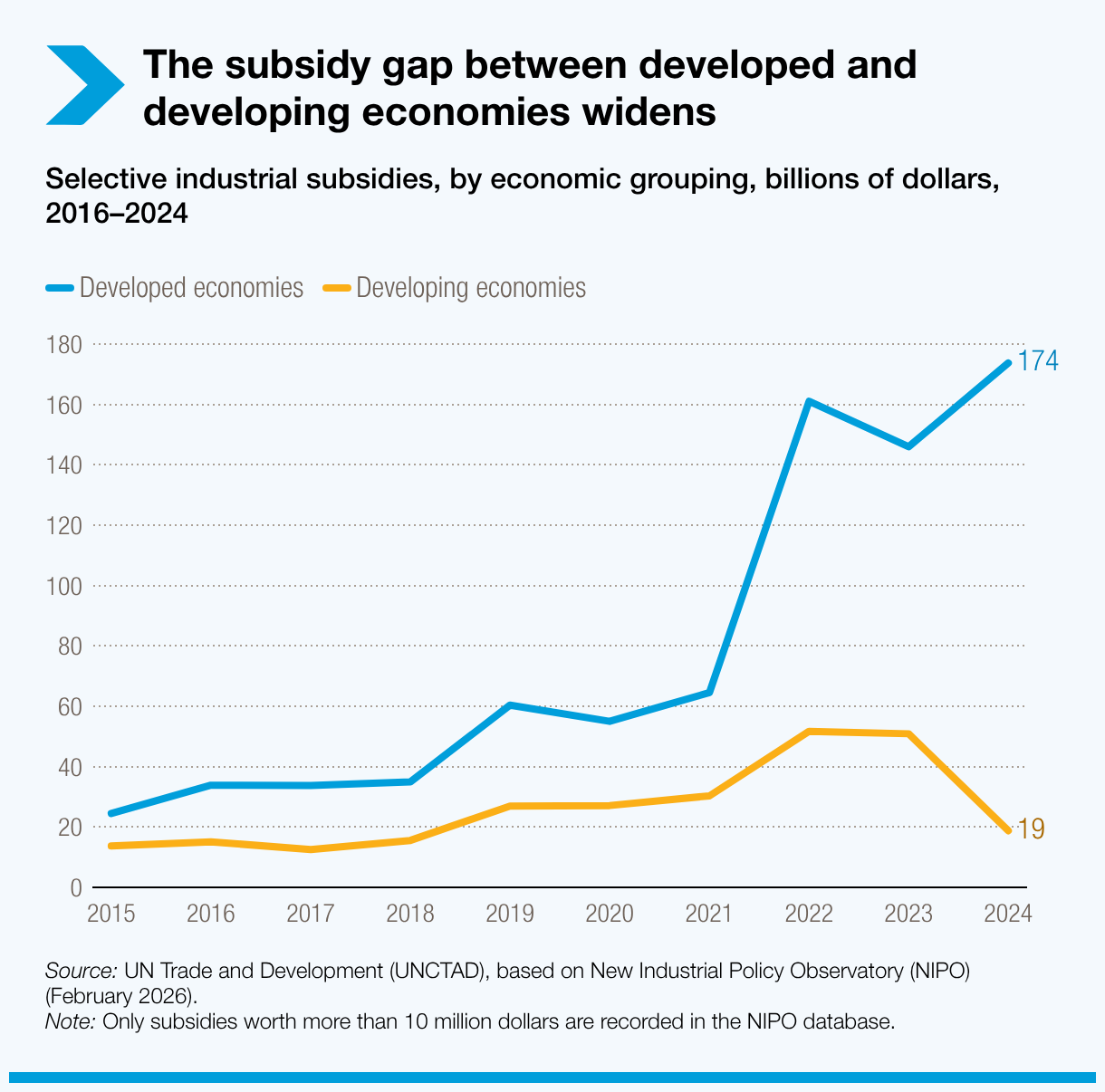
The report does not suggest that developing economies should try to match the large subsidy programmes of major powers. For many, that would be unrealistic and fiscally risky.
A more practical strategy is to identify specific entry points into strategic value chains. These may include critical minerals processing, selected manufacturing activities, data infrastructure, regional supplier networks, logistics, energy services or skills-intensive niches linked to larger investment ecosystems.
To compete, countries will need realistic priorities, bankable projects, reliable energy and digital infrastructure, stronger workforce skills, supplier upgrading, standards compliance and regional markets that make investment propositions more viable.
International cooperation, including risk-sharing platforms and investment partnerships, can help countries compete without trying to match the fiscal firepower of major economies.