


UN Trade and Development says clearer entry points for investors, predictable rules and stronger domestic linkages are key to turning foreign investment into long-term development gains.
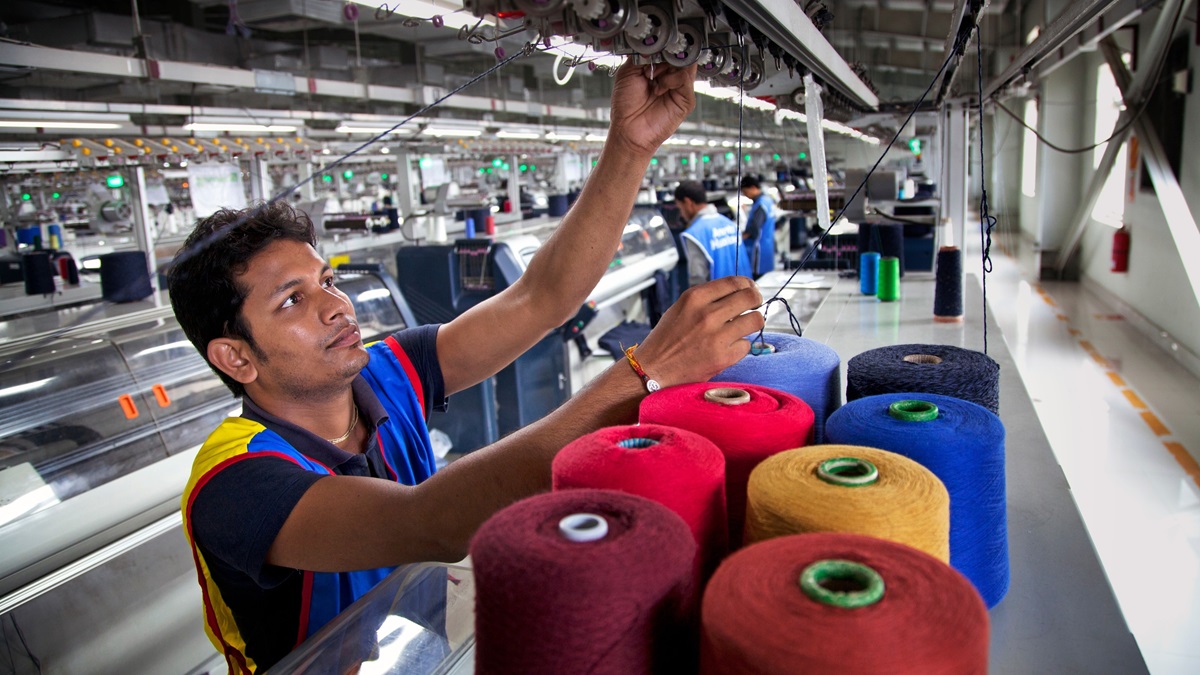
© Shutterstock/hanifphoto1 | In Bangladesh, the ready-made garment sector currently attracts the largest share of foreign direct investment.
Foreign investment into Bangladesh is recovering, but the larger test is whether the country can turn renewed investor interest into more diversified, resilient and development-focused growth, according to a new UN Trade and Development (UNCTAD) report.
The findings matter beyond Bangladesh. As developing economies face tighter global capital, shifting trade rules and rising sustainability expectations, Bangladesh’s reform agenda offers lessons on how investment policy must move from promotion to delivery.
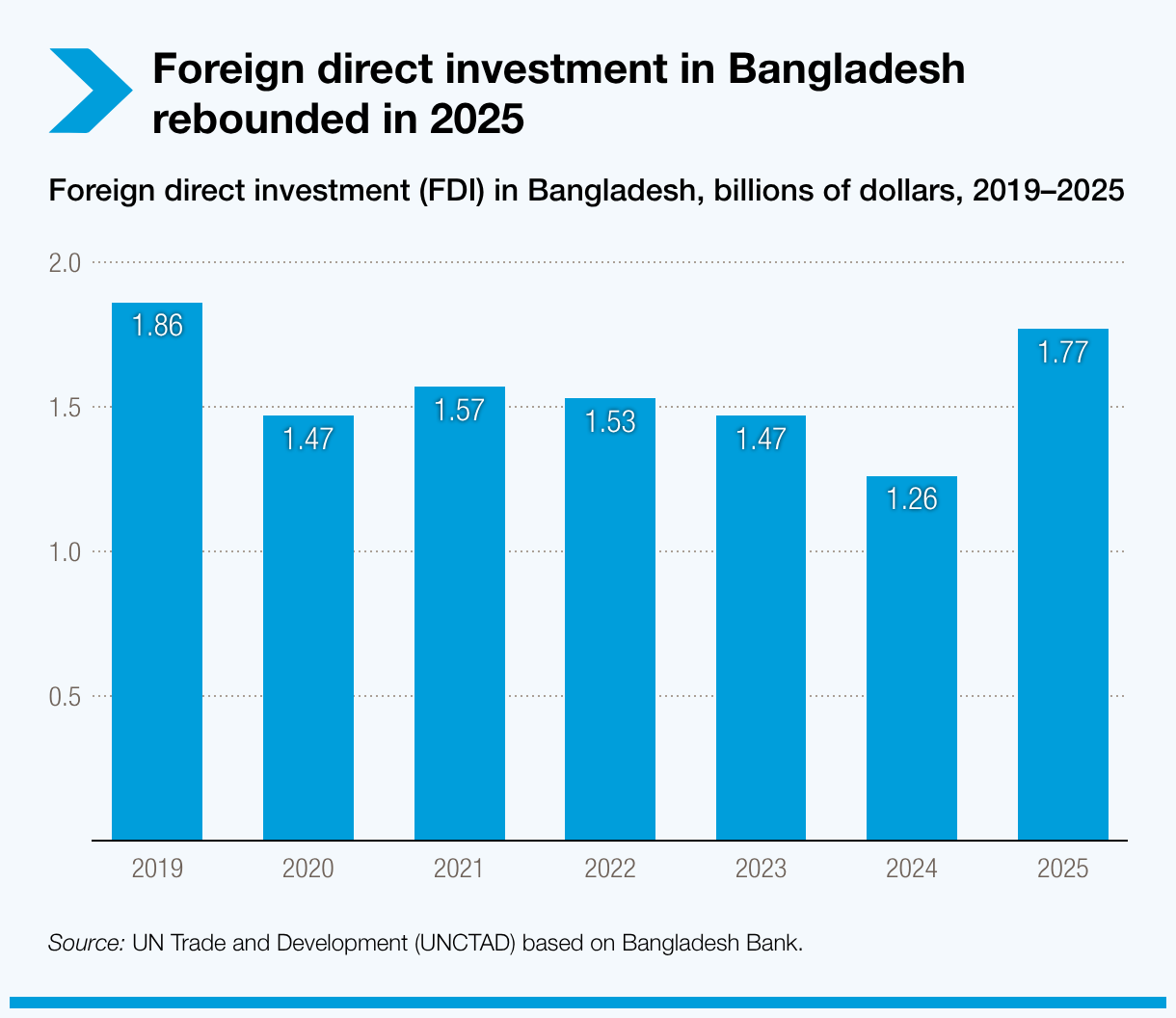
Foreign direct investment (FDI) into Bangladesh rose to $1.77 billion in 2025 after several difficult years marked by foreign‑exchange pressures, global shocks and domestic uncertainty. While inflows remain below their 2019 peak of more than $1.8 billion, the rebound – driven largely by reinvested earnings and intracompany loans – shows that investors remain engaged even under tighter conditions. The next challenge will be to ensure a broad surge in new capital despite current global uncertainty.
“Since the IPR, Bangladesh has made progress in crucial areas. Key regulatory and institutional reforms were implemented. Efforts to streamline and digitalize regulatory processes are underway,” said Nan Li Collins, Director of the Division on Investment and Enterprise at UN Trade and Development.
“The Implementation Report also provides an opportunity to update UNCTAD’s policy advice in light of the current national and global context, to ensure its relevance for decision-makers.”
The report assesses how Bangladesh is adapting its investment policies to sustain inflows, diversify its economy and position itself for long‑term development as it phases out preferential support associated with its development status.
“This report comes at the right moment for Bangladesh,” said Chowdhury Ashik Mahmud Bin Harun, Executive Chairman of the Bangladesh Investment Development Authority (BIDA).
“The global investment outlook remains challenging amid geopolitical tensions, but we are using this period to strengthen our readiness so that when the global tide turns, Bangladesh is better placed to welcome investors. We have already made real progress in improving the investment climate, and the next phase is about implementation, coordination, and a more predictable investor experience. BIDA is working across agencies to advance practical changes through the system, while supporting investment that is sustainable and long-term.”
The report was prepared at the request of BIDA, building on Bangladesh’s 2013 Investment Policy Review. It is part of an ongoing collaboration between UN Trade and Development and UNDP Bangladesh under the Transformative Economic Policy Programme, supported by the United Kingdom, to help the country’s smooth transition from least developed country status.
Simpler points can lower the cost of investing
A central shift in Bangladesh’s investment strategy has been the streamlining of investment promotion and facilitation.
The creation of BIDA consolidated several investor‑facing functions, while digital one‑stop service platforms have reduced approval times and improved transparency. Authorities are now planning a further merger of investment‑related agencies to simplify institutional responsibilities and present a single, clearer entry point for investors.
In practice, these reforms aim to lower administrative costs for firms, reduce discretionary decision‑making and improve coordination across government - issues that continue to deter investment in many developing economies.
For investors, fewer entry points and faster approvals matter because delays and fragmented decision-making often act as hidden costs. For governments, they help ensure that investment promotion is tied more closely to national development priorities.
Predictable rules are becoming an investment asset
Recent reforms prioritise regulatory predictability, digitalisation and compliance with international standards, reflecting factors that increasingly shape investors’ location decisions.
Key measures include the Income Tax Act adopted in 2023, which simplifies procedures and expands digital filing, and a revised labour framework introduced in 2025 to strengthen worker protections. A new patents law is also designed to bring intellectual property rules closer to global standards, offering greater legal certainty to technology‑ and knowledge‑based investors.
The real test is moving investment into higher-value sectors
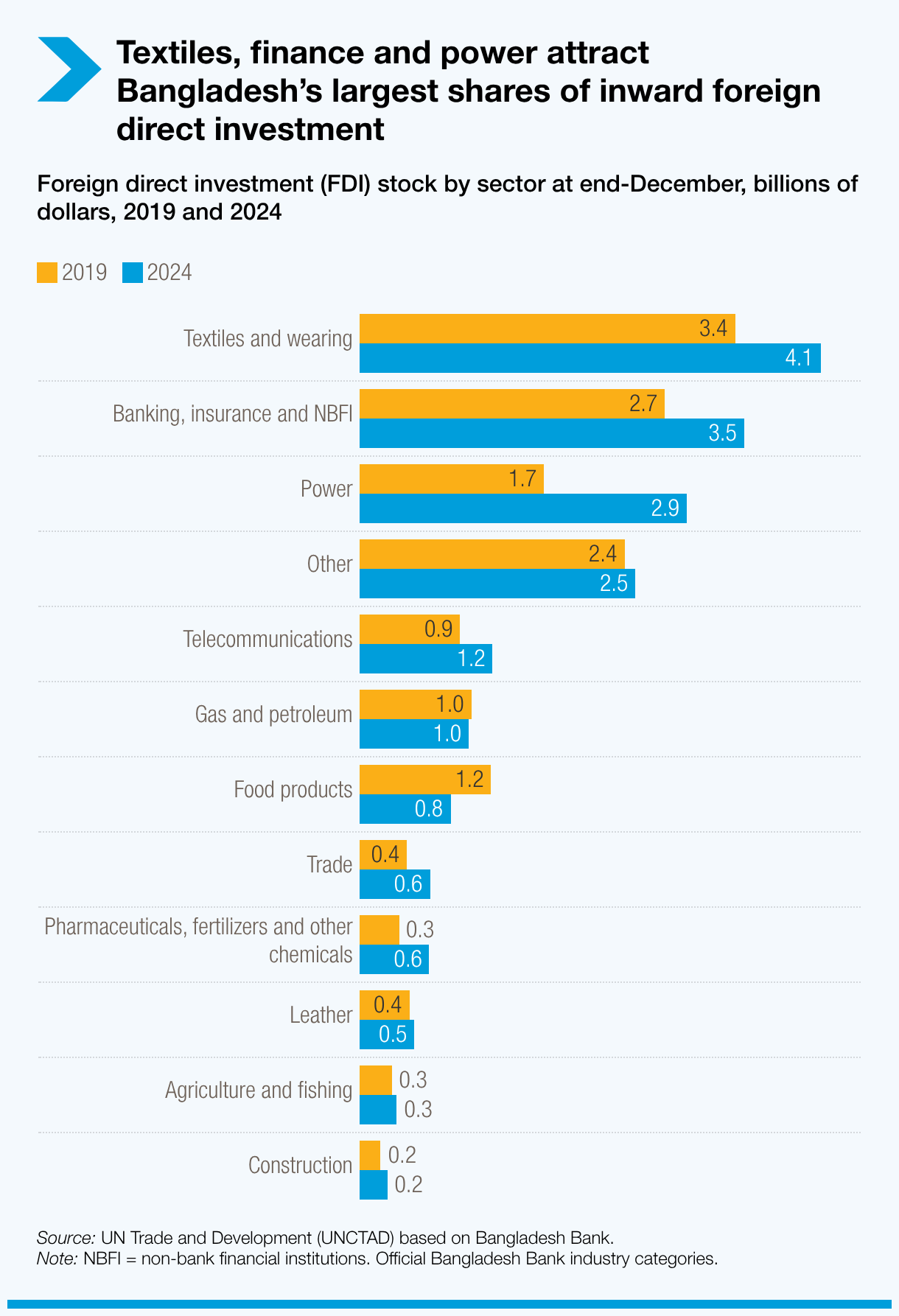
Bangladesh’s stock of inward FDI has remained broadly stable at around $18 billion since 2021, concentrated mainly in textiles, finance and power. The report notes gradual diversification towards pharmaceuticals, telecommunications and ICT, with the digital economy emerging as a growing area of interest.
Whether these shifts deepen will depend on complementary reforms, notably skills development, infrastructure and more effective linkages between foreign investors and domestic suppliers - areas where implementation gaps persist.
The issue is not only how much investment Bangladesh attracts, but where it goes and what it leaves behind - jobs, skills, technology, supplier linkages and export capacity.
Lessons for other developing economies
Bangladesh’s experience points to a broader development lesson: investment reform is no longer only about incentives or promotion. In a more uncertain global economy, countries need institutions that are clear, rules that are predictable and investment strategies that build domestic capacity.
UN Trade and Development will continue supporting Bangladesh through policy advice, capacity-building and investment data, while helping developing economies align investment with sustainable development outcomes.