


New analysis explores the extent to which rising climate finance figures represent additional support for developing countries.
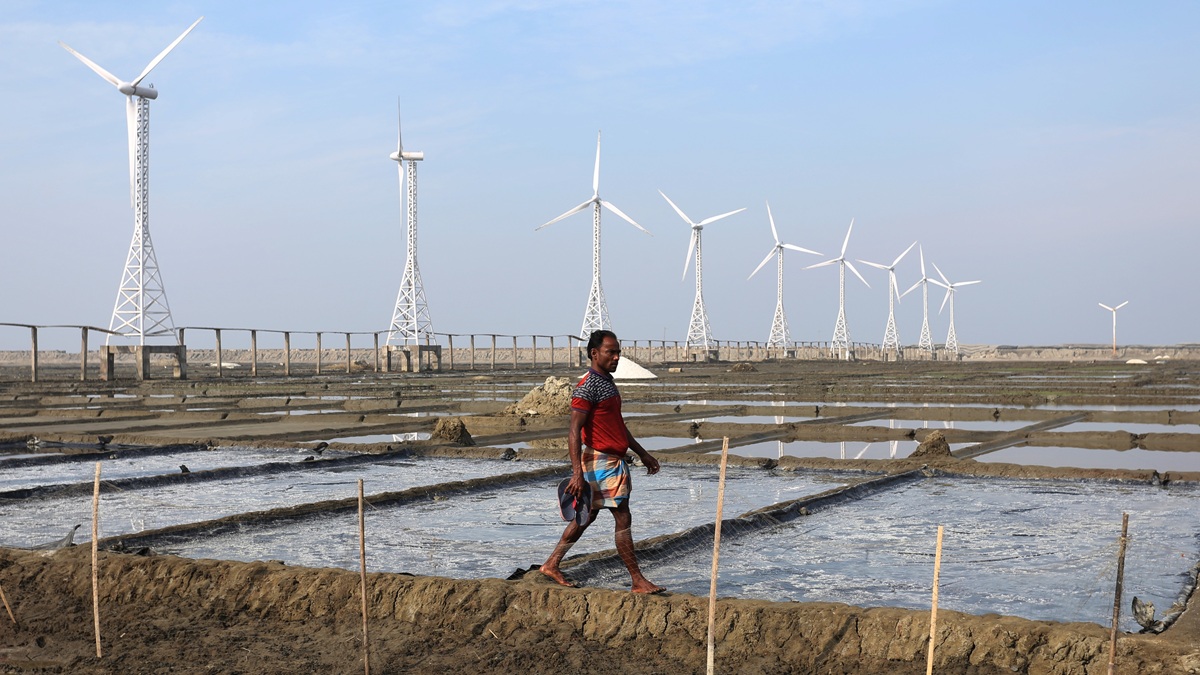
© Shutterstock/Sayed Akber Hoshen | A wind farm in Kutubdia, Bangladesh.
A new UN Trade and Development (UNCTAD) report warns that much of the reported rise in climate finance may not represent new funding for developing countries, with accounting practices sometimes creating the impression of increased support.
The analysis points to the growing role of accounting practices in shaping reported climate finance figures. Without clearer standards, reporting changes can misleadingly indicate that more funding is provided even when underlying financial commitments remain largely unchanged.
The report also notes that climate finance is being delivered in a context of growing fiscal pressures and competing spending priorities in many donor countries, making transparent accounting and credible reporting even more important.
As countries work toward mobilizing $1.3 trillion annually in climate finance by 2035, ensuring that support for developing economies is real, measurable and truly additional has become a key test for the global climate finance system. In climate finance discussions, “additionality” refers to funding that is new and provided on top of existing development aid commitments, rather than being re-labelled from existing budgets.
Climate finance drawing from shrinking aid
In practice, much climate-related spending continues to be drawn from the same pool of development assistance rather than representing new financial flows.
The report examines the relationship between climate finance, official development assistance (ODA) and broader development finance flows since 2009, when countries agreed to mobilize $100 billion annually for climate action in developing economies.
ODA rose from $133 billion in 2009 to $235 billion in 2023. However, once spending on in-donor refugee costs and support for Ukraine is excluded, ODA as a share of donor countries’ gross national income (GNI) declined from 0.33% to 0.30%.
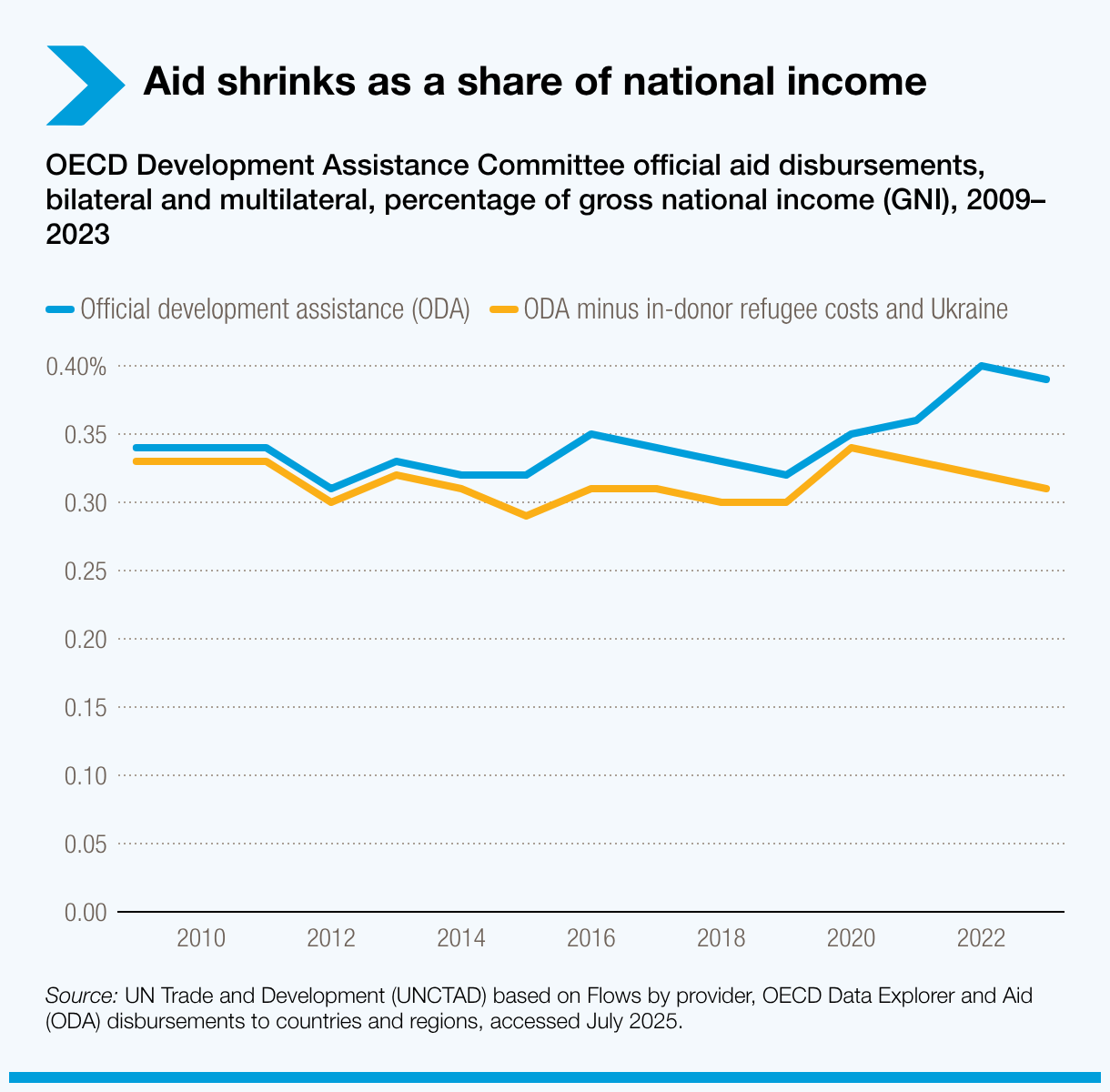
The decline is sharper for non-climate development assistance. Adjusted for climate-marked spending, non-climate ODA fell from 0.31% of GNI in 2009 to 0.25% in 2023.
These trends suggest climate finance is increasingly being provided at the expense of other development priorities rather than layered on top of existing aid commitments. Under the strictest benchmark – finance delivered above the long-standing 0.7% of GNI ODA target – only a small number of providers deliver climate finance that can clearly be considered additional.
Double-counting and classification
The report highlights widespread double-counting between climate finance and development assistance, with many development projects also counted toward climate commitments.
While climate and development goals often overlap, this practice can inflate reported totals without increasing the actual resources available to developing countries.
Changes in project classification have also contributed to rising totals. Bilateral ODA carrying a “Rio marker” for climate objectives increased from $5.7 billion in 2009 to $27.7 billion in 2023, while the share of bilateral ODA classified as climate-related rose from 6% to nearly 16%.
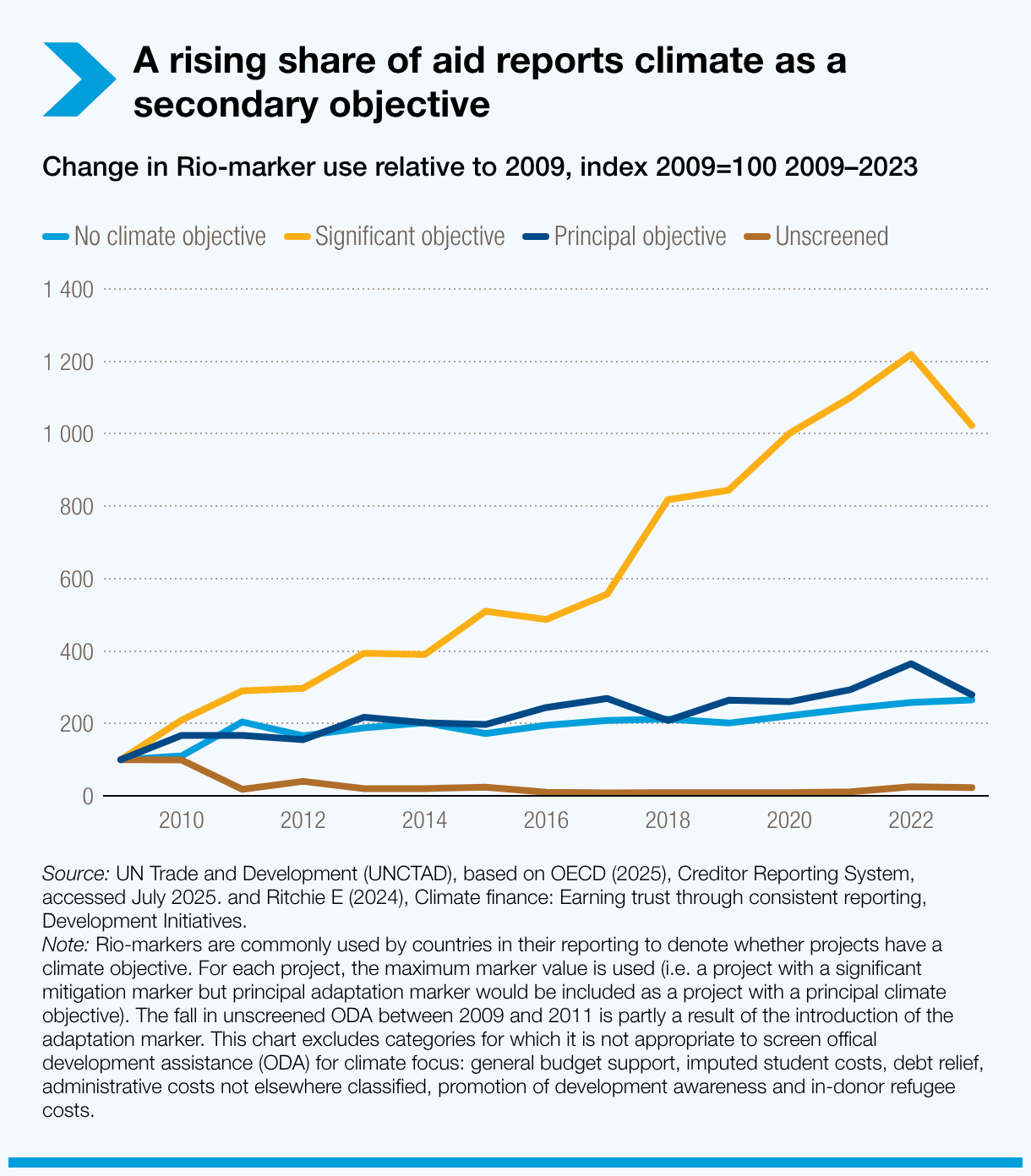
Much of this increase reflects projects where climate is one objective among several rather than the primary focus.
Restoring integrity and trust
For developing countries, the stakes are high as governments seek to address climate impacts while pursuing broader development goals.
The report calls for stronger transparency, clearer definitions and common accounting standards to prevent double-counting and improve comparability across providers. It also urges developed countries to meet both their ODA commitments and climate finance targets, while scaling up financial flows so climate finance supports – rather than competes with – development priorities.
Delivering on the $1.3 trillion climate finance ambition will require transparent and credible financial support that restores trust and ensures the system delivers real resources to developing countries.