


The region attracted a record $65 billion in foreign investment in 2024. To keep up the momentum, more efforts are needed for economic integration, diversification and resilience.
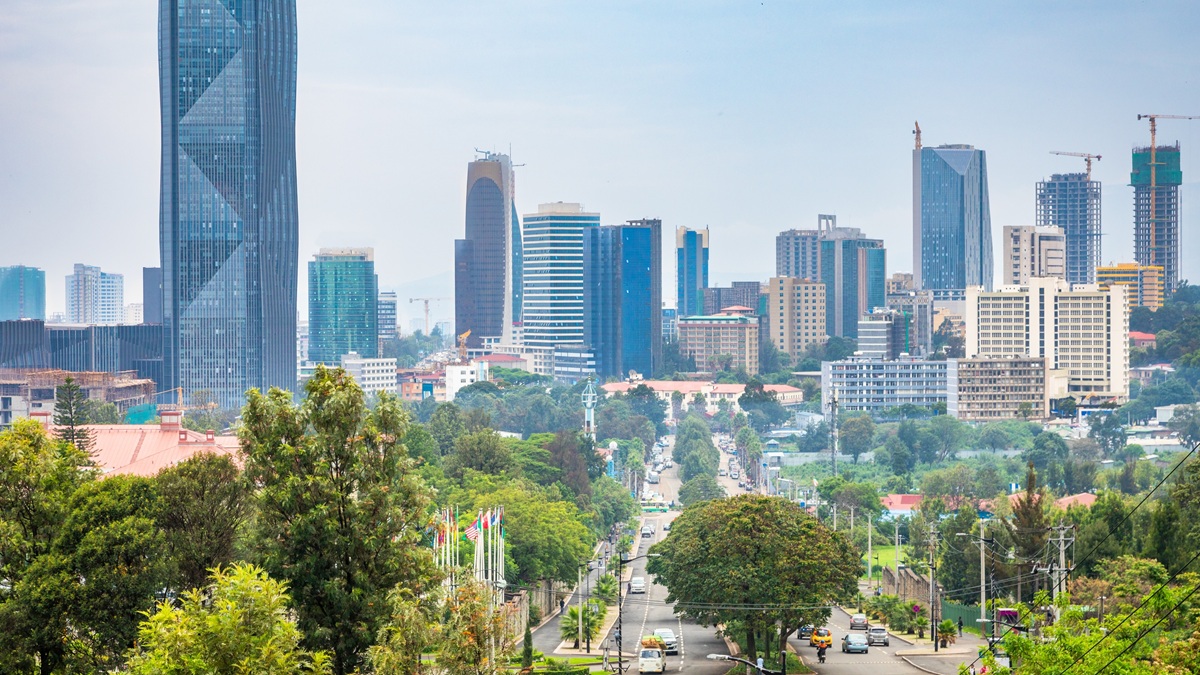
© Shutterstock/Vadim_N | Addis Ababa, Ethiopia, a member of the Common Market for Eastern and Southern Africa (COMESA).
Bucking a global downturn in foreign direct investment (FDI), the Common Market for Eastern and Southern Africa, known by its acronym as COMESA, made remarkable progress.
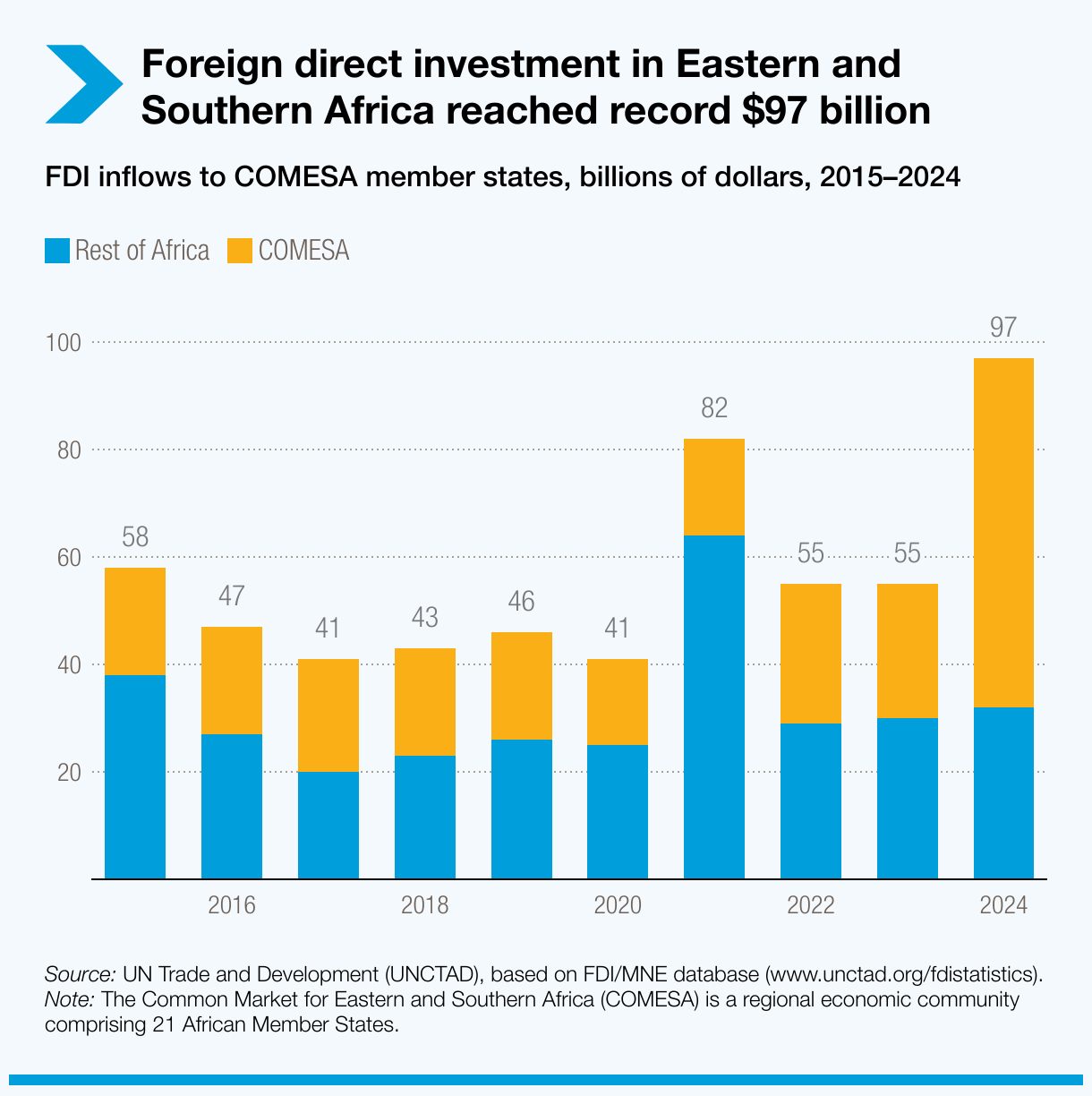
A new report from UN Trade and Development (UNCTAD) shows that in 2024, FDI inflows to the region’s 21 economies shot up by 154%, hitting an all-time high of $65 billion.
This contrasts with an 11% downturn in global FDI flows during the same period, alongside an subdued global outlook for 2025.
While the spike was largely driven by the Ras El-Hekma urban development project in Egypt, UNCTAD analysis found strong and underlying investment momentum across Eastern and Southern Africa.
Because even excluding Egypt’s mega-project, FDI inflows to COMESA would still have expanded by 16% -- a sign of overall resilience and investor confidence across the region.
The COMESAS Secretariat and Regional Investment Agency collaborated with UNCTAD to produce the report, launched on 4 December in Lusaka, Zambia.
COMESA: A stronger footing in global investment landscape
In 2024, COMESA doubled its share of global FDI from 2% to 4%. The region accounted for 7% of inflows to all developing economies, up from 3% the year before.
A positive development for infrastructure and public services: International project finance (IPF) flows to COMESA increased by 93% to $79 billion, taking up 80% of the total value in Africa.
Sectors posting the strongest IPF performance were grid expansion, renewable energy and major construction projects, especially in Egypt, Tunisia, Rwanda and Malawi.
This points to COMESA’s emerging status as an attractive destination for long-term investment, particularly into capital-intensive infrastructure related to urban development and the transition to renewable energy.
Meanwhile, greenfield investment in COMESA remained robust, meaning more foreign firms are setting up new operations in the region. In this regard, announced project value reached $77 billion in 2024, the second highest ever recorded.
The figure represents two thirds of Africa’s greenfield value, reinforcing COMESA’s role as a leading engine for the continent’s economic growth.
Despite unprecedented momentum, structural challenges persist
In 2024, just five member countries, namely Egypt, Ethiopia, Uganda, the Democratic Republic of the Congo and Kenya, absorbed 90% of total inflows into COMESA, raising concerns about the inclusiveness and sustainability of current growth patterns.
Intra-COMESA remained particularly weak, given that just 3% of greenfield projects by volume, and 6% of greenfield project by value, originated from within the bloc.
The lack of broader participation could risk more inequalities and slower economic integration for the region, the report cautions.
Investment patterns sharply diverged across sectors
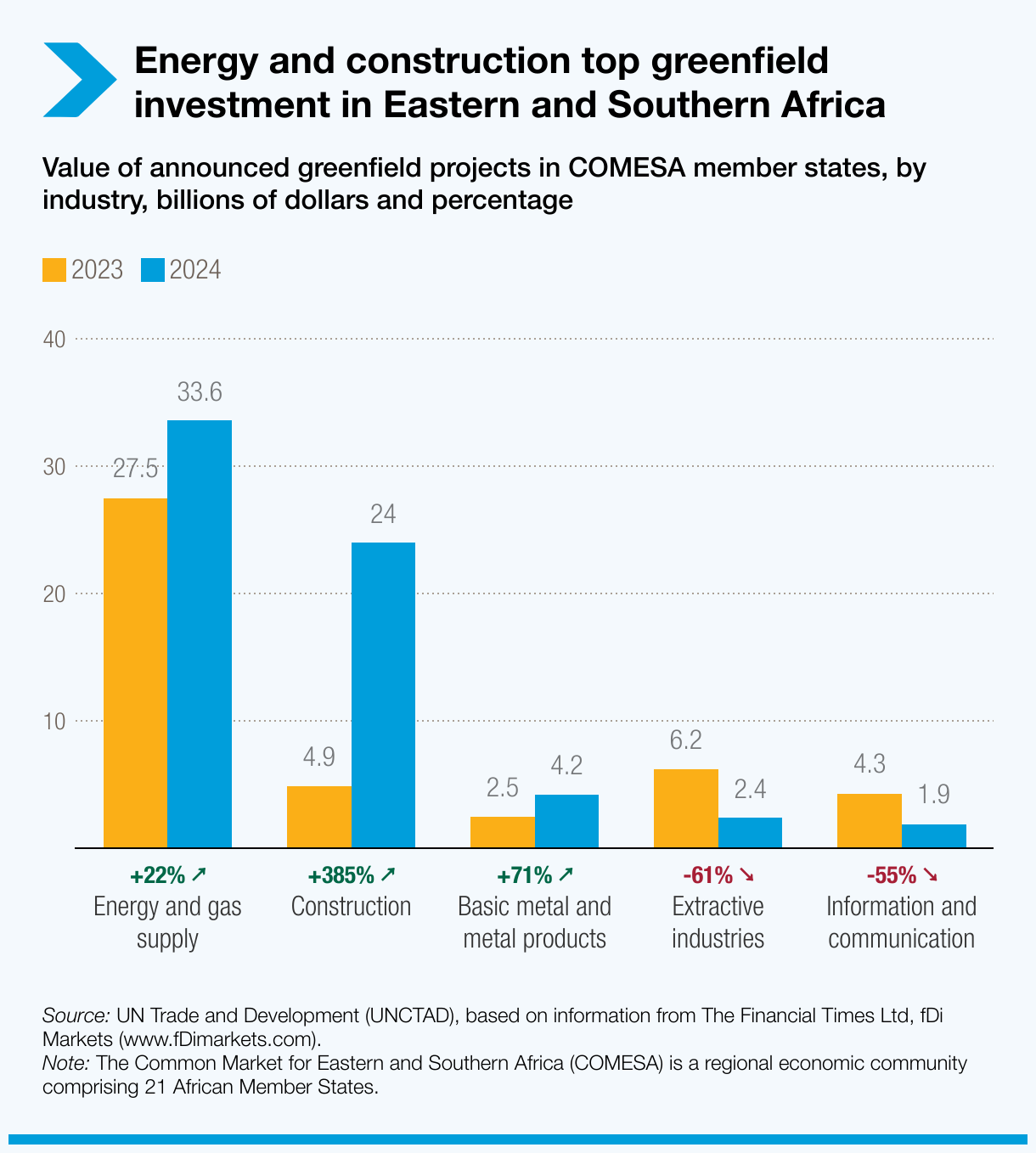
In 2024, foreign investments into COMESA’s construction sector increased almost five-fold, fueled largely by Egypt, and up 75% for basic metals, reflecting strong demand from manufacturing and infrastructure.
The energy and gas supply sectors saw a 22% increase, retaining their position as the top FDI recipient within COMESA.
In contrast, the report flags volatility in technology-related capital flows. FDI into extractives fell 61% after two strong years, and down 55% for information and communication technology (ICT), following an exceptional peak in 2023.
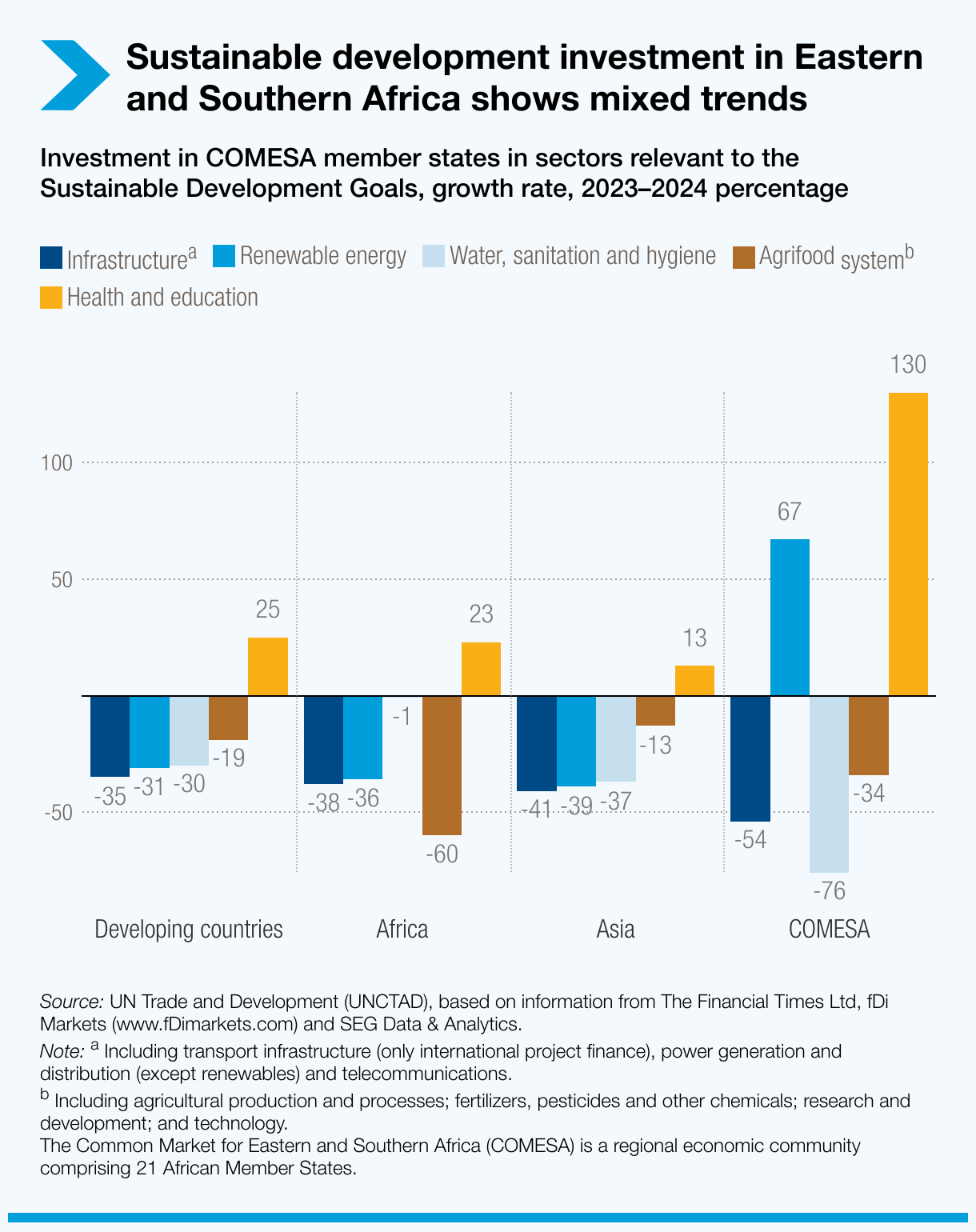
There were also mixed results from sectors linked to the Sustainable Development Goals.
FDI into renewable energy sectors soared 67%, and 130% for human-capital-related ones, such as health and education.
Yet major gaps remain as foreign investment into agrifood systems dropped 34%, and a steeper 76% for water and sanitation.
Despite the overall rise in project finance, infrastructure investment contracted 54%, indicating persistent financing constraints facing essential development sectors.
Policy insights
The UNCTAD report outlines five priorities to help COMESA economies continue shoring up investment for sustainable inclusive development, including:
- Broadening the investment base beyond a handful of economies.
- Accelerating industrialization through value-added manufacturing and local supplier development.
- Scaling up digital infrastructure to bridge a growing ICT investment gap.
- More focus on human capital sectors, supported by innovative and blended finance, to enhance investment in sustainable development sectors.
- Improving data reporting to support evidence-based policymaking.