

The free e-learning course offers practical training to help countries collect better data and make more informed development decisions.
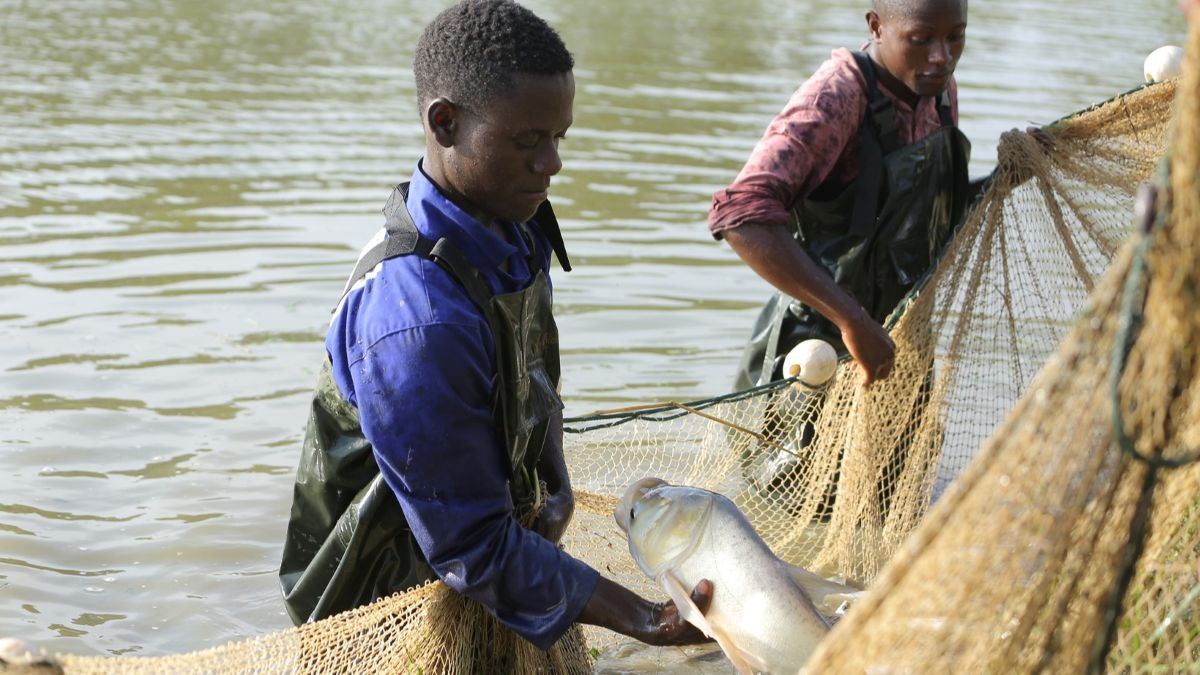
©FAO | Developing aquaculture value chains is a focus of an FAO-supported South-South cooperation project between China and Uganda.
When developing countries help one another train doctors, improve farming or finance schools, they are engaging in South-South cooperation. Such exchanges are increasingly important, but much of the support goes unrecorded. Data are scattered, and conventional statistics fail to capture the full picture.
To help fill this gap, UN Trade and Development (UNCTAD) has launched a free e-learning course that teaches professionals in government and national statistical offices how to measure and report these exchanges.
The self-paced course takes about 9.5 hours and uses practical scenarios and real-world examples. Participants can take individual modules or the full course, earning a certificate for each module and another for completing all five.
The course is open to beginners and experienced professionals, with no formal prerequisites. Participants can enrol through the UNCTAD e-learning portal.
Building stronger evidence for South-South cooperation
The course is part of an UNCTAD project that helps developing countries improve how they measure and report South-South cooperation. Funded by the United Nations Development Account, the project is led by UNCTAD in collaboration with the United Nations regional commissions.
The course takes participants through the entire measurement process in five modules:
- Introduction: The principles of South-South cooperation and its relevance for sustainable development.
- National institutions: The institutions and coordination mechanisms involved in South-South cooperation.
- Data collection and validation: How to collect, classify and check financial and non-financial data.
- Data analysis: How to analyse and visualize data to produce useful insights.
- Reporting and quality assurance: How to prepare reliable data for Sustainable Development Goal (SDG) indicator 17.3.1, which falls under Target 17.3 on mobilizing additional financial resources for developing countries.
Turning better data into better decisions
The course draws on the Manual for the Framework to Measure South-South Cooperation, published in 2025. Developed by a group of countries of the global South, with UNCTAD providing support, the framework was welcomed by the UN Statistical Commission in March 2022.
It sets out a common approach to measuring financial and non-financial support between developing countries, including contributions often missing from conventional statistics.
Better data can help countries make better decisions. By tracking who provides support, where it goes and what it funds, governments can identify gaps and direct resources towards areas where they're most needed.
From learning to action
The course comes ahead of the South-South Cooperation Data Forum, taking place on 26 and 27 November 2026 in Bangkok, Thailand, with online participation.
Hosted by the UN Economic and Social Commission for Asia and the Pacific (ESCAP), the forum brings together policymakers and experts to assess progress, share experiences and improve South-South cooperation data.
The forum also marks a shift from pilot projects towards regular, country-led measurement, with the launch of a new Steering Committee on South-South Cooperation Data.
The course supports this shift by giving professionals the skills to collect and use better data, helping countries understand the scale and impact of their South-South cooperation.