


The choices made today will determine whether critical minerals become a catalyst for economic transformation or reinforce patterns of commodity dependence.
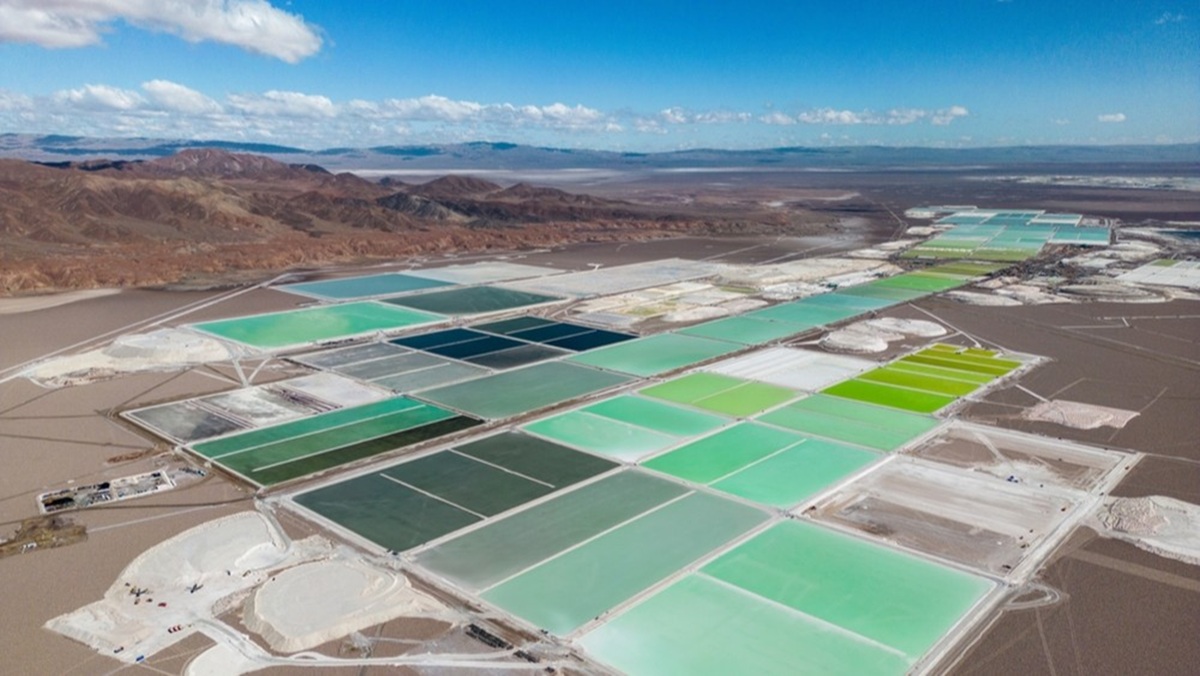
© Shutterstock/Freedom_wanted | Lithium fields in the Atacama Desert in Chile.
Latin America’s critical minerals boom presents an opportunity for governments across the region to promote activities that build a broader productive base, according to recent analysis by UN Trade and Development (UNCTAD), “Critical minerals, critical decisions: Industrial policy for the energy transition”.
The report looks at how countries can use industrial policy to turn critical mineral resources into broader economic opportunities, including productive transformation, technological upgrading and economic diversification.
It draws on the experiences of Argentina, Brazil and Chile to examine different approaches to governance and industrial development.
While the three countries have adopted different policy and governance models, their experiences highlight a common challenge: how to link mineral extraction to wider economic development and move beyond reliance on the export of raw materials.
Critical minerals matter to Latin America and beyond
Latin America holds significant shares of global reserves and production of several critical energy transition minerals – or critical minerals – needed for the energy transition, renewable energy infrastructure and high-tech manufacturing.
The region produces more than half of the world’s raw lithium concentrate and more than a third of its copper, as well as significant shares of global silver, tin and rare earths production.
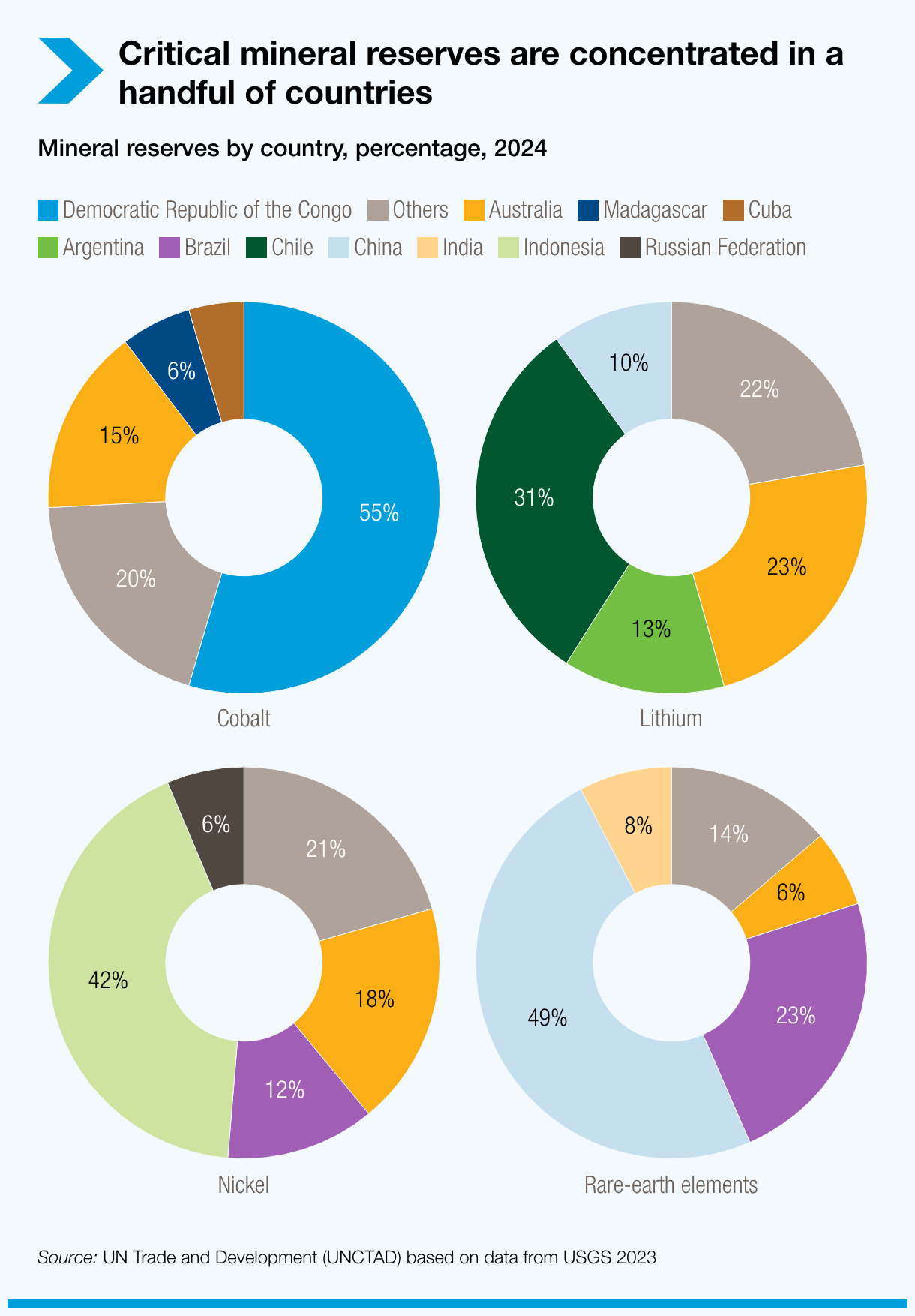
As global demand for electric vehicles, battery storage, renewable energy and electricity grids grows, demand for relevant critical minerals is expected to nearly double by 2040.
At the 18th BRICS Summit held on 12 and 13 September, major developing economies affirmed the key role of critical minerals in achieving economic diversification and energy security.
Against this backdrop, mineral-rich Latin American countries are pursuing different policy approaches to strengthen links between critical minerals and the wider economy.
Brazil: Long-term planning and institutional coordination
Brazil’s approach is based on long-term governance and institutional planning. It aims to develop a range of critical minerals while strengthening incentives for investment in processing industries.
The National Mining Plan 2050, Plano Nacional de Mineração 2050, provides a long-term framework for stakeholders.
Brazil’s aim to move beyond extraction is clear but achieving it will require stronger incentives for mineral processing, targeted infrastructure and mechanisms to share risks and attract private investment in processing and advanced materials.
Argentina: Attracting investment while strengthening coordination
Argentina has prioritized mobilizing foreign direct investment while giving provinces considerable autonomy over critical mineral resources located in their territories.
While this approach has helped accelerate the development of project pipelines in some provinces, it has also limited the coherence of a unified national strategy. Foreign investment remains concentrated in upstream production rather than downstream processing.
Argentina’s challenge will be to translate investment into broader domestic productive capabilities. Limited social and environmental governance, particularly in water management, also poses risks and underscores the need for stronger monitoring and transparency.
Chile: State stewardship and strategic planning
Chile has adopted a state stewardship model that combines fiscal policy, environmental safeguards and public-private partnerships within a strategic framework.
Its policies build on decades of experience in managing the copper industry, alongside a new strategic approach to lithium.
The report notes that Chile has developed strong social and environmental governance frameworks. New projects are subject to consultations with Indigenous peoples, while policies address environmental thresholds, water management and scientific monitoring. The framework also encourages technological upgrading where appropriate.
Regional cooperation is crucial
Beyond national strategies, the UNCTAD report underscores the need for regional cooperation to harmonize standards, support technological cooperation and align critical minerals strategies with climate and development goals.
Regional cooperation can also strengthen countries’ positions when negotiating contracts with multinational companies and seeking technology transfer, particularly where market size and bargaining power are important.
Broader policy lessons
Ultimately, the measure of success will not be the volume of critical minerals extracted, but the extent to which they help generate new productive capabilities, technological learning and higher-value activities across the economy.
The report calls for integrated governance frameworks that promote sustainability, transparency and community participation across the value chain.
Key recommendations include:
- Strengthening domestic value-chain development and economic diversification
- Building strategic partnerships while preserving policy space
- Ensuring coherence across fiscal, trade, industrial and environmental policies
- Advancing regional cooperation on standards, infrastructure and market access.