
- Foreign investment in Caribbean economies rose 9% to $18 billion in 2025, excluding offshore financial centres, but remained concentrated in a small number of countries.
- The investor base is broadening: investors from other developing economies accounted for around 20% of announced greenfield investment value in 2025, compared with 12% over 2015–2025.
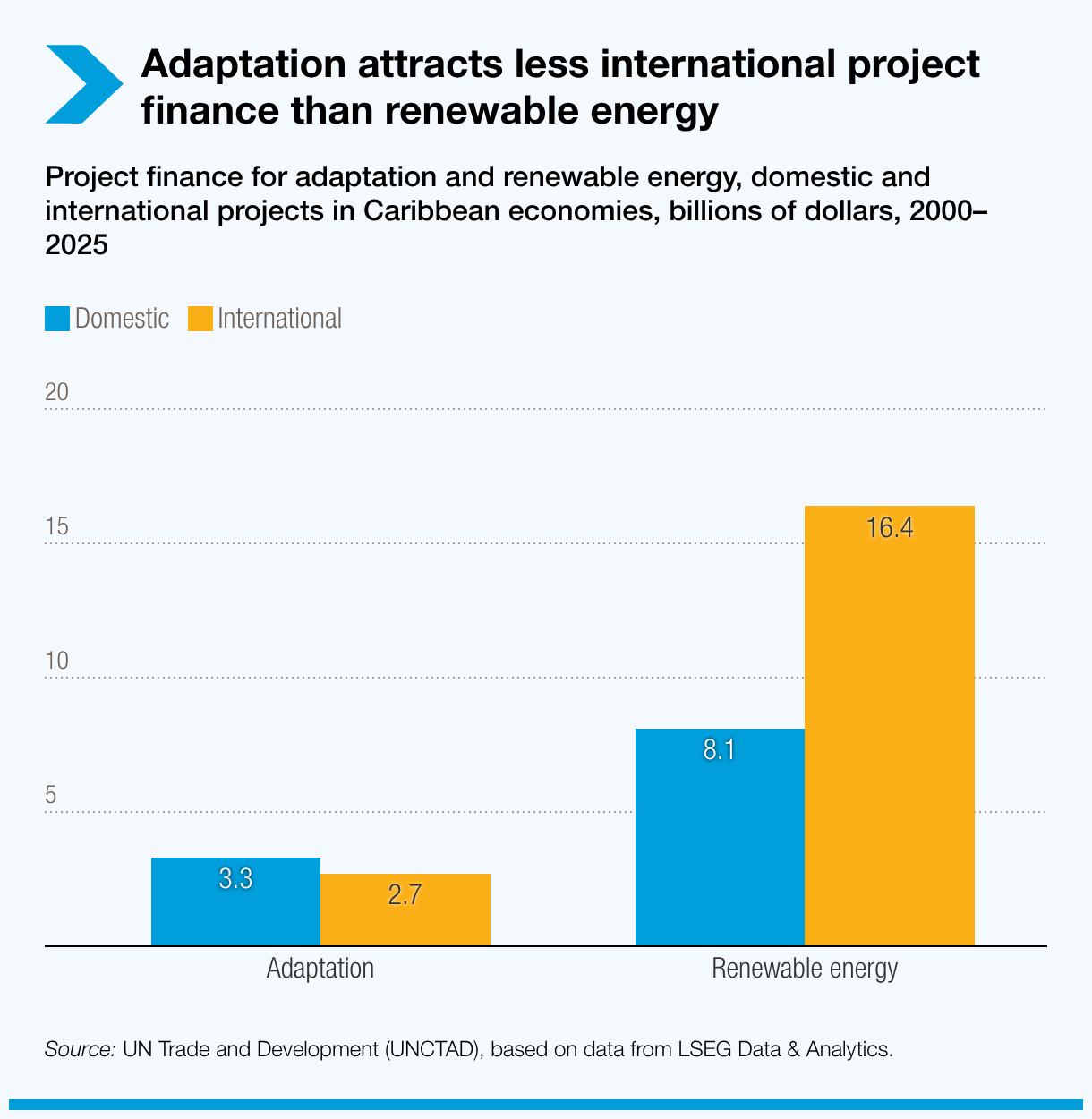
- Climate adaptation attracted far less international project finance than renewable energy: $2.7 billion during 2000–2025, compared with $16.4 billion.
- More than 90% of the investment agreements in force in the region predate 2010. These older agreements underpin all 23 known arbitrations against Caribbean economies.
Investment in the Caribbean is rising but remains concentrated in a few economies and large projects. Turning these inflows into stronger local businesses, more diverse economies and greater resilience to climate shocks remains a challenge.
This first UN Trade and Development (UNCTAD) Caribbean Investment Report provides a dedicated assessment of a region usually analysed within Latin America and the Caribbean or alongside other small island developing states. It examines where investment is going and how policies can help translate capital inflows into wider, lasting development gains.
Rising investment reaches few economies
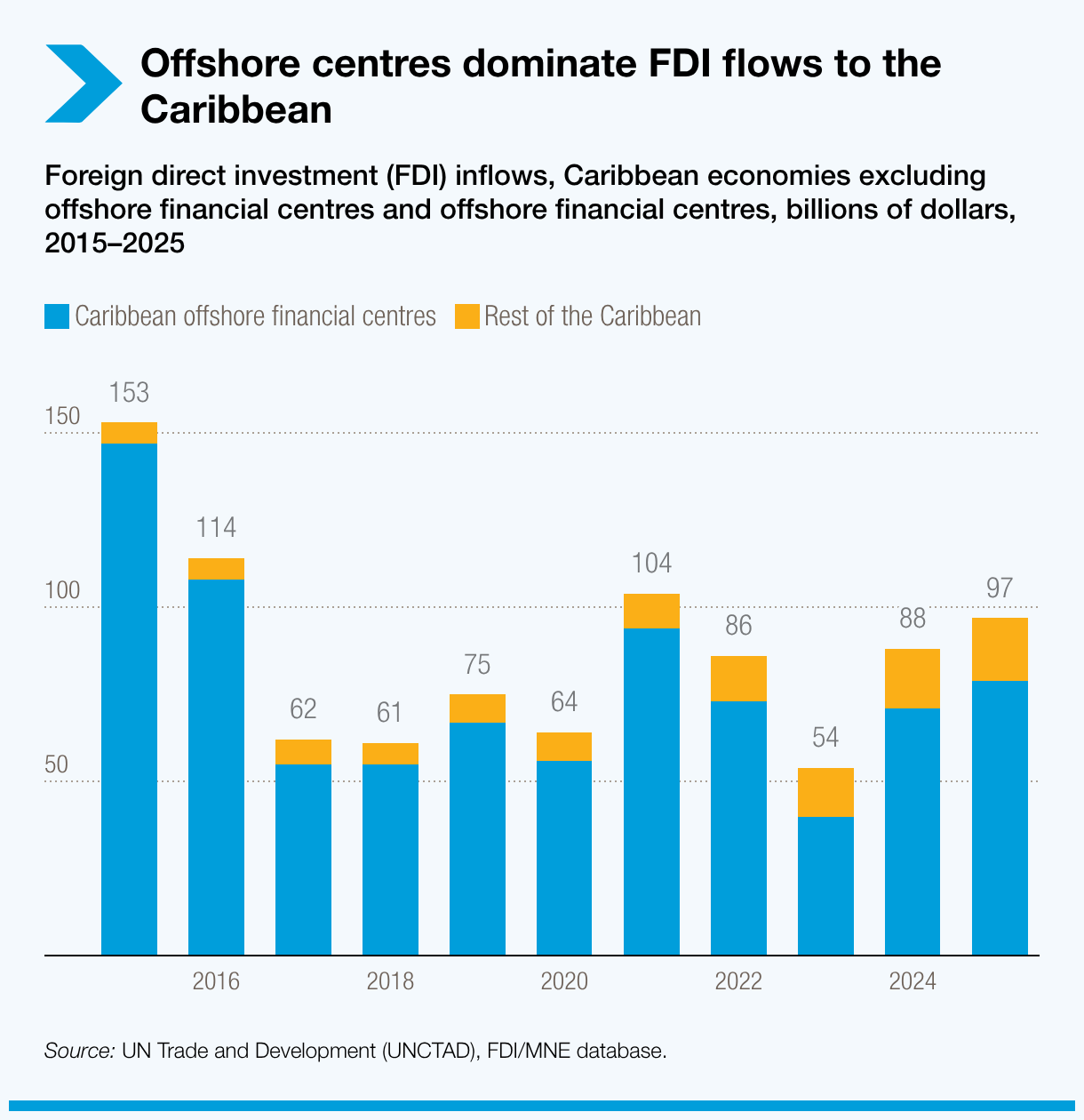
Caribbean economies excluding offshore financial centres attracted only 1.1% of global foreign direct investment (FDI) in 2025, with inflows heavily concentrated in a few destinations. Guyana led with $9 billion, followed by the Dominican Republic ($5 billion) and Suriname ($2 billion), which together accounted for nearly 90% of regional inflows.
The British Virgin Islands and the Cayman Islands continued to dominate investment flows to Caribbean offshore financial centres, attracting more than 80% of regional inflows. However, the FDI recorded may be routed through holding companies or special purpose entities to other destinations, so it doesn’t necessarily represent investment in the local economy.
In resource-rich economies, lasting benefits will depend on stronger local suppliers, infrastructure and skills.
Large projects drive an uneven recovery
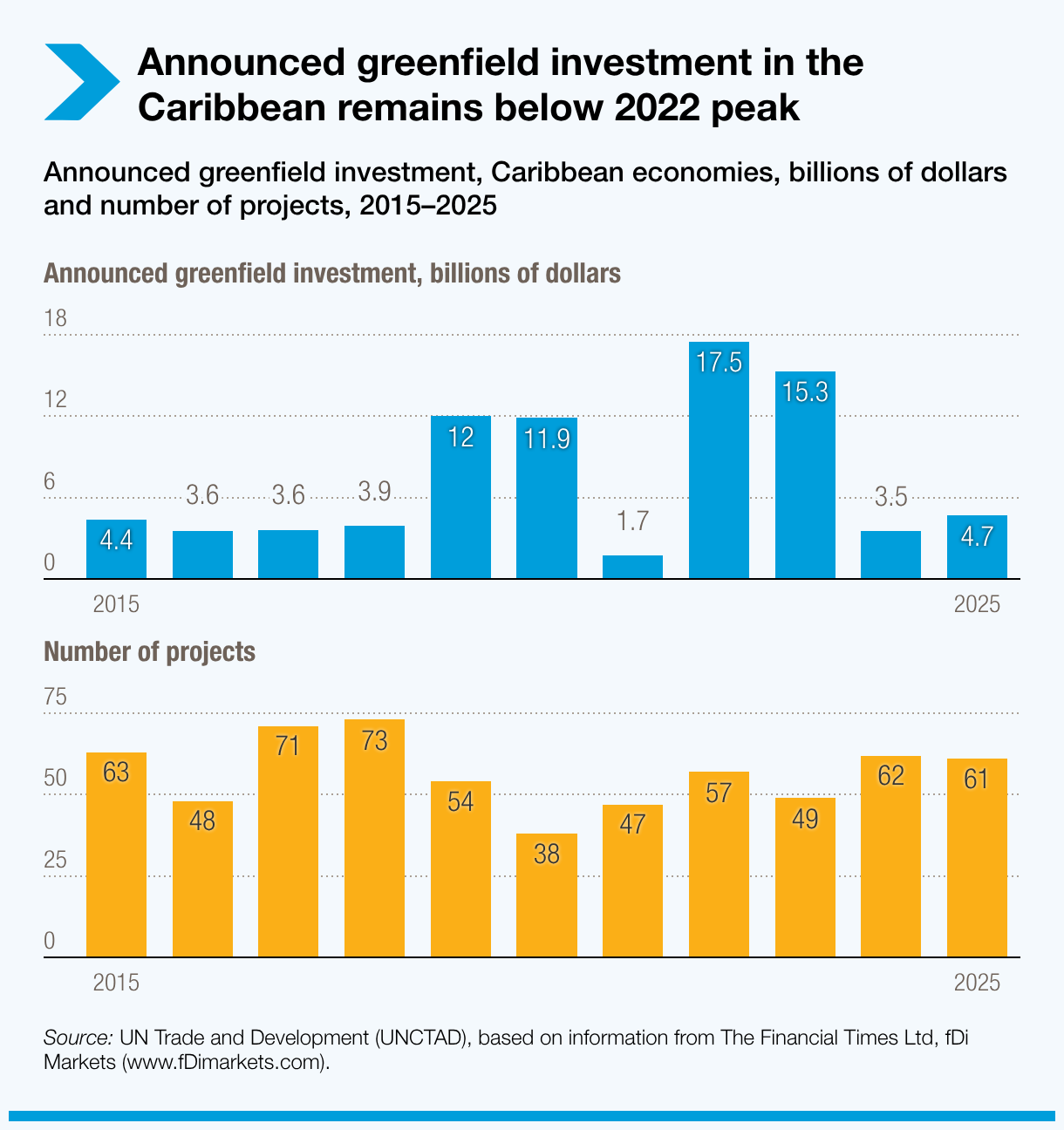
Announced investment in new operations and facilities, called greenfield investment, rose 33% to $4.7 billion in 2025, below $17.5 billion in 2022. The Dominican Republic, Guyana and Trinidad and Tobago accounted for 93% of announced value. Less than 1% of announced greenfield investment originated within the Caribbean in 2025. Stronger regional cooperation could help overcome fragmented markets.
Investors from other developing economies accounted for 19.3% of announced investment value in 2025, compared with 11.6% over 2015–2025. The increase was driven mainly by investors from the United Arab Emirates, including logistics company DP World, which announced a $760 million project in the Dominican Republic.
Tourism accounts for about a third of regional economic output, yet greenfield tourism announcements fell to $232 million in 2025, from over $2 billion a year during 2018–2020.
Climate adaptation struggles to attract finance
International adaptation project finance totalled $2.7 billion during 2000–2025, compared with $16.4 billion for renewable energy.
Adaptation projects often lack predictable revenues, making private funding harder to attract.
Direct loans were the most common financing instrument by number of deals, while guarantees and other risk-sharing instruments were used far less frequently. Greater use of risk-sharing instruments could help mobilize additional private investment, particularly for infrastructure and climate-resilient projects. The report calls for better project preparation and risk sharing, with development banks helping mobilize capital.
Policy activity rises as older treaties need reform
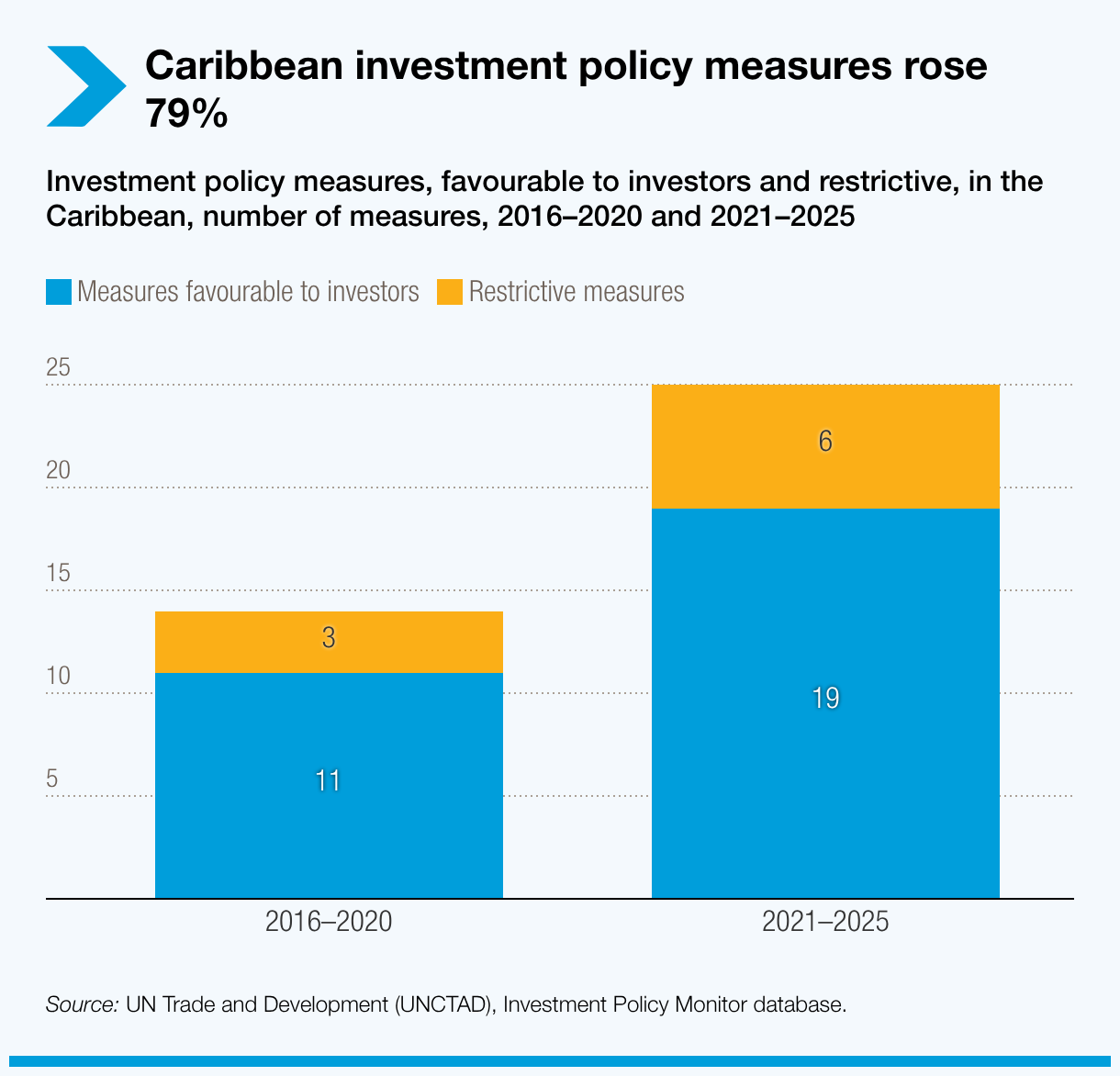
Caribbean economies stepped up efforts to attract and retain investment between 2021 and 2025, adopting 25 policy measures (about 3% of the global total). This was a 79% increase over the preceding five years. Most measures were aimed at improving the investment climate through incentives, investment facilitation and promotion.
Over 90% of investment agreements in force predate 2010. All 23 known treaty-based arbitrations against Caribbean countries arose under older agreements. The report recommends effective investor services and treaty reforms protecting governments’ ability to regulate.
Make investment deliver lasting benefits
The Caribbean’s challenge is to attract investment that creates lasting benefits for its people and economies. Investment’s quality and development impact matter as much as its scale.
The report highlights the importance of stronger links with local businesses, effective investor services and regional cooperation in turning capital inflows into more diverse, productive and climate-resilient economies.