

Key points
- Developing countries’ external debt reached $12.3 trillion in 2025 but growth in borrowing remained weak compared to development financing needs.
- Debt service pressures are still high. Total debt service fell to $1.6 trillion in 2025, but interest costs on long-term external debt rose by almost 14%.
- Debt service burdens are becoming more unequal. Least developed countries spent 18.2% of export earnings on external debt service in 2025.
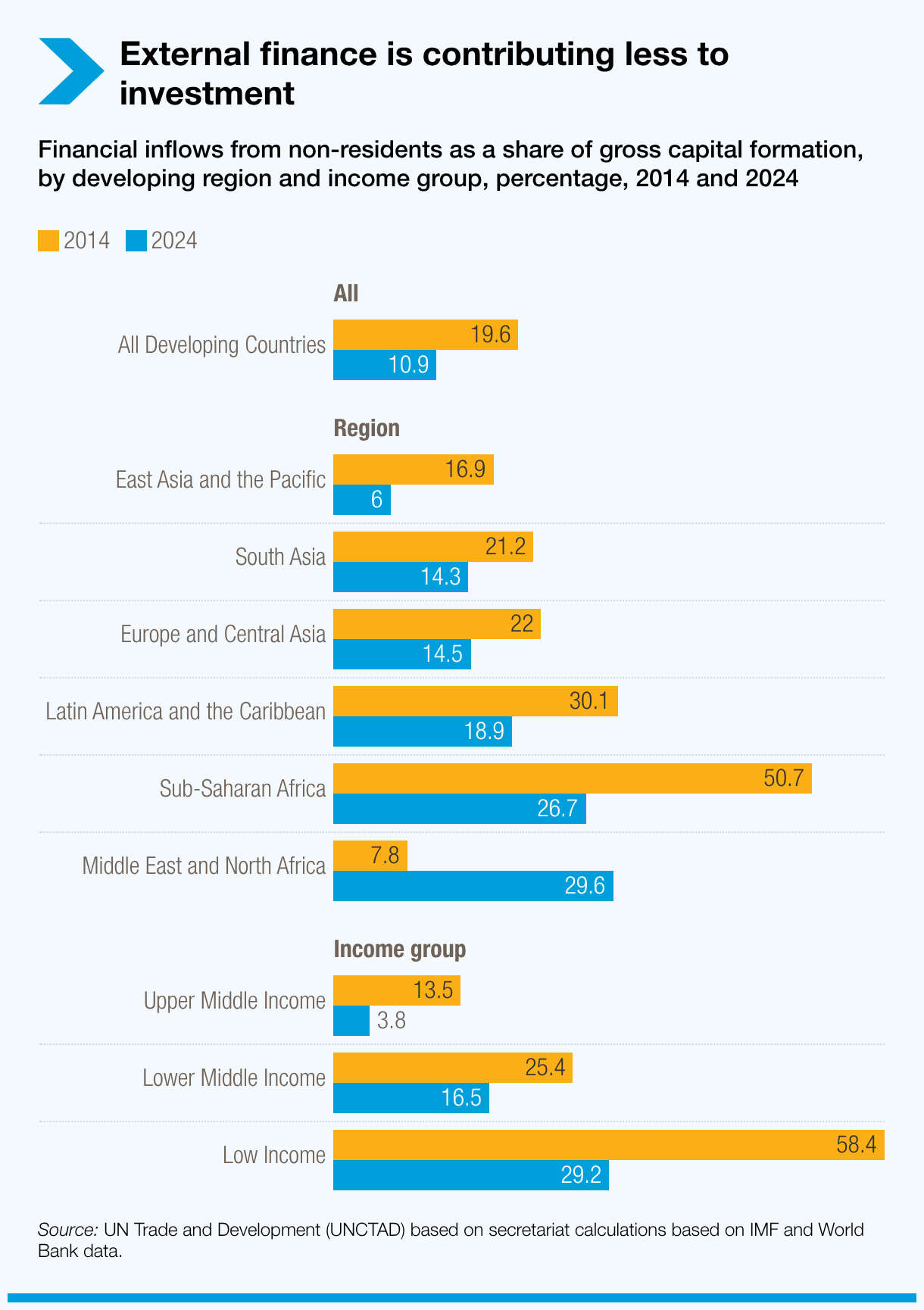
- External finance is contributing less to investment. Financial inflows from non-residents fell from funding 20% of gross capital formation in 2014 to 11% in 2024.
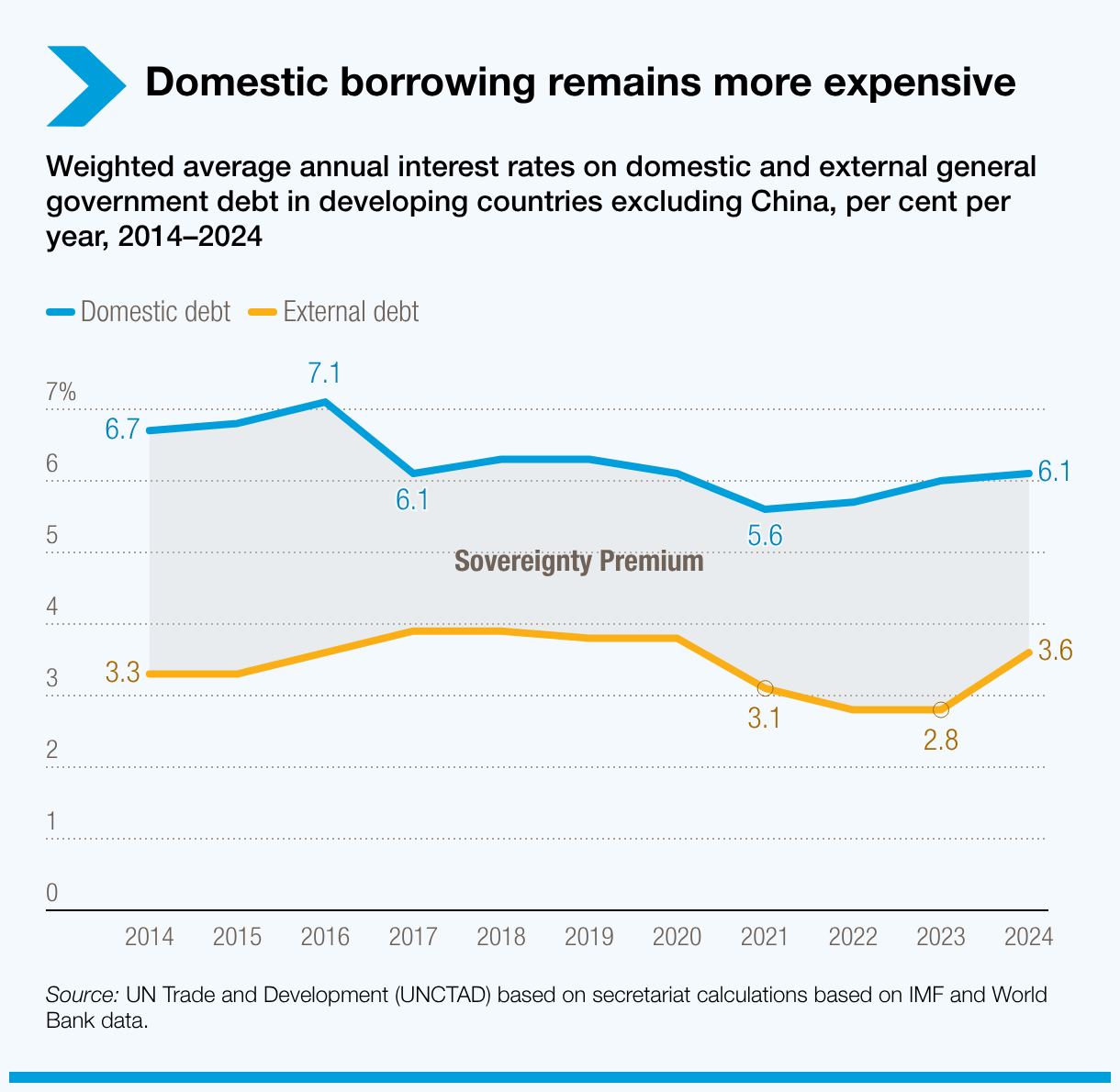
- Domestic borrowing is gaining importance but comes at a higher cost – an average of 2.8 percentage points over the past decade. Domestic debt accounted for 81% of total general government debt in 2024.
Despite some improvement in borrowing conditions in 2025, most developing countries continue to face rising interest costs, weaker access to external finance and growing pressure on public resources. These challenges are particularly severe for the poorest economies.
The conflict in the Middle East has further raised borrowing costs, undermining many countries’ capacity to service their debt – to pay the interest and repay the amount borrowed.
The report finds that external financing is still costly, volatile and insufficient to support development needs.
Debt continues to grow but development financing is still constrained
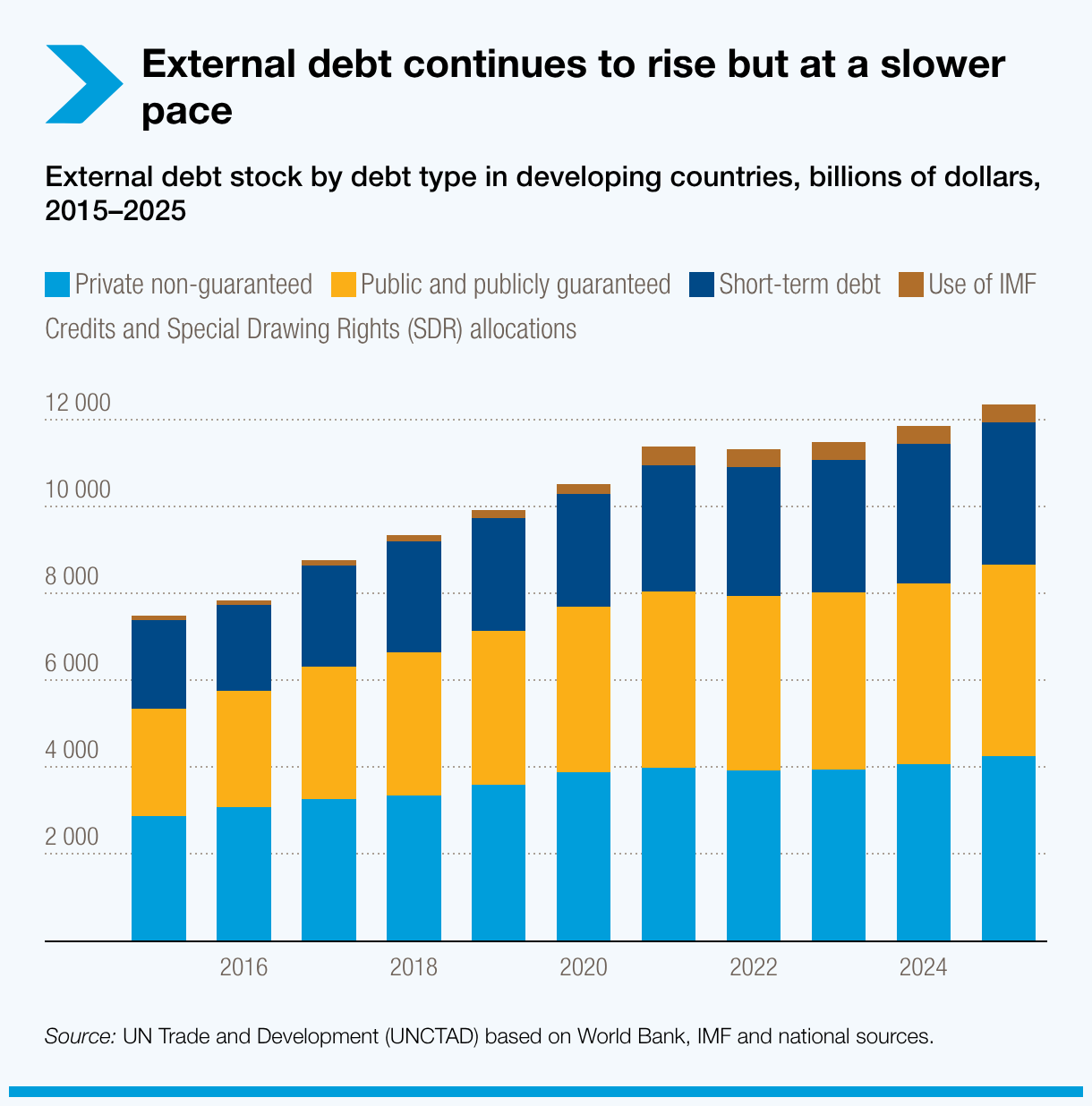
Developing countries’ external debt stock reached $12.3 trillion in 2025, up $508 billion from the previous year. At the same time, the average rate of external debt accumulation slowed from 7.2% between 2015 and 2021 to 2.1% between 2021 and 2025.
The report also highlights the limited use of special drawing rights (SDRs), which can be rechannelled through International Monetary Fund (IMF) trusts or prescribed multilateral development banks. Although $114.7 billion in rechannelled SDRs had been pledged, only $8 billion, or 7%, had been disbursed by the end of March 2026.
Falling debt service does not mean lower pressure
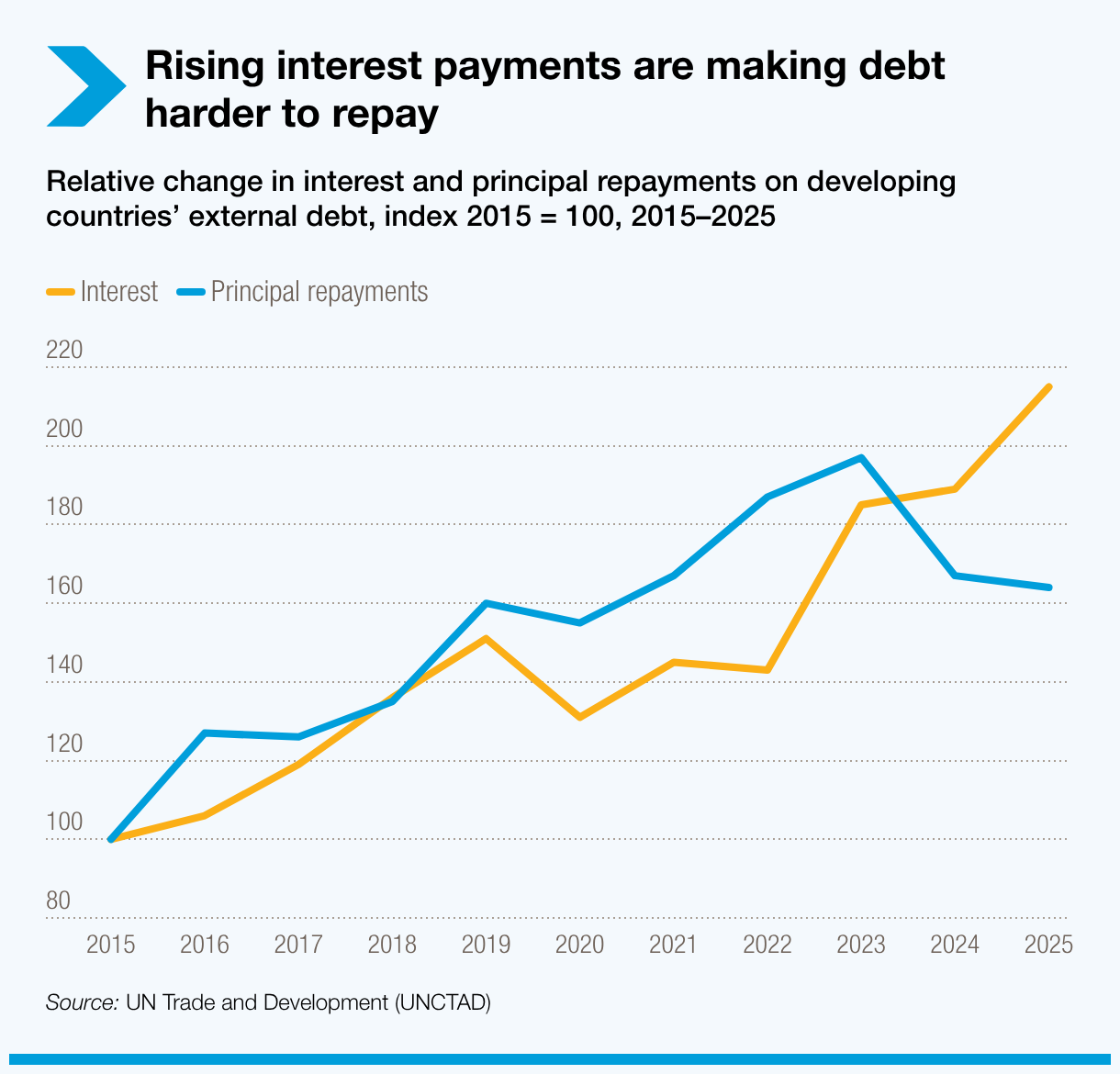
Total external debt service, which includes both principal repayments and interest, fell to $1.6 trillion in 2025, about $200 billion lower than in 2023. However, the report finds that this decline was driven mainly by lower principal repayments in a few large developing economies. It doesn’t reflect the experience of most countries.
Total interest costs on long-term external debt increased by almost 14% in 2025. Over the longer term, debt service grew by 81% between 2015 and 2025, while debt stocks increased by 65%.
The report argues that debt financing needs to become less costly and less volatile if it’s going to support development effectively.
The poorest countries face the greatest debt pressures
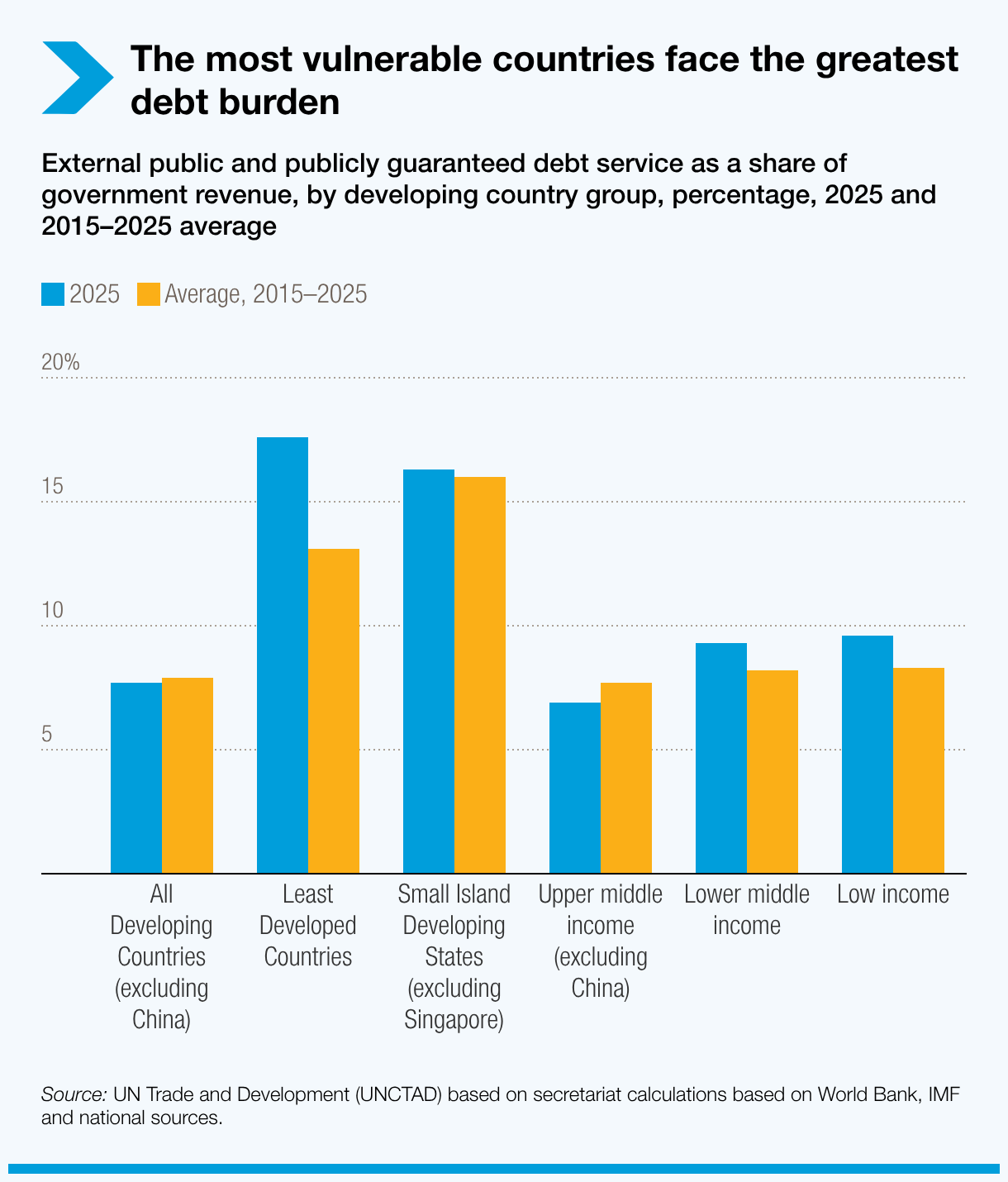
Debt sustainability outcomes vary widely across regions and income groups. Debt service absorbs a particularly large share of government revenue in least developed countries and small island developing states, leaving less to spend on development.
Least developed countries faced the greatest debt pressure, spending 18.2% of export earnings on external debt service in 2025. They also paid an average of 17.6% of total government revenue to service their external public and publicly guaranteed debt.
The report points to the importance of expanding concessional finance (funding offered on more favourable terms than commercial loans), improving debt restructuring processes and reversing the decline in official development assistance.
Domestic finance is playing a larger role
External finance is making a smaller contribution to investment in developing countries. Financial inflows from non-residents accounted for 20% of gross capital formation in 2014, but only 11% in 2024. This decline was widespread across developing regions, with the notable exception of the Middle East and North Africa.
Over the same period, domestic financing increased by 60%, while new external inflows declined by 18%. Consistent with these trends, domestic debt instruments represented 81% of total general government debt in 2024.
Domestic borrowing can reduce exposure to external shocks and increase policy autonomy. However, it’s generally more expensive. Between 2014 and 2024, domestic borrowing cost an average 2.8 percentage points more than external borrowing.
Greater reliance on domestic borrowing can also create new vulnerabilities. When domestic financial institutions concentrate heavily on government securities, credit available to the private sector may be reduced and risks can be transferred between governments, banks and other financial institutions.
Debt finance must better support development
Debt is still essential for financing development. However, current financing conditions aren’t providing the scale, affordability or stability needed to support development goals. The report calls for stronger debt management, broader access to concessional finance and measures to reduce financing costs and volatility.
It also highlights several recent initiatives, including the Borrowers’ Platform, the Global Hub on Debt-for-Development Swaps, the Seville Forum on Debt and proposals advanced through the London Coalition on Sustainable Sovereign Debt. These efforts aim to strengthen international cooperation and address debt challenges facing developing countries.