

Financing development is becoming more difficult. External financial flows remain too costly, too volatile and too limited to support the investment developing countries need to achieve the Sustainable Development Goals, or SDGs.
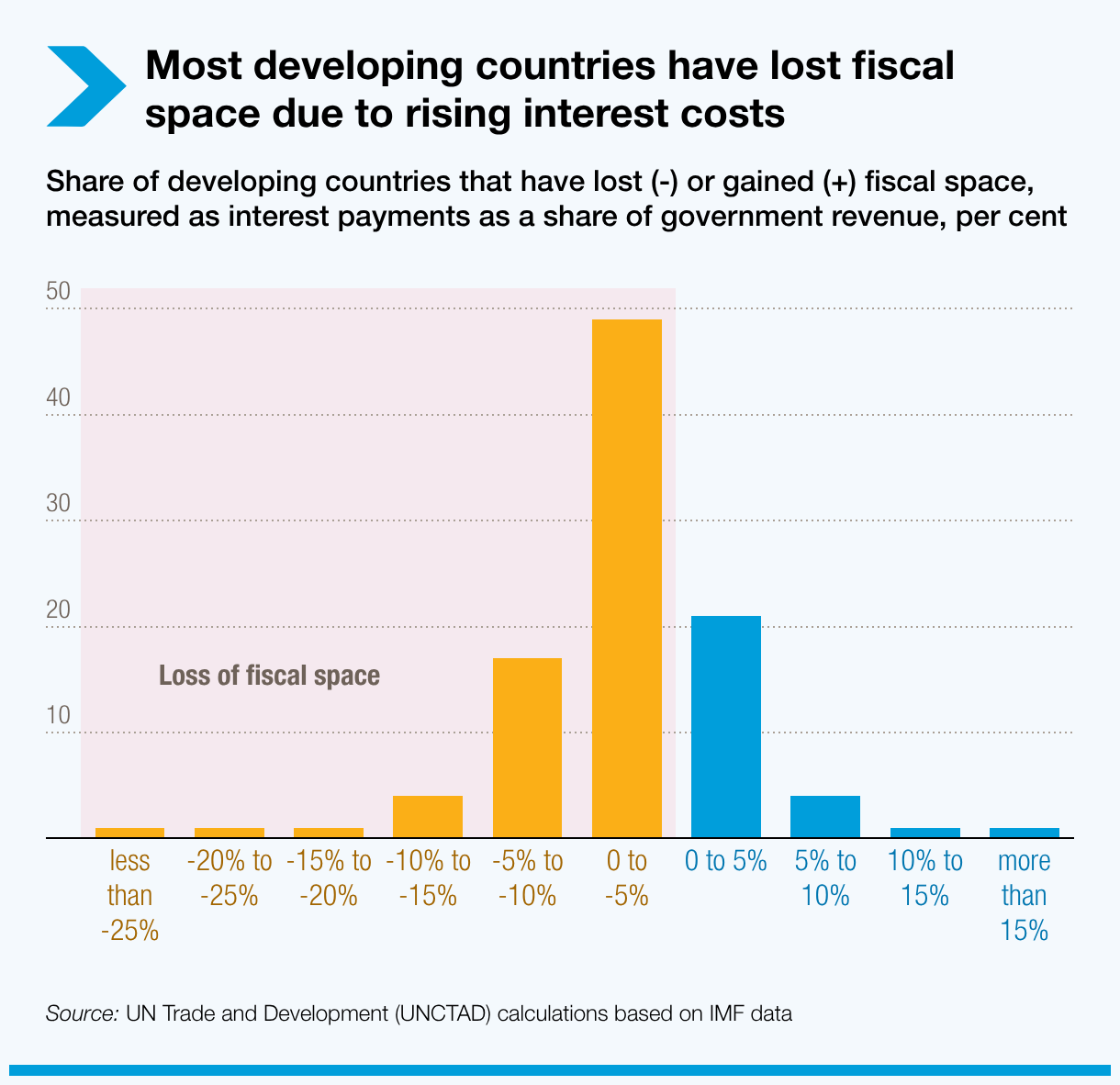
Between 2018 and 2024, 99 developing countries – home to 5.5 billion people – saw rising interest payments reduce the share of government revenue available for development spending.
The report shows how rising external borrowing costs, shorter repayment periods and persistent risk premiums are putting growing pressure on public finances.
Developing countries face a widening financing gap
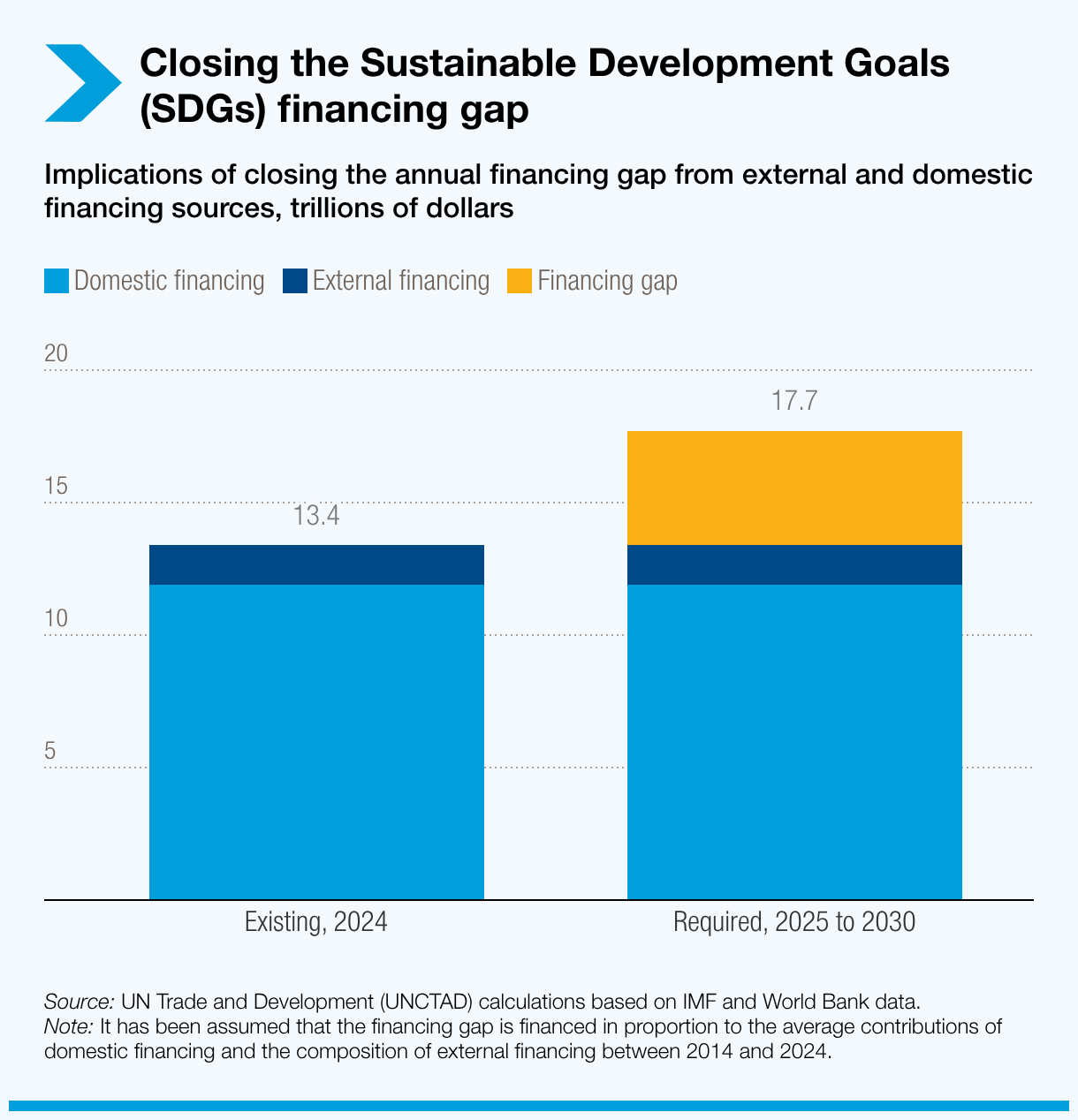
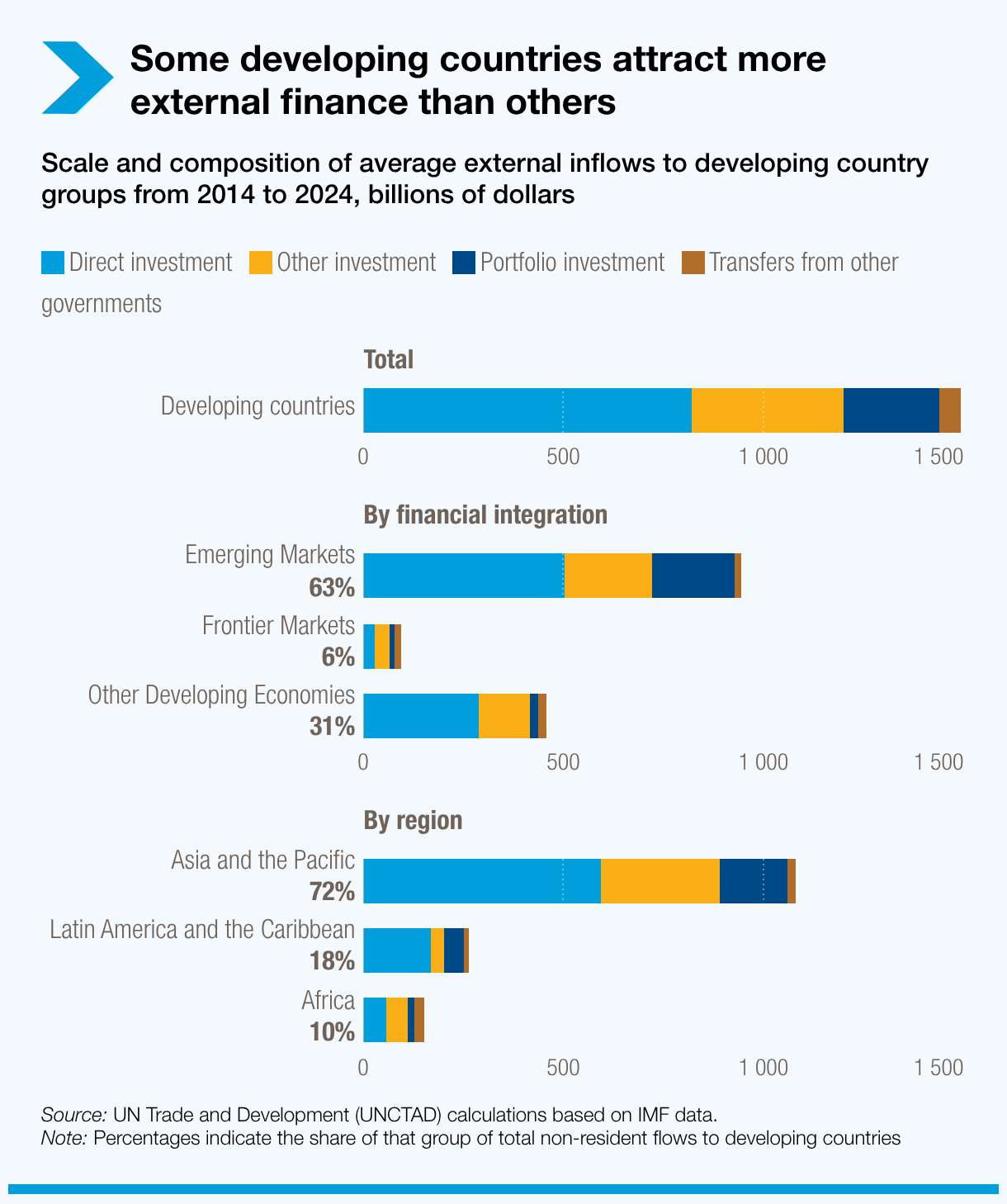
Developing countries received almost $1.5 trillion in new external financial inflows in 2024. About half came through equity-based investment flows and half through borrowing. While domestic financing is larger, at around $11.9 trillion, external financing has an outsized influence on the terms and conditions of domestic finance.
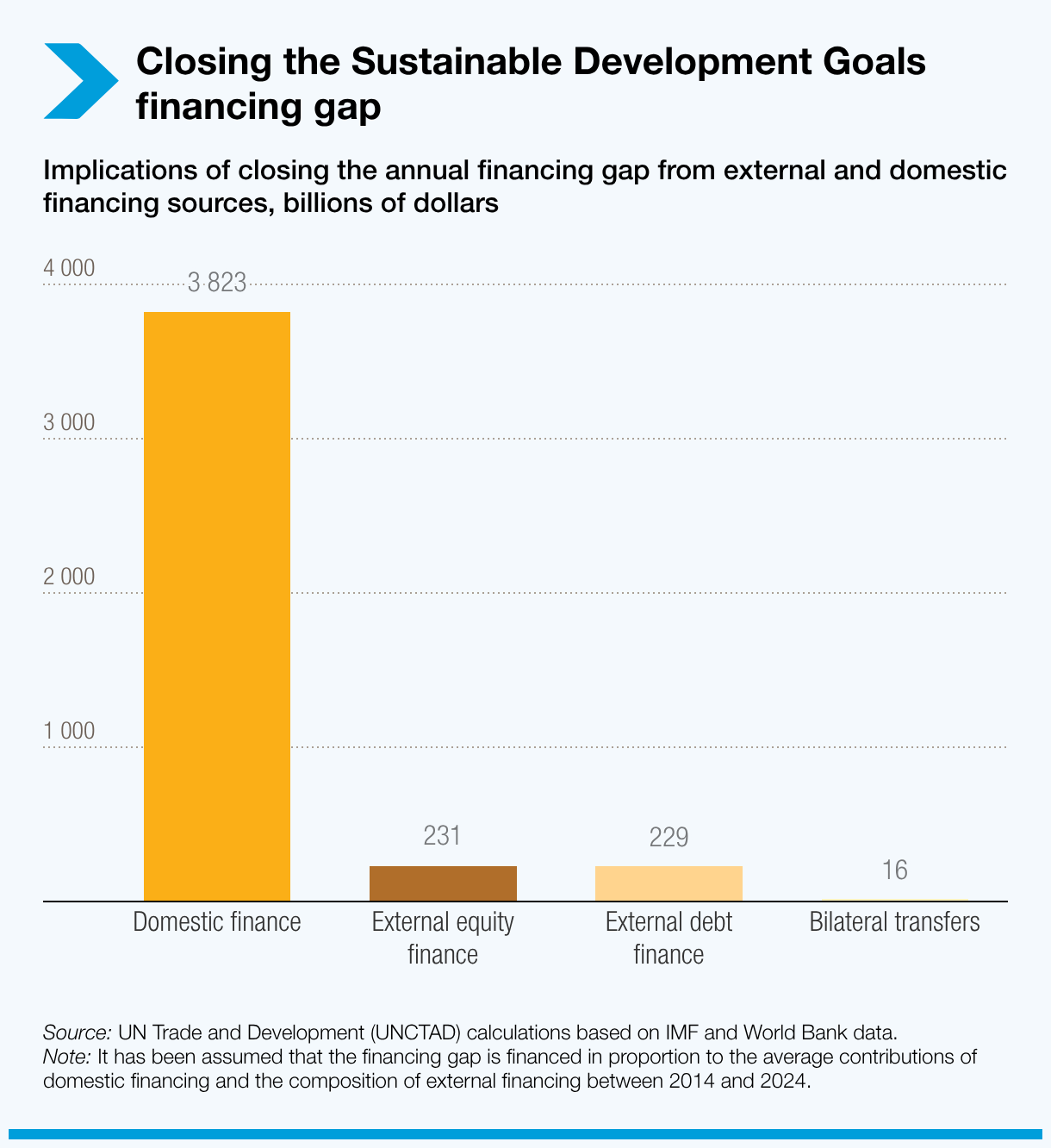
Together, financing still remains far below what is needed to achieve the SDGs, with an annual financing gap estimated at around $4.3 trillion. Closing that gap would require both domestic and external financing to increase by about one third from 2024 levels. That will require around $230 billion each of additional debt and equity financing each year.
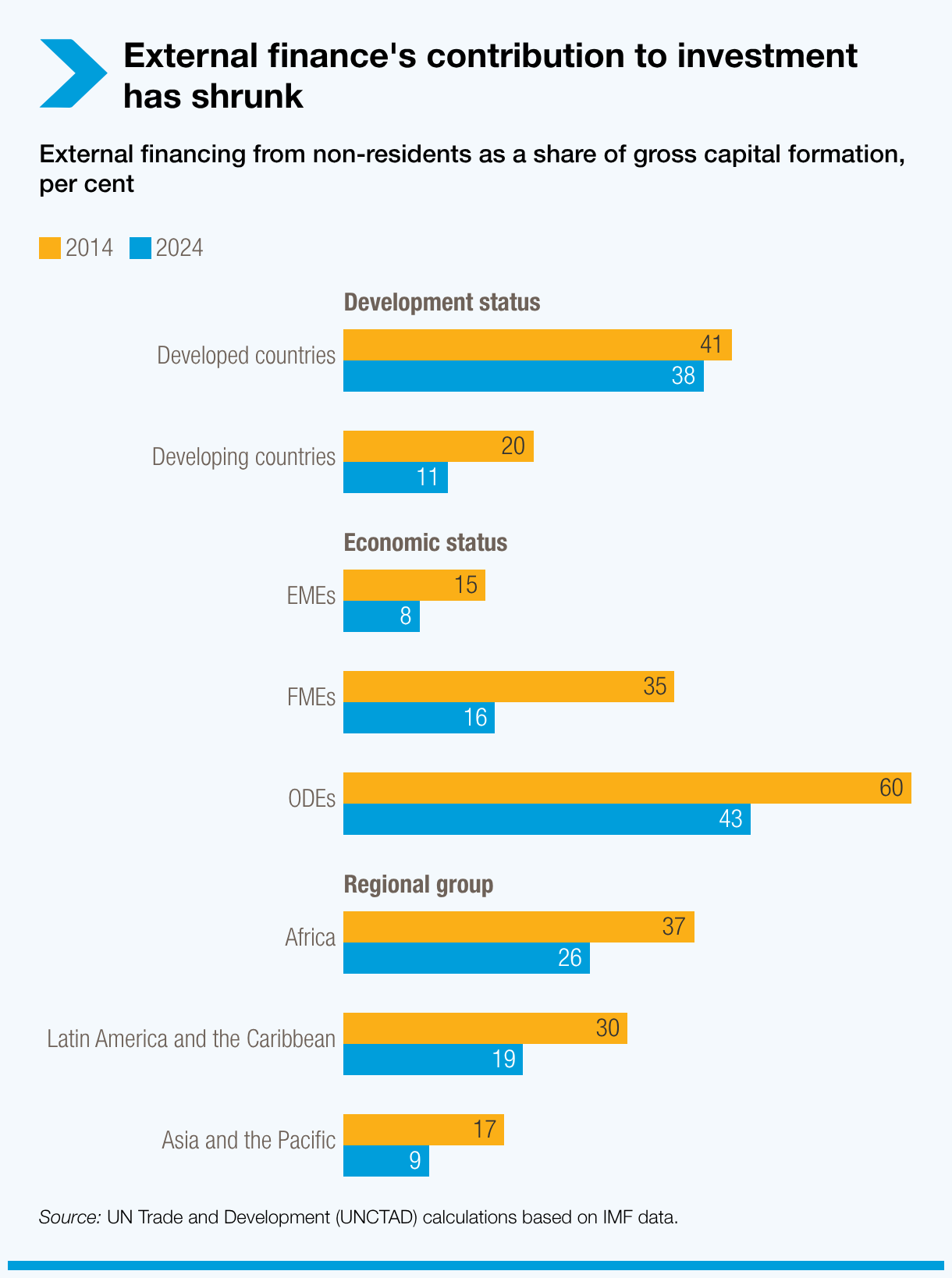
Despite the need for scaled-up investment, external finance is playing a smaller role in supporting investment across developing countries. Key findings include:
- Developing countries received far less external finance than developed countries in 2024. External sources accounted for 11% of investment financing in developing economies, compared with 38% in developed economies.
- External financial inflows to developing countries fell 18% between 2014 and 2024, while domestic financing rose 60%.
- Africa received only 10% of total external inflows to developing countries, despite accounting for 22% of the developing world’s population. Asia and the Pacific attracted more than 70%.
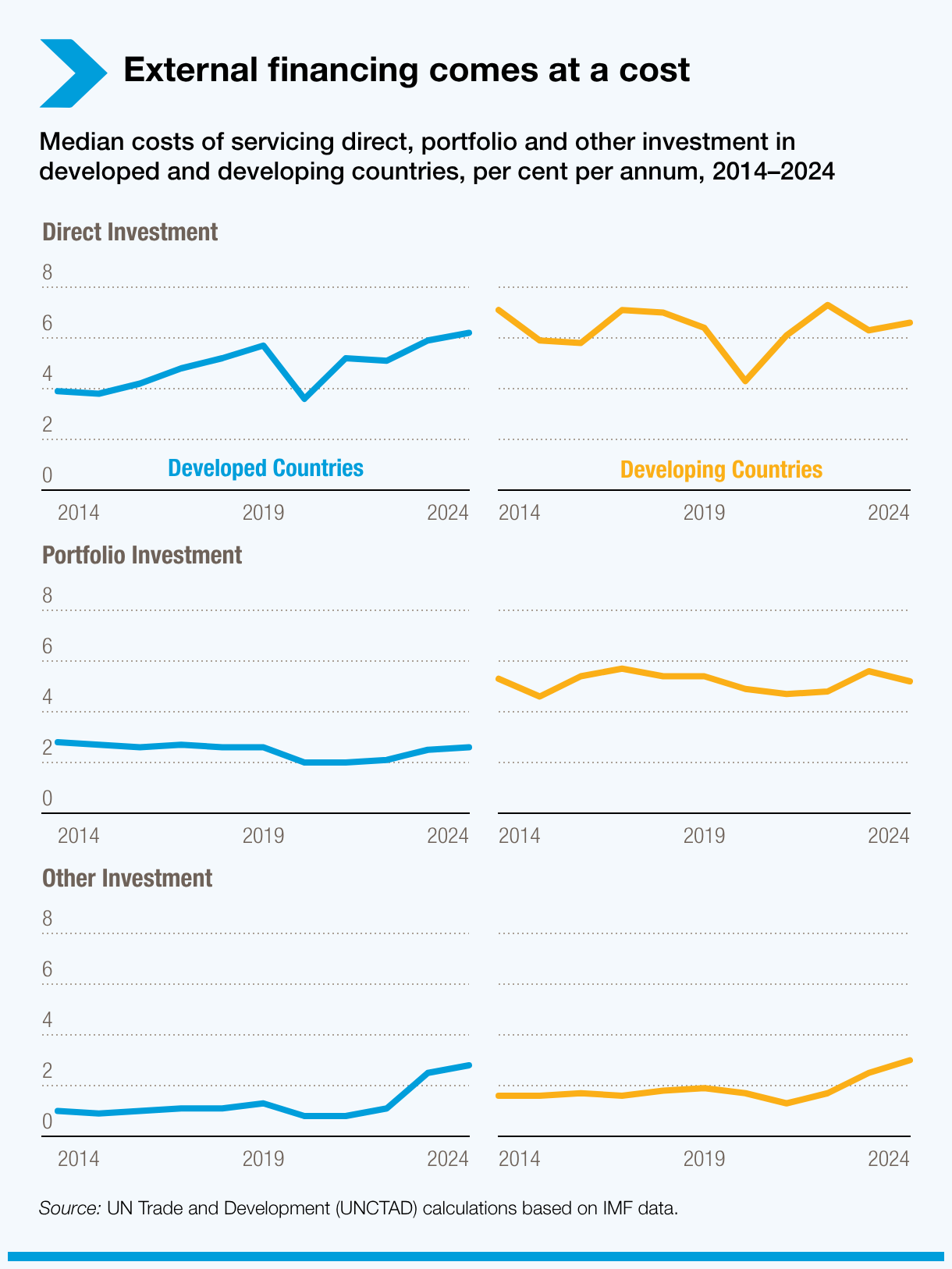
In addition to being limited in scale, external financing is usually more expensive for developing countries than for developed economies.
Debt costs are rising faster than repayment capacity
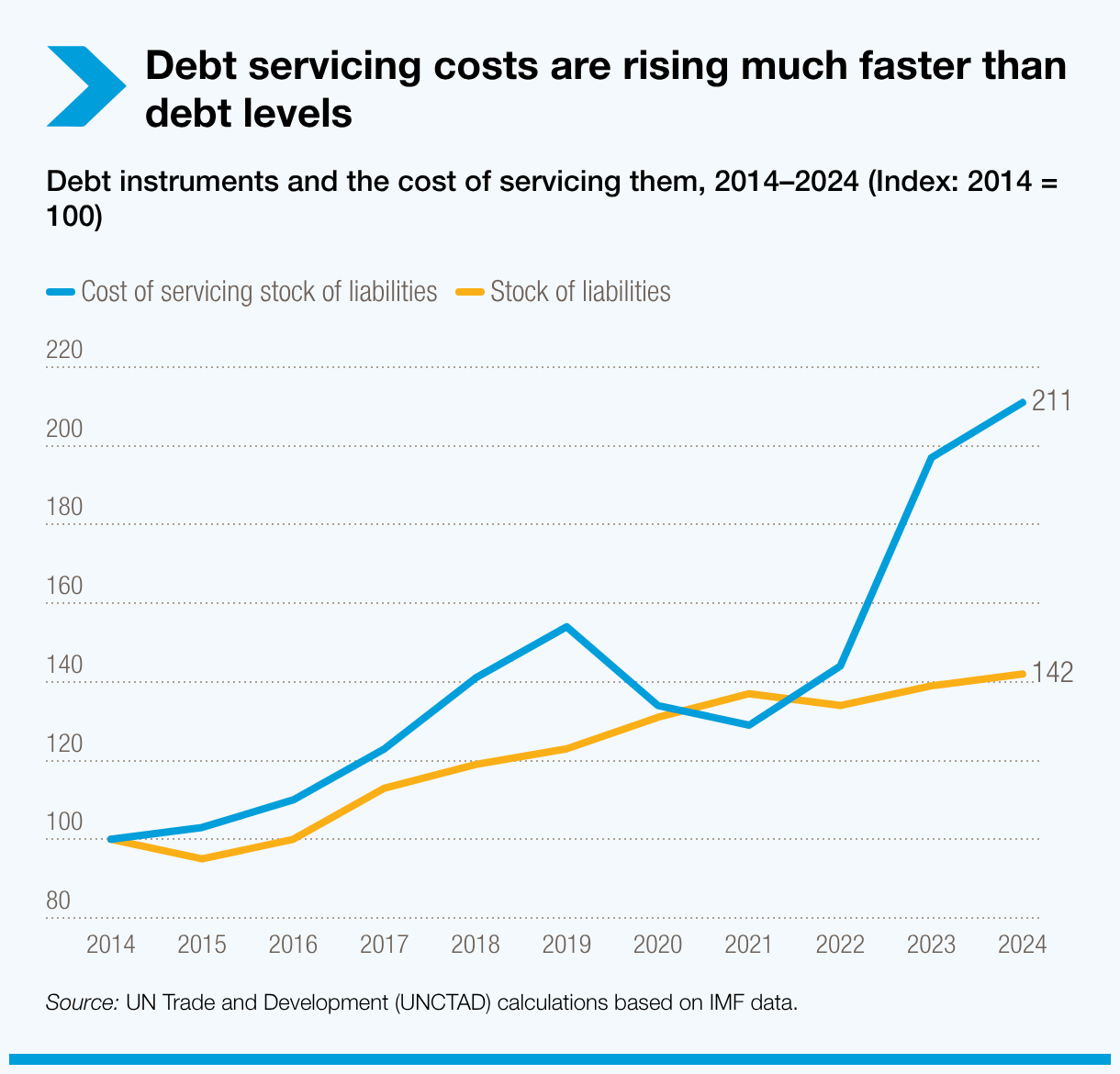
Rising debt servicing costs have become the principal driver of the high cost of capital and put significant pressure on public finances. In 2024, developing countries paid $384 billion in interest payments on external debt instruments.
Between 2014 and 2024, the cost of servicing external debt grew much faster than the stock of debt itself. Since many developing country governments depend on external financing to finance their expenditure, this has put growing pressure on public finances.
The pressure on governments is severe:
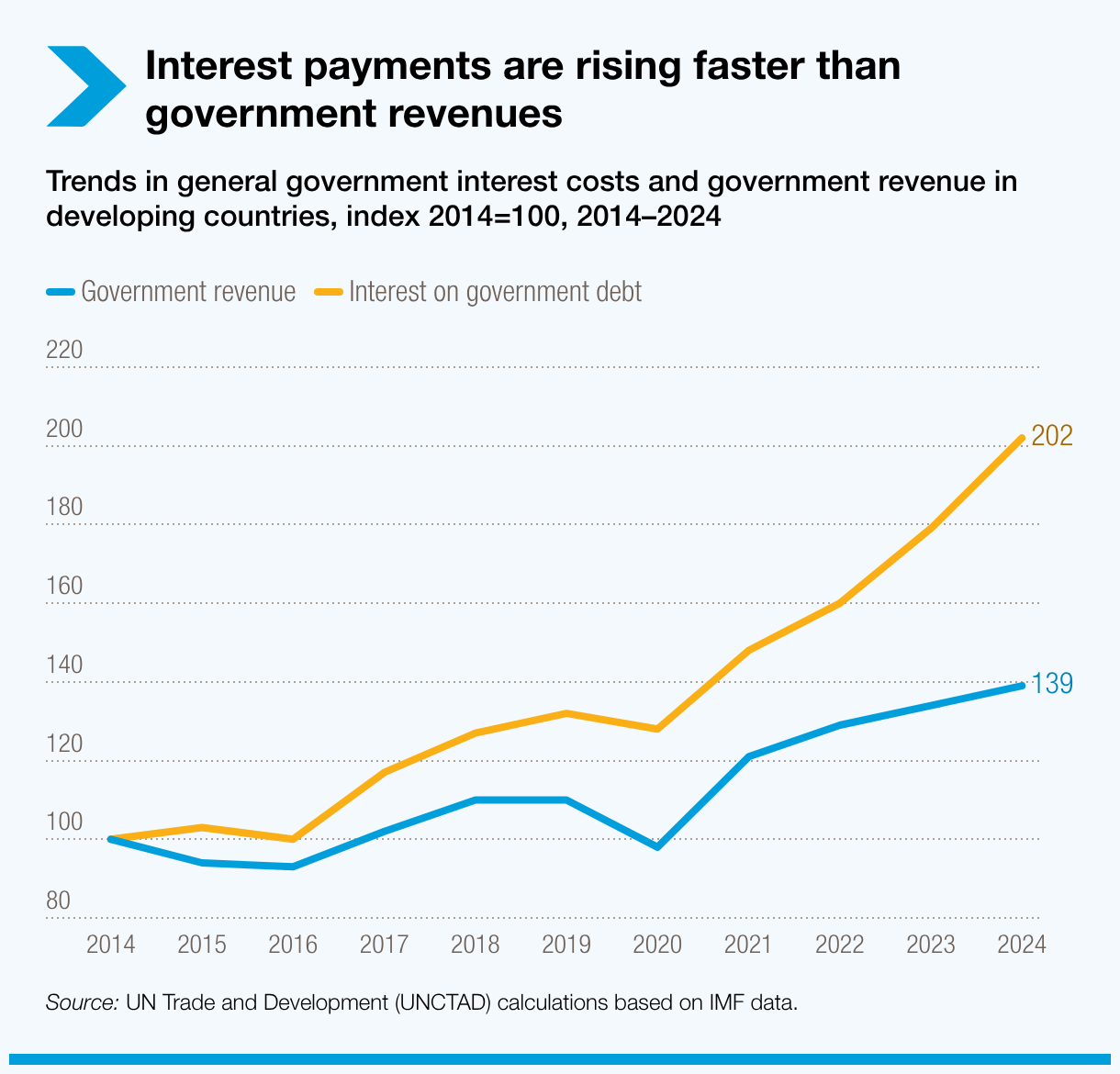
- Government interest payments in developing countries rose 102% between 2014 and 2024, while government revenues increased only 39%.
- 73% of developing countries lost fiscal space – room in public budgets for schools, healthcare, infrastructure and other public investment – between 2018 and 2024 as rising interest costs crowded out spending.
If 94 developing country governments could borrow at the same rates as those in developed economies, they could collectively save around $500 billion a year in interest payments. These savings could finance:
- Around 375,000 schools
- More than 1.3 million primary health clinics
- More than 920 gigawatts of installed solar power capacity each year
Sovereign borrowing conditions remain difficult despite recent improvements
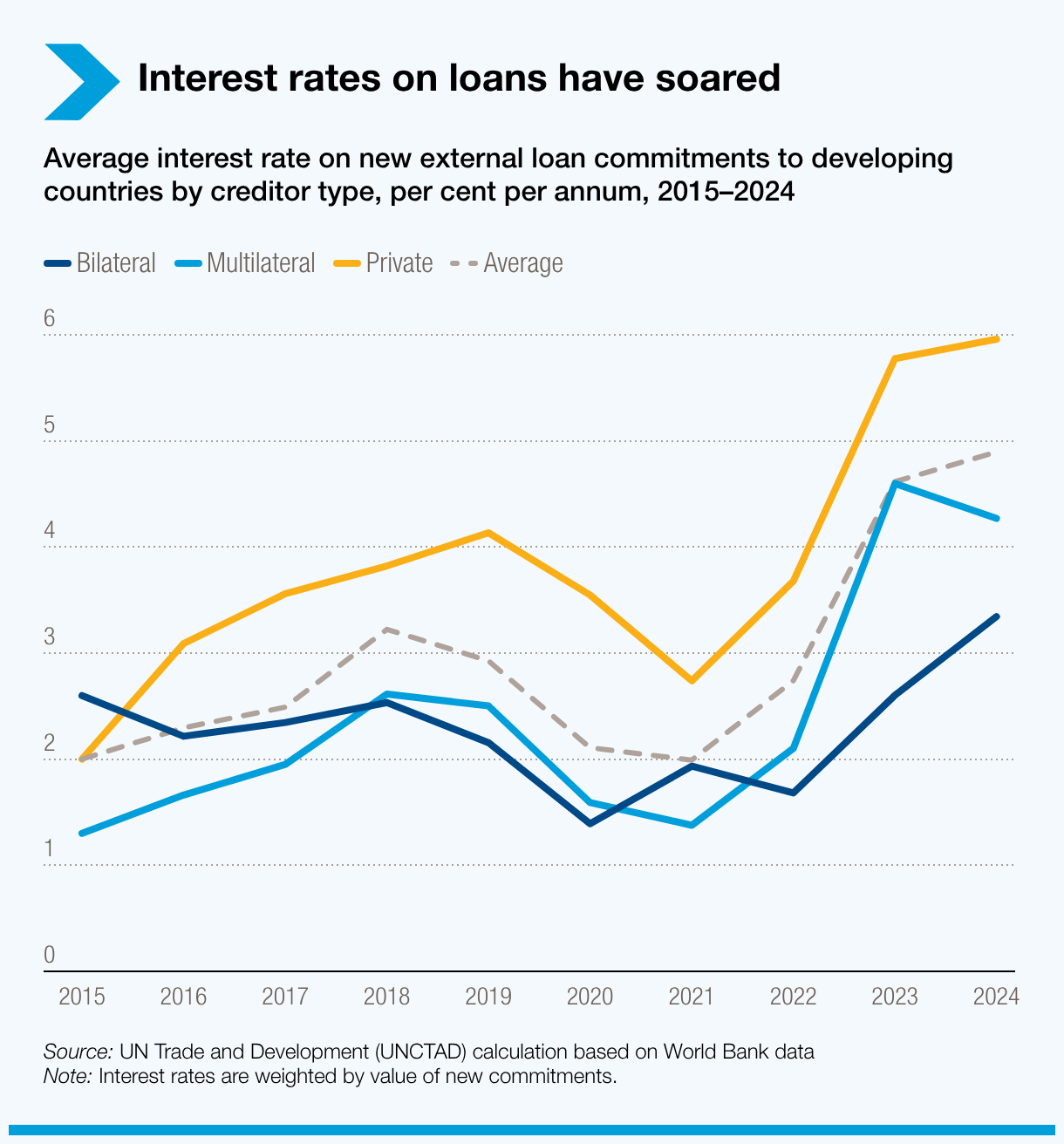
External sovereign borrowing conditions worsened sharply after the COVID-19 pandemic and global monetary tightening. Sovereign bond yields surged, issuance volumes fell and loan interest rates climbed to record highs.
Conditions improved somewhat in 2025. Even so, borrowing costs for developing countries remained above those faced by developed economies.
The report highlights several major trends in foreign currency sovereign bond markets:
- Average sovereign bond yields in developing countries rose from around 5% before the pandemic to 6.8% between 2022 and 2024, before decreasing to 5.7% in 2025.
- But average spreads for developing countries remained around 1.9 percentage points above developed country benchmark rates in 2025.
- Average bond maturities fell from around 17 years before 2021 to just 9.5 years in 2025, increasing refinancing risks.
Loans remain central to sovereign debt financing, but borrowing conditions are difficult as interest rates on external loans reached a record 4.9% in 2024. Even multilateral lending, traditionally a source of stable, low-cost finance, has seen costs rise sharply in recent years.
The report calls for national and international action
The report argues that reducing external borrowing costs and improving access to finance will require action at both the national and international levels.
National measures should include:
- Strengthening macroeconomic frameworks and institutional quality, including sound fiscal management, and economic diversification.
- Improving public capacity to manage debt effectively.
- Optimising the structure of debt portfolios by expanding domestic and local currency financing and diversifying the investor base.
- Improving transparency around debt and strengthening communication with investors.
- Using innovative financing tools such as green bonds and debt-for-development swaps.
At the international level, the report calls for:
- Increasing affordable financing from multilateral development banks.
- Expanding technical assistance for developing countries.
- Strengthening global financial safety nets.
- Improving mechanisms to restructure unsustainable debt.
- Reversing declines in official development assistance.
The report also highlights the role of the Borrowers’ Platform in supporting peer learning, borrower coordination and stronger debt management practices.
A growing challenge for sustainable development
External finance remains insufficient, expensive and volatile. High borrowing costs on sovereign debt are rapidly eroding fiscal space and constraining sustainable development.
Despite these pressures, the report argues that national reforms, stronger multilateral support, technical assistance, South-South cooperation and reforms to the global financial architecture can together help reduce financing costs, expand access to stable, long-term finance and strengthen resilience.