

Key points
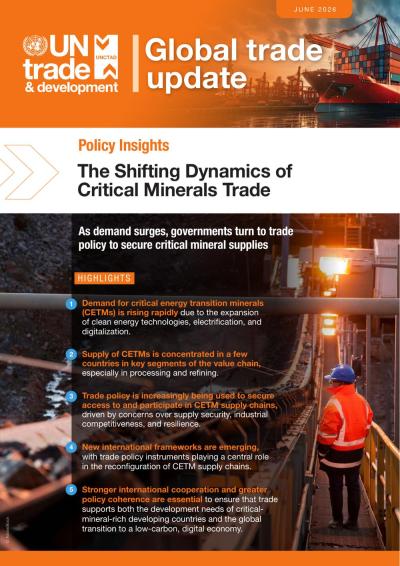
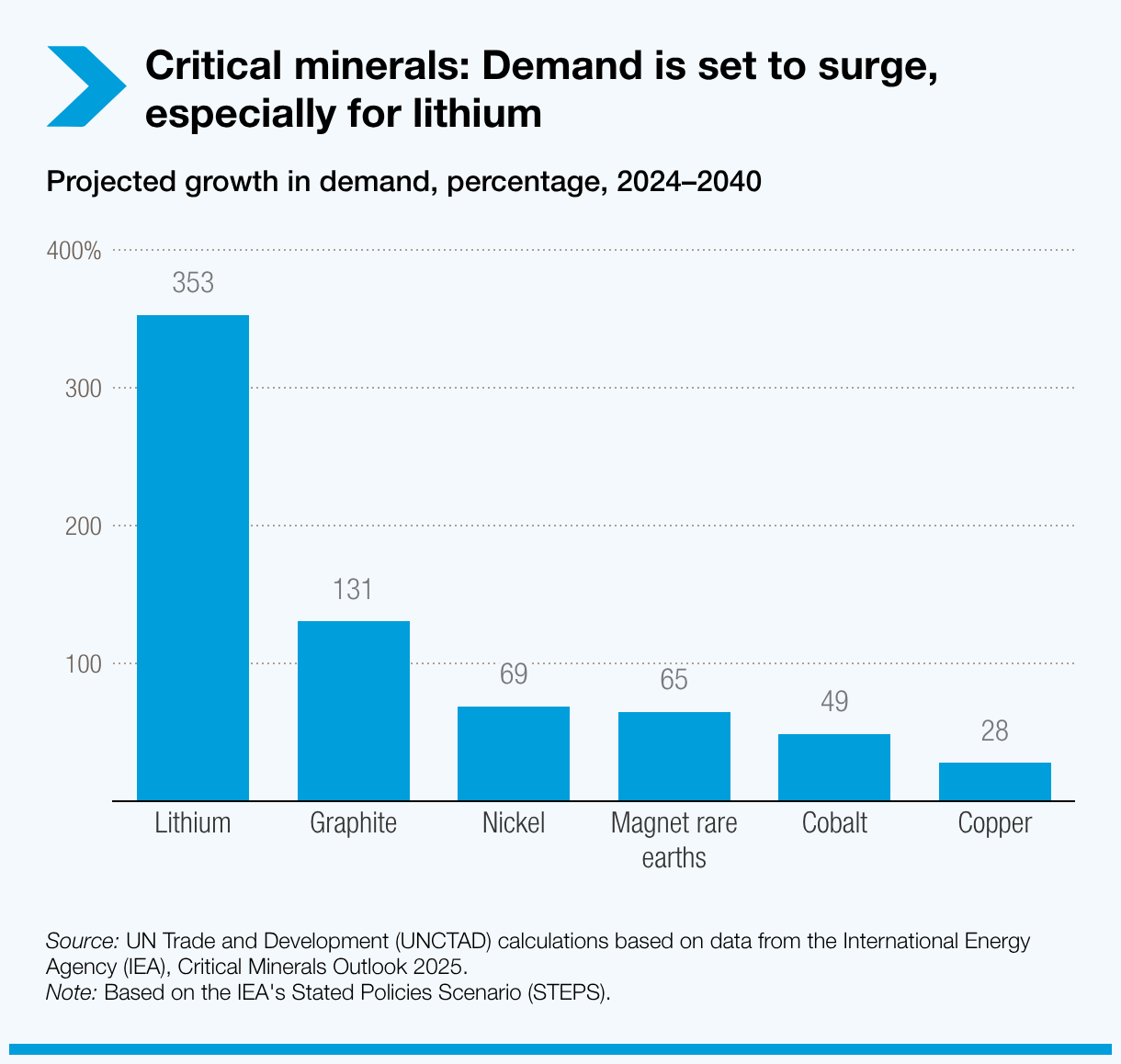
- Demand for critical minerals is set to surge. Lithium demand alone is projected to rise by 353% between 2024 and 2040.
- Supply is highly concentrated. A handful of countries dominate reserves, mining and refining.
- Governments are racing to secure supply chains. Nearly 100 new export measures have been introduced since 2020.
- Critical mineral partnerships are expanding fast. 58 agreements have been signed since 2022, reshaping supply chains.
- Cooperation will decide who benefits. Without stronger international coordination, critical minerals trade risks fragmenting into competing blocs.
The report shows how rising demand for critical energy transition minerals is reshaping global trade. These minerals, including lithium, cobalt, nickel, copper and rare earth elements, are essential for clean energy technologies, electrification and digitalization.
But demand is only part of the story. Supply is concentrated, much of the value is captured after extraction and governments are increasingly using trade policy to secure access, strengthen domestic capabilities and reduce risk.
Demand for critical minerals is rising rapidly
Demand for critical energy transition minerals is being driven by clean energy technologies, battery storage, electric mobility, digitalization, data centres, semiconductors and industrial electrification.
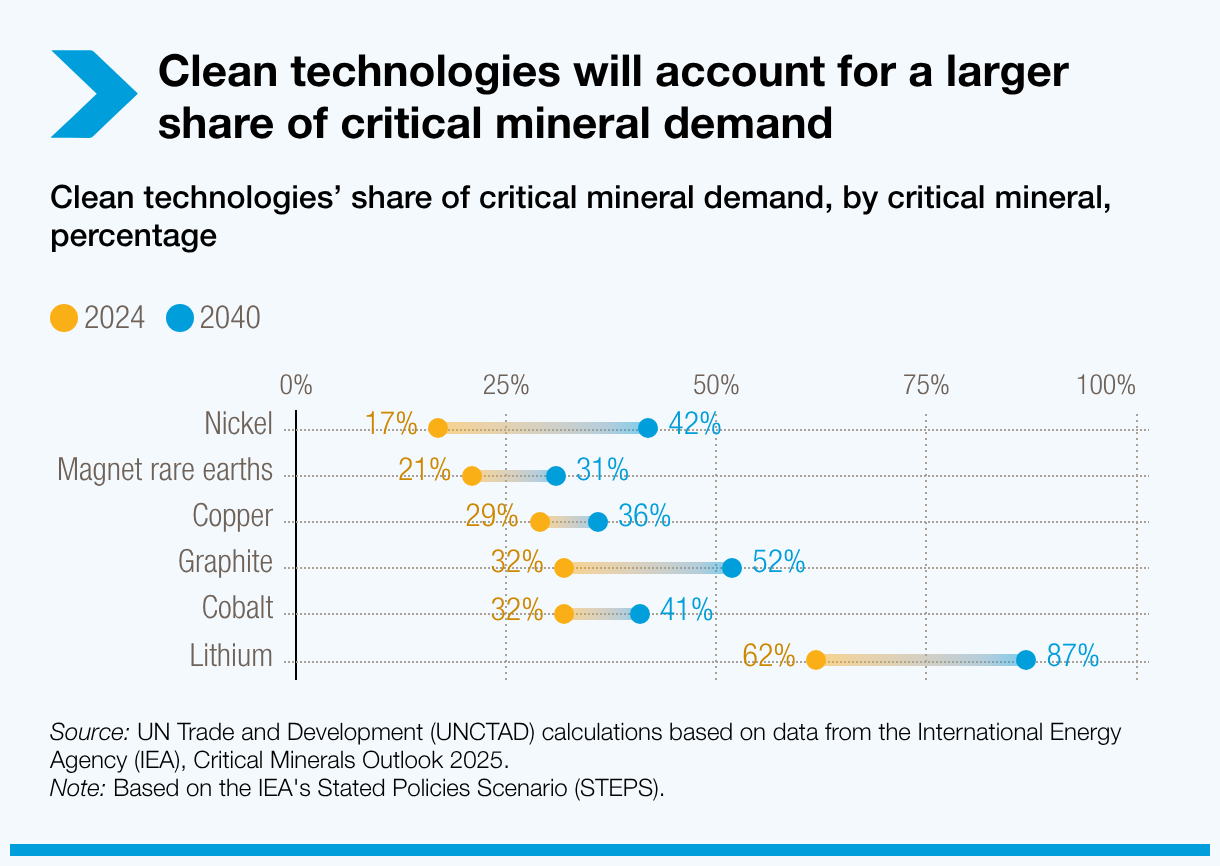
Lithium demand is projected to rise by 353% between 2024 and 2040, while graphite demand is projected to increase by 131%. Clean technologies are also expected to account for a larger share of demand. Their share of lithium demand is projected to rise from 62% in 2024 to 87% in 2040.
The report points to the need to diversify supply sources, improve market transparency and strengthen international cooperation. This can help support open, stable, secure, transparent, rules-based and sustainable trade.
Supply is concentrated in a few countries
Supply of critical energy transition minerals is concentrated across reserves, mining, processing and refining. This concentration is especially acute in processing and refining, where higher-value activities take place.
In 2025, the Democratic Republic of the Congo accounted for 74% of global cobalt mine production, Indonesia for 67% of global nickel mine production and China for 69% of rare earth mine production.
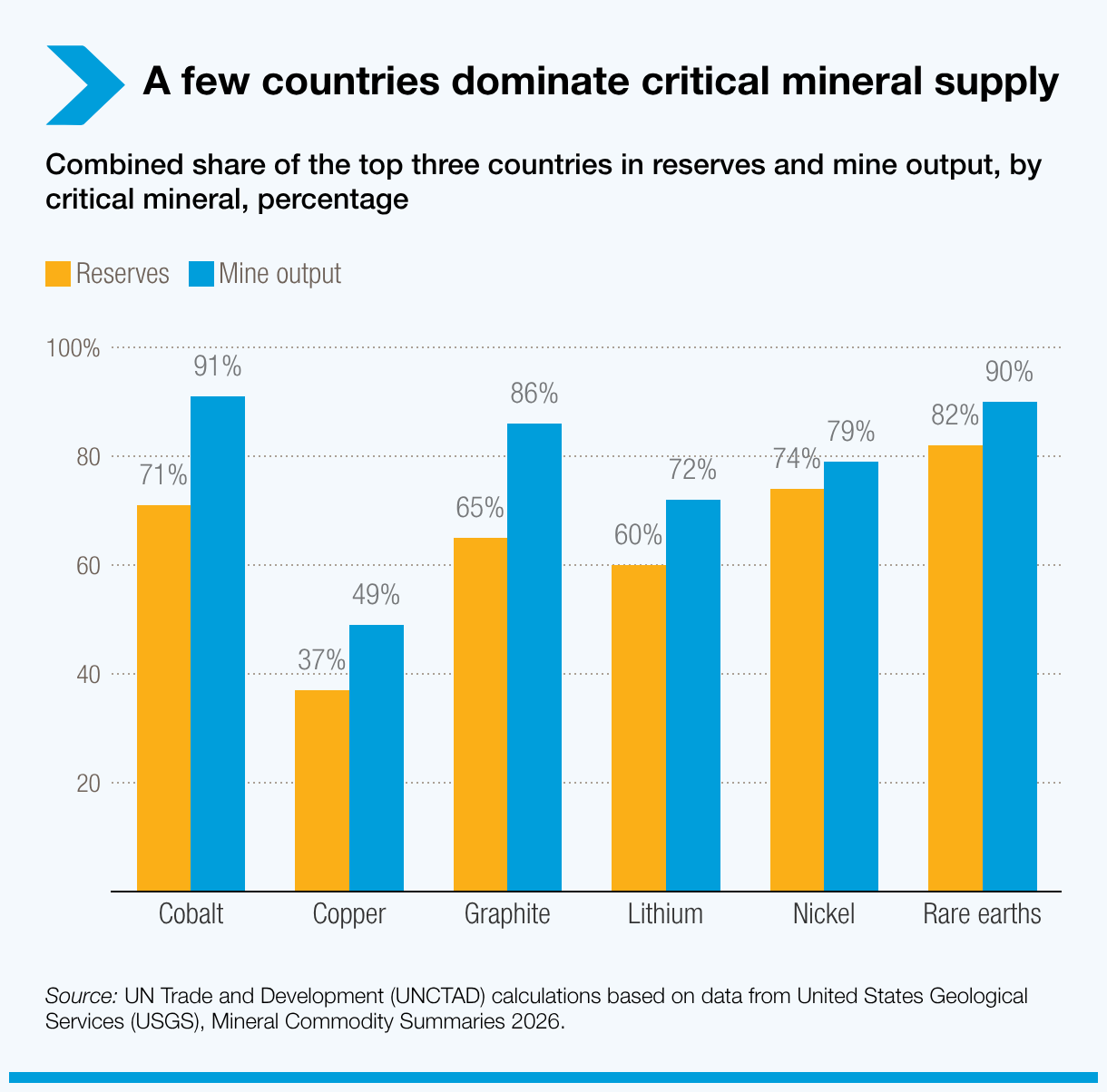
China also dominates refining for rare earths, lithium and cobalt. Indonesia accounts for 43% of global nickel refining capacity.
Diversifying processing capacity, promoting recycling and strengthening domestic value chains will take time. It will also require long-term investment and coordinated policy support.
Trade policy is being used to secure supply chains
Governments are increasingly using trade policy to secure access to critical minerals, strengthen industrial competitiveness and build more resilient supply chains.
Since 2020, nearly 100 new export measures have been introduced on critical energy transition minerals. These include 37 licensing requirements, 31 export taxes, 29 export bans and one export quota. The Democratic Republic of the Congo has introduced the highest number of measures, followed by China and Indonesia.
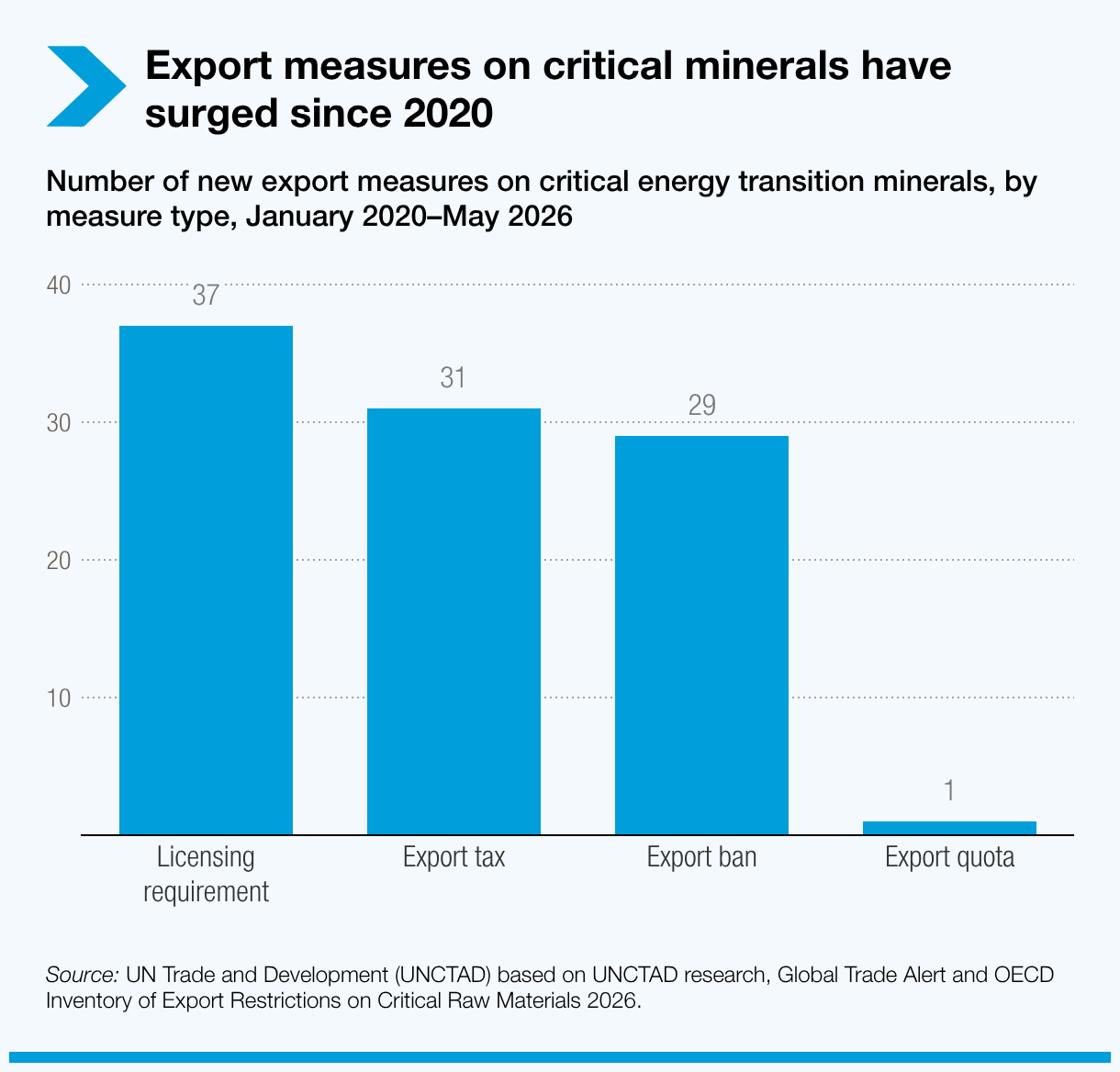
These measures are being used by critical-mineral-rich countries to strengthen their position in global supply chains. They can support domestic processing and help countries capture more value. But trade policy can also strengthen – or weaken – the resilience of global supply chains.
New international frameworks are emerging
Critical mineral partnerships are expanding quickly. The report analyses 73 partnership agreements, including 58 signed since 2022. These agreements are helping reshape supply chains, often by combining trade, industrial and investment policy tools.
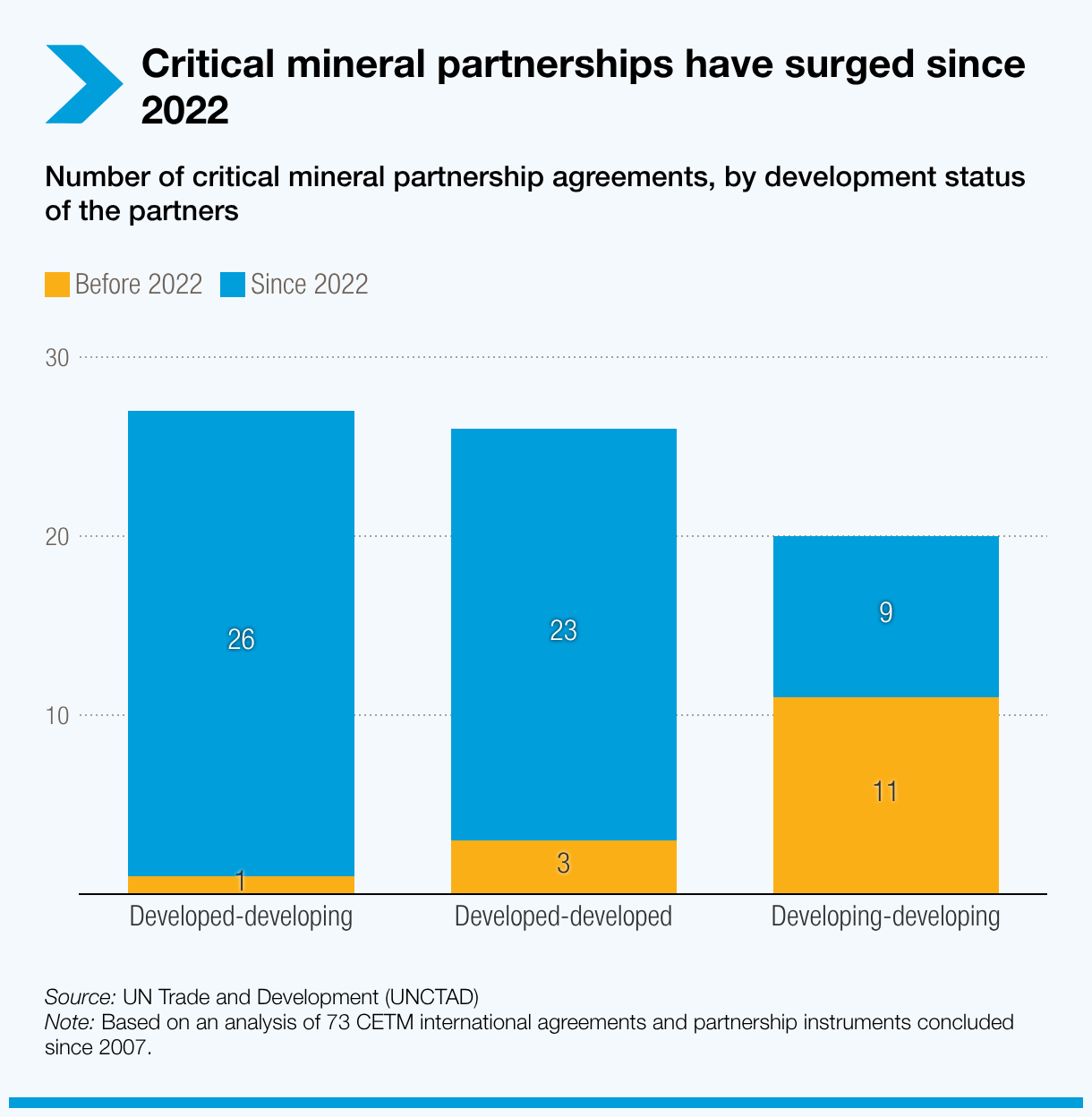
Many agreements now cover exploration, extraction, processing, refining, use and recycling. But upstream activities still dominate. Agreements involving developing countries tend to focus more narrowly on extraction, with fewer provisions to support value addition.
The report says critical-mineral-rich developing countries may seek stronger provisions on local processing, technology transfer and skills development. This would support more diversified and sustainable participation in critical mineral supply chains.
Cooperation will decide who benefits
Critical minerals trade is at a crossroads. It can support export revenues, investment and structural transformation in developing countries. Or it can reinforce extractive patterns and fragment markets into competing blocs.
The report’s message is clear: stronger international cooperation and greater policy coherence are essential. Trade policy must support both the development needs of critical-mineral-rich developing countries and the global transition to a low-carbon, digital economy.