

A stable and predictable multilateral trading system is essential for global economic growth and sustainable development. World Trade Organization (WTO) rules were designed to ensure predictable market access by preventing sudden trade restrictions and discrimination between trading partners.
Yet trade rules have become less predictable. Countries increasingly use discriminatory trade measures such as tariffs, investment screening and technology restrictions linked to industrial policy, national security and geopolitics.
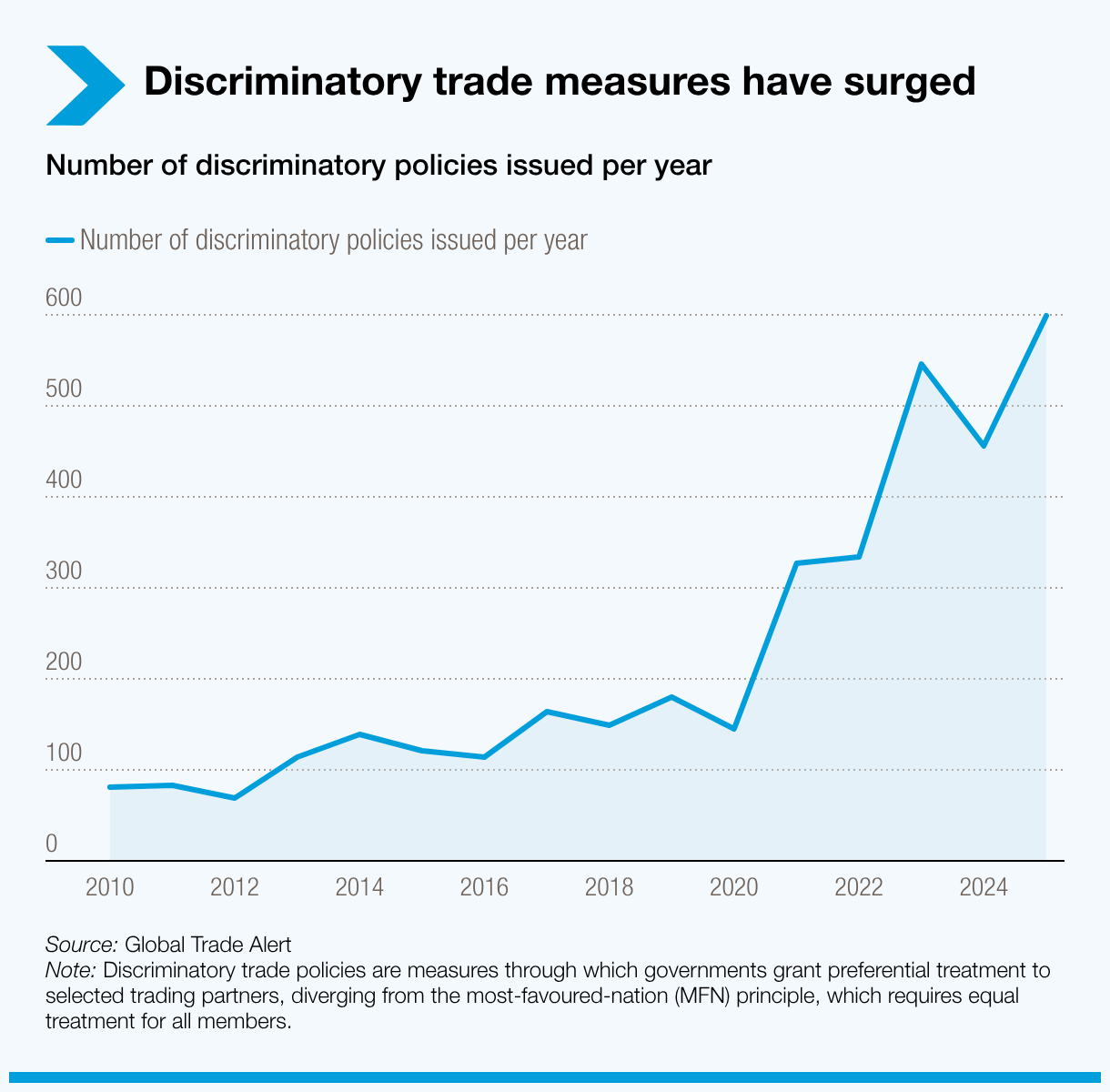
For developing countries, this volatility can be particularly damaging. Many rely on a narrow range of exports and have limited capacity to absorb economic shocks.
This edition of the Global Trade Update examines why reforming the WTO is critical to restoring confidence in global trade rules.
Developing countries have the highest stakes in a functioning trading system
Trade has been a major driver of economic growth in many developing countries over the past two decades. Export earnings provide the money countries need to import machinery, energy and other inputs essential for development. Trade also supports investment, technology transfer and job creation.
For smaller economies, access to international markets is particularly important because domestic demand alone is often too limited to sustain strong growth.
Trade between developing countries – known as South–South trade – has expanded rapidly under the multilateral trading system, rising from about $500 billion in 1995 to $6.8 trillion in 2025. By 2025 it accounted for more than a quarter of global trade.
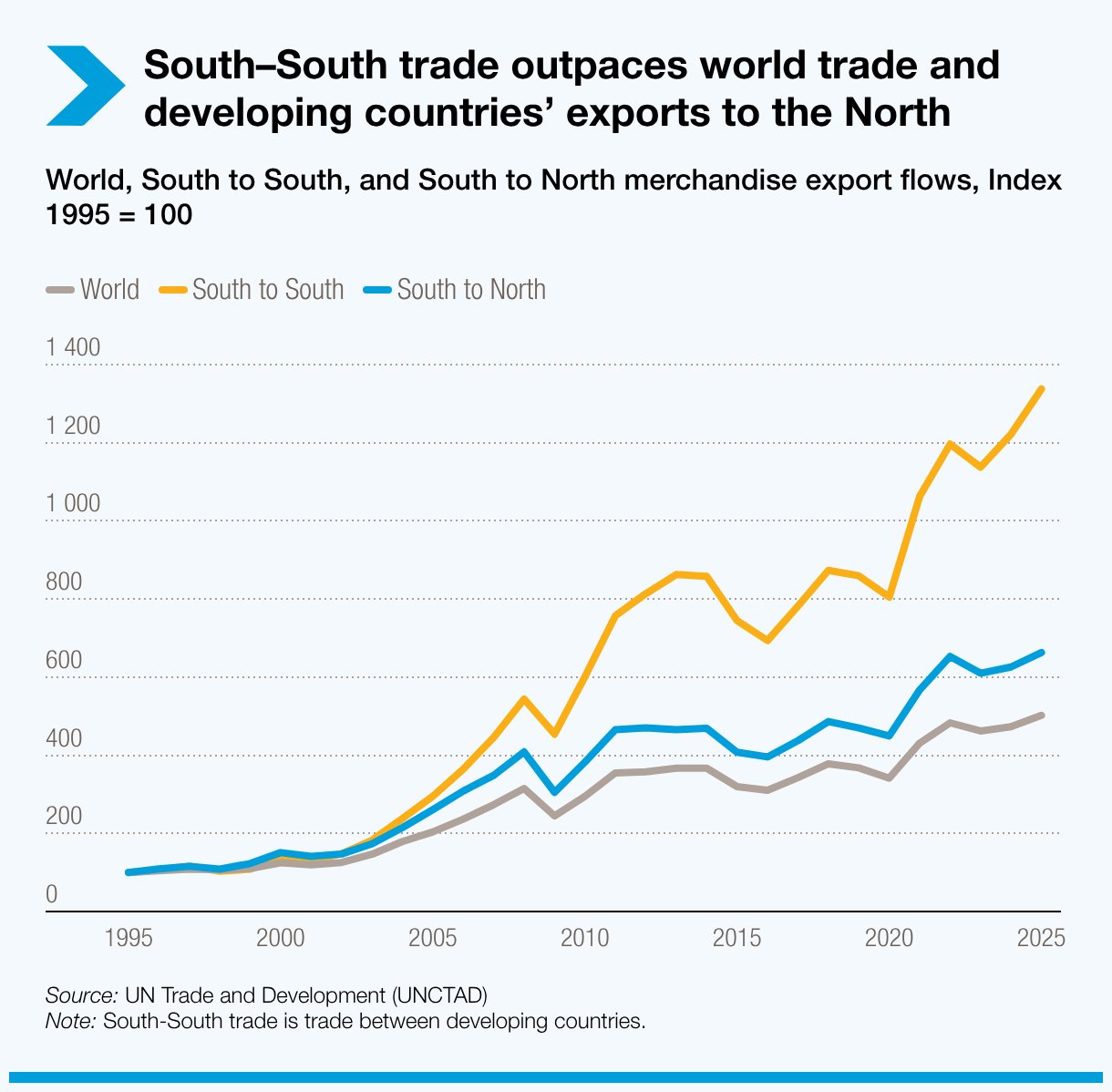
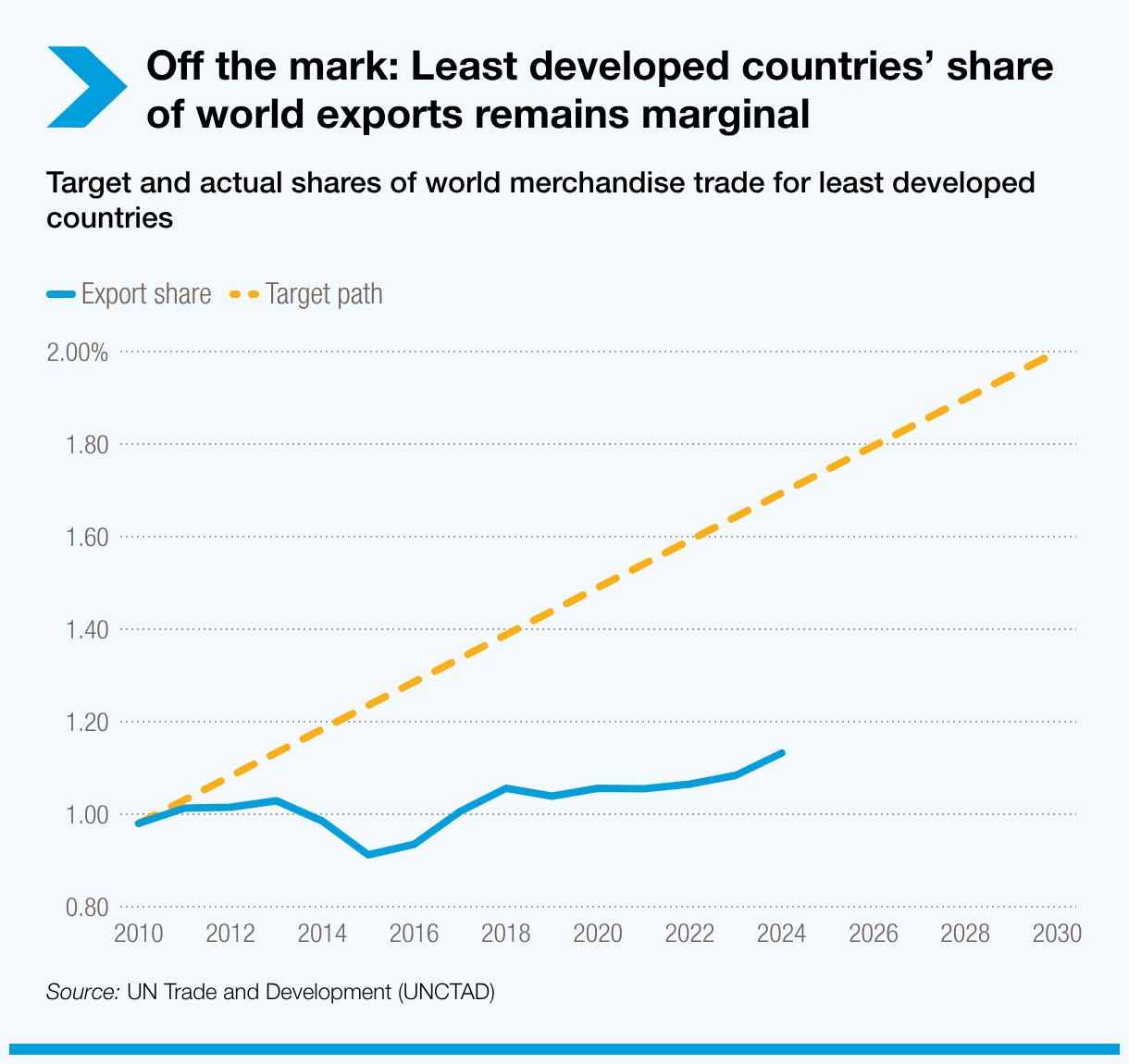
Yet many developing countries still struggle to benefit fully from global trade. Least developed countries accounted for just 1.1% of world exports in 2024, barely above 1.0% in 2010 and still far below the 2% target set for 2030, despite preferential access schemes.
WTO reform should therefore strengthen mechanisms that help developing countries integrate into global markets, diversify exports and move up the value chain.
A functioning dispute settlement system helps smaller economies defend their trade rights on equal footing
The WTO dispute settlement system allows countries to challenge trade measures that violate agreed rules. It helps ensure that commitments remain binding, regardless of a country’s economic size or influence.
For smaller economies, this legal framework allows them to defend their trade rights on more equal terms.
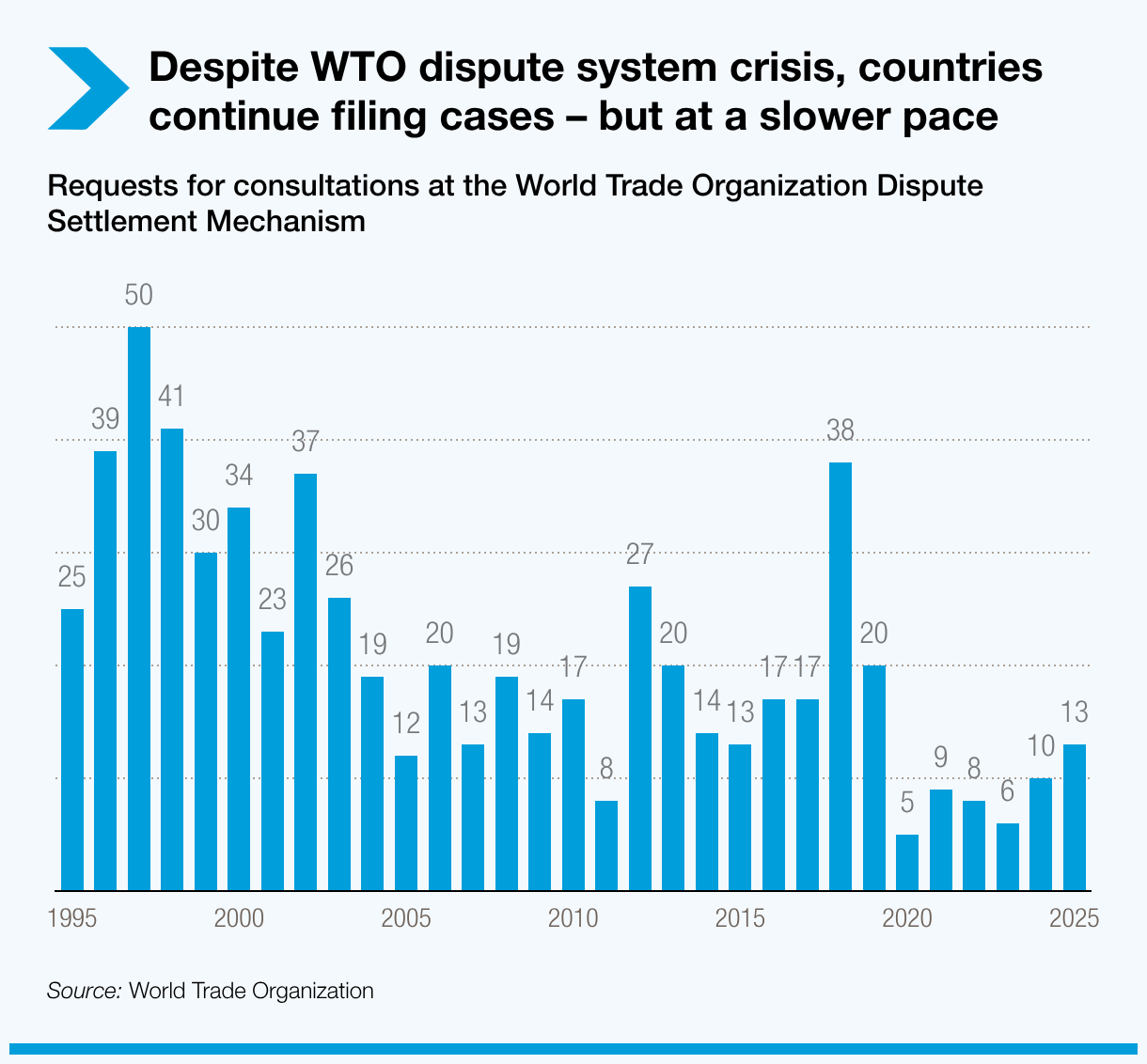
Since the system was established in 1995, WTO members have initiated 644 disputes, leading to the creation of 378 panels – independent groups of experts that examine trade disagreements and issue rulings. However, its effectiveness has weakened in recent years. The WTO’s Appellate Body – the final stage of the dispute process – has been unable to function because appointments of new judges have been blocked.
This paralysis has already affected the system’s use. Before the crisis, WTO members initiated an average of 19 consultations per year between 2010 and 2019. That figure fell to 8.5 per year between 2020 and 2025.
Reviving a fully functioning dispute settlement system is essential to maintaining fairness and predictability in global trade.
A rules-based trading system will support both economic growth and sustainable development
Global trade is evolving rapidly. Services, digital technologies and the green transition are becoming increasingly important sources of economic growth. Yet many developing countries remain on the margins of these sectors.
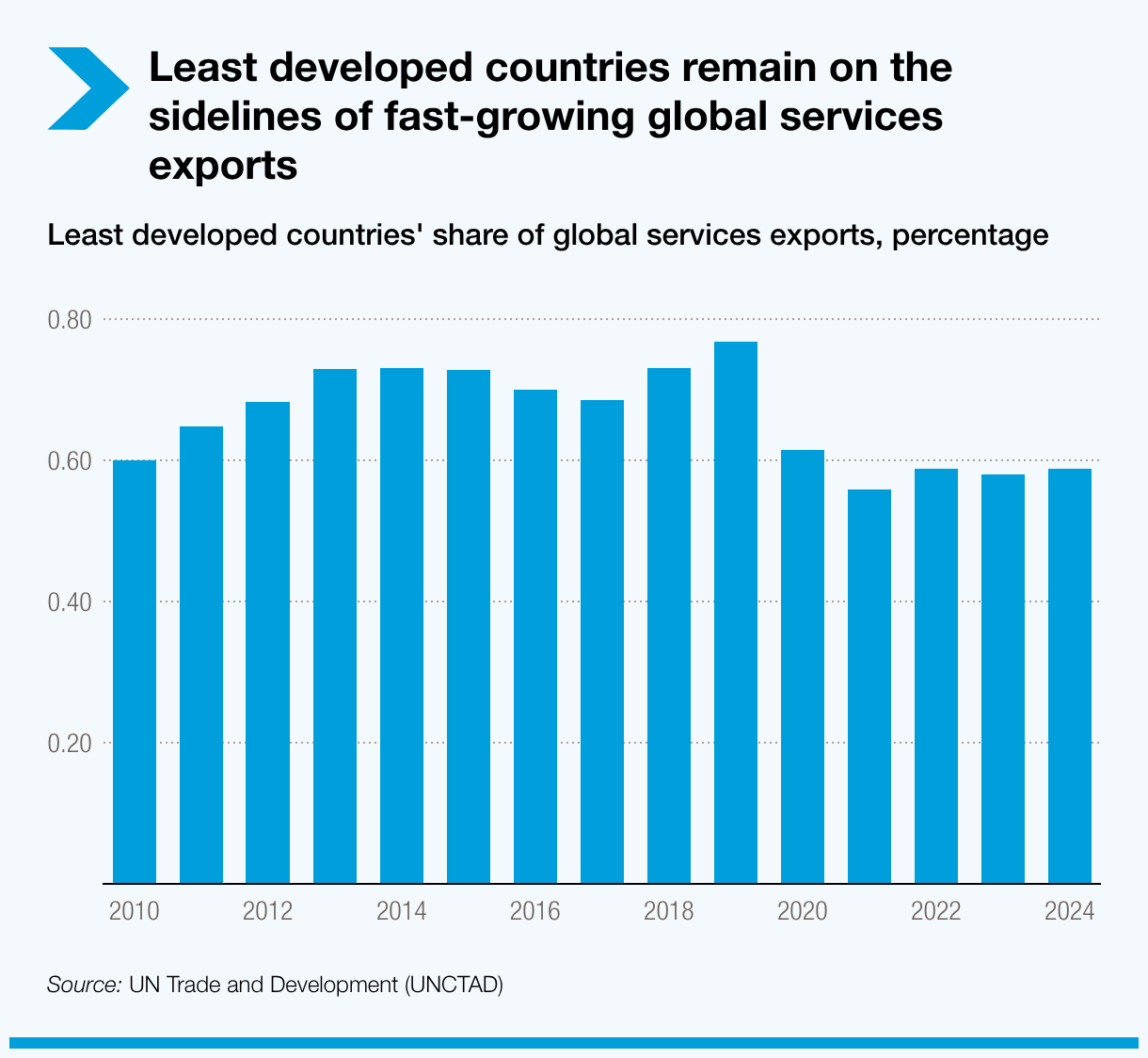
For example, least developed countries account for less than 1% of global services exports. Between 2014 and 2024, their services exports grew by just 3% per year, compared with 5.3% globally, highlighting the barriers they face in participating in the global services economy.
Clearer multilateral rules in areas such as digital trade, financial services and professional services would also help ensure that developing economies can participate in these emerging sectors.
The report says reforms should also strengthen special and differential treatment – provisions that give developing countries greater flexibility and support within trade agreements.
Keeping development at the centre of global trade reform
As WTO members prepare to advance reform discussions, the report stresses that development must remain at the centre of the multilateral trading system.
Restoring a fully operational dispute settlement system, strengthening predictable market access and preserving core principles such as non-discrimination are essential steps.
This will help ensure that global trade remains a driver of inclusive growth and sustainable prosperity in the decades ahead.