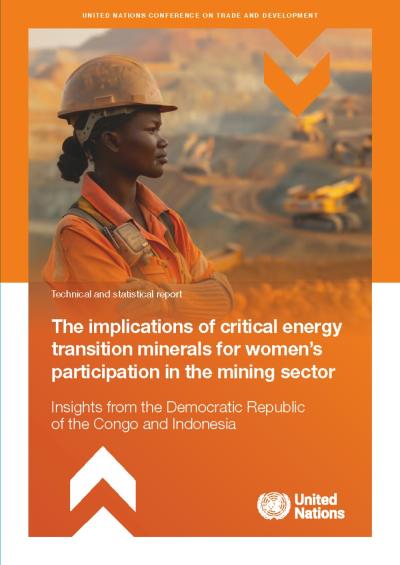
The global push towards clean energy is driving a surge in demand for critical energy transition minerals such as cobalt and nickel – essential for electric vehicles, batteries and renewable technologies. Mineral-rich developing countries stand to benefit. But without targeted policies, the gains risk bypassing women.
Drawing on case studies from the Democratic Republic of the Congo and Indonesia, the report shows that while demand, investment and downstream processing are accelerating, women remain largely confined to low-paid, informal and high-risk roles in critical minerals value chains.
Turning the energy transition into a driver of inclusive development will require deliberate, gender-responsive action. The report offers evidence and policy-relevant insights to help ensure that the critical minerals boom delivers tangible benefits for women.
Key findings
- The surge in demand is historic – but inclusion is not automatic.
Meeting global net-zero targets could require around 80 new copper mines, 70 new lithium and nickel mines each, and 30 new cobalt mines by 2030.
New mining projects announced in 2021–2022 were more than double the total of the previous decade. Yet higher demand and investment have not translated into better outcomes for women, who remain underrepresented in higher-value and technical segments of mining value chains.
- Women remain concentrated in informal and vulnerable work.
In some regions, women make up 30% to 50% of the artisanal and small-scale mining workforce. These jobs are typically informal, low-productivity and hazardous.
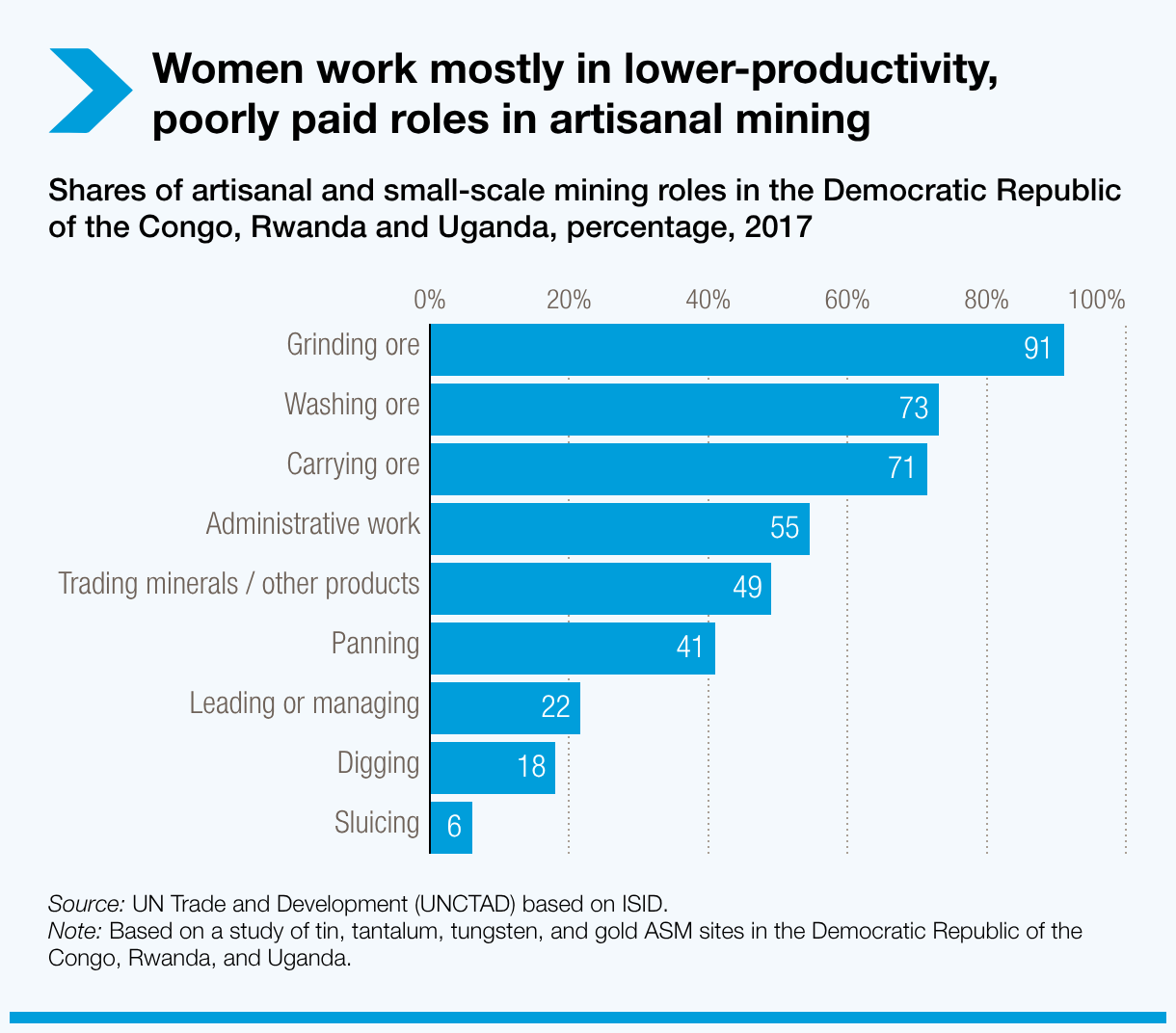
In the Democratic Republic of the Congo’s cobalt value chain, women in artisanal and small-scale mining are typically involved in mineral cleaning, processing and transporting, often in lower-productivity and poorly paid roles. Women are largely absent from management and executive roles. Hazardous working conditions and vulnerability to gender-based violence remain major concerns.
- Value addition creates opportunities – but women are being left behind.
Downstream processing and industrialisation create opportunities for more formal and higher-value employment. Indonesia’s nickel sector shows what is possible when policies support domestic processing and industrial expansion. The country has become a major exporter of processed nickel products, including battery inputs.
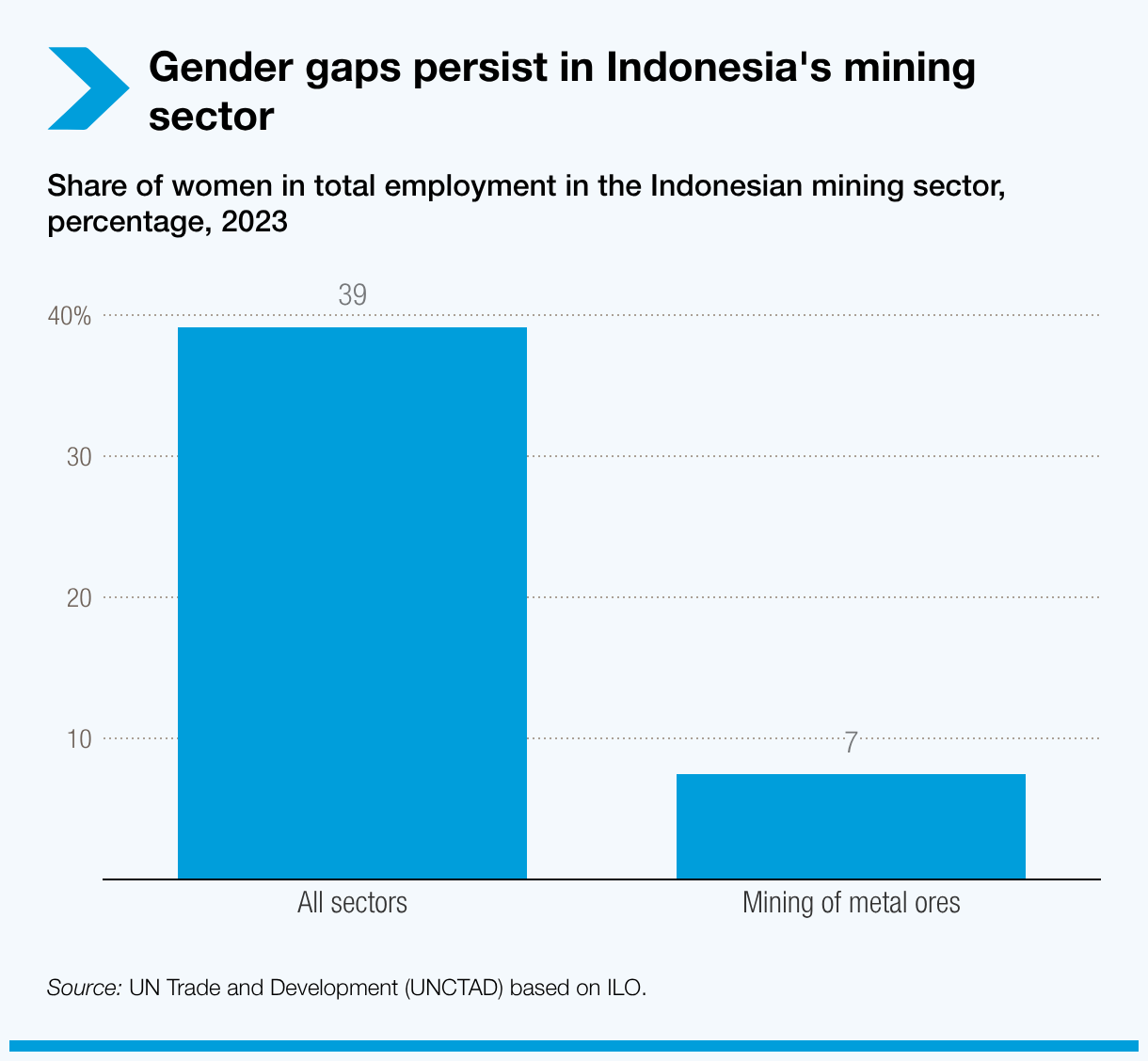
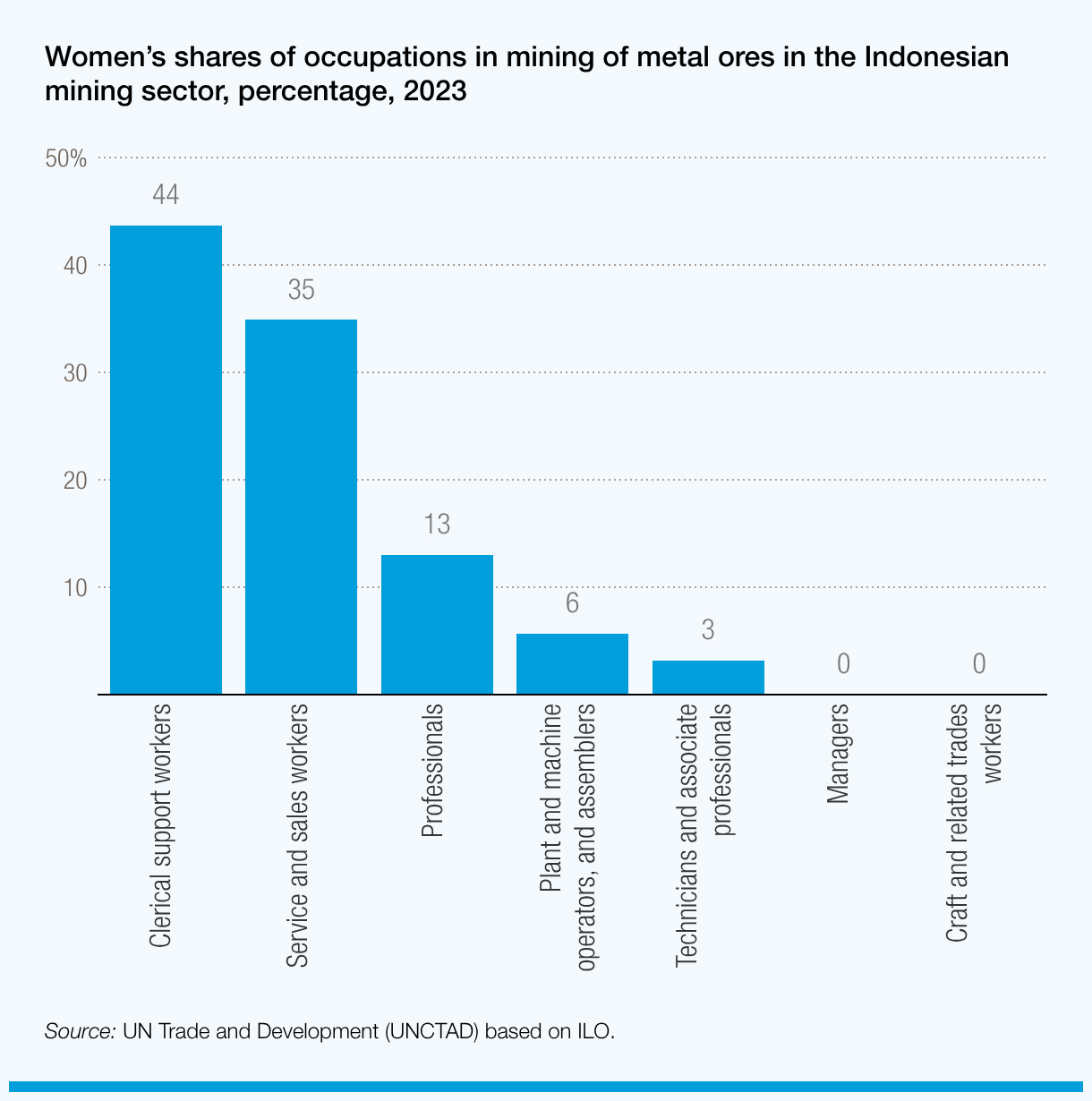
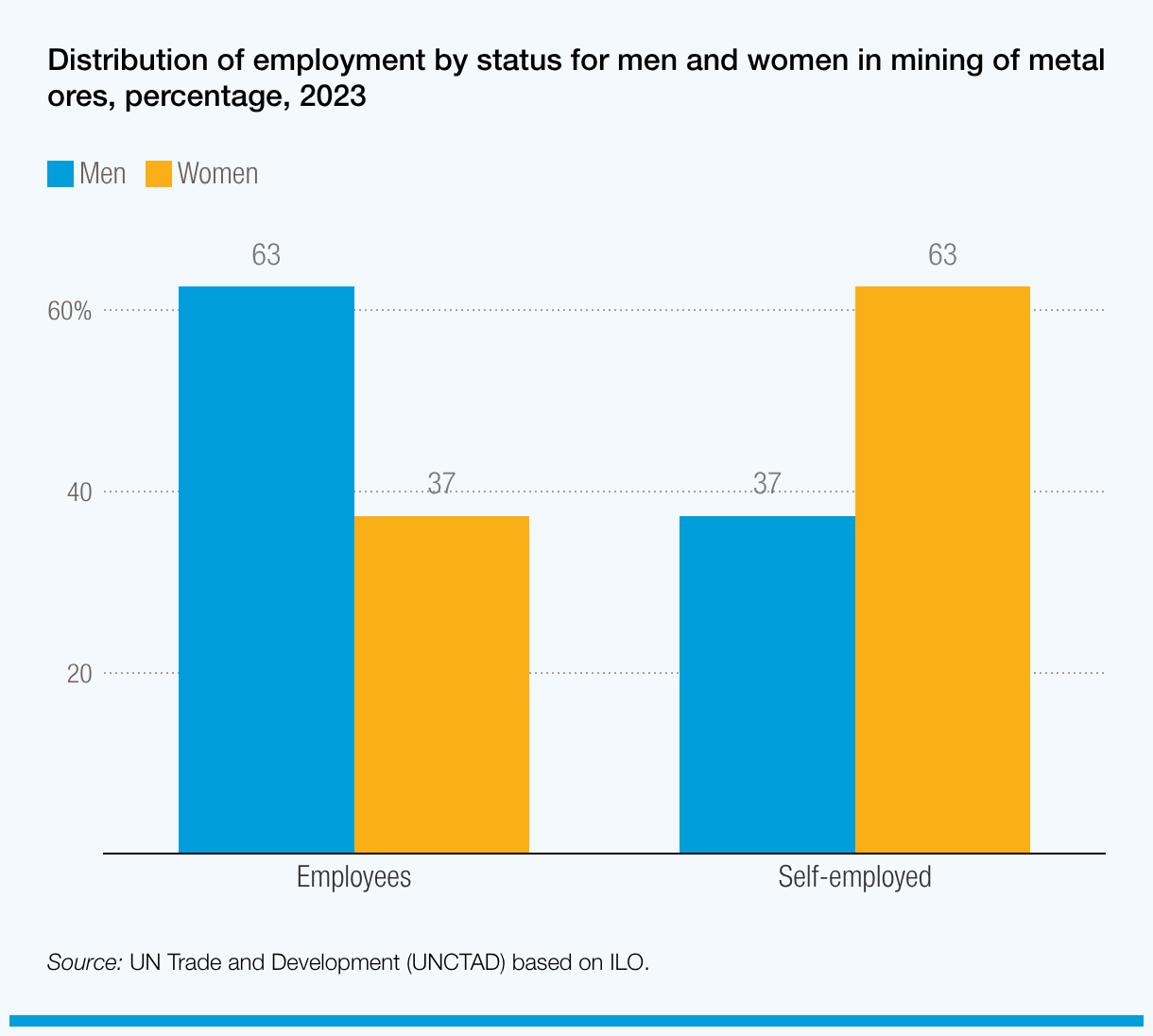
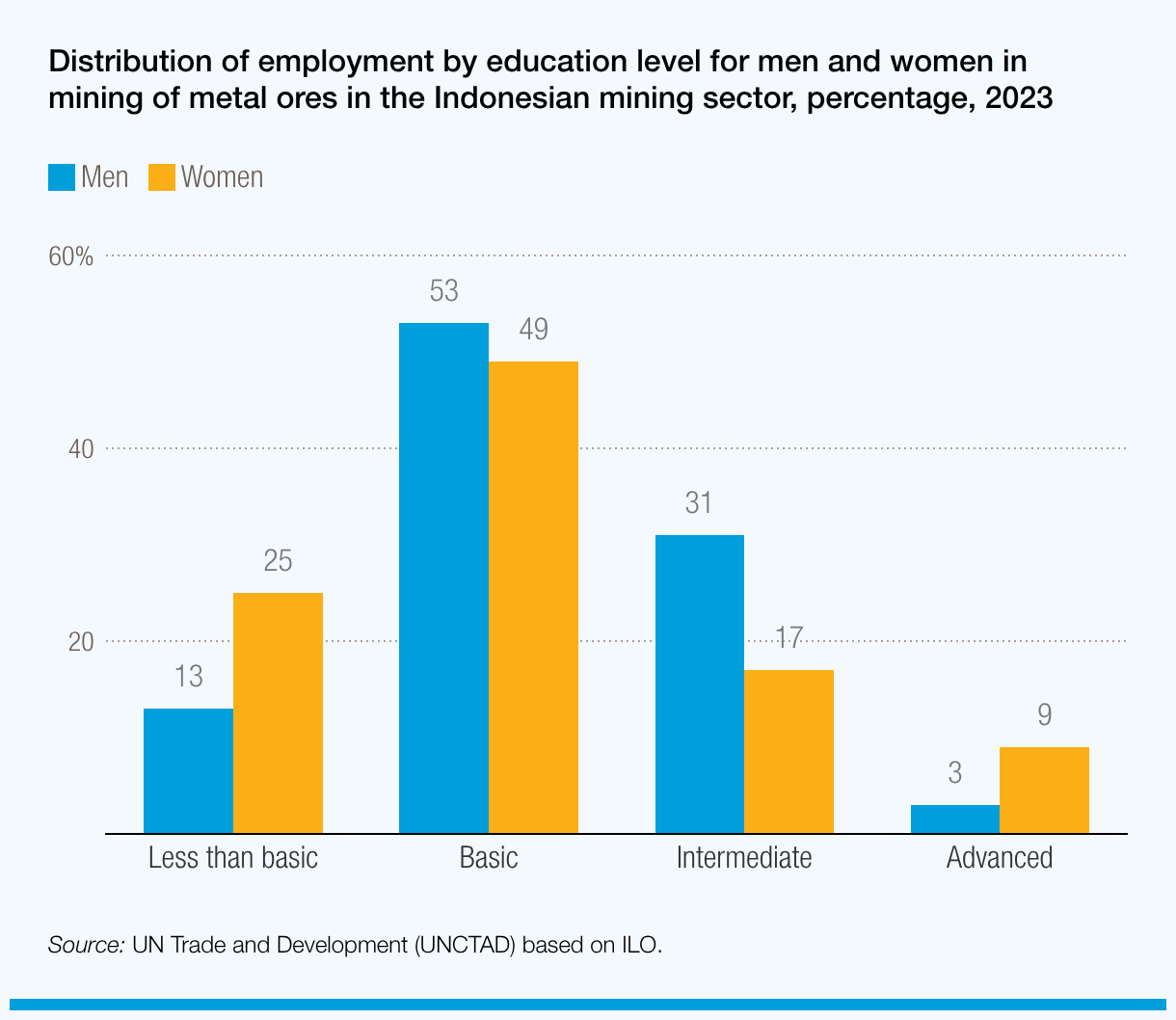
However, despite this progress, women’s participation in mining remains low, with persistent gender gaps in skills, recruitment and workplace access.
- Skills and training are critical to breaking gender barriers.
Women account for less than 15% of engineering and technology researchers in some regions, limiting their access to technical roles as the mining industry modernizes.
Targeted investment in technical and vocational education, STEM training and on-the-job skills development is essential for women to benefit from the shift towards higher-value activities across mining and processing.
- Governance and data gaps are holding back progress.
Many mining codes lack gender-specific provisions, and gender-disaggregated data on employment and entrepreneurship remain scarce.
In the Democratic Republic of the Congo, fewer than 1% of government and policy decision-makers are women, and this disparity extends to the mining sector. Weak institutional capacity limits the ability to design, implement and enforce gender-responsive mining policies, particularly in artisanal and small-scale mining.