

The reopening of the Strait of Hormuz would bring much-needed relief for many economies.
This is a first step toward a progressive recovery of energy markets and international trade. However, during more than 100 days of shipping disruption, negative effects have already rippled through the global economy.
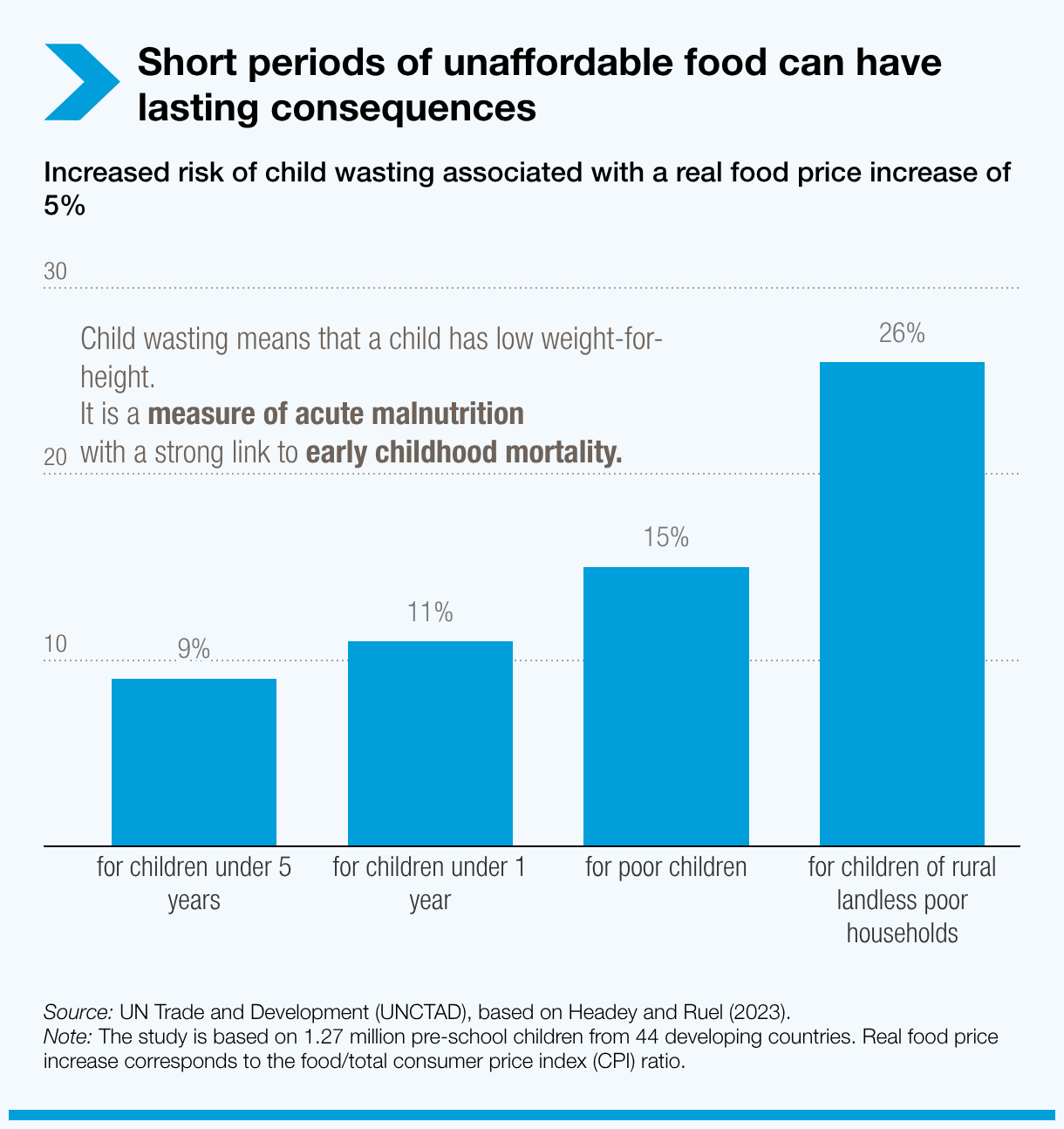
Vulnerable economies have been particularly exposed to oil and fertilizer price shocks. These shocks can result in persistent inflation. People suffer from inflation, especially the poor. It squeezes household budgets and makes necessities–such as food and healthcare–less affordable.
The reopening paves the way for recovery. But for vulnerable economies, the path can be longer, uneven and costly. International support is needed to improve their ability to cope.
These shocks will be felt for many months – with developing countries bearing the heaviest impacts. I call on all parties to honour the ceasefire and redouble efforts.
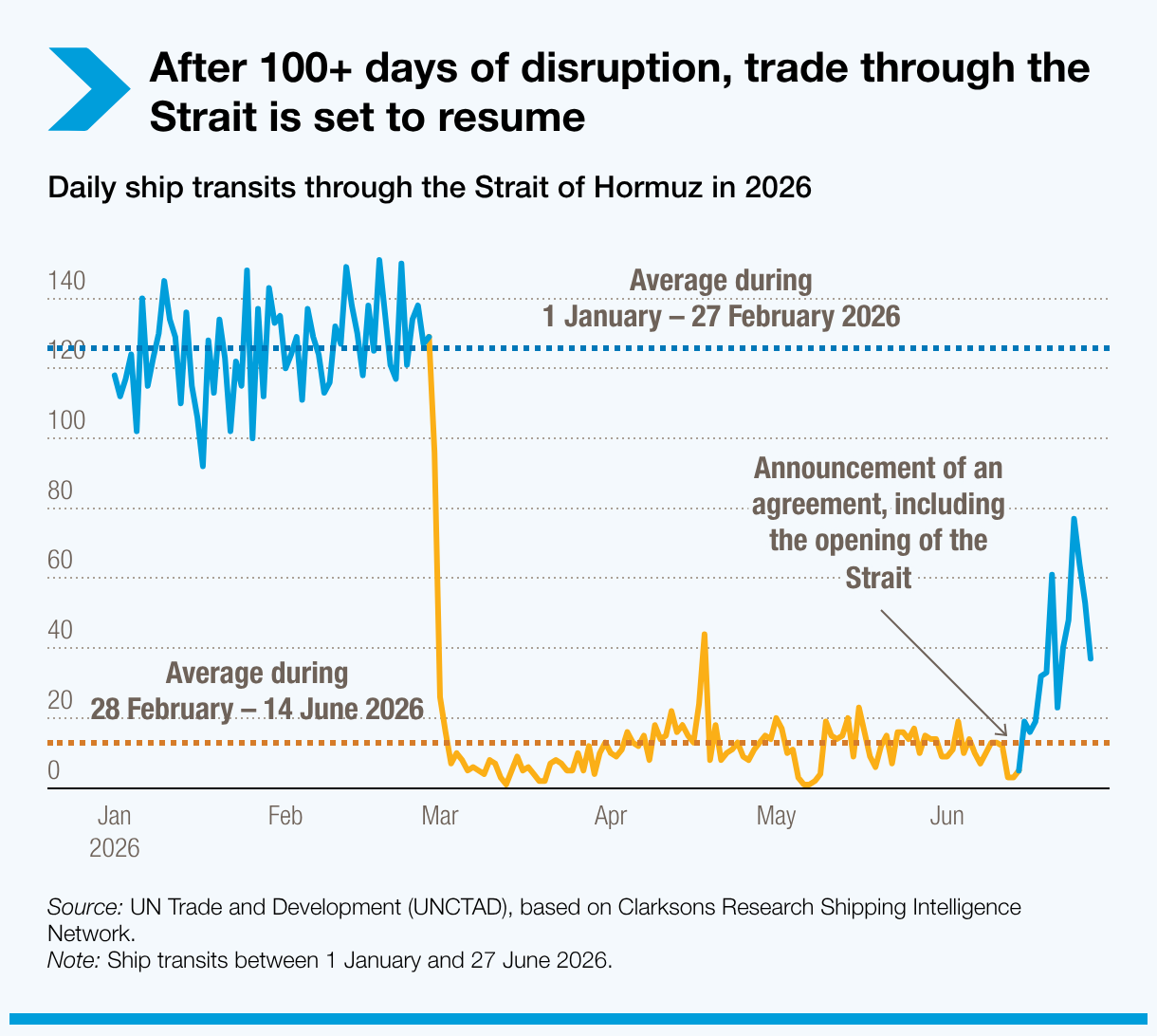
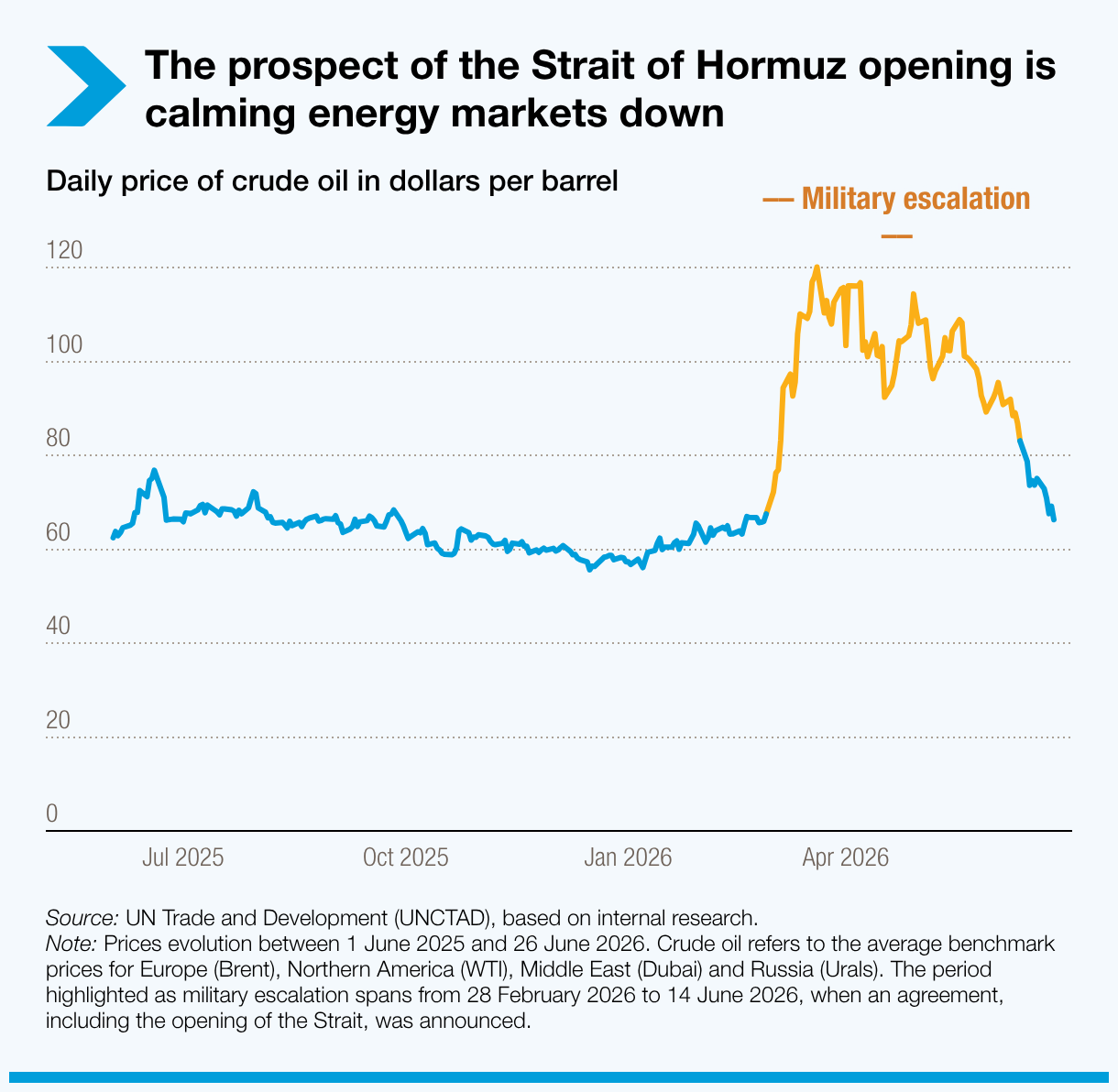
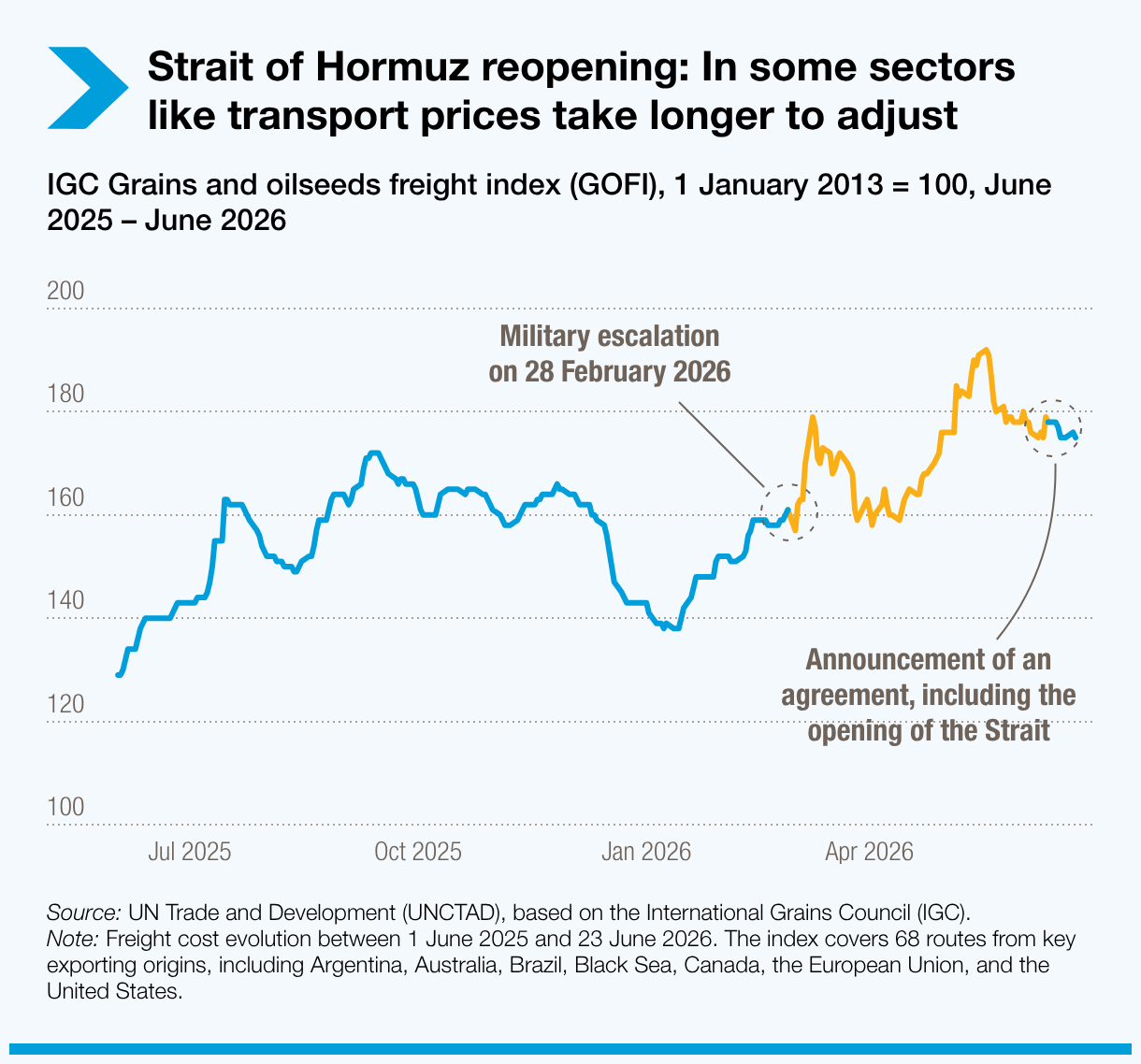
The shockwaves have already rippled through the world economy.
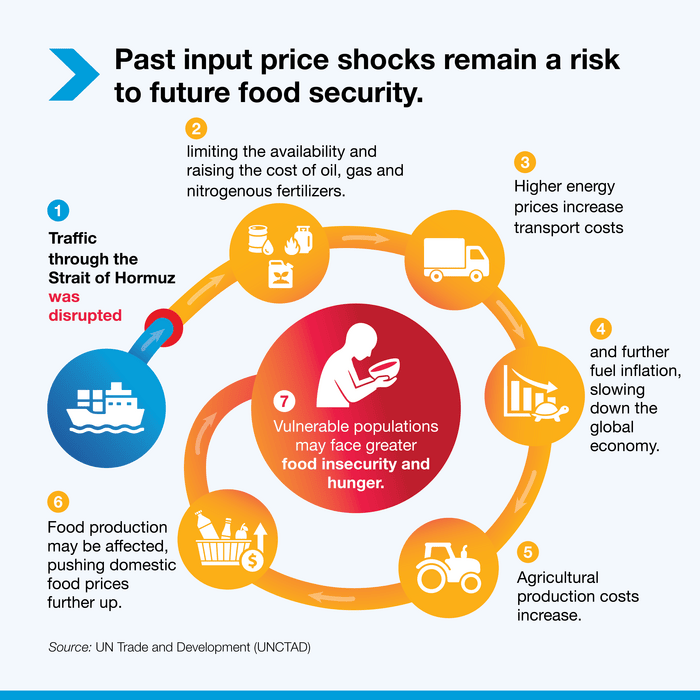
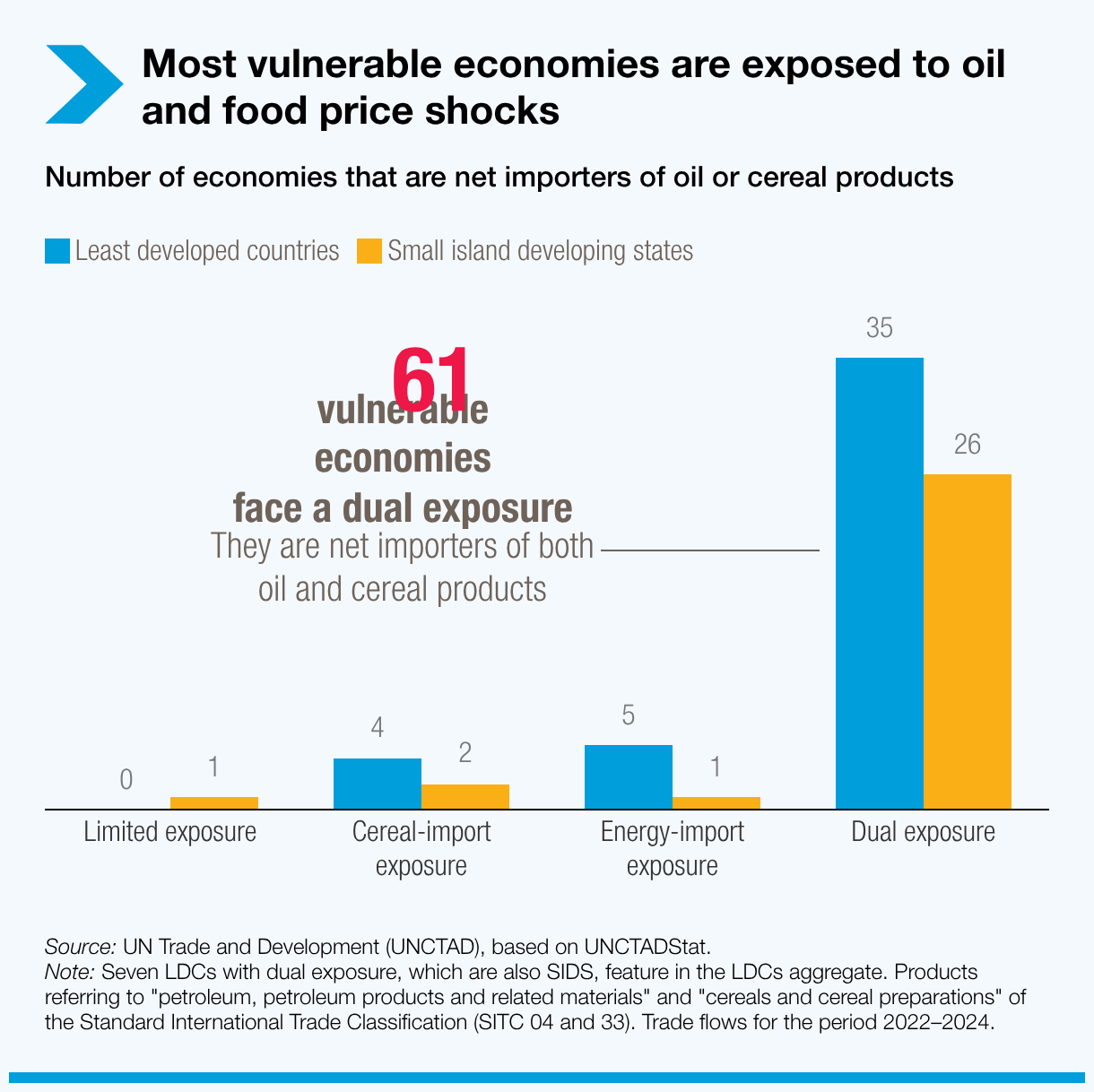
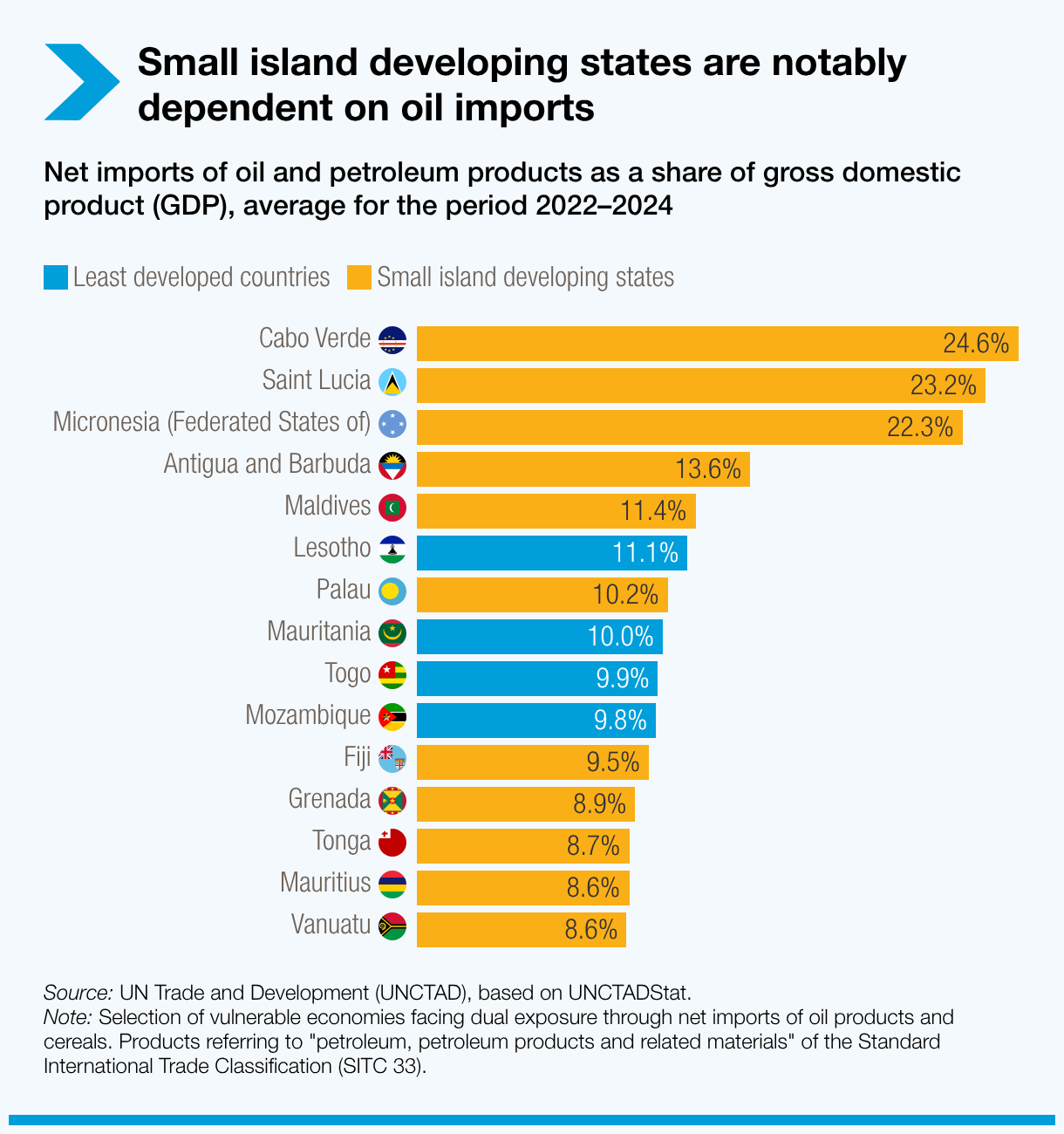
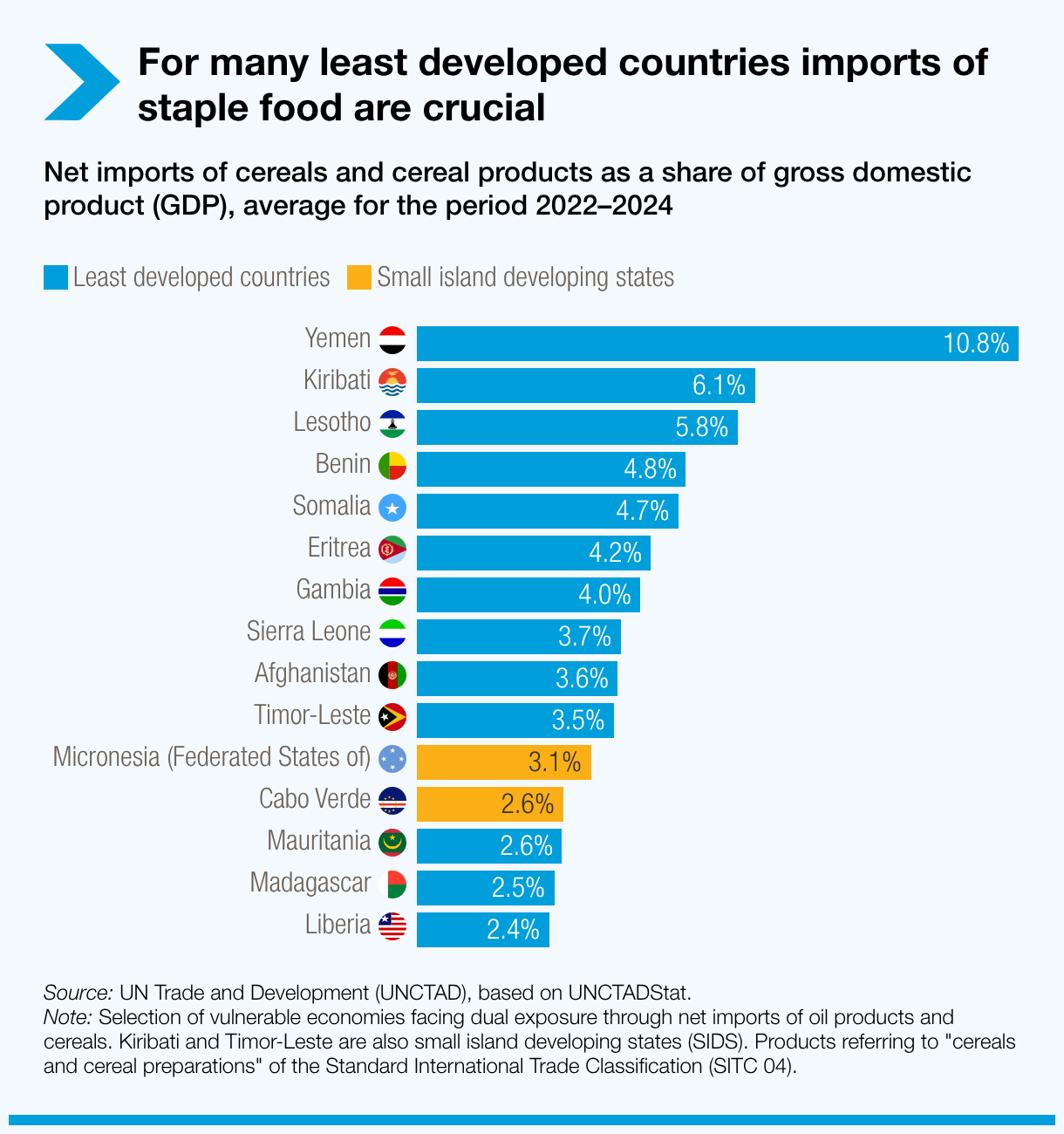
Trade shocks hit hardest where the ability to cope is limited.
- Difficulties to mobilize resources, domestically or externally.
- A heavy debt servicing burden and exchange rate risks associated with high levels of external debt.
- A drop in remittances that could cut off a financial lifeline for some economies.
- Declining international aid.
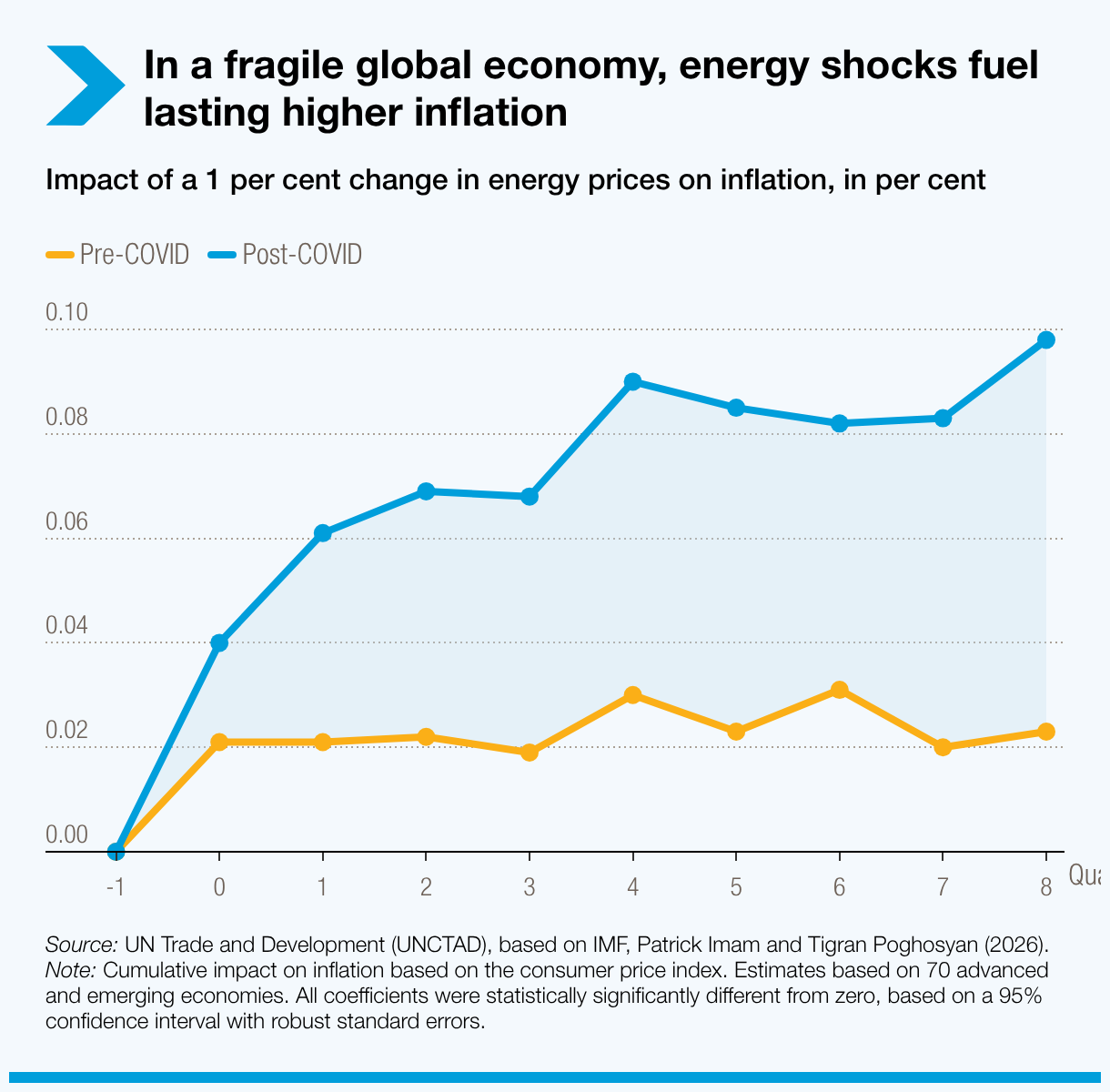
Short-lived energy shocks can have long-term consequences
Issues for consideration
- Normalization of trade will take time. International energy prices can adjust fast, but shipping and value chains need time to adapt.
- The impact of the energy shock will continue to be felt unevenly. Many vulnerable economies have limited ability to cope with soaring import bills. Countries dependent on oil imports face particularly strong domestic inflationary pressure.
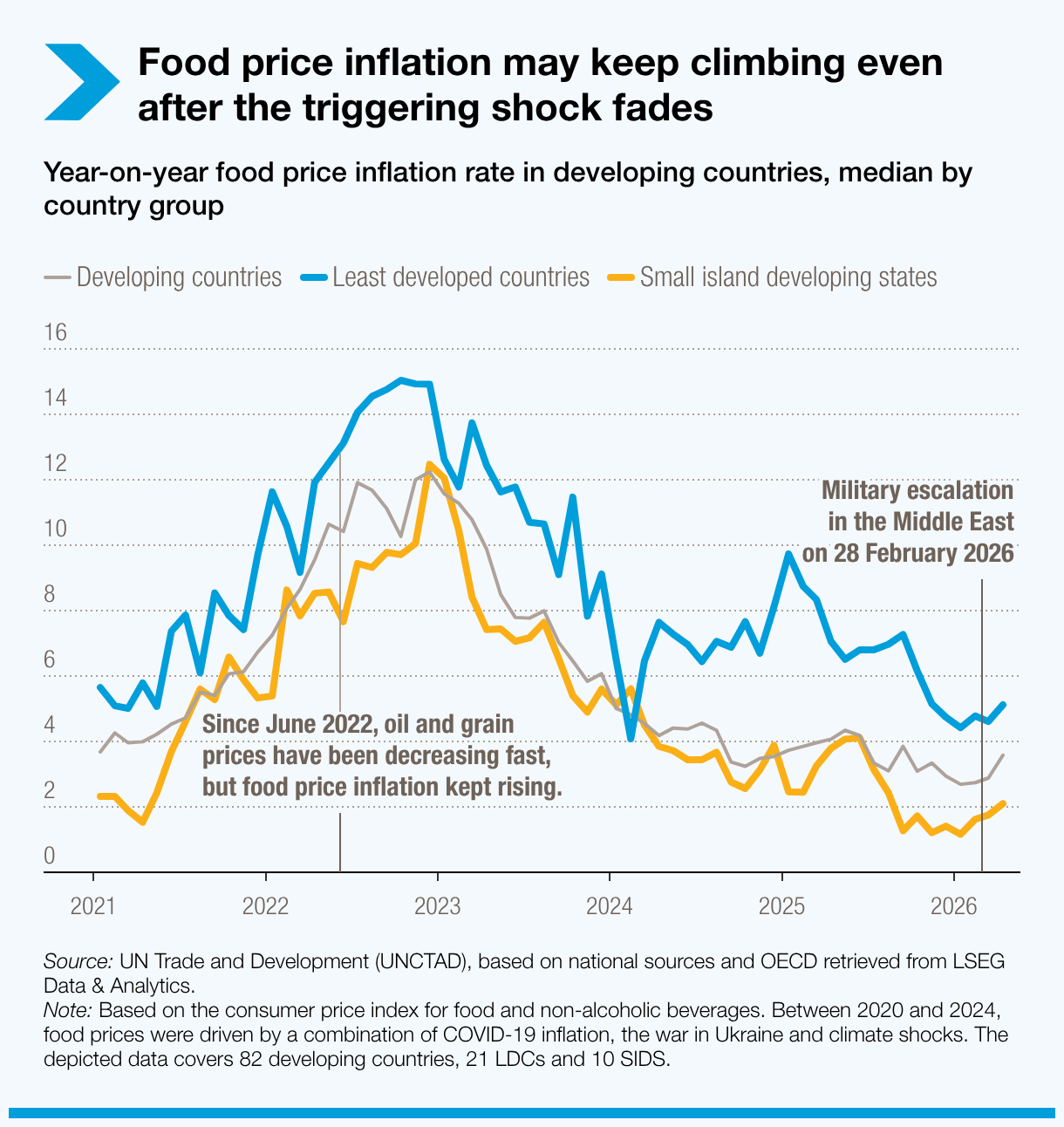
- Food production risks remain. Input price hikes that may have persistent impacts on production and trade, coupled with an expected strong El Niño, increase concerns about food insecurity.
- International support is needed. Decreasing official development assistance and mounting debt servicing burdens risk slowing down recovery.
- Investment in resilience is key. This includes diversification of trade sources, as well as other domestic resilience measures, conditional on financial constraints.