

Key statistics
- $31 trillion: Developing countries’ public debt in 2024
- $921 billion: Developing countries’ net interest payments on public debt in 2024
- 61 developing countries spend more than 10% of government revenues on net interest payments
- $25 billion: Developing countries’ negative net resource transfer in 2024, as they paid more to external creditors than they received in new disbursements
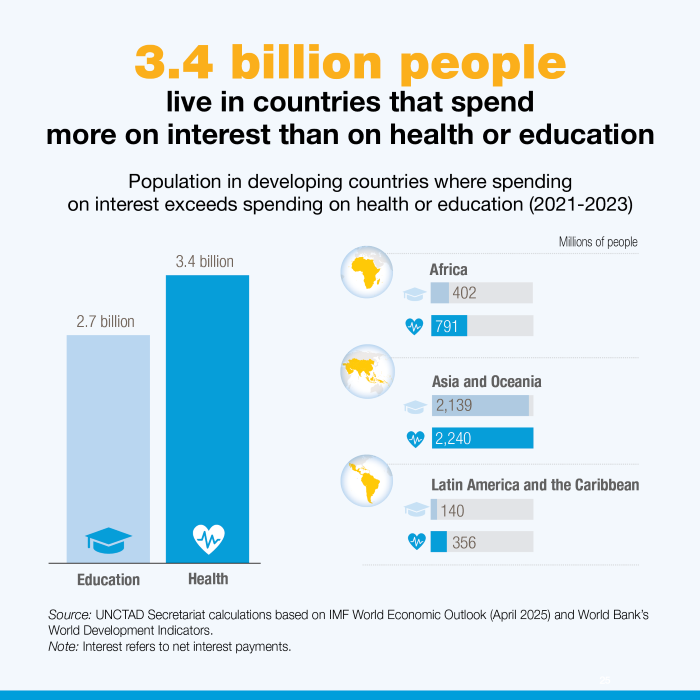
- 46 developing countries spend more on interest payments than on either health or education
- 3.4 billion people live in countries that spend more on interest payments than on either health or education
Public debt can be vital for development. Governments use it to finance expenditures, protect and invest in their people and pave the way to a better future. But when public debt grows excessively or its costs outweigh its benefits, it becomes a heavy burden. This is precisely what is happening across the developing world today.
Global public debt reached a record high of $102 trillion in 2024. Public debt in developing countries accounted for less than one third of the total – $31 trillion – but has grown twice as fast as in developed economies since 2010.

Developing countries pay more to borrow
There is a stark contrast among developing regions. Asia and Oceania hold 24% of global public debt, followed by Latin America and the Caribbean at 5% and Africa at 2%. The burden of this debt varies significantly depending on the cost and maturity of the financing available to countries, and is further exacerbated by the inequality embedded in the international financial architecture.
Developing countries are now facing a high and growing cost of external public debt. Debt service on external public debt reached $487 billion in 2023. Half of developing countries were paying at least 6.5% of export revenues to service external public debt.
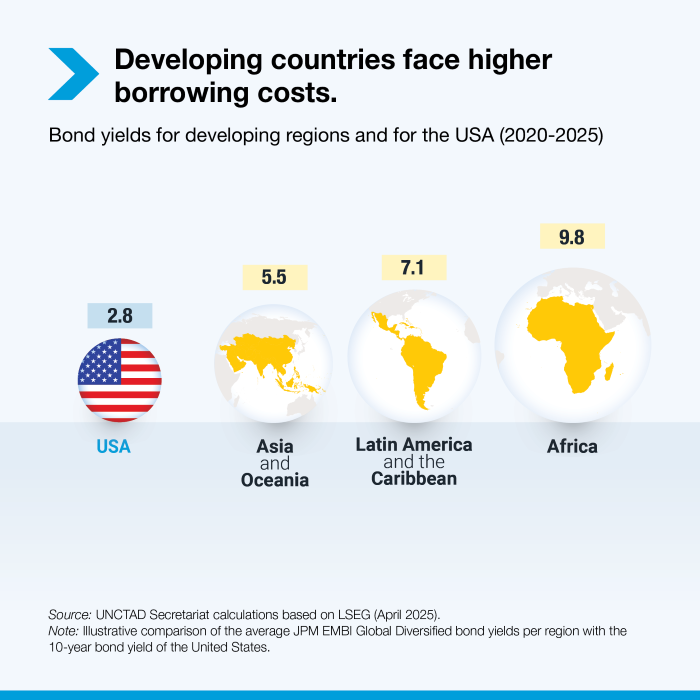
This dynamic is largely driven by high borrowing costs, which increase the resources needed to pay creditors, making it harder for developing countries to finance investments. Since 2020, developing regions have been borrowing at rates two to four times higher than those for the United States.
Debt service exceeds new disbursements
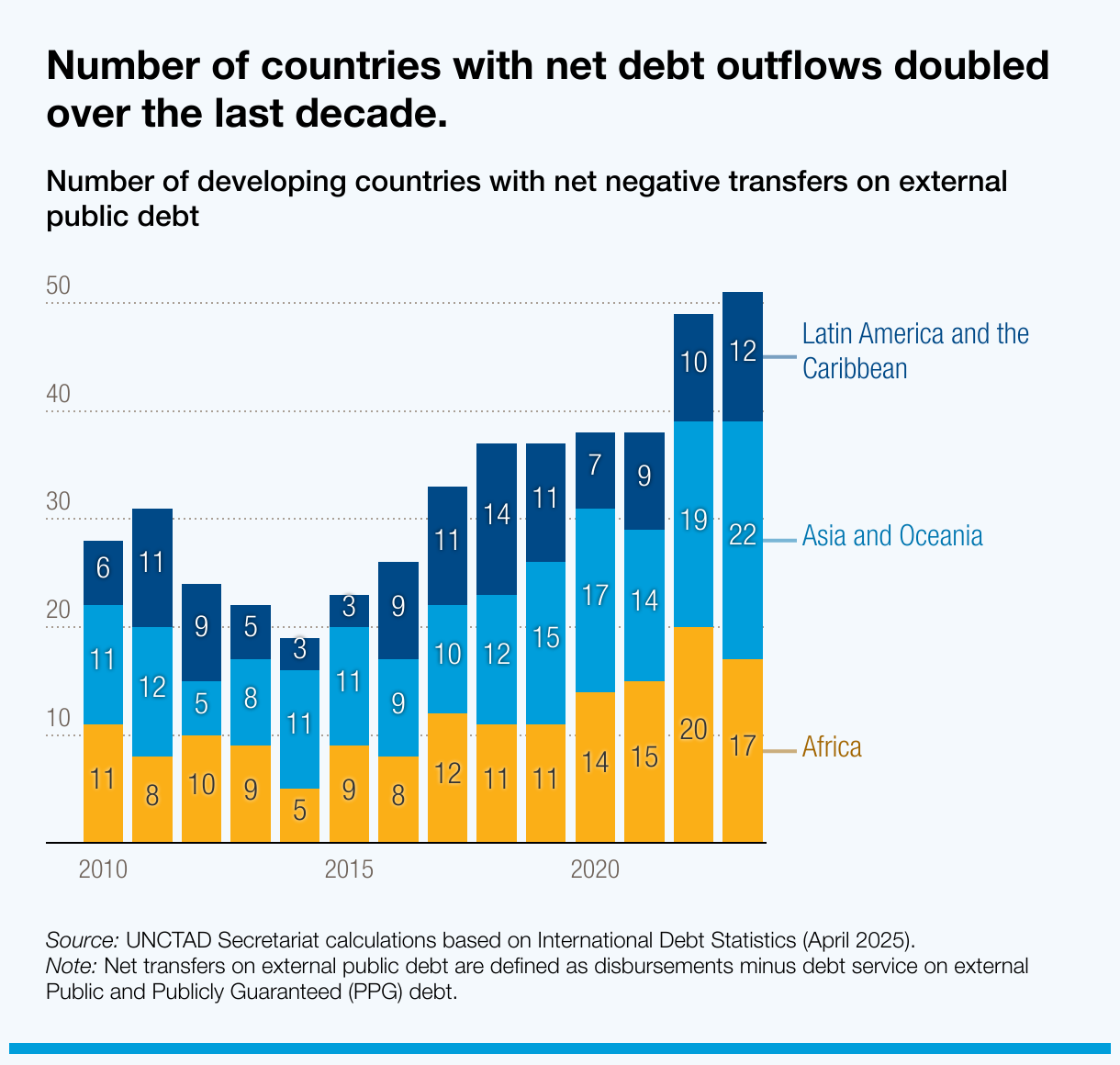
Developing countries also experienced a net resource outflow for the second year in a row. In 2023, they paid $25 billion more to their external creditors in debt service than they received in fresh disbursements, resulting in a negative net resource transfer.
The impact of these trends on development is a major concern: people are paying the price. Persistently high interest rates, weak global economic prospects and heightened uncertainty are directly affecting public budgets. Developing countries’ net interest payments on public debt reached $921 billion in 2024, 10% more than in 2023. A record 61 developing countries allocated 10% or more of government revenues to interest payments.
Interest payments are constraining public spending
Developing countries’ interest payments are growing rapidly and outpacing growth in critical public expenditures, such as health and education. As a result, in many developing countries, the need to service existing obligations is constraining spending in other key areas essential for sustainable development.
3.4 billion people live in countries that spend more on interest payments than on either health or education.
Reform is urgent
Developing countries must not be forced to choose between servicing their debt and serving their people. There is a pressing need to reform the international financial architecture. Such reform should encompass:
- Making the system more inclusive and development-oriented
- Enhancing the availability of liquidity in times of crisis
- Creating an effective debt workout mechanism to address current deficiencies
- Providing more and better concessional finance and technical assistance to help countries tackle the high cost of debt
The world has long been talking about reform. It is time to move from conversation to action.