


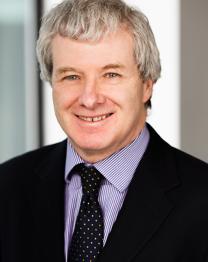
Mario Cimoli is the Deputy Executive Secretary of the Economic Commission for Latin America and the Caribbean (ECLAC). With over twenty years of experience in the United Nations, he is responsible for overseeing and coordinating multi-disciplinary and inter-divisional working groups, substantive institutional documents, and advisory services to ECLAC member governments on development issues.
He has also served as Director of the Division of Production, Productivity and Management since 2010, overseeing research and technical assistance to Member State governments on issues related to the productive development of the region. Prior to joining the United Nations, he was Professor of Economics at the University of Venice. He holds a PhD in economics from the University of Sussex.
His extensive publication record reflects a substantial contribution to the fields of micro and macroeconomic policies, with a focus on development paths, economic growth and the interconnections between industrial policy, technological development and innovation.
Recent publications include: Industrial Policies, Patterns of Learning and Development: an Evolutionary Perspective (2020); Choosing sides in the trilemma: international financial cycles and structural change in developing economies (2020); and A technology gap interpretation of growth paths in Asia and Latin America (2019). These complement his seminal works: Learning, Technological Capabilities and Structural Dynamics (2011); Innovation and Economic Development: the Impact of Information and Communication Technologies in Latin America (2010); Industrial Policy and Development, The Political Economy of Capabilities Accumulation (with Dosi, G. and J. E. Stiglitz, 2009); and Institutions and policies in developing economies (with Dosi, G., R. R. Nelson, and J. E. Stiglitz, 2009).

Claire Citeau serves as a Senior Fellow at the Canadian Agri-Food Policy Institute (CAPI), the University of Ottawa and the Canadian Global Affairs Institute (CGAI). She is a distinguished international trade policy expert with extensive experience in global agriculture, trade and sustainability. She is Vice President at the Canadian Meat Council. Claire is also an advisor at the Inter-American Institute for Cooperation on Agriculture (IICA) and the Canada-EU Trade and Investment Association (CEUTIA). As former Executive Director of the Canadian Agri-Food Trade Alliance (CAFTA), she played a key role in advancing industry interests in the context of major trade agreements, including CPTPP, CETA, CUSMA agreements. Claire holds a double MBA in international business and is currently pursuing an LLM in international law. Her extensive background and deep understanding of the nexus between trade, agriculture, and sustainability position her as a valuable asset in advancing global trade policies and agricultural sustainability.

Constantin Ciuta, is a Senior Customs Adviser of the ASYCUDA Programme, the largest technical assistance Programme of UNCTAD. ASYCUDA Programme has played a major role in the modernization of the Customs Administrations in almost 100 countries around the world and for more than 40 years.
He has had a longstanding involvement in the functional analysis, enhancement and implementation of the ASYCUDA Integrated Customs Management System in various countries in the region and on the alignment of ASYCUDA system to the European Union (EU) and EurAsian Economic Union (EAEU) Customs requirements.
He also participated in the functional analysis and design of various Single Window and ASYCUDA Cross-border e-Commerce components, such as ASYPCD (ASYCUDA Postal Customs Declaration, establishing and facilitating the exchange of electronic customs information between designated postal operators/UPU and customs administrations), ASYPAP (the ASYCUDA component to facilitate the Pre-Arrival Processing of Express consignments), and ASYHUB (“Digitizing Global Maritime Trade” initiative, improving customs administrations access to advance cargo information).
Currently, Mr Ciuta holds the position of Senior Customs Adviser at the ASYCUDA Centre of Excellence Gibraltar. Before joining the UNCTAD in 2003, he had worked in the Romanian Customs Authority.

Deidre Clarendon is Chief of the Social Sector Division of the Barbados-based Caribbean Development Bank.
She is an experienced professional with more than 30 years contributing to the regional development landscape in the Caribbean. Her portfolio spans a number of sectors including Education; Social Protection; Agriculture and Rural Development; Youth Development; Gender and Development; Citizen Security; and the Basic Needs trust Fund — the Bank’s flagship poverty reduction programme.
She is also responsible for ensuring social safeguards are included in all interventions as well as the monitoring of the same. She has led the formulation of CDB’s Gender Equality Policy 2020 and Youth Development Policy and Strategy 2020 and the accompanying Gender Equality and Youth Development Action Plans. Prior to joining the CDB in 1995, she worked with the OECS Economic Affairs Secretariat as a Senior Industry Officer.
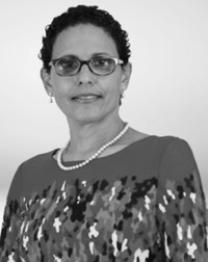
Roberta Clarke is the Chair of the Barbados Population Commission, the Executive Committee, International Commission of Jurists, and the Coalition against Domestic Violence, Trinidad and Tobago.
Roberta is an activist for social justice and gender equality. She is the former head of UN Women Offices in East and Southern Africa, Libya Programme, the Asia Pacific region and the Caribbean. She is lawyer and extensively engaged in civil society.

James Clarke serves as President of the Barbados Chamber of Commerce and Industry (BCCI) which helps local businesses prosper and grow by facilitating a more enabling business environment in Barbados and the CARICOM Single Market. BCCI’s areas of focus include assisting members make linkages in new offshore markets, business resiliency and sustainability, climate change initiatives and projects, and cost of living issues.
James is an Executive Director and Electrical Power Systems Engineer with experience in engineering company operations.
His interests are Business Process improvement, Electrical Power Generation and Distribution, Power Quality, Power System efficiency and reliability, Maintenance and Repair Operations, Energy Efficiency, and Green Building Science.
James has a Master of Business Administration from the University of Surrey, Guildford, UK, and a Bachelor of Engineering Science (Electrical) from Western University, London, Ontario, Canada.
James is a Registered Professional Engineer in Barbados and a Certified Power Quality Professional.
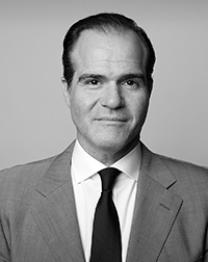
Mauricio Claver-Carone was elected President of the Inter-American Development Bank (IDB) on September 12, 2020. He also chairs the Board of Executive Directors of IDB Invest, the private-sector arm of the IDB Group, and the Donors Committee of IDB Lab, the Bank’s incubator for innovative development projects. Under his leadership, the Bank has developed a blueprint for post-pandemic recovery and prioritized efforts to avert another “lost decade” in Latin America and the Caribbean.
Since his inauguration on October 1, 2020, Mr. Claver-Carone has led an unprecedented response to the immediate impact of COVID-19, including $1 billion to support countries’ vaccine purchases and distribution plans, and a first-of-its-kind guarantee to help countries better compete to obtain the lifesaving shots.
He spearheaded the creation and implementation of Vision 2025 – Reinvest in the Americas: A Decade of Opportunity , a strategy to jumpstart recovery in the region and accelerate sustainable, inclusive growth. Approved by the Board of Governors in March 2021, it identifies five key areas for development that will guide the Bank’s efforts: integration and nearshoring; digitalization; support for small businesses; gender equality; and climate change. To better leverage private financing opportunities in these areas, Mr. Claver-Carone launched the largest private-sector coalition in the history of the IDB, which has grown to include more than 120 global corporate executives.
Internally, he has led an ambitious reform and modernization effort, including initiatives to improve operational efficiency, productivity and transparency to enable better results, impact and monitoring. He has prioritized a digital transformation of the Bank’s work and the development a new human capital strategy that are under way.
Prior to joining the IDB, Mr. Claver-Carone served as Deputy Assistant to the President of the United States and Senior Director for Western Hemisphere Affairs at the National Security Council. In this capacity, he was the U.S. President’s principal advisor on issues related to Canada, Latin America and the Caribbean. During this period, he conceptualized a whole-of-government economic growth initiative, América Crece (“Growth in the Americas”), which led to the creation of energy and infrastructure finance frameworks with nearly half of the nations in Latin America and the Caribbean. He also spearheaded the first White House-led Western Hemisphere Strategic Framework for U.S. inter-agency policy guidance and development since 2004.
Mr. Claver-Carone previously served as the United States Executive Director at the International Monetary Fund (IMF), where he represented the United States, as the largest shareholder on the IMF’s Executive Board. In this capacity, he worked with the U.S. Department of the Treasury, the Federal Reserve Board and the U.S. inter-agency to effectively present policies regarding foreign exchange practices, debt transparency and trade to the Executive Board and to IMF management. He also played an important role in lending arrangements for Argentina, Barbados and Ecuador, and revolving credit lines for Colombia and Mexico.
From 2017 to 2018, Mr. Claver-Carone served as Senior Advisor for International Affairs at the U.S. Department of the Treasury, where he was a principal policy advisor to the Secretary of the Treasury and
to the Under Secretary for International Affairs on geo-political, national security and economic issues. He was a key figure in developing the bipartisan Better Utilization of Investments Leading to Development Act of 2018, which created the U.S. International Development Finance Corporation.
Prior to his government service, Mr. Claver-Carone was Executive Director of Cuba Democracy Advocates in Washington, D.C., a non-partisan organization dedicated to the promotion of human rights, free markets and the rule of law. He was also host of the bilingual foreign policy show “From Washington al Mundo” on Sirius-XM Radio and the co-founder of a data-software start-up company.
Mr. Claver-Carone began his career as an Attorney-Advisor for the U.S. Department of the Treasury’s Office of the Comptroller of the Currency, where he provided counsel on banking laws, capital requirements and securitizations. He was also a Clinical Assistant Professor at The Catholic University of America’s School of Law, an Adjunct Professor at The George Washington University’s National Law Center and a Research Fellow at Georgetown University’s Law Center for the Americas.
Mr. Claver-Carone earned his Bachelor of Arts degree from Rollins College, Juris Doctor from The Catholic University of America, and Master of Laws in International and Comparative Law from Georgetown University Law Center.
He is a native speaker of English and Spanish.

Jason's goal is to create global standards for producing and using raw materials, particularly in terms of carbon and water.
He has convened industry roundtables of retailers, buyers, producers and environmentalists to reduce the key impacts of producing soy, cotton, sugarcane, salmon, shrimp, mollusks, catfish and tilapia.
Jason ran a family farm, taught at Harvard and Yale, worked at the US Department of Agriculture, and spent more than 25 years working with human rights and environmental organizations before joining WWF in 1999.