
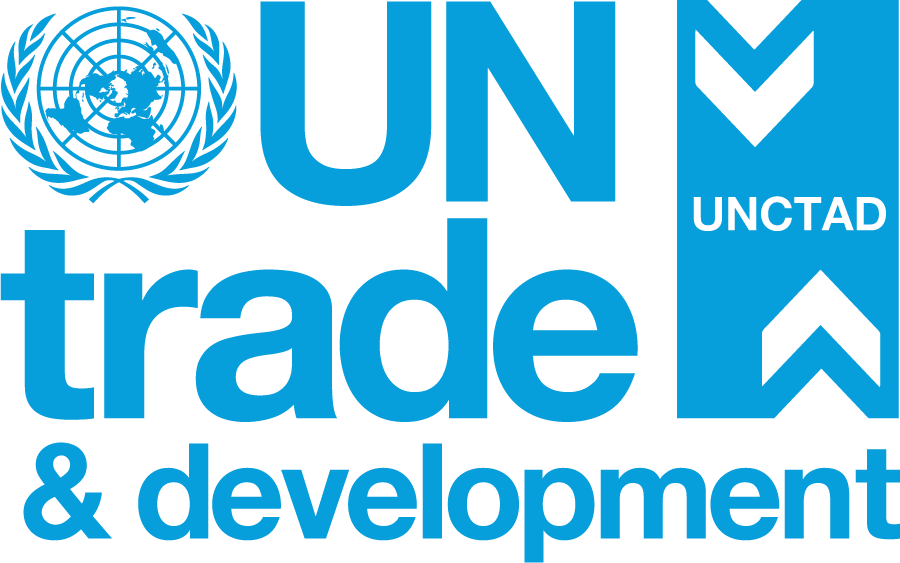


The projections push growth further below the pre-pandemic average of 3% and far below the 4.4% average seen before the 2008-2009 financial crisis.
UN Trade and Development (UNCTAD) projects the world economy will expand by only 2.6% in 2025 and 2026, down from 2.9% in 2024.
The projections push growth further below the pre-pandemic average of 3% and far below the 4.4% average seen before the 2008-2009 financial crisis.
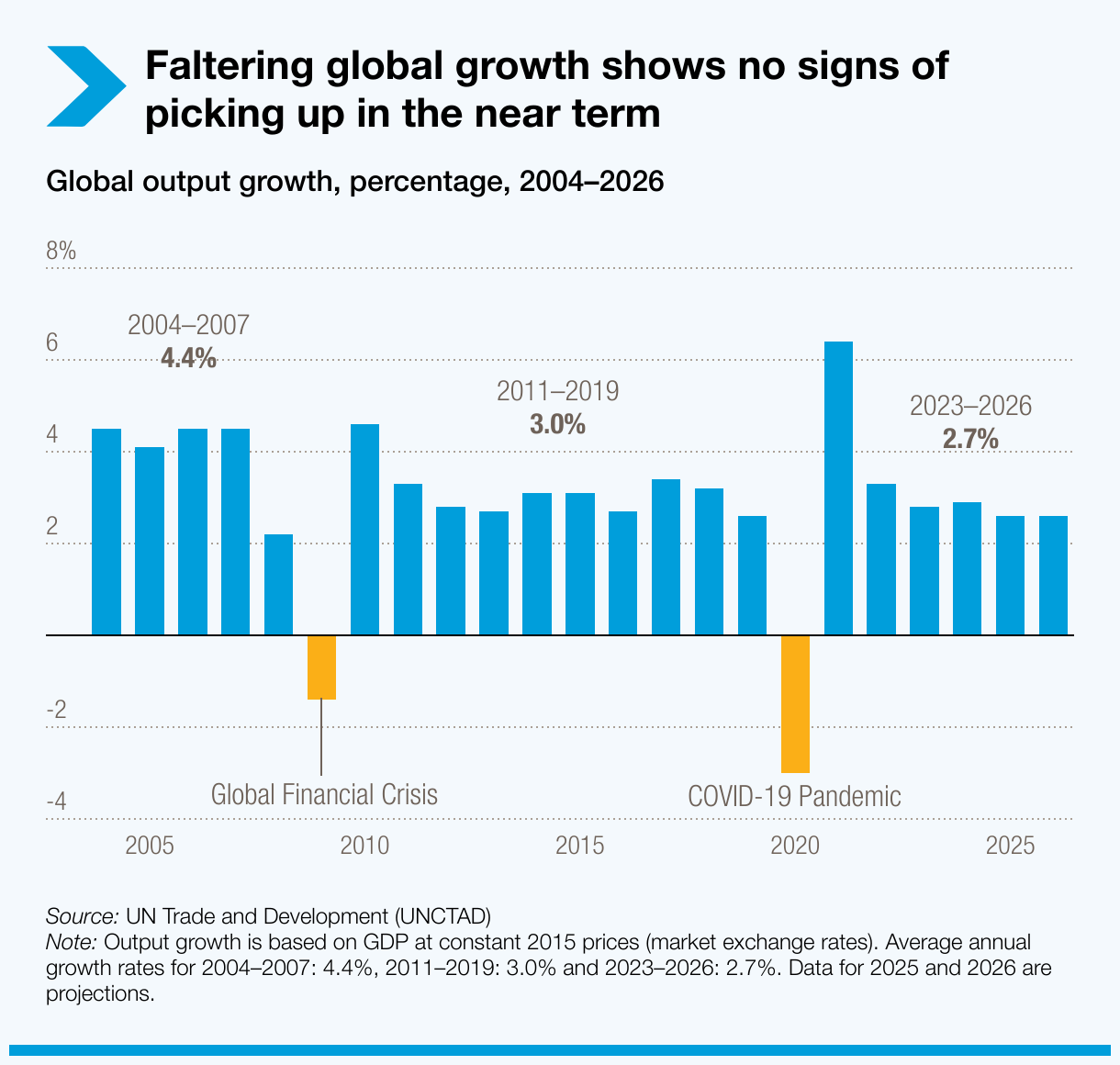
Major economies are also losing momentum. Growth in the United States is expected to slow to 1.8% in 2025 and 1.5% in 2026. China’s growth is projected to decline from 5% in 2025 to 4.6% in 2026, well below the 6.7% average recorded before the pandemic.
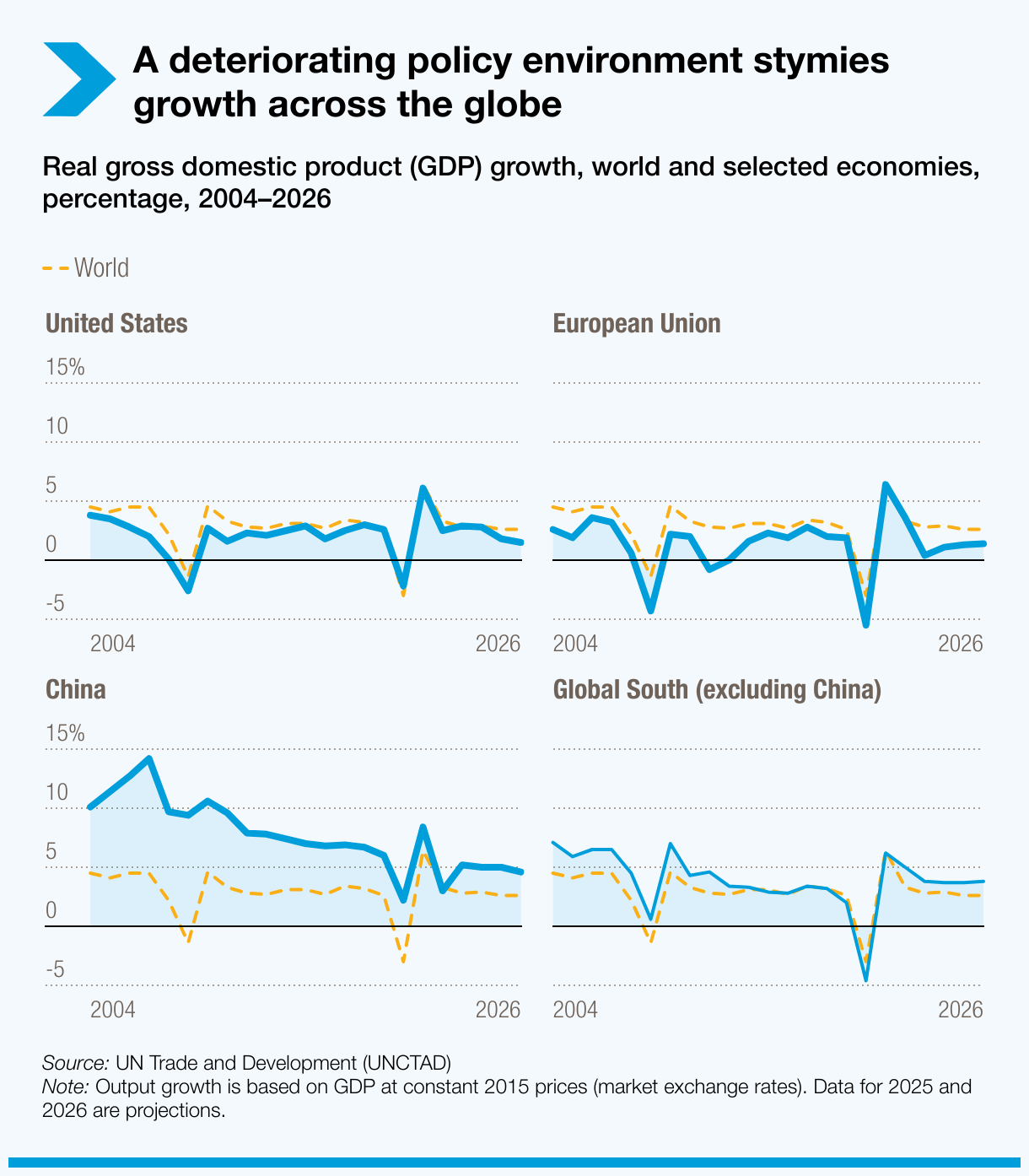
The year had begun with what looked like a rebound. Trade rose by about 4%, lifted by firms rushing to import goods before new tariffs and by growth in the digital economy and artificial intelligence. But without these temporary factors, underlying trade growth drops to between 2.5% and 3%, and signs of a slowdown are already visible.
Finance increasingly shapes global trade
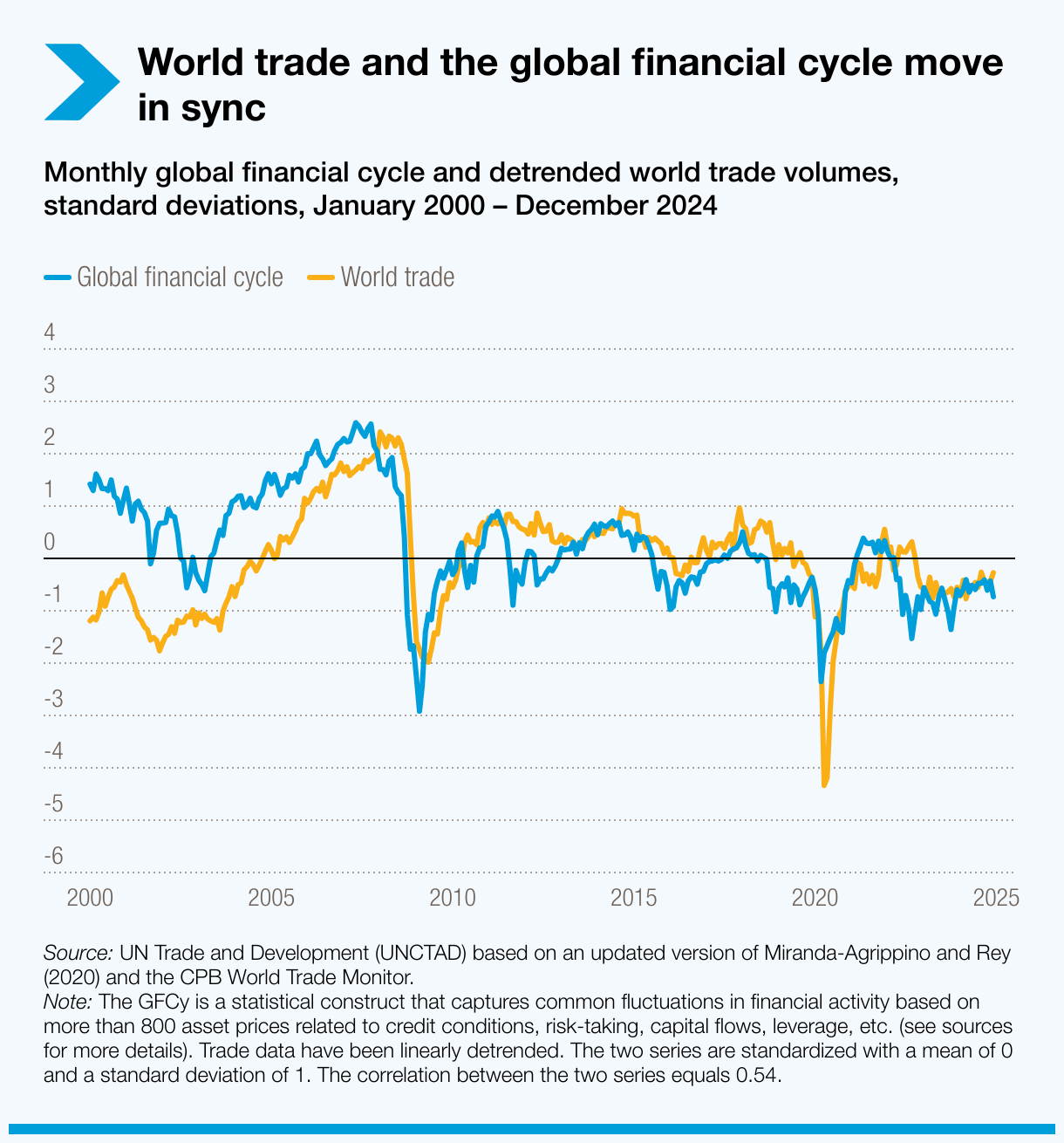
A central finding of UNCTAD's Trade and Development Report 2025 is that financial conditions now influence trade as much as real economic activity.
Trade is not just a chain of suppliers. It’s also a chain of credit lines, payment systems, currency markets and capital flows – and these financial channels increasingly determine the direction of global trade.
More than 90% of global trade depends on trade finance. This deep reliance means trade reacts quickly to shifts in interest rates or investor sentiment in major financial centres.
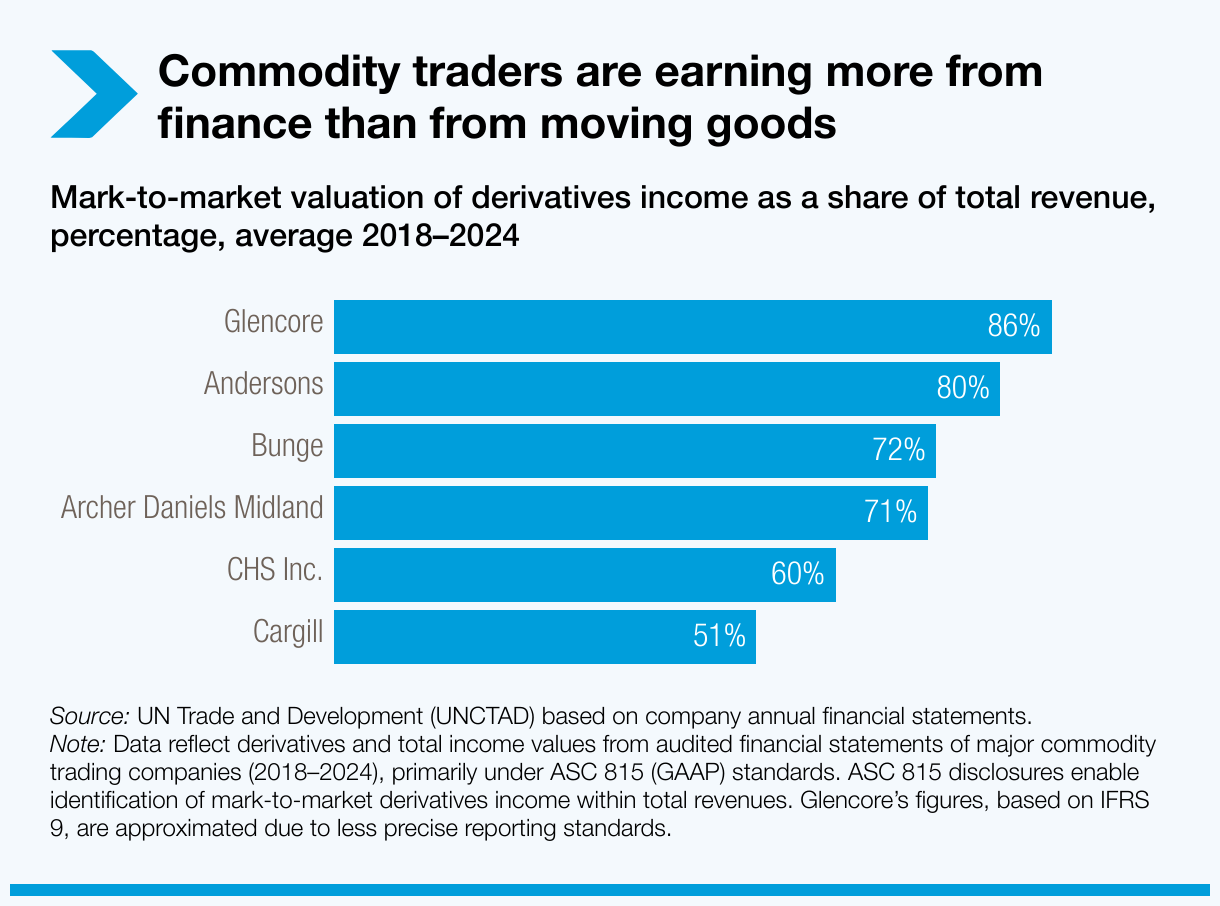
The report also highlights the growing importance of financial factors in commodity markets, especially food systems. For several major food trading companies, more than 75% of income now comes from financial operations, not from moving wheat, coffee, cocoa or other crops.
The global South remains on the financial margins
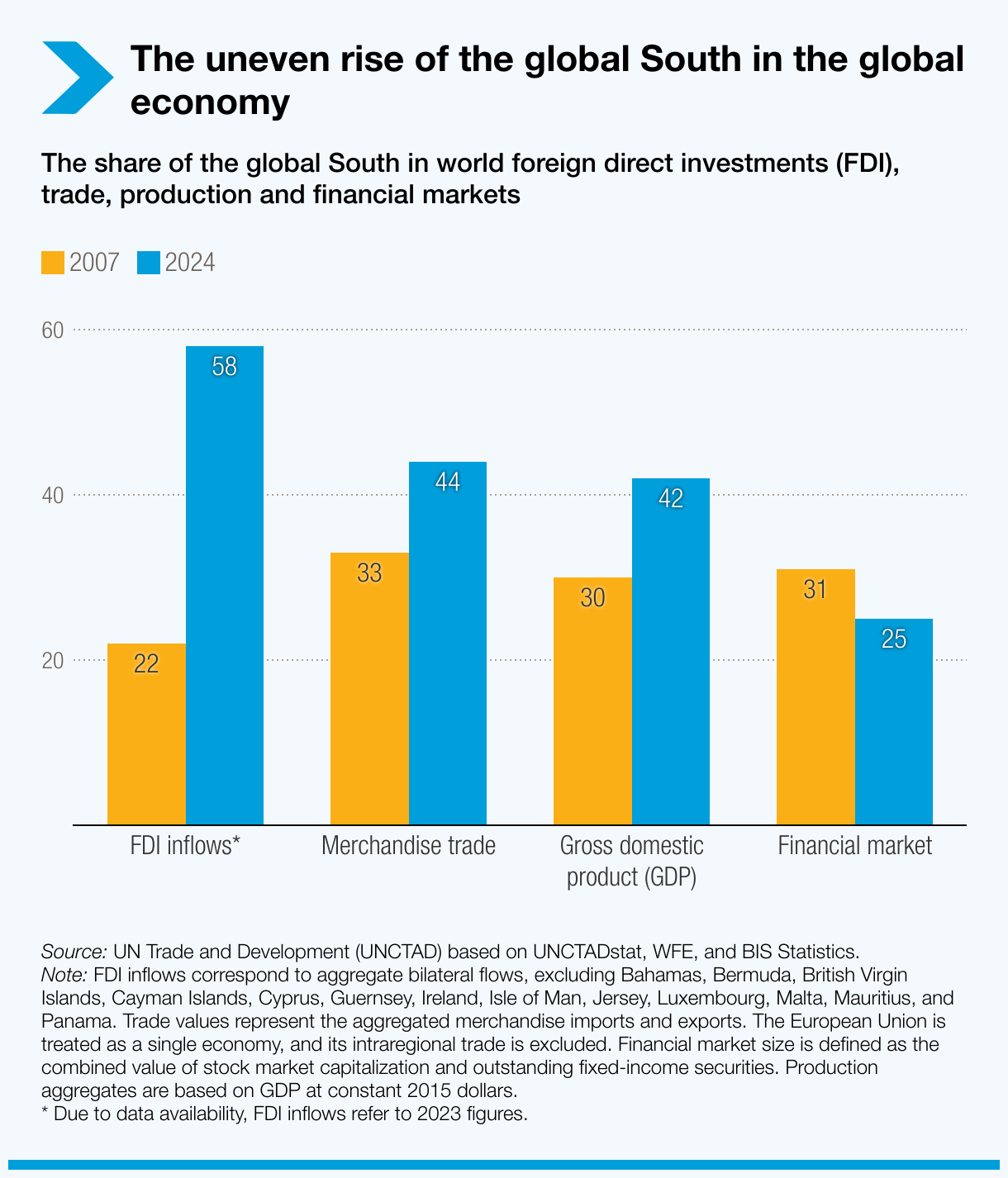
Developing economies are forecast to grow by 4.3%, faster than advanced economies. The global South now generates more than 40% of world output, nearly half of global merchandise trade and more than half of global investment inflows.
Yet developing countries hold just 25% of global financial market value.
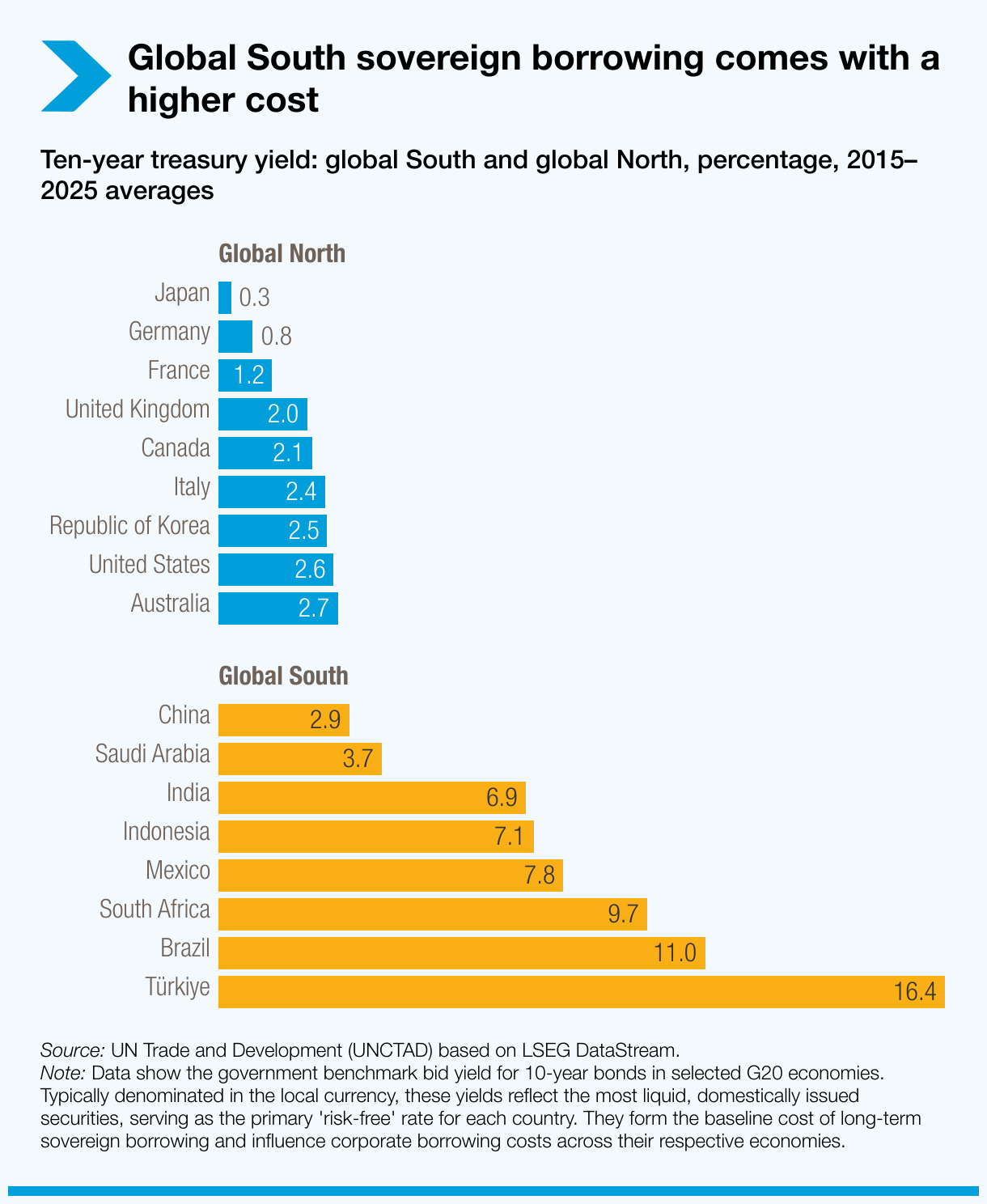
Because domestic financial markets are often small, many developing economies rely on external borrowing – typically at much higher cost. Borrowing rates of 7% to 11% are common, compared with 1% to 4% in major advanced economies.
Beyond higher financing costs, they face sharper swings in capital flows and rising climate-related financial risks. These pressures restrict long-term investment and slow growth.
Reforms needed to align trade, finance and sustainable development
The Trade and Development Report 2025 outlines a set of practical reforms to reduce financial vulnerability and better align trade, finance and development. These include:
- Updating trade rules for today’s economy, including services, digital trade, climate action and new industrial strategies.
- Reforming the international monetary system to limit harmful swings in currencies and capital flows.
- Strengthening regional and domestic capital markets so developing countries can raise affordable long-term finance.
- Improving transparency in commodity trading and expand access to affordable trade finance, especially for small businesses.