


UNCTAD analysis shows how countries can use better data to move from broad capacity gaps to specific service needs to reduce plastic pollution.
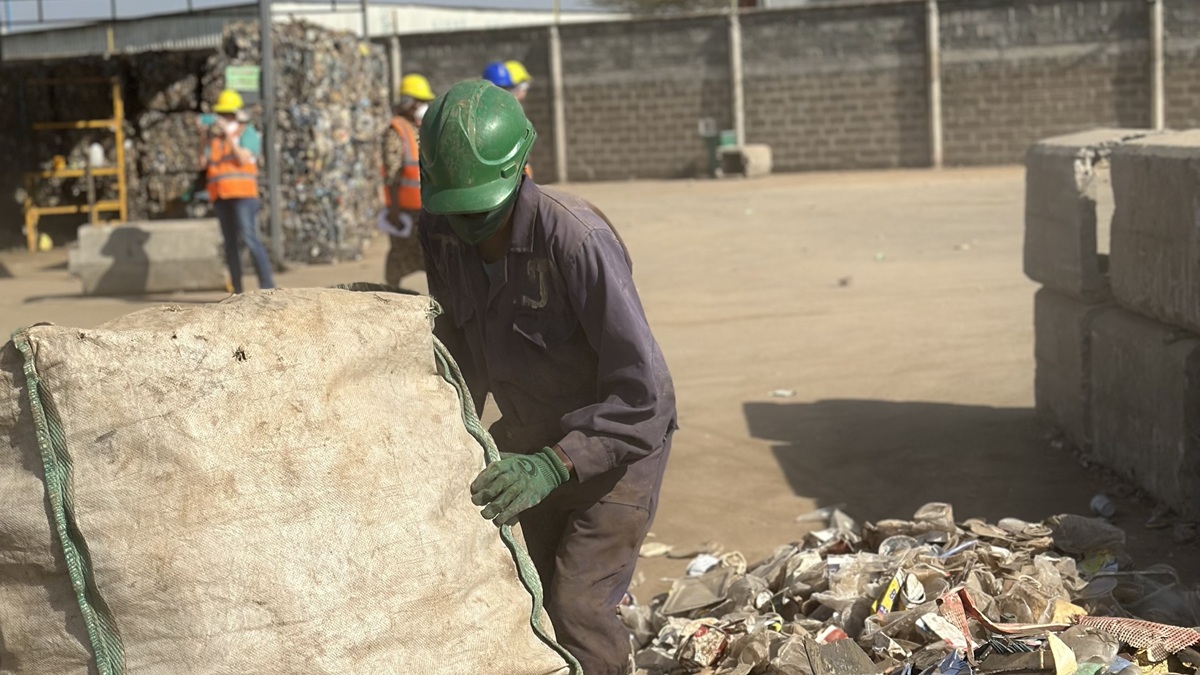
© Maria Durleva/UNCTAD Photo | Plastic waste sorting in Nairobi, Kenya.
At waste-sorting sites, plastic pollution is easy to see. Less visible are the services that enable waste collection, sorting and recycling – from engineers maintaining equipment and laboratory technicians testing recycled materials to workers sorting and handling plastic waste.
Further upstream, researchers, designers and engineers help reduce plastic waste before it is created by developing safer, better product designs and affordable substitutes.
Plastic pollution starts with goods, but solutions depend on services, UN Trade and Development (UNCTAD) shows in a new study.
“Ending plastic pollution will depend not only on managing plastic goods, but on the services that prevent waste, enable recycling and support clean-up,” says Luz Maria de la Mora, UNCTAD director of international trade and commodities.
Mind the gap in services data
Trade data records activities under broad headings such as engineering, testing and education, but does not show which services are being used to prevent or manage plastic pollution.
That leaves policymakers with a basic information gap: what services exist, where they are missing and where support may be needed.
Global trade in plastics exceeded $1.1 trillion in 2023, about 5% of merchandise trade. But the value of trade in services specifically used to tackle plastic pollution remains unknown.
Unlike trade in goods, which is recorded at the border through customs data, global trade in services is measured through surveys and balance-of-payments data.
This makes it harder to identify the full range of services needed to address plastic pollution, from local waste collection to imported engineering expertise.
The data gap is particularly acute in developing economies: fewer than 15 regularly report bilateral trade in services with their trading partners, adding to the challenge of tracking whether relevant services are reaching the places where they are needed.
Turning data gaps into service needs
The UNCTAD study helps close this gap by mapping 19 types of services to 71 existing United Nations Central Product Classification codes across eight stages of the plastics value chain, from design and production to recycling and clean-up, without creating a new international classification.
“This mapping turns broad capacity gaps into specific service needs, improves trade data and exposes barriers to access,” UNCTAD director Luz Maria de la Mora adds.
“For developing economies, that clarifies what can be built locally and what can come through trade, investment or technical cooperation.”
Implications for trade policy
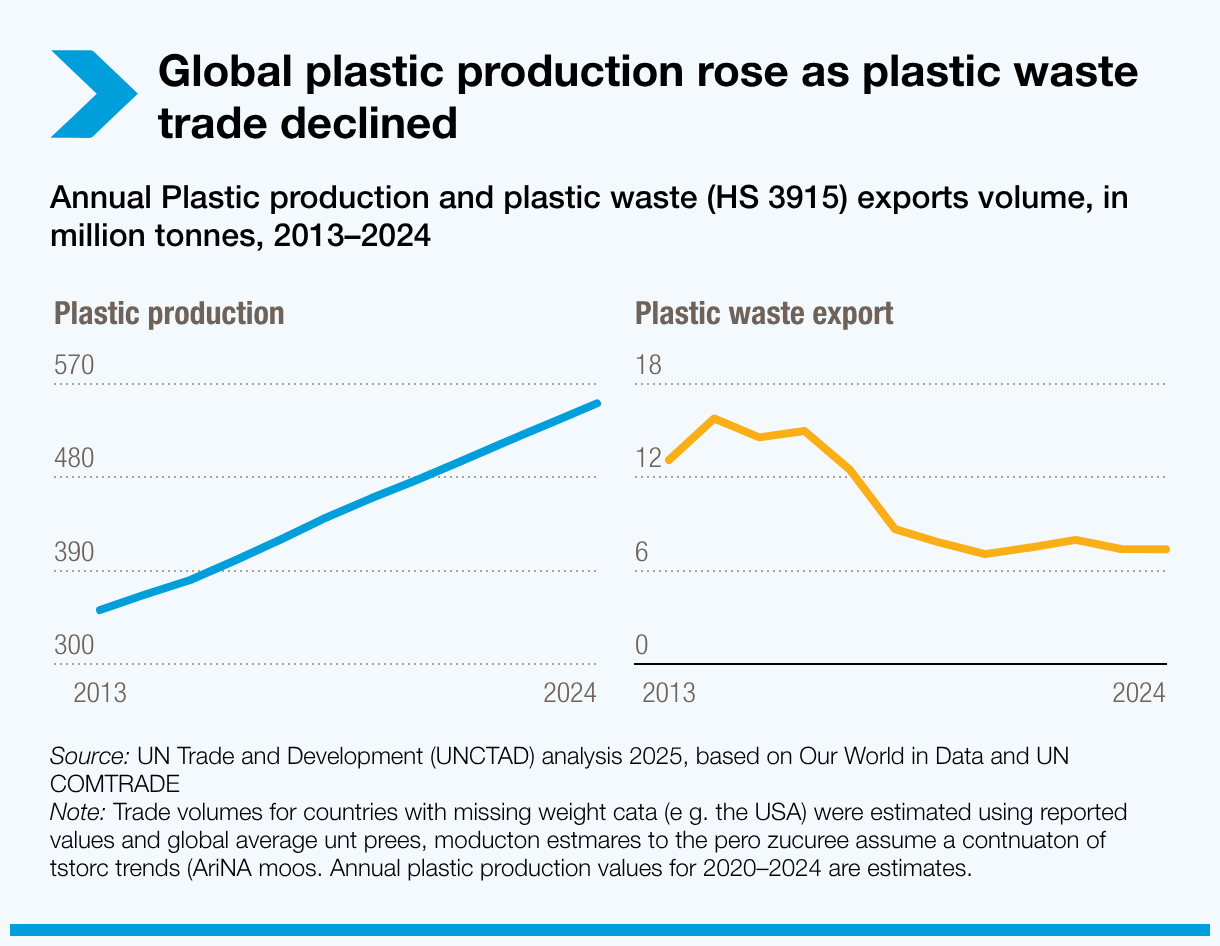
Between 2013 and 2024, plastic production rose while international trade in plastic waste fell sharply.
This meant that more countries needed to manage plastic waste closer to home, often without the skills, technology or specialized services needed to do so safely.
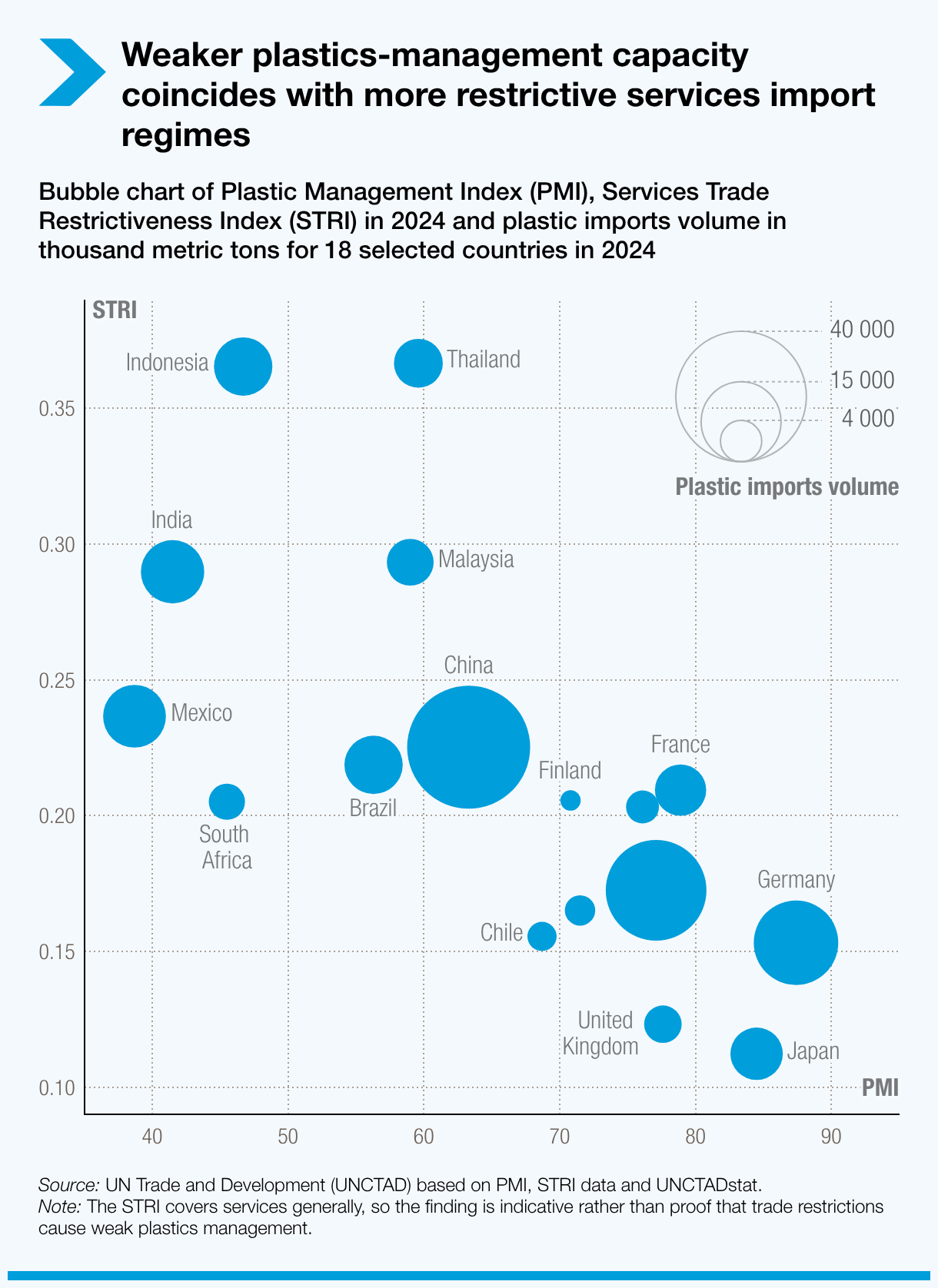
Comparing 18 economies, the UNCTAD study identifies a further constraint: countries with weaker plastics-management capacity also tended to have more restrictive regimes for importing services, including licensing and qualification requirements, technical standards and restrictions on foreign firms and personnel.
“We need to look at the services that make prevention, substitution, circularity and sound waste management possible, including who can affordably access these services,” says Keiran Smith of Mr. Green Africa, a Nairobi-based recycler supported by the UK-funded Sustainable Manufacturing and Environmental Pollution (SMEP) Programme, implemented by UNCTAD and the UK Foreign, Commonwealth and Development Office.
Services as part of the wider response to plastic pollution
Against the backdrop of the UNCTAD analysis, multilateral negotiations continue towards an international legally binding instrument on plastic pollution.
The UNCTAD study comes ahead of discussions at the World Trade Organization on access to goods, services, technologies and trade-related technical assistance for developing and least-developed members.
The study also seeks to inform broader global efforts on product design, waste management and remediation, alongside finance, capacity-building, technical assistance and technology transfer.