

- Expanding the use of alternatives to conventional plastics could help reduce plastic pollution, while opening new business and trade opportunities for developing economies.
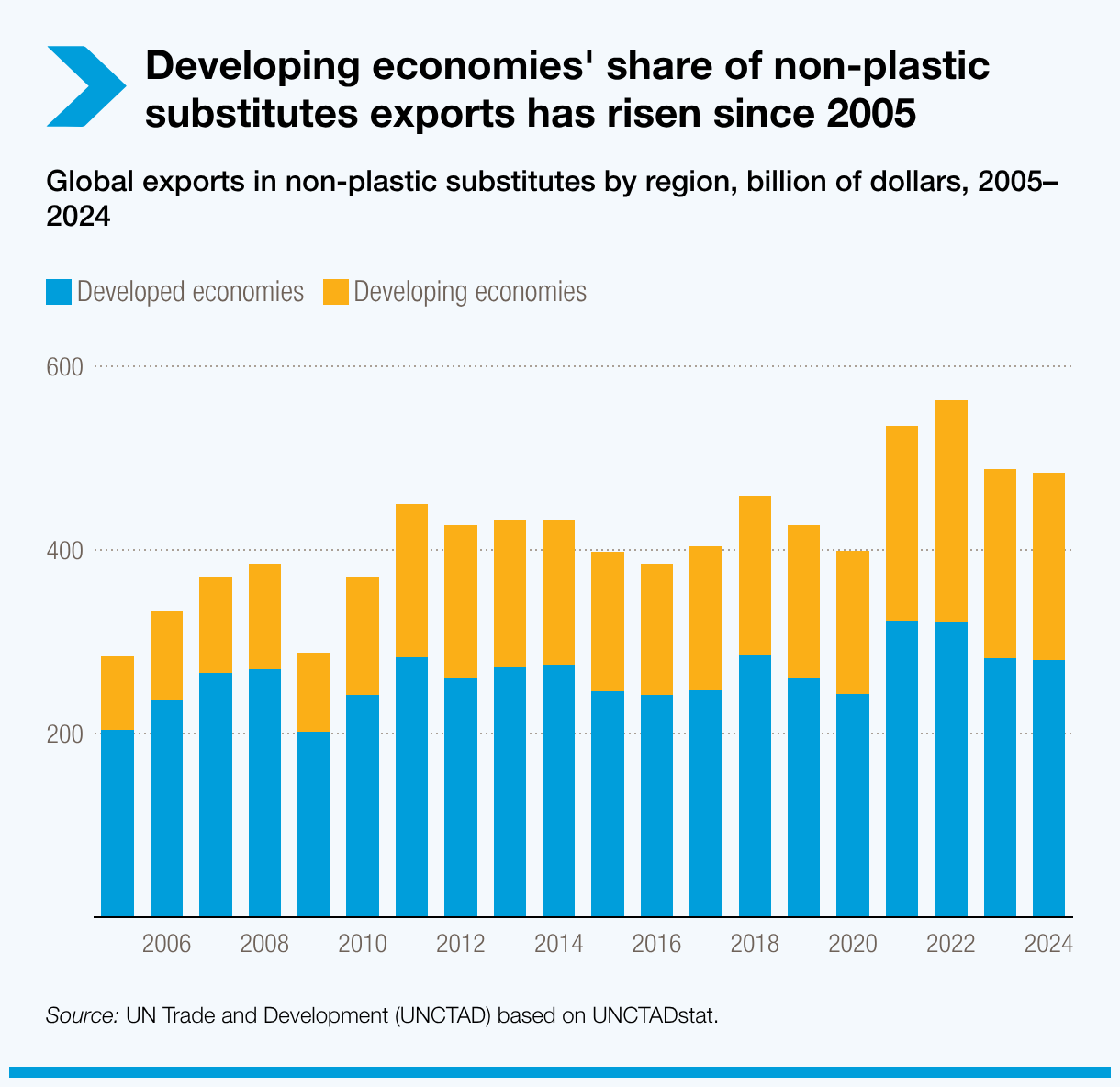
- Global exports of non-plastic substitutes stood at $484 billion in 2024, 14% below their 2022 peak and much less than half the $1.1 trillion traded in plastics.
- Developing economies accounted for 42% of exports, up from roughly a quarter in 2005. But value-added products represented only 35% of global trade in non-plastic substitutes.
Global exports of plastics have more than doubled in value since 2005, adding to challenges for waste management and environmental sustainability. Meanwhile, exports of non-plastic substitutes reached $484 billion in 2024, 14% below their 2022 peak, according to UN Trade and Development (UNCTAD) data.
Expanding the use of sustainable, safe, environmentally friendly and affordable substitutes to conventional plastics could help reduce pollution at source while opening new trade opportunities for developing economies. But the environmental benefits depend on how these materials are produced, used and disposed of.
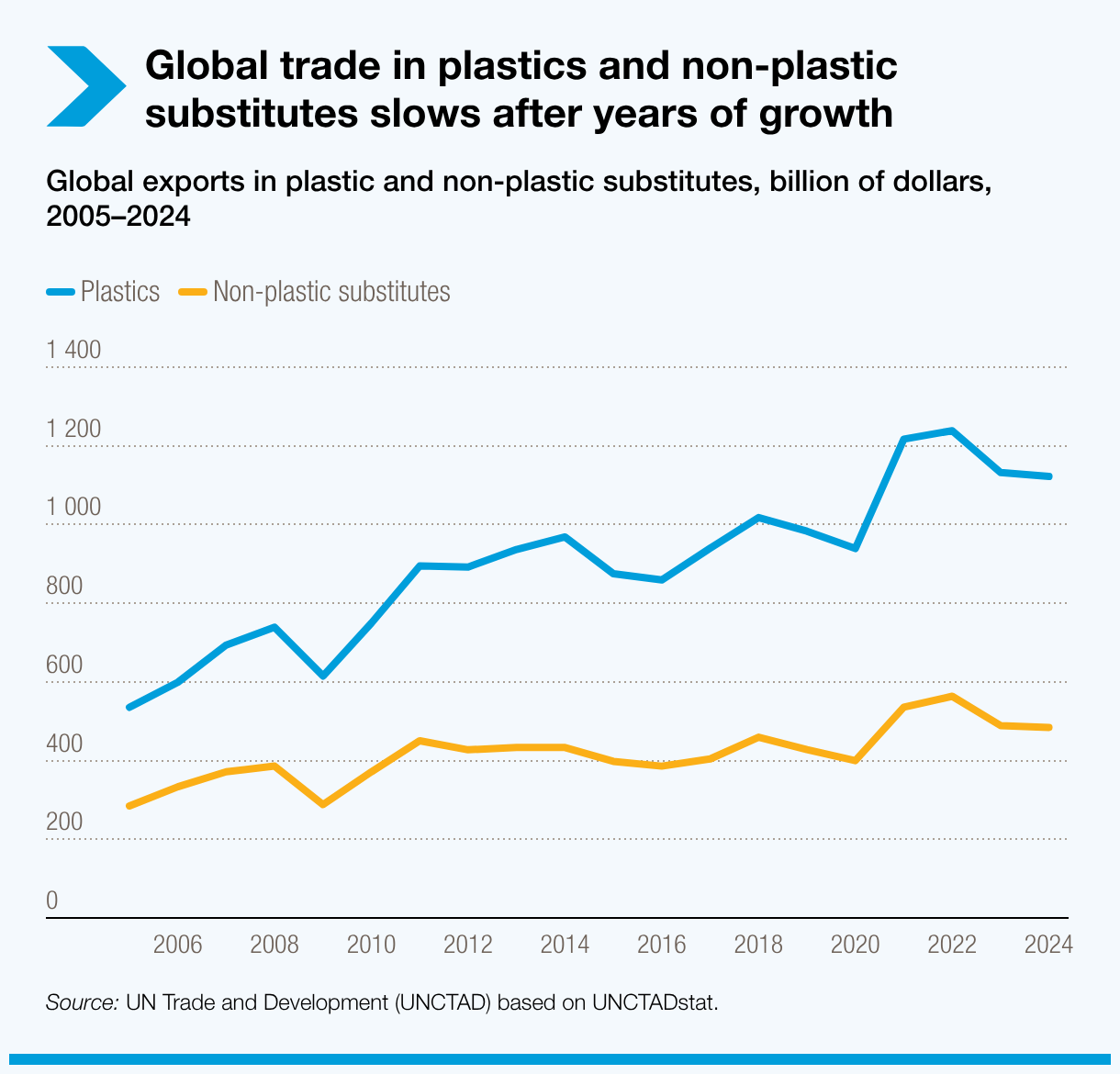
A substantial trade that still trails plastics
Pressure to move away from conventional plastics is growing, driven by regulation, sustainability targets and price swings. Alternatives include paper, glass, natural fibres, minerals and seaweed-based products.
UNCTAD launched its data series during the 2024 plastics treaty negotiations in Busan, with support from the Sustainable Manufacturing and Environmental Pollution (SMEP) Programme, to track trade in products that can replace plastics.
Developing economies are closing the gap in global substitutes trade
Developed economies accounted for 58% of global exports of non-plastic substitutes in 2024, while developing economies accounted for the remaining 42% – up from roughly a quarter in 2005.
Moving beyond raw materials
UNCTAD’s Global Trade Update on biodiversity highlights another challenge: capturing more value along the production chain.
In 2024, raw materials accounted for nearly two thirds of global trade in non-plastic substitutes. Value-added products represented the remaining 35%, with exports reaching $170 billion out of a global total of $484 billion.
For developing economies, greater value addition could create opportunities to diversify exports, strengthen domestic production capabilities and retain more value from the sustainable and responsible use of natural resources.
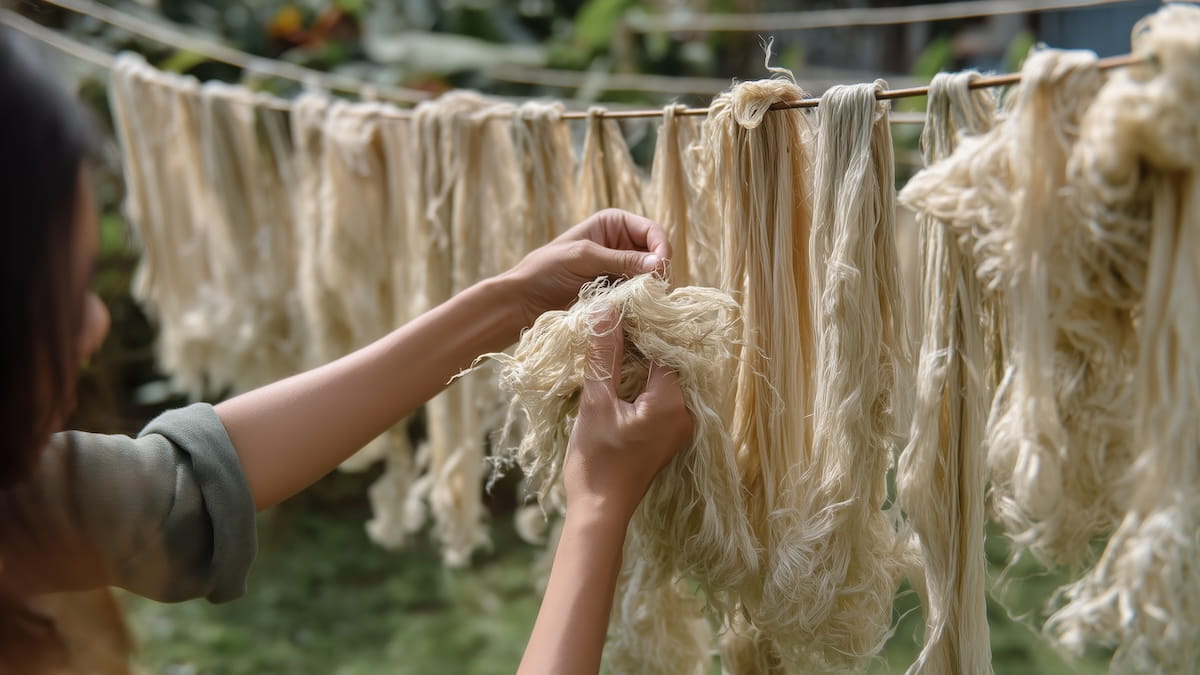
In Kenya, an SMEP-supported pilot turned 3,300 tonnes of pineapple leaves, previously burned, into more than 100 tonnes of textile-grade fibre.
Scaling up these opportunities will require investment, access to appropriate technologies, domestic innovation, infrastructure and trade policies that address barriers facing non-plastic substitutes.
From data to action
In East Africa, a regional bill to control single-use plastics is under development. “UNCTAD’s evidence and engagement were crucial in helping the East African Community develop a coordinated approach to regulating single-use plastics,” says Gideon Gatpan Thoar, Chairperson of the East African Legislative Assembly on Agriculture, Tourism and Natural Resources.
A similar initiative is under way in West Africa, with Ghana moving towards adopting a national blueprint for substitutes, supported by the UK-funded SMEP Programme.
UNCTAD contributes to international discussions on plastics and sustainable alternatives through a series of upcoming events. These include the second East Africa Alternative Fibres Symposium, which will explore opportunities for developing economies in natural fibre value chains, and an OECD–UNCTAD workshop on standards for sustainable plastic alternatives (26 November, WTO, Geneva). Sustainable production methods and material substitution will also feature in the joint UNCTAD–UNEP input to the Basel Convention discussions on used textiles and textile waste and at the UN Water Conference (8–10 December).
UNCTAD's trade databases on plastics and non-plastic substitutes have informed international trade policy discussions at the WTO Dialogue on Plastics Pollution and the plastics treaty negotiations.