

Attracting capital that supports growth, resilience and sustainable development is increasingly important as investment policies become more selective and global value chains evolve.

© Shutterstock/Gorodenkoff
International investment is navigating a turbulent era, as the World Investment Report 2026 shows.
Geopolitical tensions, technological change and shifting trade patterns are reshaping where companies invest and how they organize their global value chains.
For governments, the challenge now goes beyond attracting more capital. It is also about securing investment that strengthens productive capacity, creates jobs and supports long-term economic growth, while remaining open to international business.
Investment still welcome, but on more selective terms
The World Investment Report 2026 highlights growing shifts in investment policies.
Governments adopted a record 229 investment policy measures in 2025, of which 73% were favourable to investors.
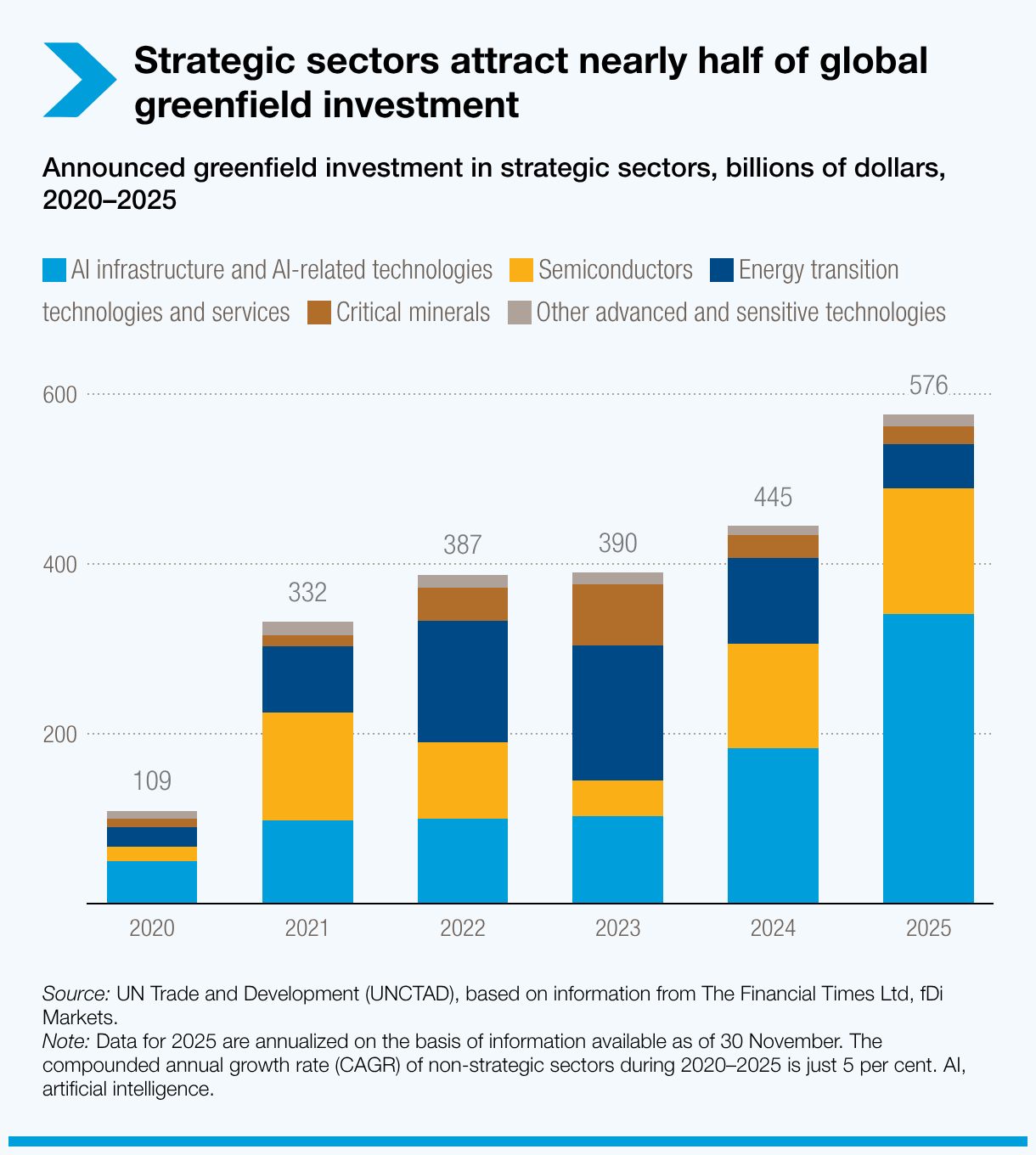
Meanwhile, policies increasingly direct investment towards strategic sectors such as artificial intelligence, semiconductors, critical minerals and energy-transition technologies.
Security concerns are also playing a greater role in investment decisions. The number of economies with investment screening regimes rose from 21 in 2016 to 52 in 2025.
This more selective approach creates both opportunities and challenges.
While governments seek to strengthen economic competitiveness and technological capabilities, investors need clear, predictable rules and confidence that projects can deliver returns over time.
For developing countries, attracting investment requires more than incentives. Reliable infrastructure, affordable energy, skilled workers, efficient public services and stronger links between foreign investors and local businesses can help make projects viable and generate lasting development benefits.
Fostering resilient value chains through investment
Rebuilding global value chains for growth and resilience will feature prominently at the World Investment Forum 2026, with a high-level plenary scheduled for 25 October.
Bringing together public- and private-sector leaders, the discussion will explore how investment policies, international cooperation and business partnerships can strengthen global value chains, unlock new growth opportunities and ensure that developing countries remain part of the global economy of the future.
As investment increasingly concentrates in strategic sectors, international cooperation will be essential to preserve predictable conditions for cross-border investment and broaden access to emerging opportunities.
At a time when governments and businesses are seeking greater resilience without sacrificing openness, bankable projects, reliable infrastructure, a skilled workforce and access to regional markets can help make investment propositions more attractive.