


New trade measures are reshaping export competition, shifting advantages across global markets.

© Adobe Stock/jeson | A worker welds steel in a manufacturing facility.
Trade policy changes can shift who wins and who loses in global markets. When governments adjust tariffs, preferences or other trade costs, they change prices and competitive conditions. Some exporters gain advantages while others lose ground, reshaping trade flows and sourcing decisions.
Recent United States trade measures illustrate how these shifts play out in practice. A new report from UN Trade and Development (UNCTAD) examines how uneven tariff increases are affecting access to the US market and what this means for developed, developing and least developed countries.
The analysis shows a more restrictive and uneven trade landscape – with clear losses for some exporters but new opportunities for others.
Tariff shifts are redrawing the competitive map
Trade policy changes redistribute competitiveness not only between domestic and foreign firms, but also among foreign suppliers. By altering relative prices, tariffs reallocate market shares and influence production, sourcing and investment decisions across global value chains.
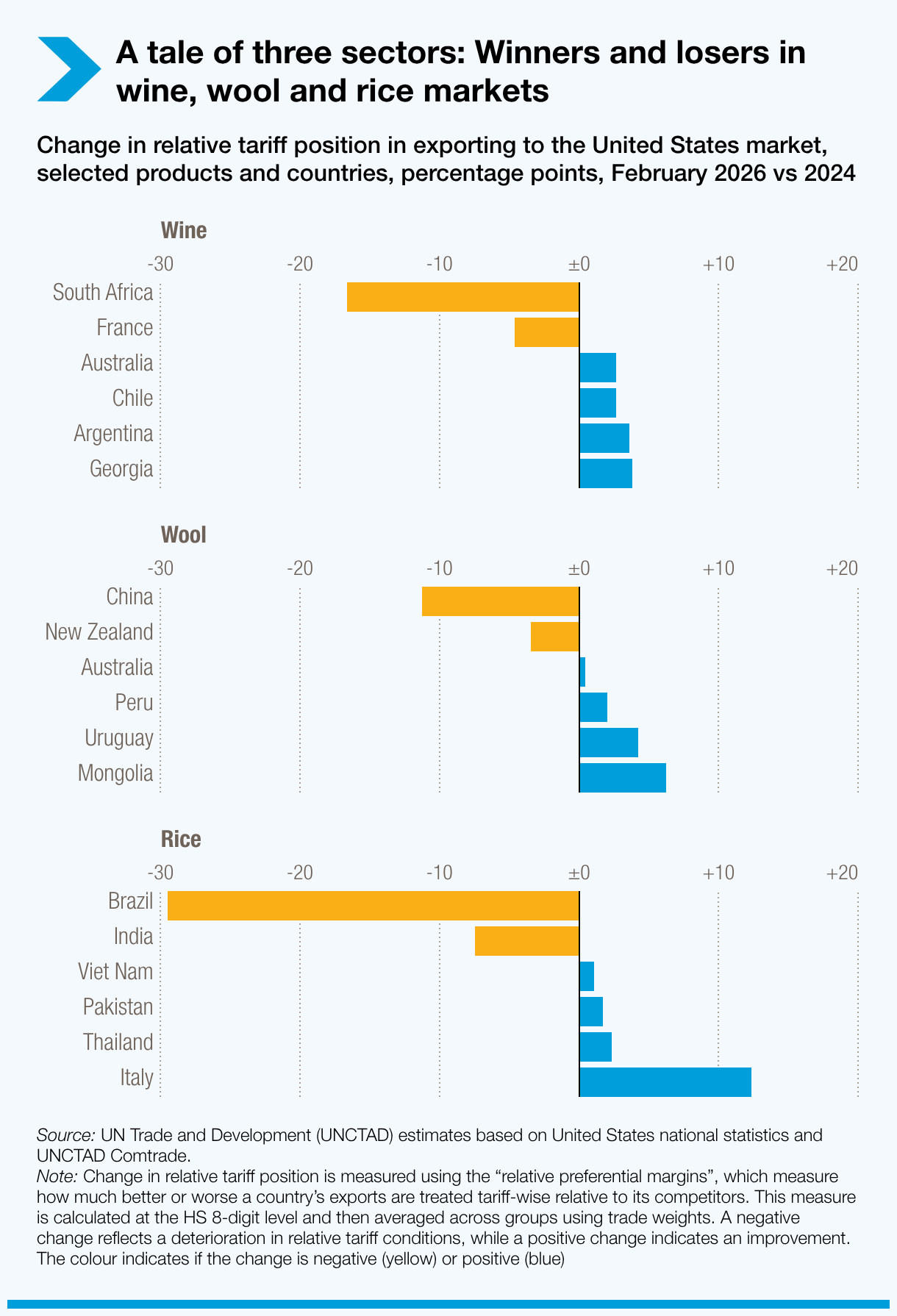
For example, as of early 2026, US imports of South African wine are roughly 17 percentage points more expensive relative to other wine exporters than in 2024. By contrast, rice imports from Italy have become about 12 percentage points cheaper than those from other suppliers. Such tariff gaps are likely to influence procurement decisions and gradually shift trade flows.
Uneven tariff hikes are driving trade diversion
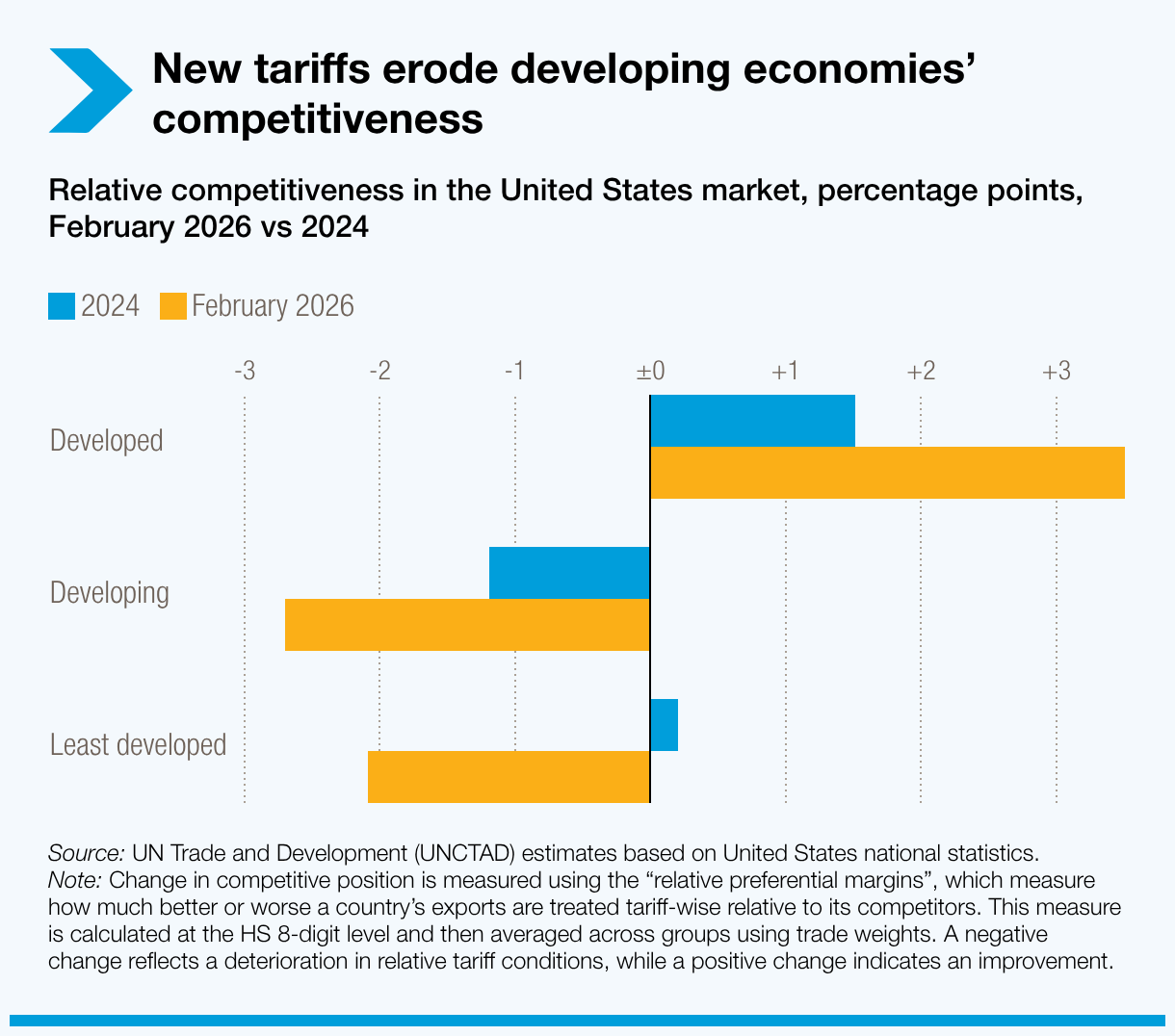
When tariff increases differ across suppliers, relative competitiveness changes. On average, developed economies appear less affected by recent US tariff changes. Their earlier tariff advantage of about 1.5 percentage points has widened by roughly 2 percentage points.
Developing economies have seen their relative disadvantage grow from around 1 to nearly 3 percentage points. Least developed countries, previously in a neutral position, now face an estimated disadvantage of about 2 percentage points.
Tariff changes are limiting upgrading in value chains
Tariff changes can also affect countries’ efforts to move up the value chain.
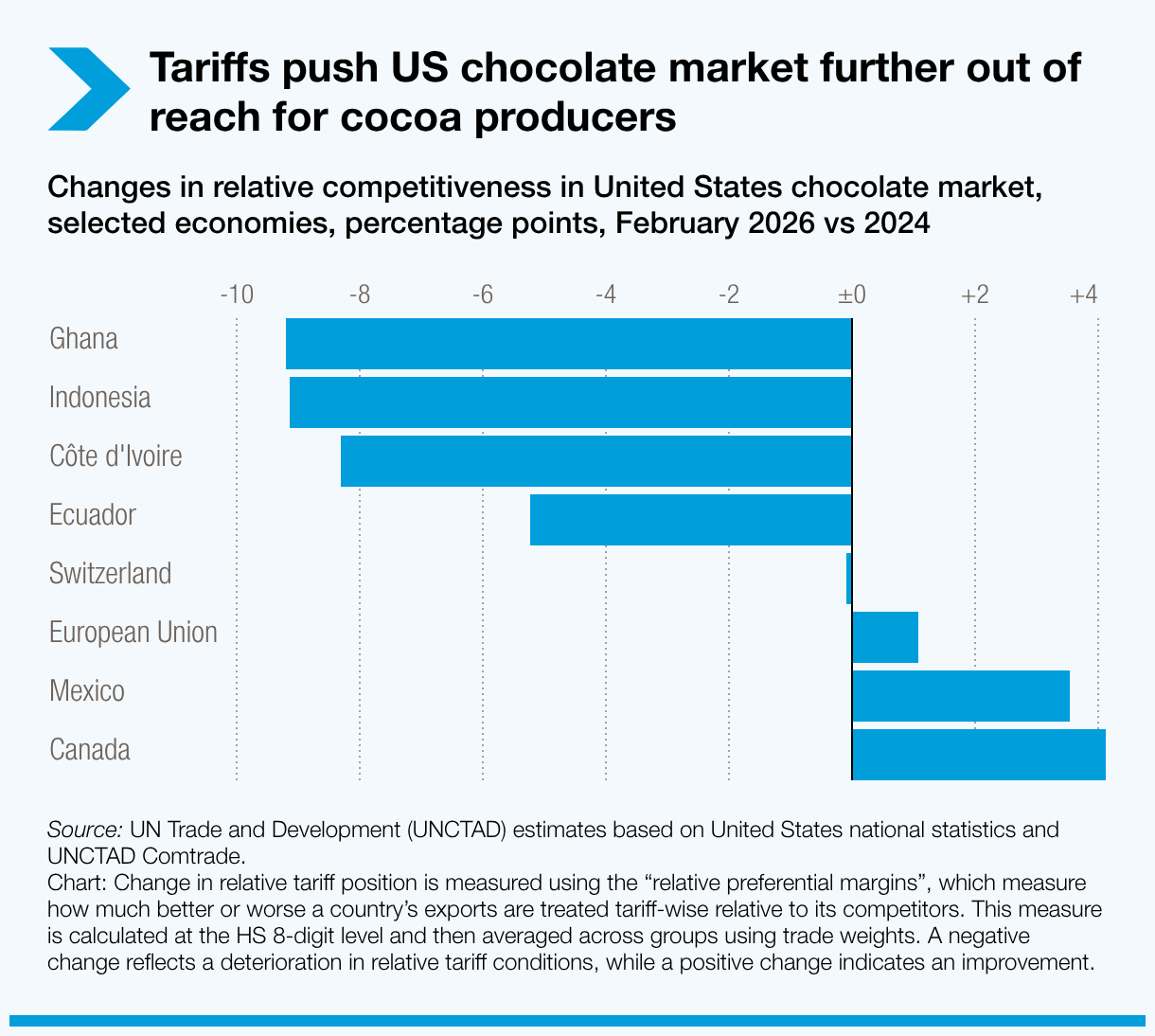
For example, along the cocoa–chocolate value chain, raw cocoa enters duty-free while tariffs on chocolate have risen significantly and unevenly. Major chocolate exporters such as Canada, Mexico, Belgium and Switzerland face smaller increases than cocoa-producing countries such as Côte d’Ivoire, Ecuador, Ghana and Indonesia, reinforcing existing specialisation and limiting upgrading opportunities.
Strategic responses matter
Shifting tariff regimes are redistributing competitiveness in complex and uneven ways. The effects differ by sector, country and export structure.
Countries need to monitor their relative tariff positions closely, diversify export markets where access tightens and seize openings where preferential margins improve. In a more discriminatory global trade environment, timely analysis and targeted policy responses will be essential to bolster export resilience and capture emerging trade opportunities.