



The quality, cost and availability of services directly affect competitiveness and participation in global value chains.
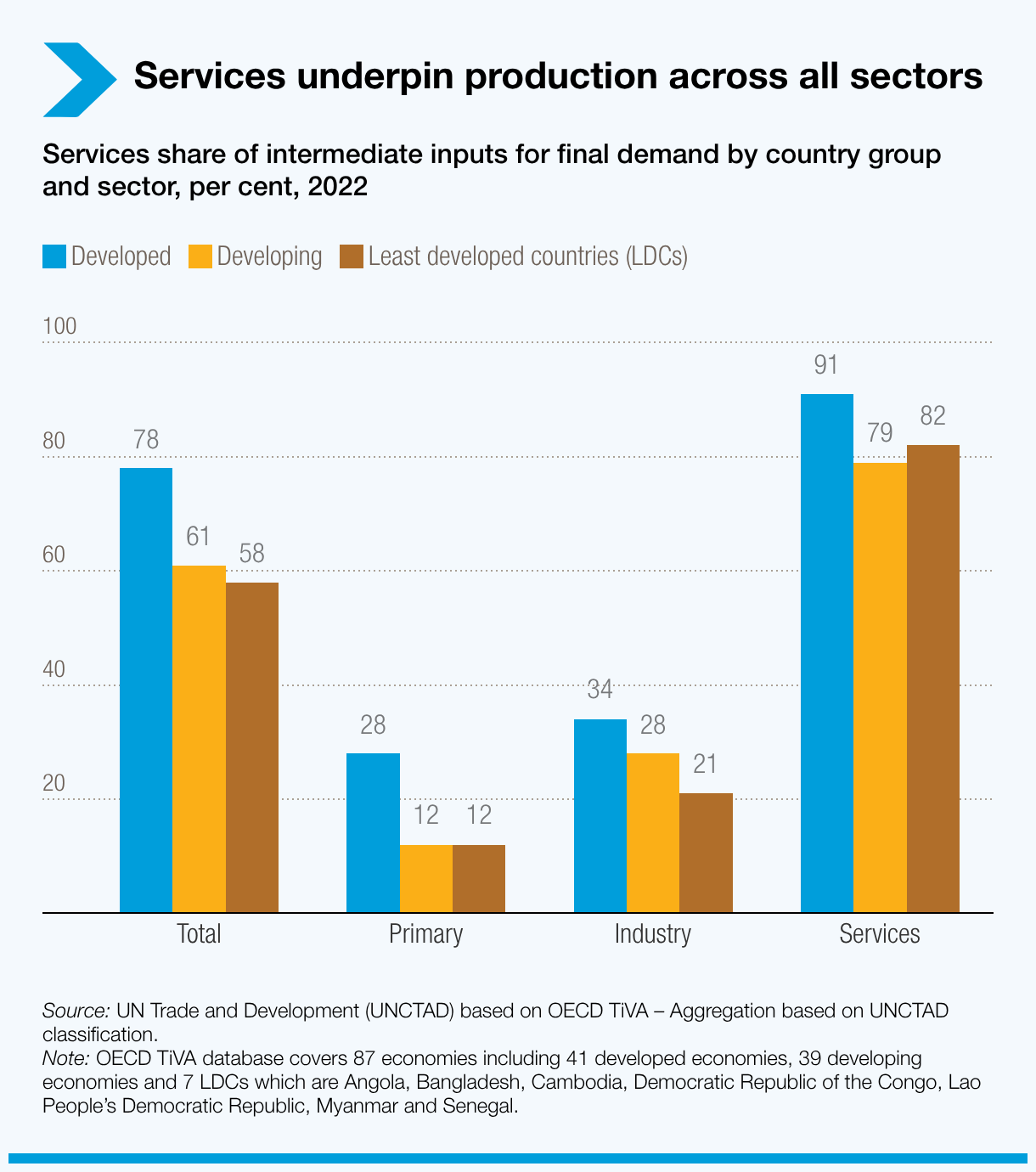
A ship carrying containers filled with smartphones, office equipment, car parts and other manufactured goods may seem like a straightforward trade in goods. But look more closely and some of the value inside those containers comes from the services needed to produce and move them – including engineering, finance, design, logistics and marketing.
This growing use of services as inputs across sectors, from agriculture to manufacturing, is known as “servicification”.
Digitalization is helping accelerate servicification. It’s also reshaping services trade. Exports of digitally deliverable services – those that can be supplied remotely over computer networks – grew by an average of 7.1% a year over the past decade.
The services gap
But services aren’t embedded in industrial goods exports equally. In developed economies, services represent 33% of intermediate inputs in industrial goods exports, compared with 27% in developing economies and 13% in the least developed countries (LDCs) covered by the data.
Put simply, the services share of inputs in industrial exports is about two and a half times higher in developed economies than in the LDCs.
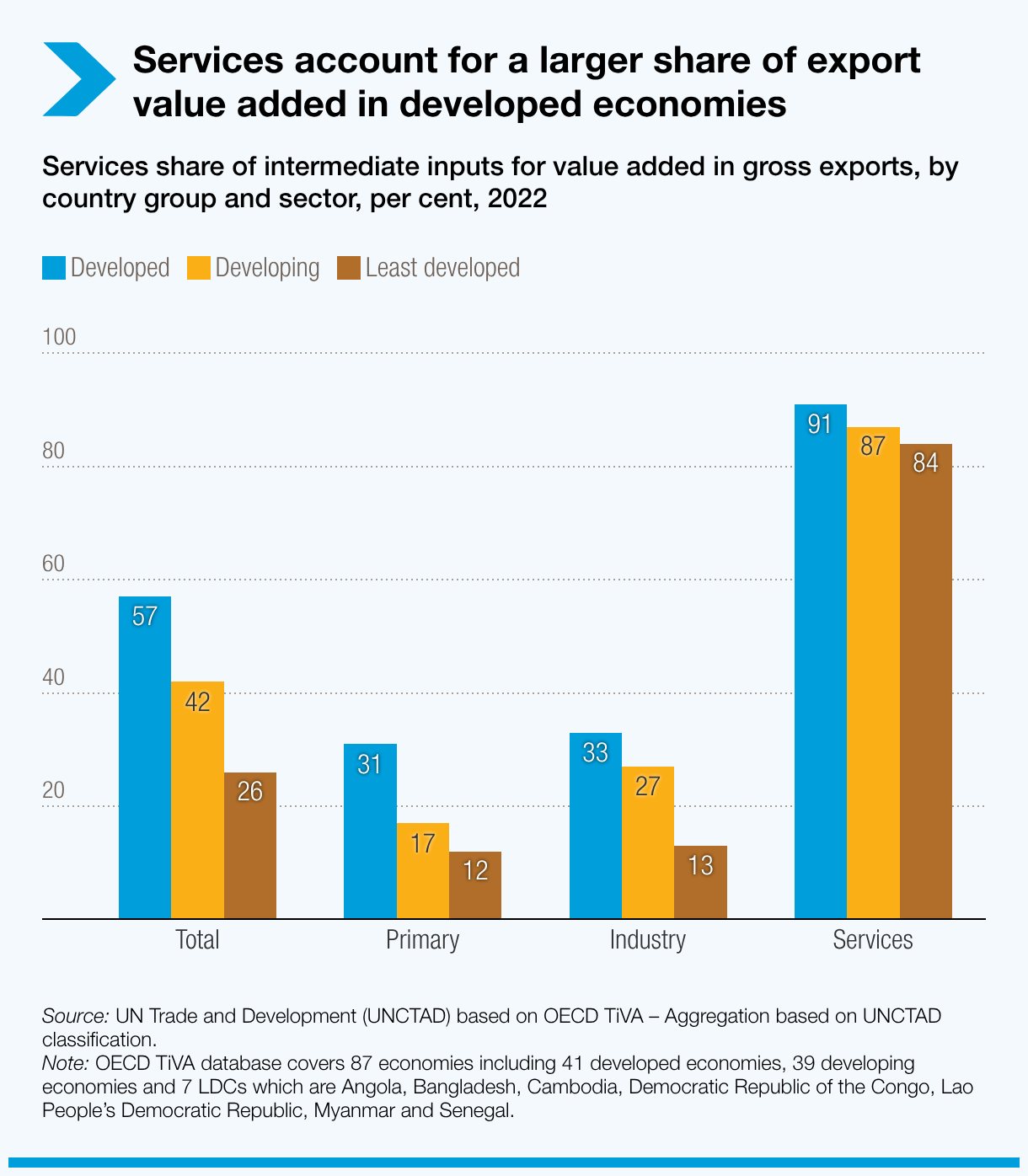
This difference matters. As highlighted in UNCTAD’s latest Global Trade Update, the quality, cost and availability of services directly affect competitiveness and participation in global value chains across all sectors.
The productivity gap
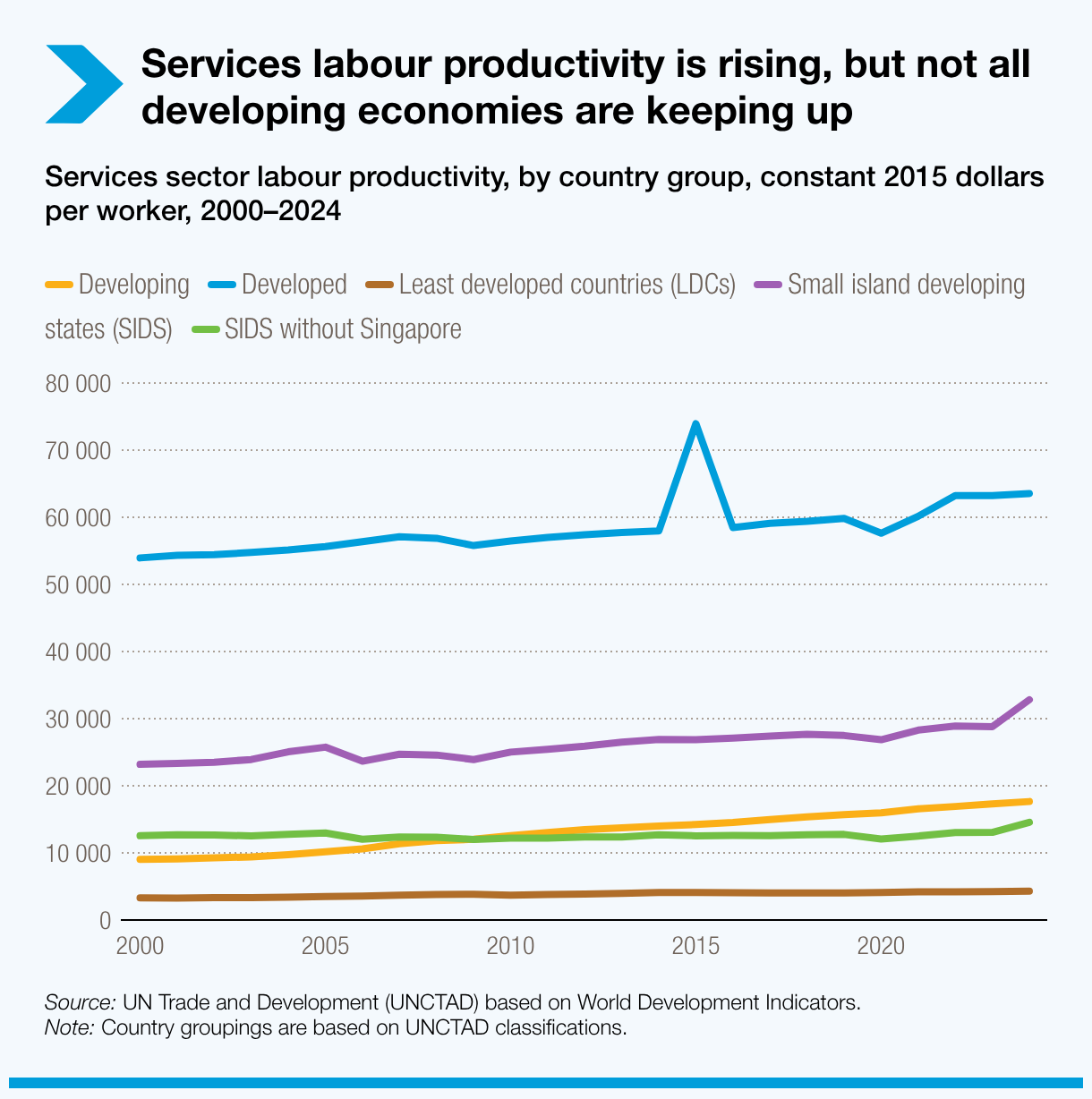
There are also large gaps in productivity. Another UNCTAD report that measures the impacts of servicification shows that services labour productivity remains far higher in developed economies. By 2024, it was around $60,000 per worker in developed economies, compared with about $15,000 in developing economies and around $2,000 in least developed countries, measured in constant 2015 dollars.
The final product may still be a good. But the services behind it increasingly shape how competitive that export is – making gaps in access to efficient services and in services productivity an important part of the development challenge.