

Description
Global supply chains are operating in an increasingly complex and uncertain environment. Recent years have demonstrated that disruptions are no longer exceptional events but a recurring feature of the global trading landscape. Geopolitical tensions, weather and climate-related impacts, cyber incidents, labour shortages and other factors causing disruption and growing uncertainty across critical maritime chokepoints have exposed vulnerabilities throughout international supply chains. Recent disruptions have highlighted the interconnected nature of global trade and how quickly localized events can generate global repercussions, affecting economies and a wide range of stakeholders including shippers, transport operators, workers, businesses and consumers alike.
Against this background, the roundtable will provide a platform for discussions on key issues of concern as well as risk management strategies and best practices from the perspective of different key stakeholder groups, including shippers, freight forwarders, transport operators and transport workers. Bringing together leading global industry representatives, the discussion will explore how different stakeholders experience and manage disruption and risks, adapt their operations, and build resilience in an environment where uncertainty is increasingly becoming the norm. The session is expected to generate industry-driven insights and recommendations on strengthening supply chain resilience, informing broader discussions at the Forum on how governments, international organizations and the private sector can work together to support more resilient, efficient, sustainable and inclusive global supply chains.
Questions for discussion
- How have shippers, freight forwarders, carriers and transport workers adapted their operations to cope with increasingly frequent disruptions and uncertainty?
- What lessons have been learned from recent crises, and how can these lessons be translated into longer-term resilience strategies?
- How can international cooperation, capacity-building and targeted investment support developing countries in enhancing their preparedness for and response to supply chain disruptions while improving their integration into global and regional value chains?
- What are the key areas for policy action and the main messages for policymakers from the perspective of your industry?
Programme
Opening remarks and moderation: Ms. Regina Asariotis, Chief Policy and Legislation Section, UNCTAD
Panel discussion with the participation of:
- Mr. Godfried SMIT, Acting Secretary General, Global Shippers Alliance (GSA)(TBC)
- Mr. James HOOKHAM, Secretary General and Director, Global Shippers Forum (GSF) (Confirmed)
- Ms. Anna LARSSON, Vice President Communications, World Shipping Council (WSC) (Confirmed)
- Dr. Stephane GRABER, Director General, International Federation of Freight Forwarders Associations (FIATA) (Confirmed)
- Mr. Stephen COTTON, General Secretary, International Transport Workers Federation (ITF) TBC)
- Mr. Habib TURKI, Secretary General, International Road Transport Union (IRU) (Confirmed)
Mr. Fançois DAVENNE, Director General, International Union of Railways (UIC) (TBC)
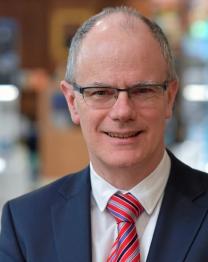
James Hookham is Secretary General and a Director of the Global Shippers Forum (GSF), the voice of cargo owners in international supply chains. He is a graduate in Environmental Science from the University of Bradford and completed a master’s degree in the safe transport of dangerous goods at the University of Manchester.
James early career was spent with Exis Technologies (now part of National Cargo Bureau) developing the world’s first remotely accessible computerised dangerous goods database and later served as deputy editor of Hazardous Cargo Bulletin.
Until 2020 James was Deputy Chief Executive of the Freight Transport Association (now Logistics UK) where he held numerous positions on UK, EU and global transport and logistics advisory bodies, as well as senior executive roles at one of the UK’s largest trade organisations.

Anna Larsson is the Vice President Communications at the World Shipping Council as of October 2020, responsible for WSC communications globally.
Prior to joining the World Shipping Council, Ms. Larsson served as Head of Corporate Communications, VP, for Wallenius Wilhelmsen ASA and has held several senior communication, marketing and sustainability roles for the company over the past decade.
With over 25 years’ experience in international communication and sustainability, Ms Larsson holds a Master’s in Business and Marketing from Lund University and a post-graduate degree in Journalism from the University of Gothenburg. She has also certified as a “One Planet Leader” by WWF and IMD. Her professional background includes management positions within Corporate Communications at Akzo Nobel in Sweden and the Netherlands.
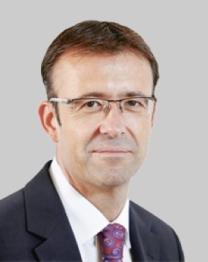
Dr Stéphane Graber has been Director General at FIATA International Federation of Freight Forwarders Associations since 1 January 2020.
Prior to joining FIATA, Dr Graber was Secretary General at the Swiss Commodity Trading and Shipping Association and led the eGTSA as Chairman and Director General, a company that successfully developed a digital platform used by commodity trading companies and commodity trade-finance banks, which known today as Console.
He is also a member of the Advisory Board of the International Chamber of Commerce’s Digital Standard Initiative and a founding member of the Future International Trade, which aims to raise awareness and accelerate the adoption of a standards-based electronic bills of lading across all sectors of the shipping industry. He also participates in Cargo IQ Board, an IATA interest group whose mission is to create and implement quality standards for the global air cargo industry.
Dr Graber previously worked for the Economic Department of the Republic and Canton of Geneva, and was President of the Geneva Chapter of the Swiss-Chinese Chamber of Commerce (SCCC) and a member of the SCCC’s national council.
Alongside his professional activities, Dr Graber also taught for 20 years at the Universities of Geneva and Lausanne on various Executive MBA programmes and was the Academic Director of the EMBA in Commodity Trading and Shipping.
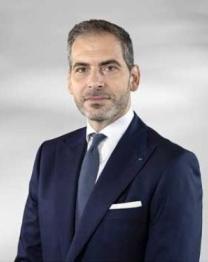
Habib Turki is Secretary General of IRU, the world road transport organisation and the voice of more than 3.5 million transport operators. Since taking office in August 2026, he has led IRU’s global activities, working closely with its members to represent and support the road transport industry in advancing safe, efficient and green mobility and logistics.
Habib Turki brings more than two decades of international leadership experience across transport, trade, tourism and sustainable development. He began his career in project management, trade and customs roles at UNCTAD, UNDP and ITC.
He went on to serve as IRU’s Regional Adviser for the Middle East from 2015 to 2018, playing a key role in expanding the TIR system across the region. In 2019, he joined the Fédération Internationale de l’Automobile (FIA) as Director of Tourism Services, later becoming its Chief Development Officer where he led strategic initiatives spanning tourism services, institutional development, public affairs and international partnerships.
Habib Turki holds a Bachelor’s Degree in Economics and a Master’s Degree of Research in Marketing from the University of Tunis El Manar, as well as a Master of Advanced Studies in International Relations and Policy from the Geneva Graduate Institute.
Born in Tunis, Habib Turki is a Tunisian and Swiss citizen. He is fluent in Arabic, English and French, and also speaks Italian and Spanish.
