
Djibouti’s strong growth masks deep vulnerabilities
- Djibouti met two graduation criteria in 2024: income and human assets.
- Its economic and environmental vulnerability score was 54.7, compared with the graduation threshold of 32.
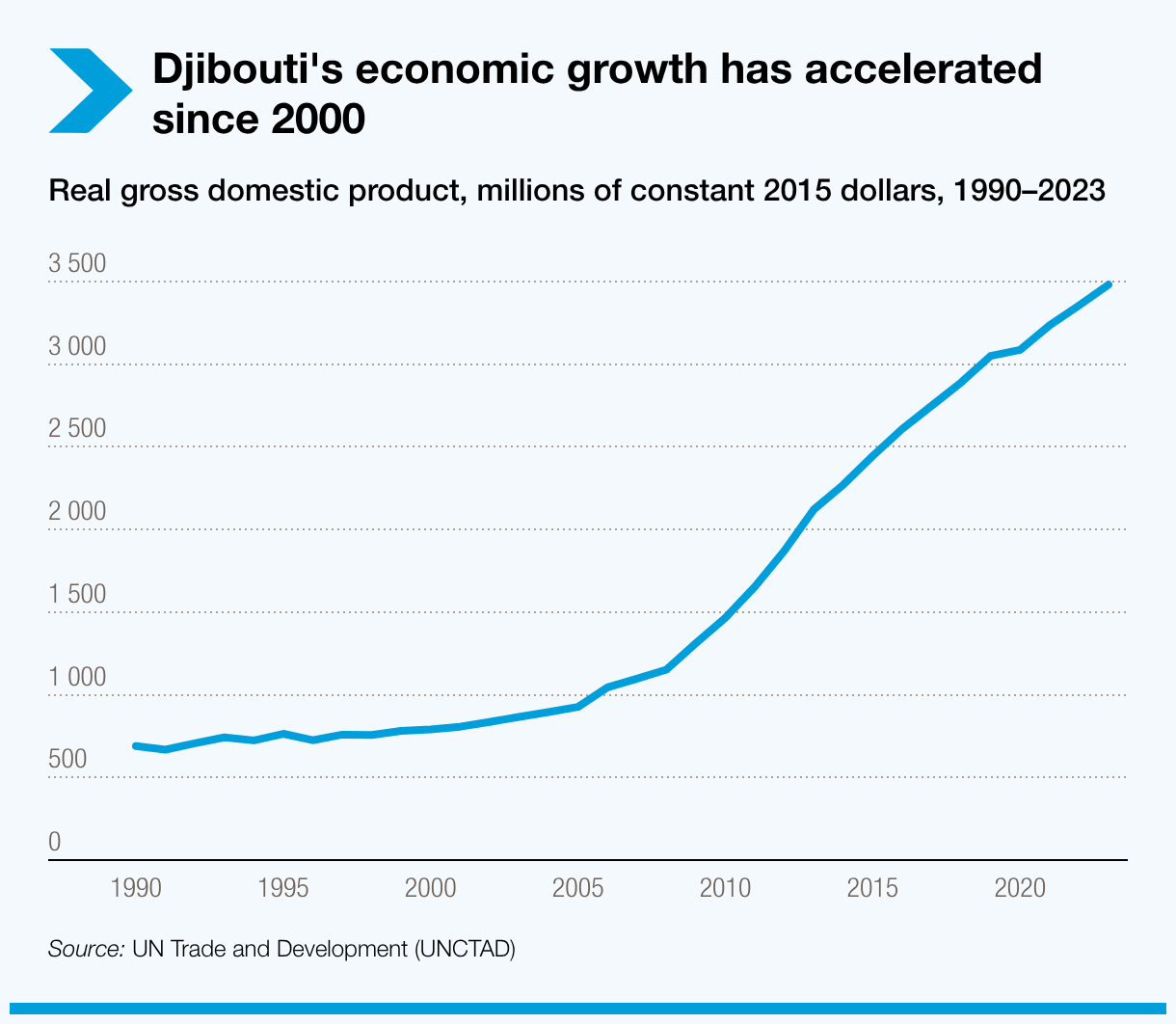
- Real economic growth averaged 7.3% a year from 2010 to 2023, but unemployment stood at 38% in 2024.
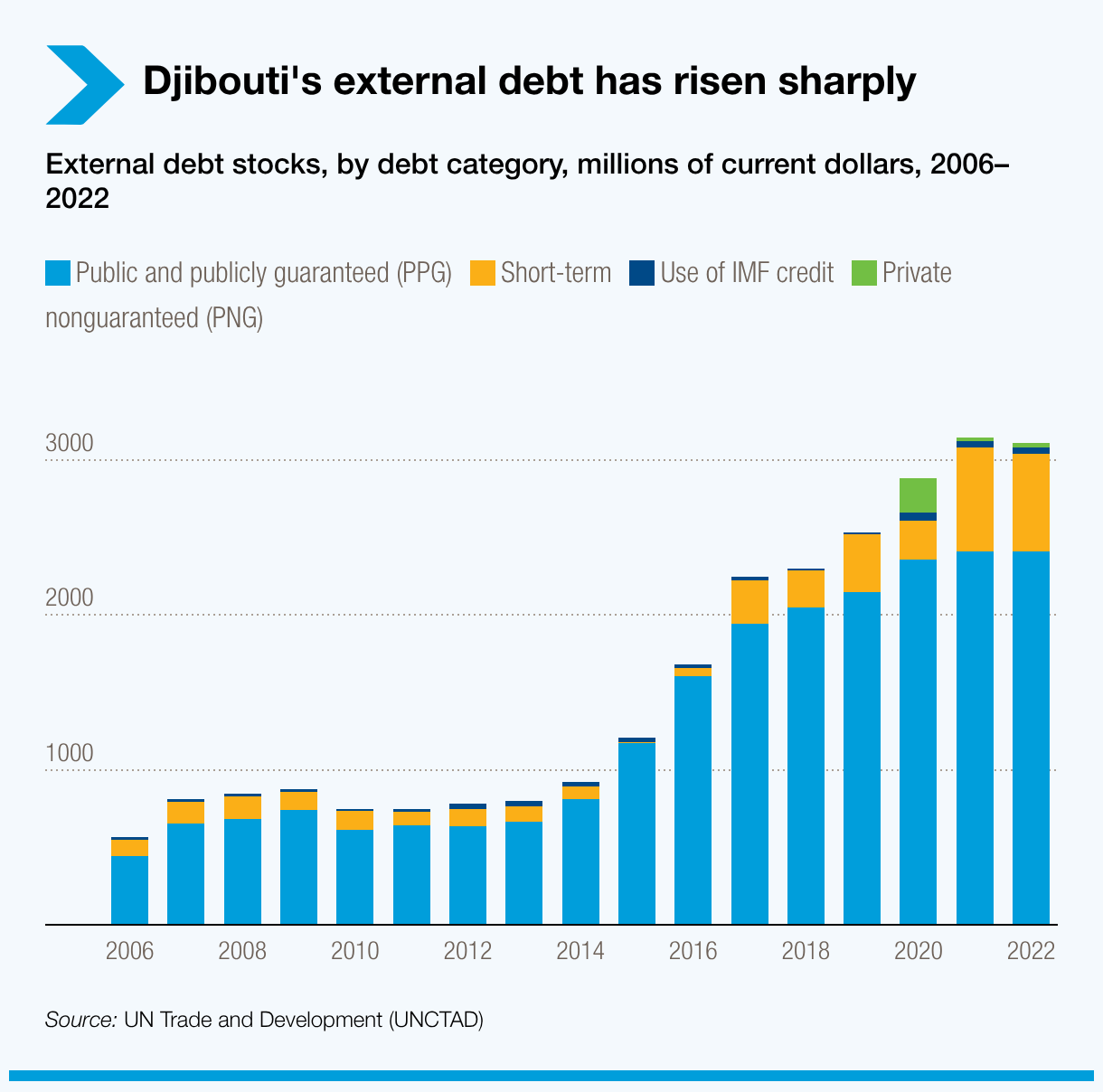
- External debt rose from 49.1% of gross national income in 2015 to 88.5% in 2022.
The report assesses Djibouti’s readiness to graduate from the least developed country category. It finds that the country has used its political stability and strategic location to become a fast-growing transport and logistics hub.
But growth has not created enough jobs or delivered broadly shared gains. High debt, weak human capital, economic concentration and climate risks could undermine continued progress.
Strong growth has not reached everyone
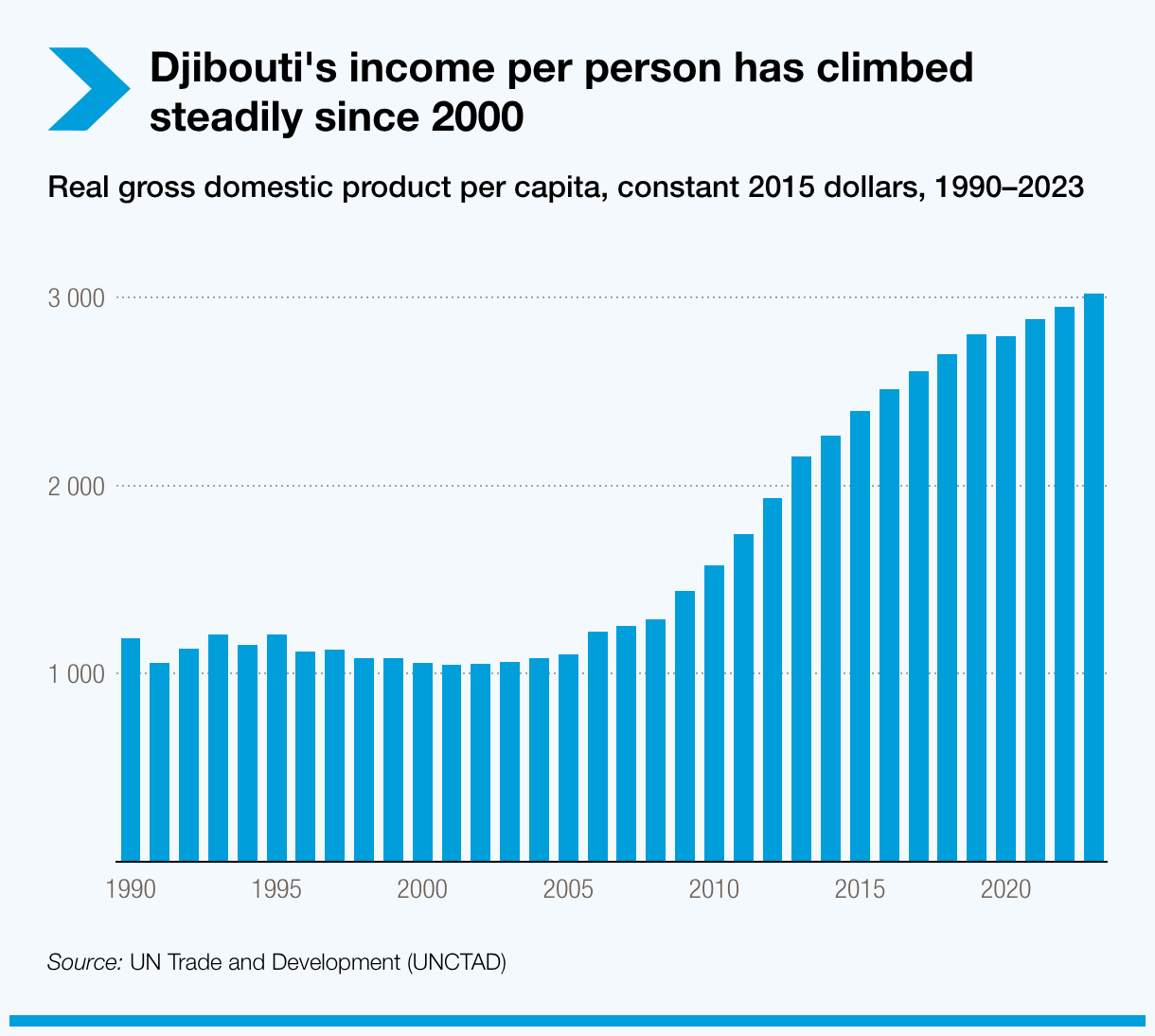
Real gross domestic product per person rose from $1,576 in 2010 to $3,020 in 2023. Yet in 2017, about 25% of the population lived on less than $3 a day. Another 15% lived below the extreme poverty line of $2.15 a day.
Preliminary results from the 2024 population and housing census show that 20% of households lived in extreme multidimensional poverty. This measure captures overlapping disadvantages in areas such as health, education and living standards. The urban-rural divide was stark:7.6% of urban households faced extreme multidimensional poverty, compared with 75% of rural households.
The transport and logistics model relies heavily on capital and creates relatively few jobs. Youth unemployment stood at 69.1% in 2024. Unemployment was 44.9% for women and 33.2% for men. The report calls for more labour-intensive investment, stronger vocational training and a more competitive private sector.
Economic concentration increases trade and debt risks
Services generate 83% of gross domestic product. Port, transport and logistics activities underpin the economy. Trade with Ethiopia accounts for most port activity, leaving Djibouti exposed to disruptions affecting its main economic partner.
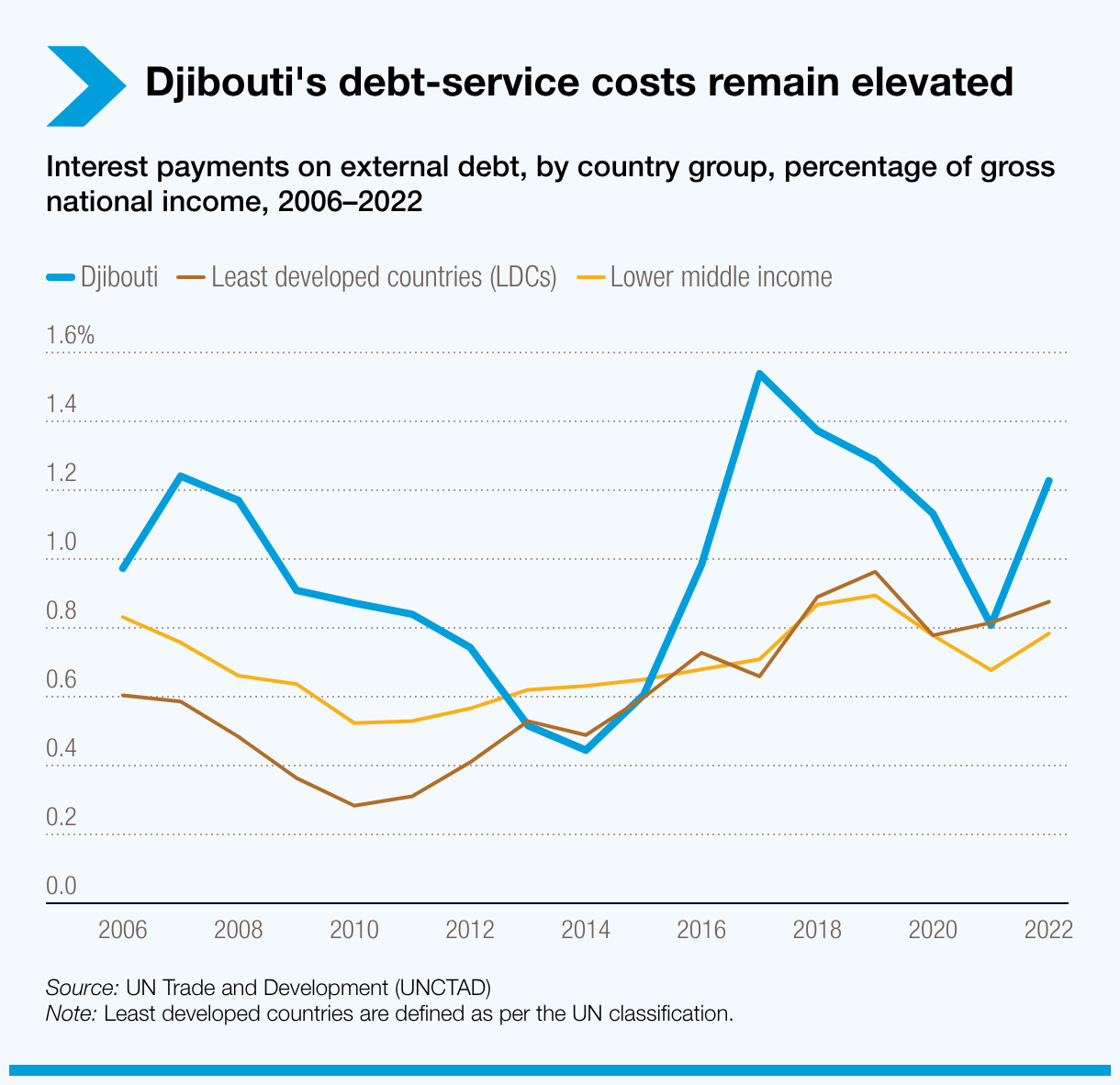
Infrastructure investment has supported growth, but rising debt has left less money for social sectors and job creation. The report recommends:
- Prioritizing concessional borrowing
- Strengthening debt and public enterprise management
- Broadening the tax base
- Assessing how new projects support employment and economic transformation
Climate shocks threaten food and water security
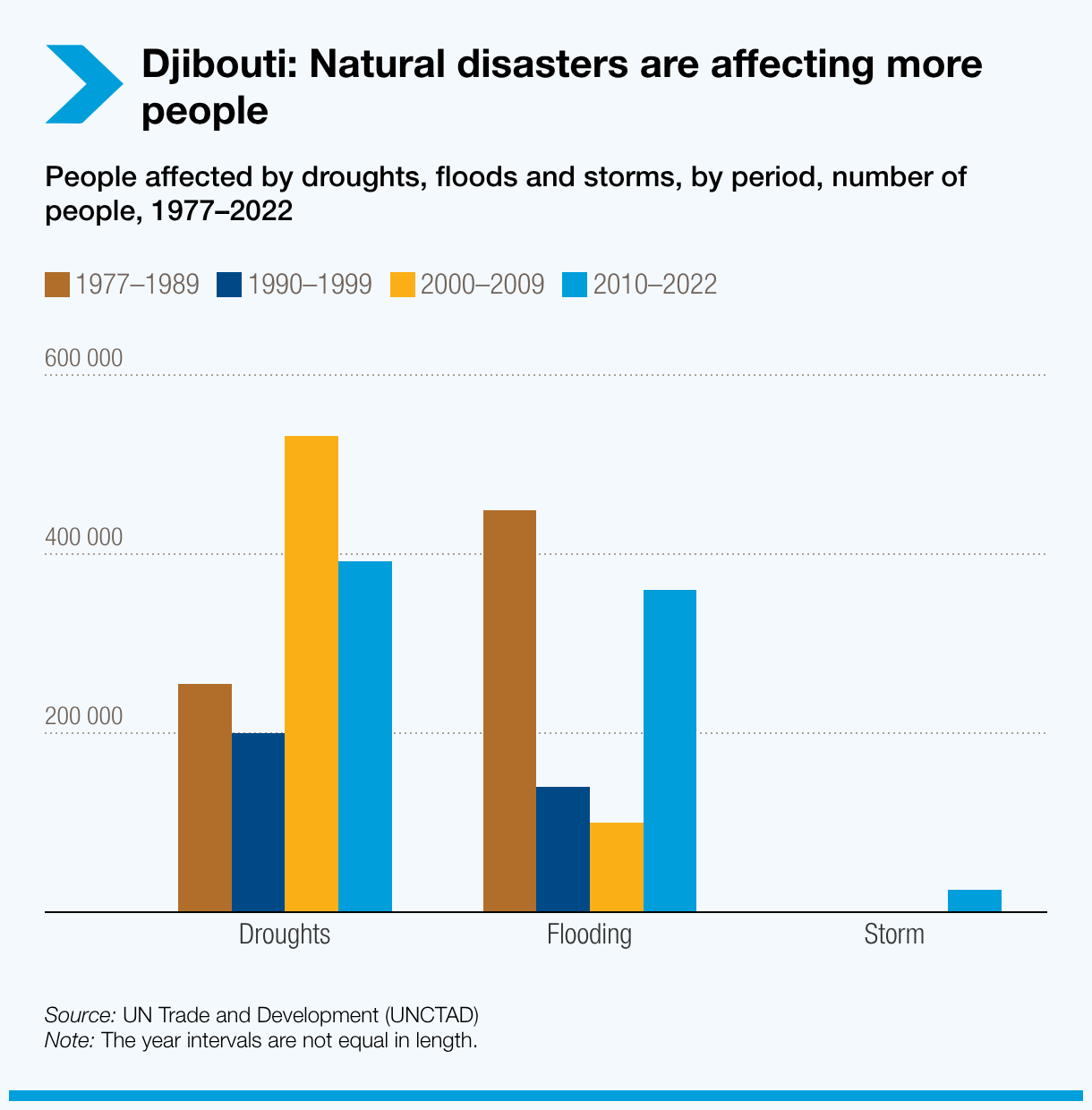
Djibouti is among the 50 countries most vulnerable to extreme climate risks. From 2010 to 2022, droughts affected a cumulative 392,000 people and floods affected 360,000.
Renewable freshwater resources stand at 318 cubic metres per person a year – below the absolute water scarcity threshold of 500 cubic metres. The report calls for greater investment in climate adaptation, renewable energy, sustainable water management and social protection that can respond to disasters. It also recommends more flexible and concessional climate finance.
Turning growth into lasting resilience
Djibouti’s stability and strategic position provide a strong foundation. The priority now is to turn economic growth into jobs, stronger human capital and greater resilience. This will require economic diversification, stronger social protection and greater capacity to withstand climate and economic shocks.