
How do countries graduate from LDC status
A country graduates from Least Developed Country (LDC) status by meeting specific economic and social development criteria at two consecutive triennial reviews conducted by the UN Committee for Development Policy (CDP).
- GNI per capita: A measure of a country's average income per person.
- Human Assets Index (HAI): Reflects health and education levels.
- Economic Vulnerability Index (EVI): Measures a country's susceptibility to economic and environmental shocks.
The CDP's recommendation is then endorsed by the Economic and Social Council (ECOSOC), and finally taken note of by the UN General Assembly, which sets the actual graduation date, typically three years after the resolution.
Our role in the process
UNCTAD contributes specialized knowledge and assessments to the UN Committee for Development Policy, which contain an analysis of the potential impacts of graduation, challenges to productive capacities development, and the country's vulnerabilities.
Towards and beyond graduation
Structural economic transformation through productive capacity-building is a key development objective of LDCs. This is what the quest for graduation from LDC status ultimately entails.
Sound economic diversification is generally aimed at as the most desirable form of structural change, conducive to economic resilience and poverty reduction, ideally with stable employment opportunities.
UNCTAD supports LDCs in achieving structural progress towards and beyond graduation. This involves mapping and measuring structural change in all LDCs, strengthening the capacity of individual LDCs to accelerate structural transformation and approach graduation thresholds and guiding graduating countries in their pursuit of a smooth transition to post-LDC life.
Progress towards graduation has, unfortunately, been limited. Since the creation of the LDC category in 1971, only 8 countries have graduated from LDC status:
- Botswana
- Cabo Verde
- Equatorial Guinea
- Maldives, Samoa
- Vanuatu, Bhutan
- Sao Tome and Principe
What types of assistance are provided?
UNCTAD's support is delivered across the following pillars:
Diagnostic of socio-economic vulnerabilities
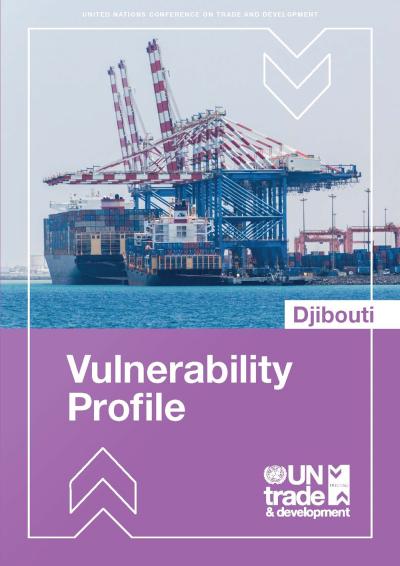
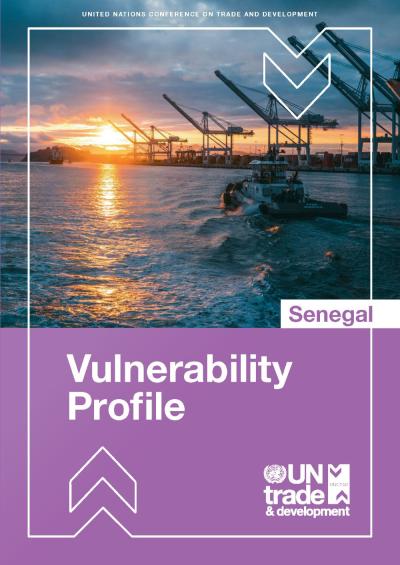
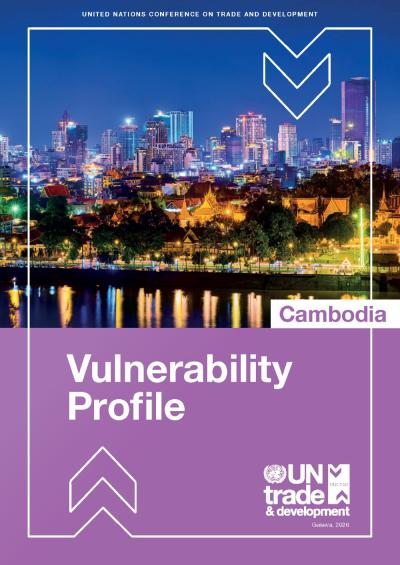
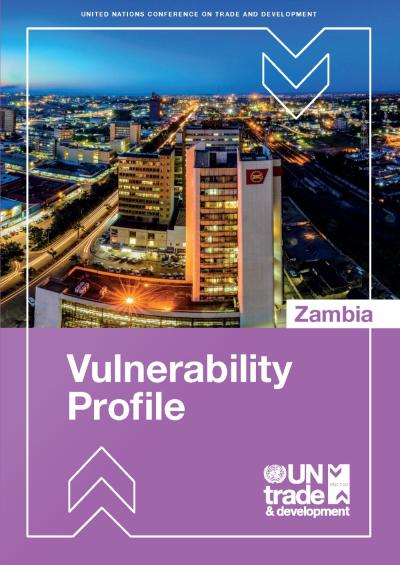
Key product: This is achieved through the delivery of the UN-mandated Vulnerability Profile, which forms a core element of the Committee for Development Policy (CDP)’s diagnostic tools for evaluating progress towards the graduation milestone. The research, analysis and policy guidance contained therein enables the identification of priority elements that could inform policies and strategies to ensure that a country’s growth and development progress is forward looking, inclusive and sustainable.
Assessment of national, economy-wide productive capacities
Key product: This is achieved through the preparation of National Productive Capacities Gap Assessments (NPCGAs) which leverages the Productive Capacities Index and a comprehensive assessment of related policies and strategies.
Statistical capacity building and training
Key product: UNCTAD experts train relevant national authorities, including representatives of National Statistical Offices on the methodology, construction, use and application of the Productive Capacities Index (see https://pci.unctad.org) in formulating evidence-based policies and monitoring their implementation and impact.
Evaluation of the use of trade preferences and trade policy review
Key products. Training on UNCTAD’s database on GSP Utilization rates (see https://gsp.unctad.org) will be made available to national experts to assess the current trade performance and use of LDC-related preferences.
An evaluation of the potential loss in access to said preferences and the implications on trade performance for graduating countries will be prepared and shared with national authorities.
UNCTAD experts also review potential policies and strategies needed to update national trade policies and strategies in the post-graduation phase.
Policy coordination and institutional capacity building
Key product. UNCTAD prepares Holistic Productive Capacities Development Programmes, which build on the findings and recommendations of the above-mentioned pillars.
These are comprehensive, multi-sectoral and multi-annual programmes, which can be implemented with external financing over a 5 –10-year period following graduation to ensure that development momentum is maintained, and institutions are equipped to develop and implement policies and strategies that meet national and international development goals.


Events & meetings
18 May 2026
13th Trade Policy Dialogue: Trade Preferences Outlook 2025: Navigating in times of uncertainty
Geneva, Switzerland
5 August 2025
Designing a new trade policy for Cambodia during and after LDC graduation: A path of challenges and opportunities
Phnom Penh, Cambodia
Featured Publications
Contact
For further information on this programme, please contact us.