


Multi-year expert meeting on trade, services and development, 12th session
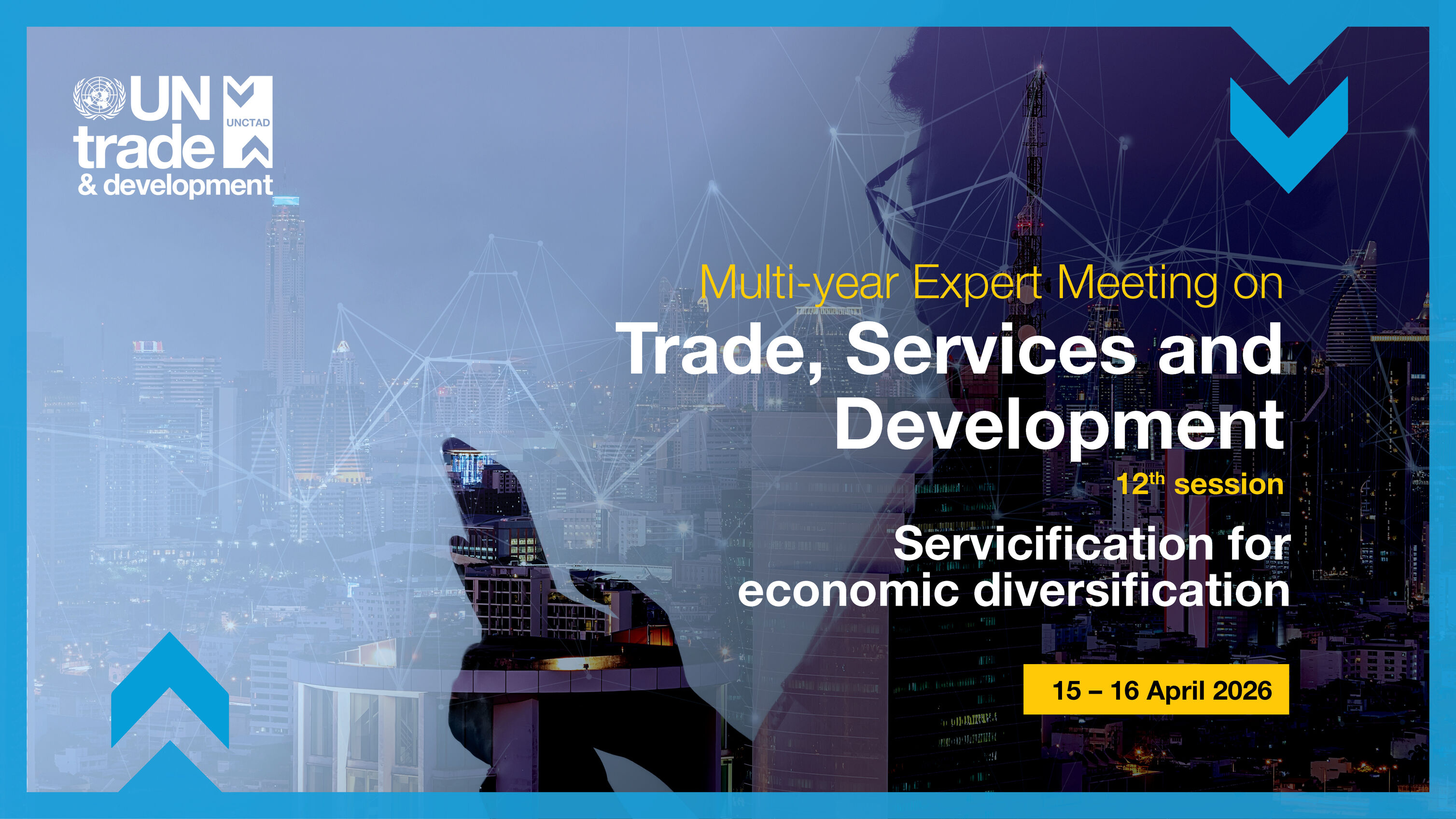
Servicification for economic diversification
The meeting provided an opportunity for experts to exchange views and good practices on servicification as an important means of pursuing structural transformation, productivity growth, economic diversification and enhanced resilience.
Experts presented trends and examples of servicification across countries, and discussions focused on the implications of digitalization, knowledge-intensive services and trade policy, including the opportunities and challenges these trends present for developing economies.
The sessions examined the role of trade in services in supporting economic diversification, consistent with the Geneva Consensus (TD/561/Add.2). Paragraph 21 of the Geneva Consensus underscores the “growing significance of services as a new frontier for structural transformation, particularly for developing countries seeking to diversify their economies”. The discussions were also aligned with the objectives of paragraph 80.14 of the Geneva Consensus, on promoting productive activities in developing countries through trade in services.
A dedicated segment examined data needs and gaps related to servicification. Participants discussed how improved data can enhance understanding of servicification and support policymaking, notably in the area of trade policy, to enable developing economies to harness servicification for economic diversification and development. The discussion also aligned with the objectives of paragraph 80.15 of the Geneva Consensus, on improving the collection, accessibility and use of services trade data to inform policy decisions.
Meeting highlights
The meeting highlighted the need to give greater policy attention to servicification as a driver of economic diversification, productivity growth, structural transformation and resilience. Discussions emphasized that its benefits depend on coherent national policies, reliable physical and digital infrastructure, skills, institutional capacity and an enabling regulatory environment.
Improving the availability, quality and use of data on services trade, including digitally deliverable services, was identified as essential for evidence-based policymaking and informed trade strategies.
The meeting emphasized the need to reduce unnecessary trade costs linked to regulatory fragmentation, including through greater coherence, transparency, standards, data governance and interoperability. Discussions stressed that services and digital trade processes, including at the WTO, should support opportunities for services-led growth while preserving the ability of governments to pursue national development strategies and public interest objectives.
Participation
The meeting was open to all member States of UNCTAD. Other organizations, including specialized agencies, intergovernmental bodies and non-governmental organizations in the general and special categories, as well as academia, research institutions and the private sector, were invited to participate as observers. Member States were invited to nominate experts from the public and private sectors. Nominated experts were encouraged to participate in all sessions to ensure continuity.
Inputs from experts
Experts nominated by member States were encouraged to submit brief papers, of approximately 5–12 pages, as contributions to the work of the meeting. The papers were made available at the meeting in the form and language in which they were received.
Papers were to be submitted to the UNCTAD secretariat in advance of the meeting, addressed to [email protected].
Logistics
The session was held with physical participation in Room Tempus at the Palais des Nations. Participants who could not attend in person were able to listen to the live audio stream in the six official languages of the United Nations.

Mr. Pedro Manuel Moreno of Spain is the Deputy Secretary-General and Acting Secretary-General of UN Trade and Development (UNCTAD).
He has over 20 years of experience of working for multilateral and intergovernmental organizations in programme, management and strategic positions both in the field and at headquarters.
He was Deputy Secretary-General of the Communication for Development Committee at the Spanish National Commission with the United Nations Educational, Scientific and Cultural Organization (1999-2004), and for the United Nations Development Programme, at the Country Office in Ecuador and, in New York City, as part of the Human Development Report team, at the Regional Bureau for Latin America and the Caribbean and at the Executive Office.
In 2014, he was appointed Chief of Staff of the Ibero-American Conference in Madrid, where he coordinated key political processes and South-South cooperation projects.
In September 2021, he was named Chief of Staff and Director of the Office of the Secretary-General of UNCTAD.
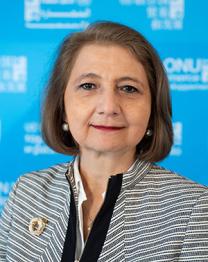
Luz Maria de la Mora is the Director of UNCTAD's Division on International Trade and Commodities. As a former Vice-Minister for International Trade and decades of government and private sector positions, Ms. de la Mora developed a career in international trade policy, negotiation, operations, and trade promotion.
During her tenure as Vice-Minister for International Trade of Mexico from 2018 to 2022, Ms. de la Mora led Mexico's trade and investment policy, overseeing fourteen free trade agreements with 51 countries. To bolster Mexico's development, she steered discussions in the World Trade Organization, the United States-Mexico-Canada Trade Agreement, Comprehensive and Progressive Agreement for Trans-Pacific Partnership, and Pacific Alliance, among others. She also coordinated policy dialogues and handled private sector consultations.
Ms. de la Mora holds a PhD in Political Science from Yale University, USA, a Master's degree in International Affairs from Carleton University, Canada, and a Bachelor's degree in International Relations from El Colegio de México, Mexico.
She is fluent in English and Spanish, and proficient in French.

Bernard Hoekman is Professor and Director, Global Economics at the Robert Schuman Centre for Advanced Studies, European University Institute in Florence, Italy, where he has been since 2013. Previous positions include Director of the International Trade Department (2008-13) and Research Manager in the Development Research Group (2001-08) at the World Bank. He was a member of the GATT Secretariat during the Uruguay Round of trade negotiations. He is also cochairing the Academic Advisory Council Committee of United Nations Forum on Sustainability Standards (UNFSS).
He currently serves as Chairperson of a High-Level Board of Experts on the Future of Global Trade Governance, a Bertelsmann Foundation initiative. He is a London-based Centre for Economic Policy Research (CEPR) Research Fellow, where he co-directs the Trade Policy Research Network, a senior associate of the Economic Research Forum for the Arab countries, Iran and Turkey, and a member of the World Economic Forum Global Future Council on International Trade and Investment.
He is an economist graduated from the Erasmus University Rotterdam and holds a PhD in economics from the University of Michigan.
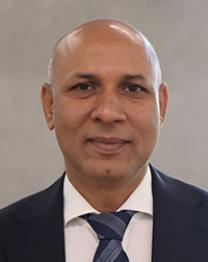
Md. Alamgir Kabir is Deputy Secretary at Bangladesh’s Ministry of Commerce, specializing in trade policy, sustainability, and circular economy. With a Master’s in Carbon Management from Adelaide, he has led WTO negotiations, UNIDO projects, GIZ projects and national industrial and trade policy reforms, advancing Bangladesh’s global competitiveness and sustainable development.
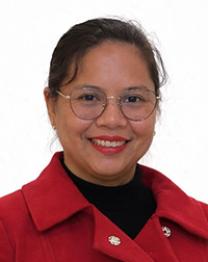
Mrs. Rajohnson Tiava Ny Kanto serves as Director General of Foreign Trade of Madagascar and Trade and Competition Commissioner. She is a recognized expert in trade in services, trade policy, e-commerce and digital trade, and international trade, and leads Madagascar's trade negotiations at the multilateral, regional, and bilateral levels. Mrs. Rajohnson holds a Master's degree in Business Law and previously worked as an international trade consultant. A strong advocate for economic transformation, she actively promotes the diversification of Madagascar's exports and the expansion of its trade in services and digital economy.

Yan Zhang has a PhD in Economics and is a Professor at the Central University of Finance and Economics. She is Vice Secretary-general of China National International Trade Subject Association in Services Trade and Economy, and invited Research Expert in China’s Services Trade Association and Emerging Economics Association. Main research areas include: Theory and policy of international trade and economics, services trade theory and policy, trade and environment, trade and labor.
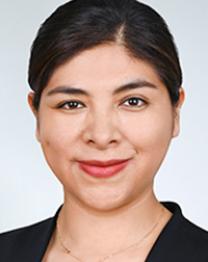
María Vasquez Callo-Müller is a legal academic and expert consultant on digital trade issues. She is part of the Trade Law 4.0 project, working as a post-doctoral fellow at the University of Lucerne and managing the TAPED dataset. María’s research focuses on the regulation of digital technologies and trade, particularly in the areas of intellectual property rights, data and AI governance, and digital trade. She is the author of the book: Intellectual Property in the Age of AI: Data, Copyright and Trade Secrets (Edward Elgar, 2026). María regularly consults for governments and international organizations on digital trade and data policies, including for organizations, such as the World Economic Forum (WEF), the Inter-American Development Bank (IDB), the Asia Pacific Economic Cooperation (APEC) Policy Support Unit, and the United Nations Economic and Social Commission for Asia and the Pacific (UNESCAP), and the German Development Cooperation (GIZ). She holds a PhD in Law from the University of Bern, an LLM from the Max Planck Institute for Innovation and Competition (Munich), and a Master of Advanced Studies in International Law and Economics from the World Trade Institute, University of Bern. She is admitted to practice law in Peru.
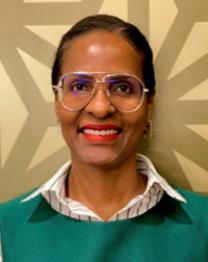
Ms. Matfobhi Riba is an economist attached to the Least Developed Countries Section of the Division on Africa, Least Developed Countries and Special Programmes. She is a member of the team of experts responsible for drafting The Least Developed Countries Report, an annual flagship publication by UNCTAD.

Helena Schweiger is Associate Director and Lead Research Economist at the EBRD. She holds a Ph.D. in Economics from the University of Maryland. She has published in AEJ: Economic Policy, Management Science, and Labour Economics, with research focused on firm productivity, management practices, innovation, and climate change.
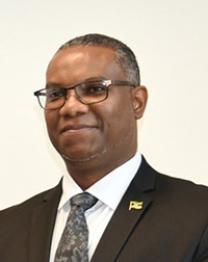
Mr. Richard Brown is Ambassador and Permanent Representative of Jamaica in the Permanent Mission of Jamaica to the United Nations and other international organizations in Geneva. Holds a PhD in international economics.

Neha Mishra is Assistant Professor of international law at the Geneva Graduate Institute, researching the digital economy, data governance, international economic law, and emerging technologies. She previously held academic roles at ANU and NUS, earned her doctorate from the University of Melbourne, and brings professional experience in digital trade and technology regulation.
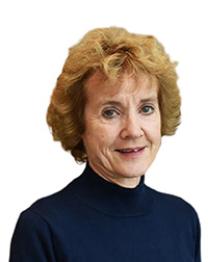
Hildegunn Kyvik Nordås is a visiting professor at Handelshögskolan at Örebro universitet; a Senior Associate at the Council on Economic Policy (a think tank in Switzerland); a member of the advisory board of Portulans Institute (a think tank in Washington DC) and a member of the OECD AI Observatory expert group on AI. She has worked and published extensively on services trade, including international trade governance. Recently, she has focused on the determinants of AI-enabled digital transformation of services with a focus on how it is related to services trade and cross-border data flows.
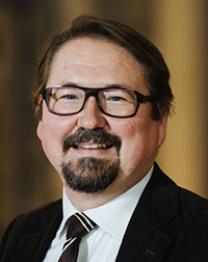
Patrik Ström is Director of the European Institute of Japanese Studies, Stockholm School of Economics, Tokyo Office, Japan. His research focuses on advanced service industries and how economies shift toward service-, knowledge-, and green-based development.
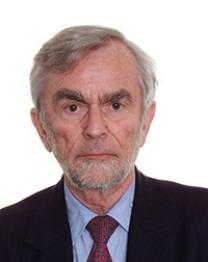
Frederic Jenny is Emeritus Professor of Economics at ESSEC Business School in Paris, Fernand Braudel Senior Fellow at European University Institute and former Chairman of the OECD Competition Committee and the OECD Competition Global Forum on Competition..
He was previously Chairman of the OECD Competition Committee (1994-2024), Non-Executive Director of the Office of Fair Trading in the United Kingdom (2007-2014 ), Judge on the French Supreme Court (Cour de cassation, Economic Commercial and Financial Chamber) from 2004 to August 2012, Vice Chair of the French Competition Authority (1993-2004) and President of the WTO Working Group on Trade and Competition (1994-2003) He was visiting professor at Northwestern University Department of Economics in the United States (1978), Keio University Department of economics in Japan (1984), University of Capetown Business School in South Africa (1991), Haifa University School of Law in Israel (2012). He was Visiting Professor at University College London Law School (2005-2010), Global Professor of Antitrust in the New York University School of Law’s Hauser Global Law School ( 2014, 2017 and 2022) and Senior Fellow in the Online Global Competition and Consumer Law Masters Program, University of Melbourne (Australia) ( 2016-2018).
He holds a Ph.D in Economics from Harvard University (1975), a Doctorate in Economics from the University of Paris (1977) and an MBA degree from ESSEC Business School (1966)
Frederic Jenny has written extensively about trade, competition and economic development and has served as an adviser to many developing countries on competition and trade issues.

Ingo Borchert is Professor of Economics at the University of Sussex Business School, a Deputy Director of the UK Trade Policy Observatory (UKTPO), and affiliated with the Centre for Inclusive Trade Policy. He is a co-creator of the global “Services Trade Policy Database” and has published in leading academic journals on services trade and integration.
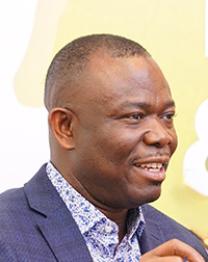
Benjamin is an international development expert in the domain of digital agriculture. He leads the digital agriculture and digital fisheries workstream of the Commonwealth Connectivity Agenda for Trade and Investment (CCA). He is spearheading the design and implementation of National Agricultural Data Infrastructure (NAgDI), an approach to the delivery of Digital Public Infrastructure (DPI) for agricultural data management at country level to boost intra-Commonwealth trade and investment.

Carlotta Schuster is an Economist at the International Trade Centre with over ten years of experience in economic research, policy advisory and technical cooperation across the United Nations system and international organizations. Her work focuses on trade, structural transformation and data for policy, including analytical work on illicit financial flows, informal cross-border trade, and trade statistics. She has contributed to UN flagship publications and led capacity-building initiatives. She holds a PhD in International Economics from the Graduate Institute in Geneva.

Ms. Prunela Charles-Williams is a Senior Economic Statistician at the Research, Statistics and Data Analytics Department of the Eastern Caribbean Central Bank.
