



UN Trade and Development’s (UNCTAD) year-end Global Trade Update shows East Asia, Africa and South–South trade powering gains, even as rising uncertainty shapes the outlook for 2026.
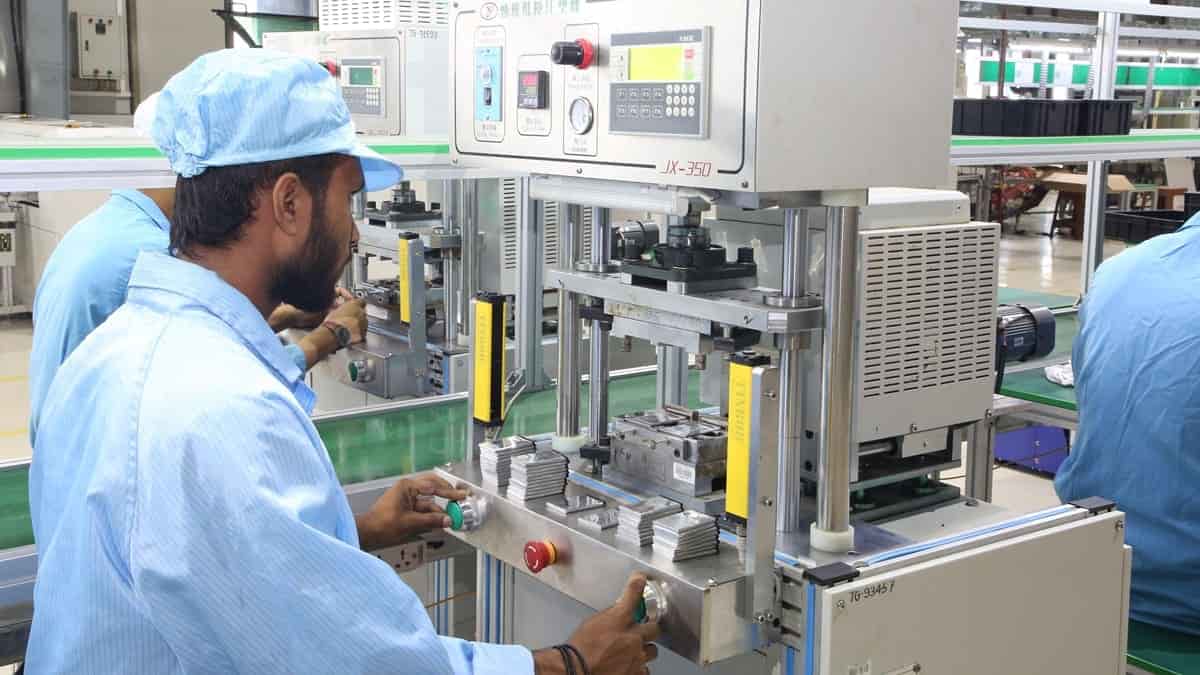
© Shutterstock/Pixparts | Manufacturing – especially electronics – continued to drive global trade during the third quarter of 2025.
Global trade is expected to grow about 7% in 2025, adding $2.2 trillion and setting a new record.
East Asia, Africa and South–South trade were the strongest drivers of global gains.
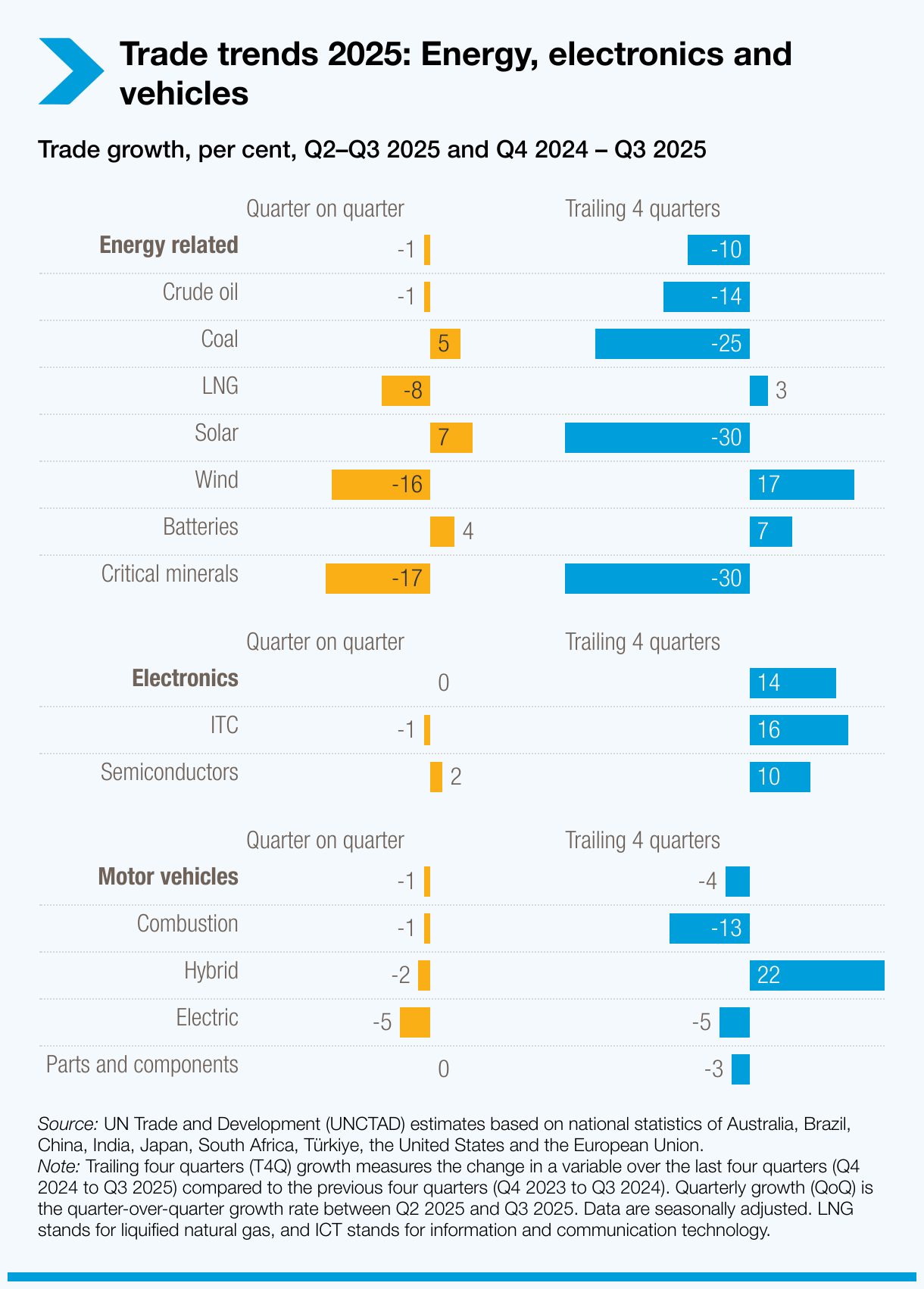
Manufacturing-especially electronics-remains the main engine of growth, while energy and automotive sectors lag.
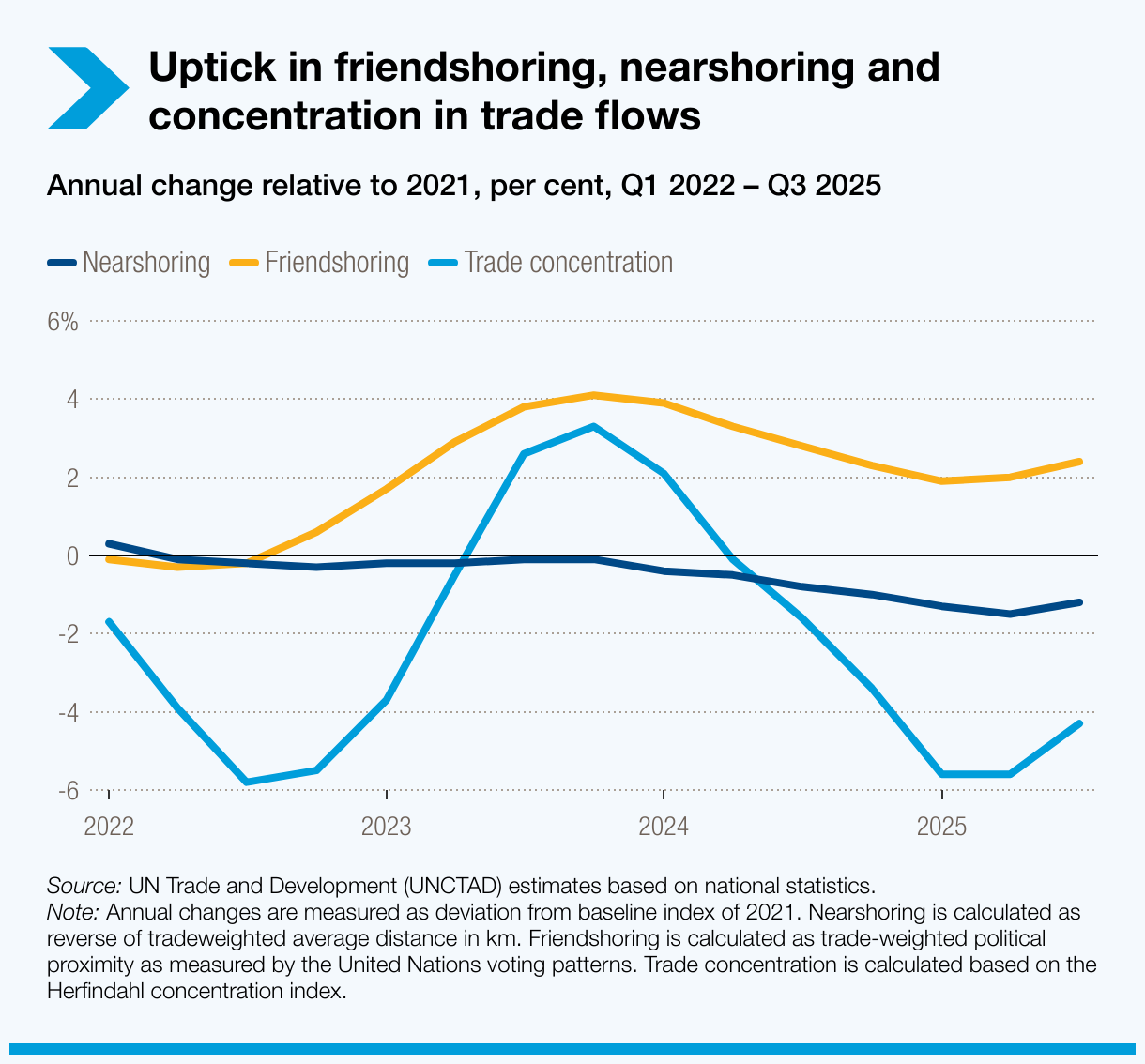
Trade imbalances stay high and geopolitical fragmentation is reshaping flows, with friendshoring and nearshoring strengthening again.
Global trade is on course to exceed $35 trillion in 2025 for the first time, according to UNCTAD’s final Global Trade Update of the year. The new data confirm that trade continued expanding through the second half of 2025, even as geopolitical tensions, higher costs and uneven global demand slowed momentum.
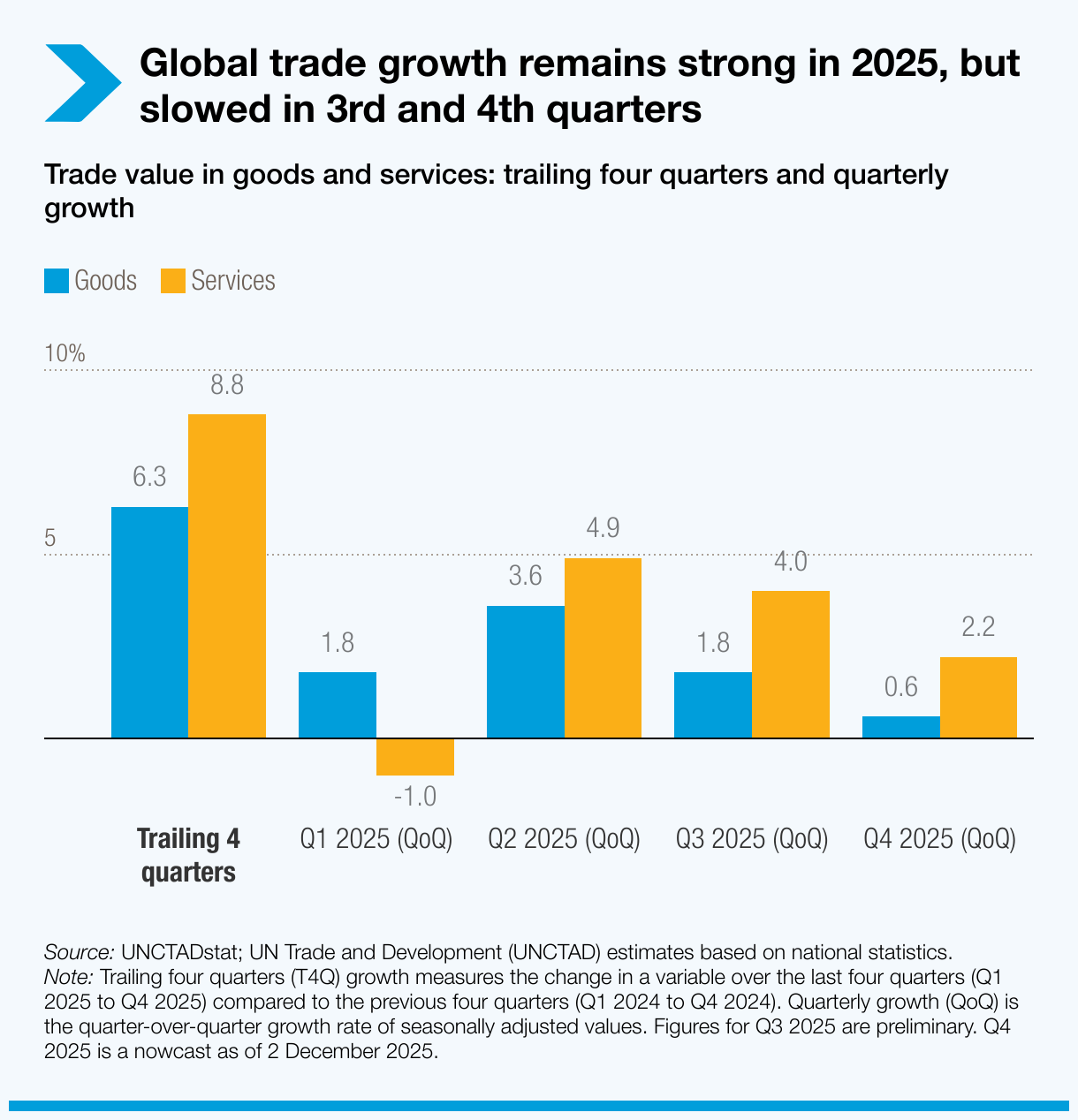
Between July and September, global trade grew 2.5% compared with the previous three months. Goods rose nearly 2%, services 4%. Growth is expected to continue in the year’s final quarter, though at a slower pace: 0.5% for goods and 2% for services. If projections hold, goods would add about $1.5 trillion to this year’s total and services $750 billion, consistent with an overall 7% annual increase.
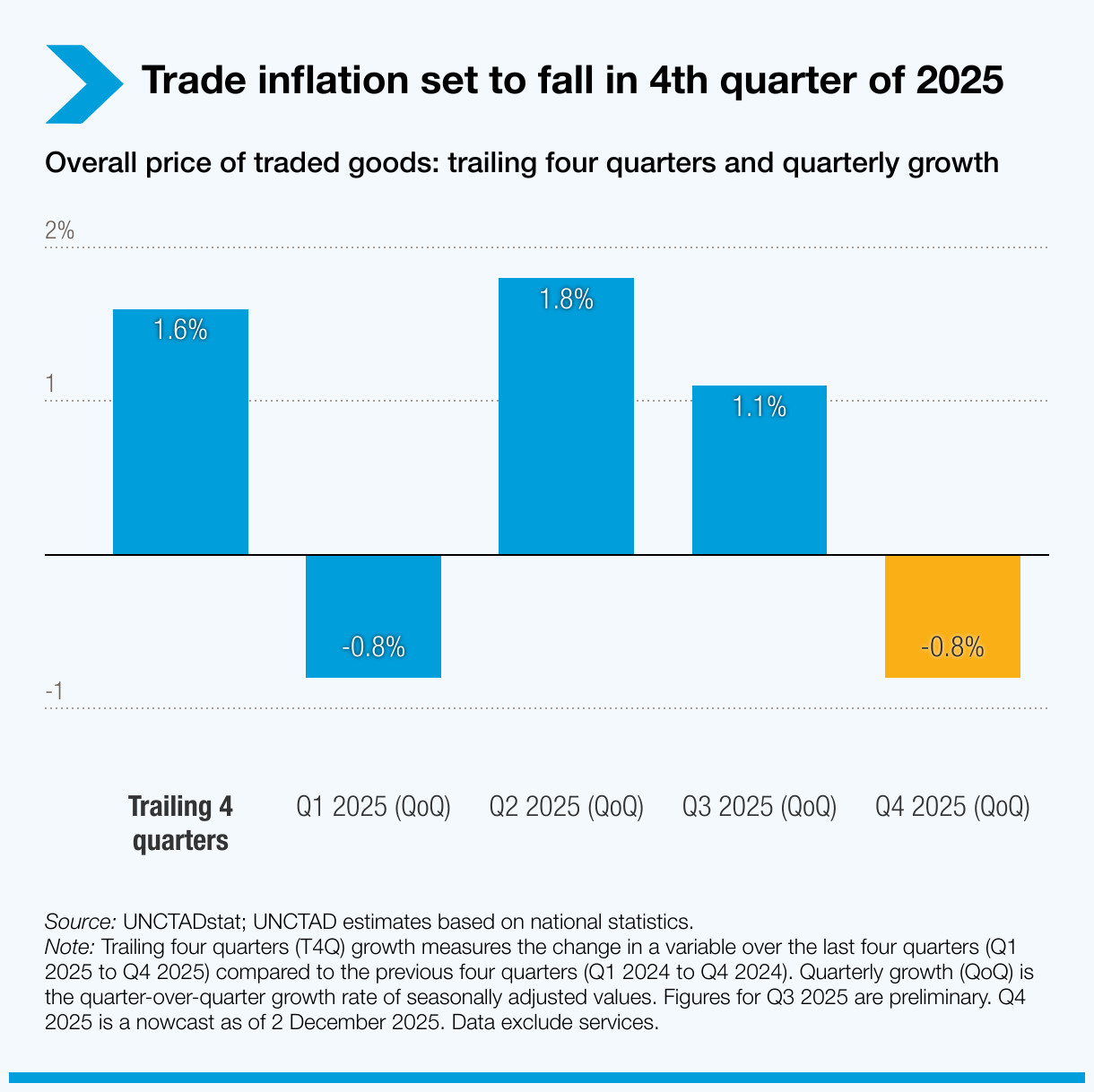
A key shift is unfolding on prices. After two quarters in which trade values rose partly because goods became more expensive, prices are now expected to drop. As a result, the increase in global trade at the end of 2025 comes from higher volumes - the actual quantity of goods shipped - rather than from price increases. This points to stable demand even as inflation eases.
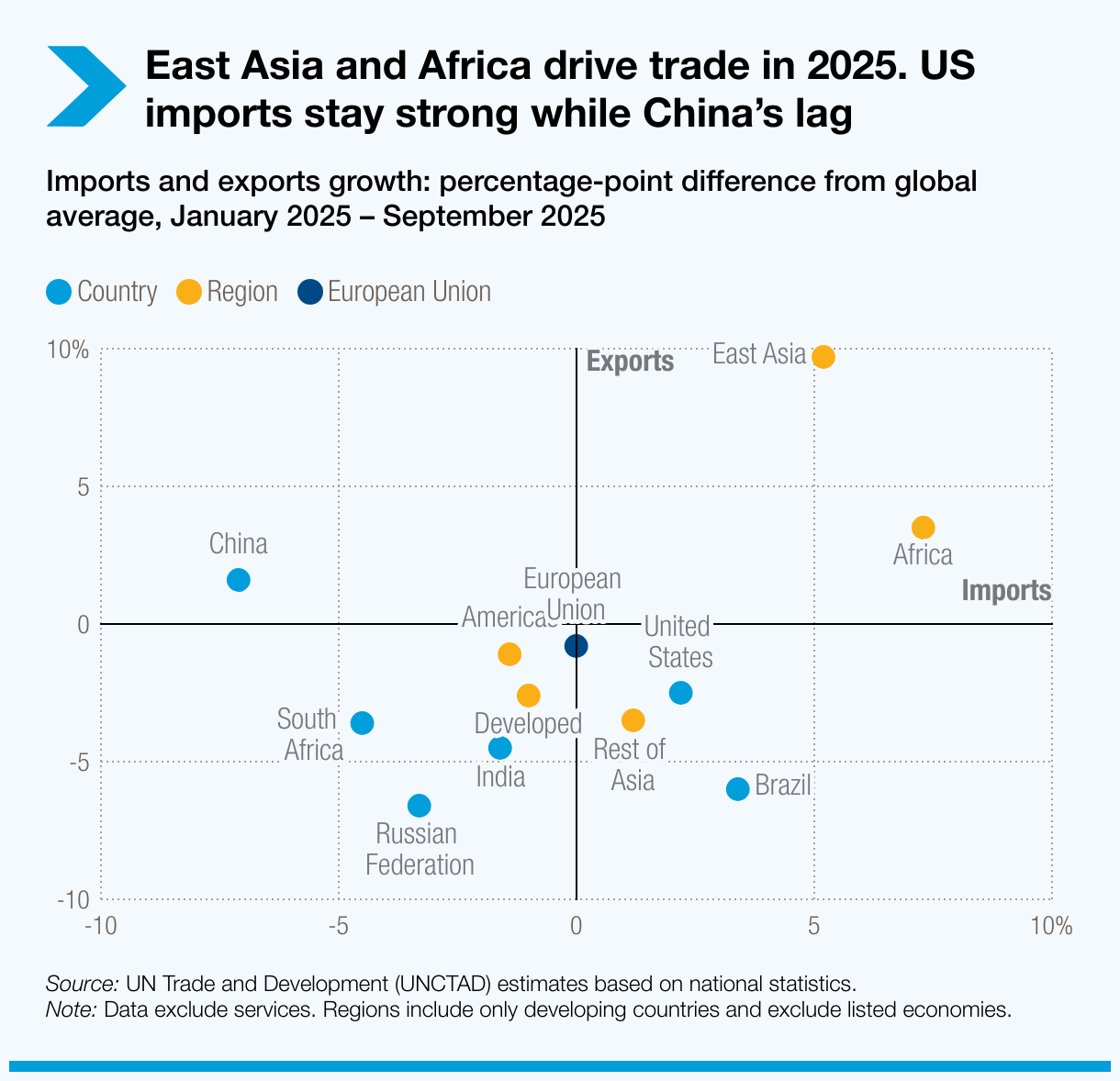
East Asia, Africa and South–South trade lead gains
East Asia recorded the strongest export growth over the past year (9%), supported by a 10% surge in intra-regional trade. Africa also performed strongly, with imports up 10% and exports 6%. South–South trade expanded around 8%, reflecting deepening economic ties among developing economies.
Among individual economies, China and the Republic of Korea stood out in East Asia, while Brazil and South Africa were key drivers in South America and Africa. India and China also posted some of the strongest growth in services exports, underscoring the growing weight of emerging economies in global trade.
Manufacturing strong but autos weak
Manufacturing grew 10% over the year, led by electronics (14%) linked to AI-related demand. Agriculture expanded sharply in the third quarter, with cereals and fruit-and-vegetable exports each rising 11%. Automotive trade fell 4%, while fossil-fuel trade declined amid lower prices.
A year of recovery-but risks ahead
Trade in 2025 consistently outpaced global economic growth, reversing the stagnation of 2023–2024. Yet imbalances remain elevated, and friendshoring and nearshoring - trade shifting towards politically aligned or geographically closer partners - strengthened again, reshaping trade patterns.
Looking to 2026, UNCTAD expects weaker growth as slower global activity, rising debt, higher trade costs and persistent uncertainty weigh on performance.