


- New UN Trade and Development (UNCTAD) report shows how Madagascar can turn minerals into jobs and industries
- 124 priority products identified across eight sectors
- Women account for about 52% of direct employment in priority sectors

© UNCTAD Photo | UNCTAD Acting Secretary-General Pedro Manuel Moreno (third from left) met with Madagascar’s President Michael Randrianirina (fourth from left) in Antananarivo on 5 June.
As global demand for critical minerals rises, Madagascar could create at least 20,000 jobs and unlock new industrial opportunities by expanding value addition and diversifying beyond raw mineral exports, according to a new report by UN Trade and Development (UNCTAD).
The projected employment impact is significant: nearly 20,000 direct and indirect jobs across priority sectors, showing how diversification and value addition can generate tangible benefits for Malagasy households and communities.
The findings highlight a challenge facing many resource-rich developing countries how to capture more value the growing global demand for critical minerals, while developing new industries that create jobs, strengthen productive capacities and support long-term economic resilience.
The assessment comes as countries across Africa and the Global South seek ways to ensure the energy transition creates industries and jobs at home rather than simply increasing exports of raw materials.
Capturing more value from critical minerals
Today, Madagascar is a major producer of minerals such as nickel, cobalt, graphite and ilmenite. Yet much of the value generated from these resources is captured elsewhere, as exports remain concentrated in upstream extractive activities with limited domestic processing and weak links to the wider economy.
Speaking at the report launch in Antananarivo, the capital of Madagascar, Pedro Manuel Moreno, UNCTAD’s Acting Secretary-General, said: “Madagascar's critical energy transition minerals are an important asset, but they are only the starting point.”
“The real opportunity lies in building stronger links between these resources and the wider economy through local processing, industrial services and new productive activities. This report identifies practical opportunities that can help create jobs, increase value addition and ensure that economic growth translates into tangible benefits for Malagasy people,” he added.
Turning mineral demand into local jobs
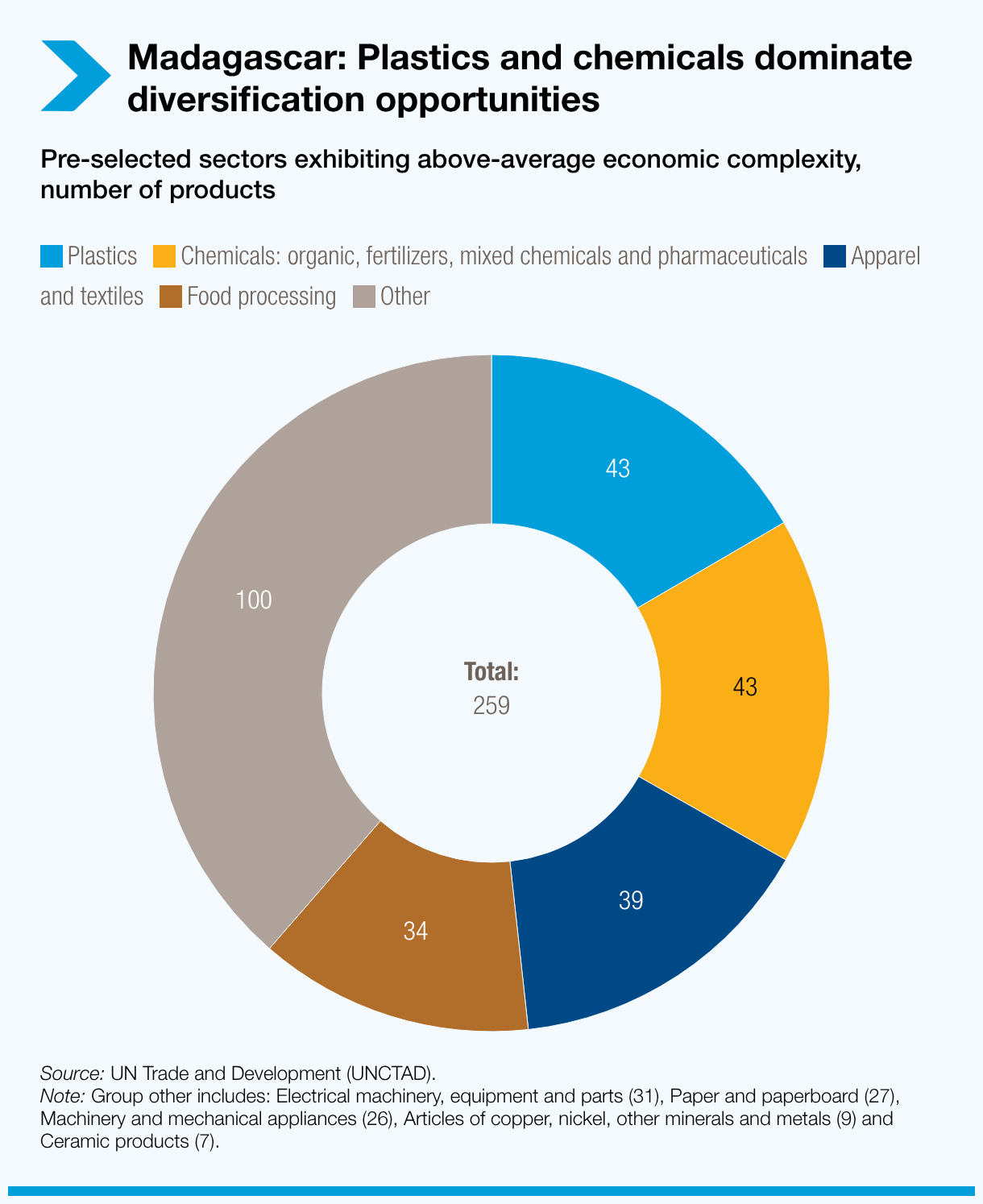
The report identifies 124 priority products across eight sectors that could help drive industrial development, attract investment and initially generate an estimated 19,696 direct and indirect jobs.
Apparel and textiles represent the largest employment opportunity, with more than 8,500 potential jobs. Food processing also stands out as a promising sector for creating jobs, supporting rural livelihoods and increasing local value addition.
Women are expected to play a central role in this transformation. Across the priority sectors, they currently account for approximately 52% of direct employment, particularly in apparel and food processing industries.
Building a broader productive base
The report argues that Madagascar's long-term resilience will depend not only on exporting minerals but also on developing stronger industrial and productive ecosystems around them.
This includes promoting local processing, strengthening supplier networks, supporting skills development and fostering linkages between mining and other sectors of the economy.
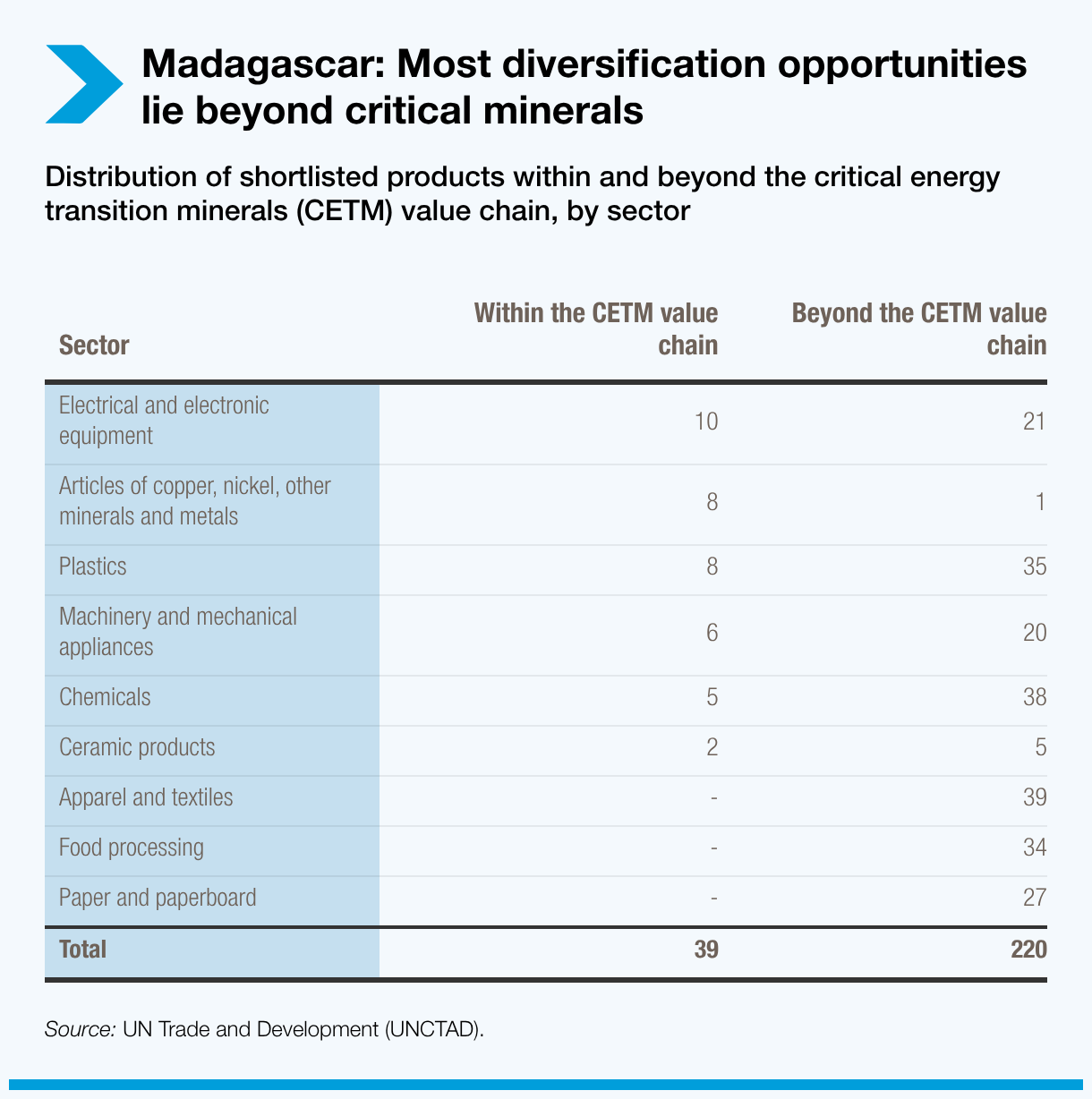
Rather than an end in itself, the report sees mineral wealth as a catalyst for broader productive transformation, helping develop manufacturing activities, industrial services and domestic supplier industries.
Opportunities close to home
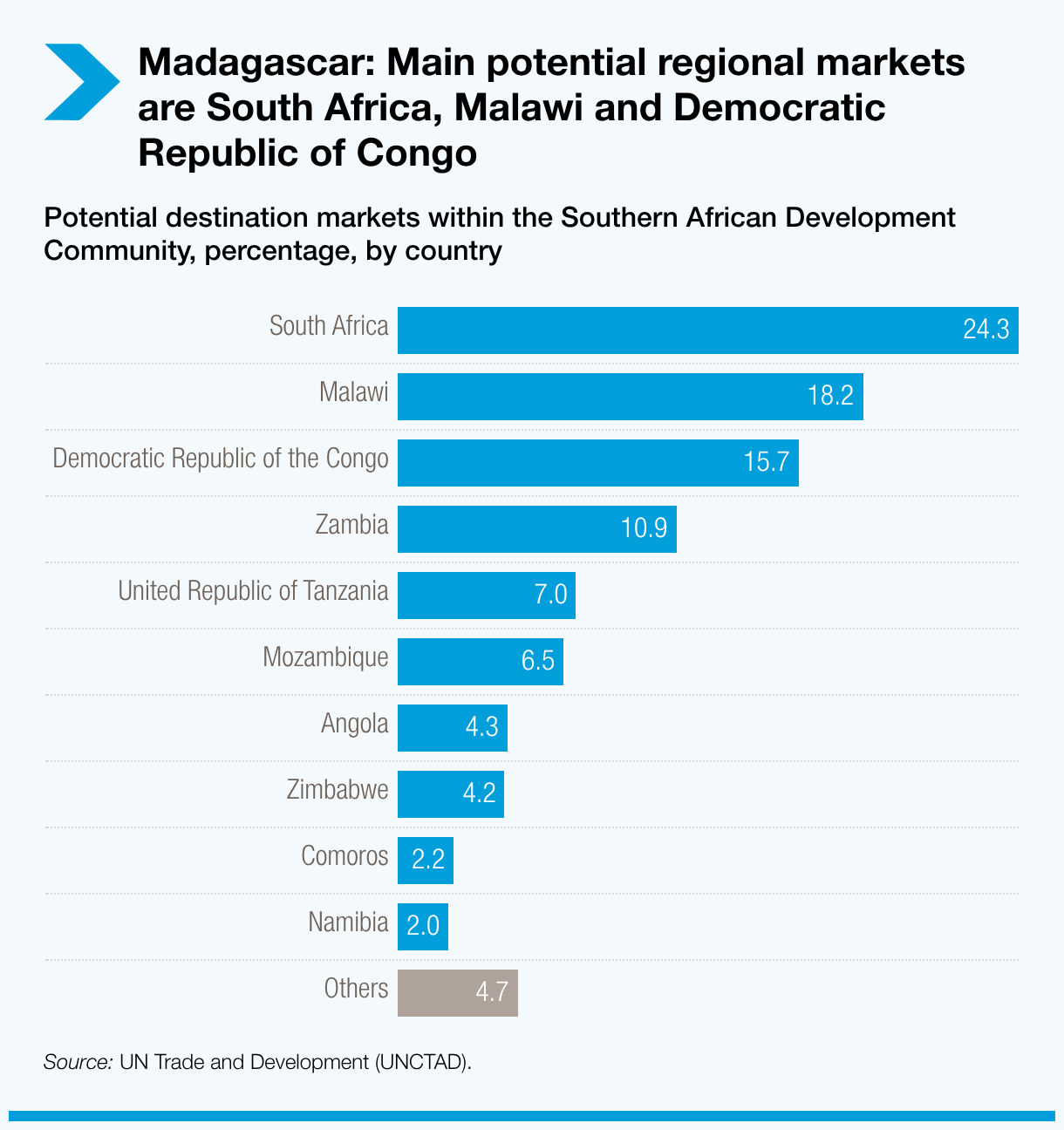
The report also highlights the importance of regional markets as stepping stones for industrial development and export diversification.
Markets within the Southern African Development Community offer significant opportunities for Malagasy producers to expand their reach, build capabilities and integrate into regional value chains. These markets can help firms learn, grow and become more competitive before expanding further into global markets.
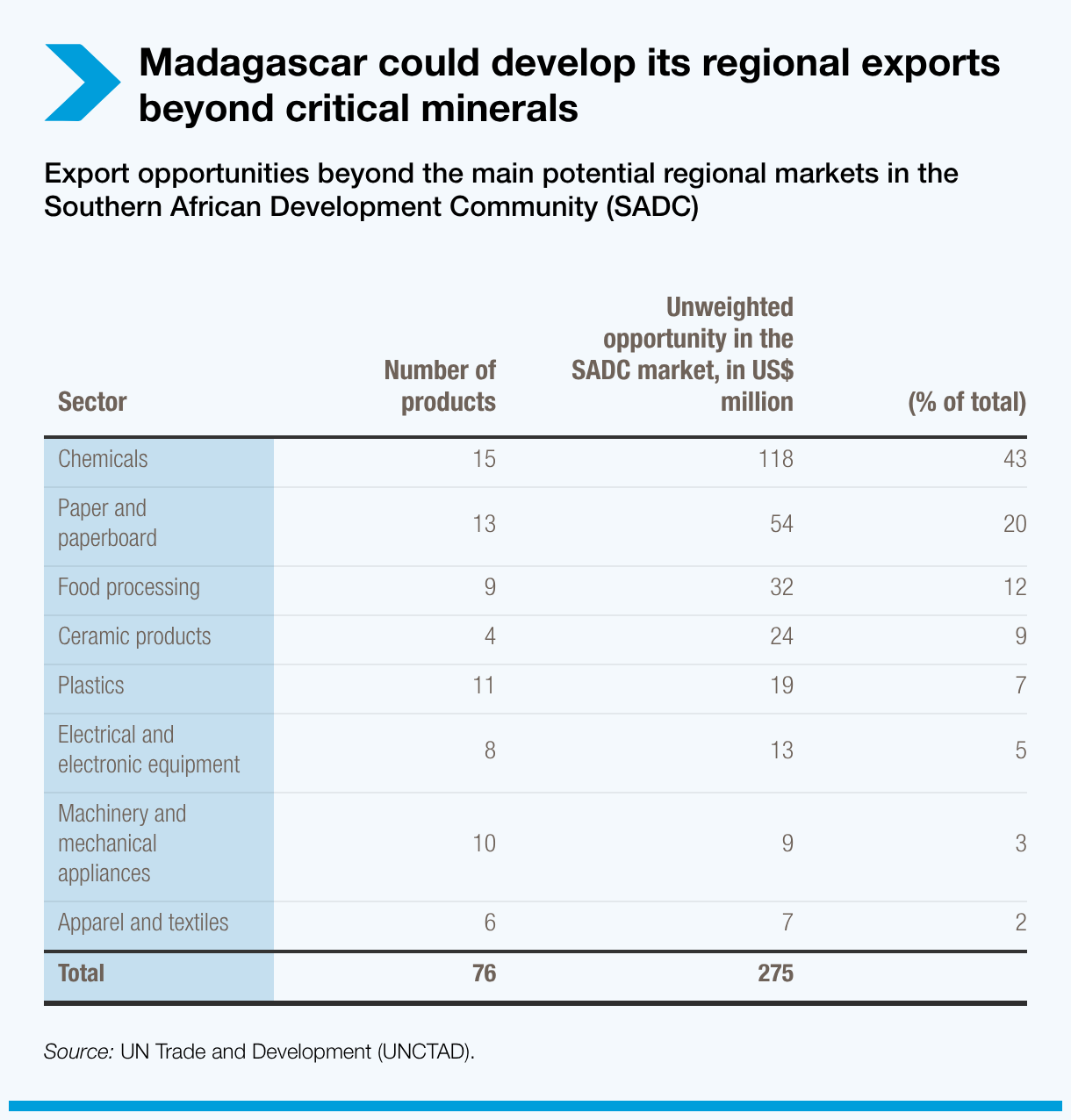
The findings come at a time when many African countries are seeking to strengthen productive capacities, regional value chains and economic resilience in response to growing global uncertainty.
The report argues that critical minerals can generate the greatest development gains when they support industrial growth, job creation and value addition at home.
About the assessment
The assessment was developed under UNCTAD's value addition and diversification project in Southern Africa, funded by the Government of Japan.
It builds on consultations carried out during an UNCTAD mission to Madagascar in 2025 involving government institutions, private sector representatives, development partners and United Nations entities, including the United Nations Environment Programme, the United Nations Industrial Development Organization and the United Nations Development Programme.