

Through the programme, UNCTAD and partners help more than 80 economies boost trade by cutting red tape and harnessing digitalization.
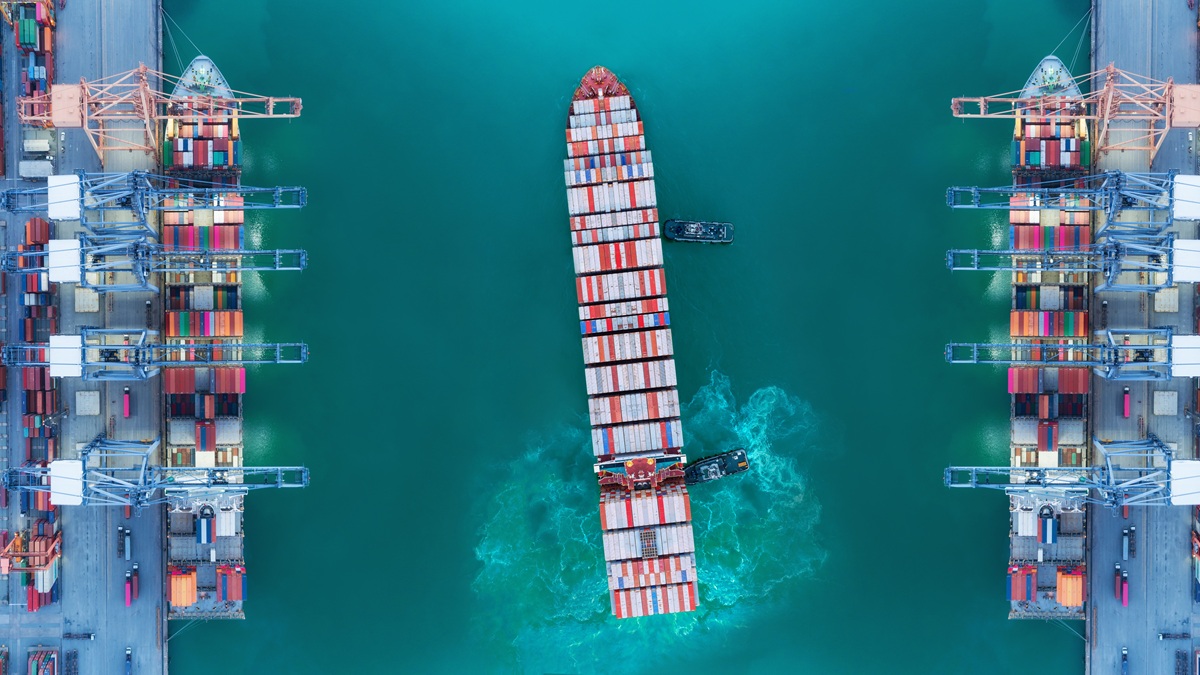
© Shutterstock/Studio concept | A container ship moves past seaport warehouses.
The Empowerment Programme for Trade Facilitation is a comprehensive initiative led by UN Trade and Development (UNCTAD), with support from more than 15 donor countries, regional organizations and development banks.
It’s been 10 years since the initiative kicked off in Khartoum, Sudan, under the UK-financed Accelerate Trade Facilitation Programme.
The work, a cornerstone of UNCTAD technical assistance, supports developing countries to tackle the challenges of modern, increasingly digital global trade.
It also helps accelerate progress worldwide towards implementing the Trade Facilitation Agreement (TFA) of the World Trade Organization (WTO), including establishing and strengthening national trade facilitation committees.
“Supply chains we thought were resilient have proven fragile and we need to make trade and investment more inclusive, greener and more sustainable,” says Secretary-General Rebecca Grynspan.
“UNCTAD remains firmly committed to empowering countries to implement effective, inclusive and climate-smart trade facilitation reforms.”
The programme’s decadelong results and impact at a glance:
- 82 countries across five continents supported through tailored interventions.
- More than 3,500 government officials, policymakers and businesses trained via the Trade Facilitation e-Learning Platform since 2021.
- Over 30 economies are monitoring trade facilitation reforms using UNCTAD’s Reform Tracker.
- Some 30 countries implemented trade information portals to enhance transparency and simplify procedures.
Eswatini: Better coordination, greater transparency and meaningful reforms
Over the last decade, Eswatini has distinguished itself through trade facilitation reforms that have driven meaningful transformation, despite the challenges faced by a small landlocked developing country.
The country credits UNCTAD support for helping strengthen its National Trade Facilitation Committee (NTFC) despite disruptions from civil unrest and the COVID-19 pandemic.
Since 2020, UNCTAD has been providing tailored capacity-building to Eswatini’s NTFC, including the introduction of the Reform Tracker tool, as well as work to identify gaps and plan reforms.
UNCTAD’s intensive training for the region’s NTFC secretariats and chairpersons played a role in raising awareness and structured planning.
As of 2025, Eswatini has developed a comprehensive trade facilitation roadmap and monitoring plan featuring 273 planned tasks.
Its NTFC currently meets quarterly, coordinates effectively with key actors of trade facilitation in the public and private sectors.
The country has also put in place 18 WTO TFA provisions, improving its implementation rate to 60%, and achieving some targets nearly a decade earlier than expected.
"The Eswatini Committee for Trade Facilitation is now stronger than ever. This progress would not have been possible without the support of UNCTAD,” says Khetsiwe Dlamini from Eswatini’s National Trade Facilitation Committee Secretariat.
“International backing for trade facilitation committees, particularly in landlocked developing countries, is essential to foster sustainable and equitable global trade — and must continue to ensure long-term success."
International cooperation makes a difference
The success of the Empowerment Programme for Trade Facilitation is rooted in UNCTAD’s integrated approach and close collaboration with partners such as the WTO, the World Customs Organization, the UN’s five regional economic commissions, and the International Trade Centre.
The programme contributes directly to UNCTAD’s mandate reaffirmed in the Geneva Consensus adopted at UNCTAD16, the organizations quadrennial ministerial conference, in order to:
- Continue supporting the implementation of trade facilitation reforms, including the World Trade Organization’s Trade Facilitation Agreement, and the development and implementation of legal and regulatory frameworks that reduce trade transaction costs.
- Strengthen the capacity of national trade facilitation committees and related bodies to better harmonize and coordinate trade facilitation measures at national, regional and global levels.