

Stronger productive capacities, economic diversification and targeted reforms can help Lao PDR turn its graduation from the UN’s least developed countries category into lasting development gains.
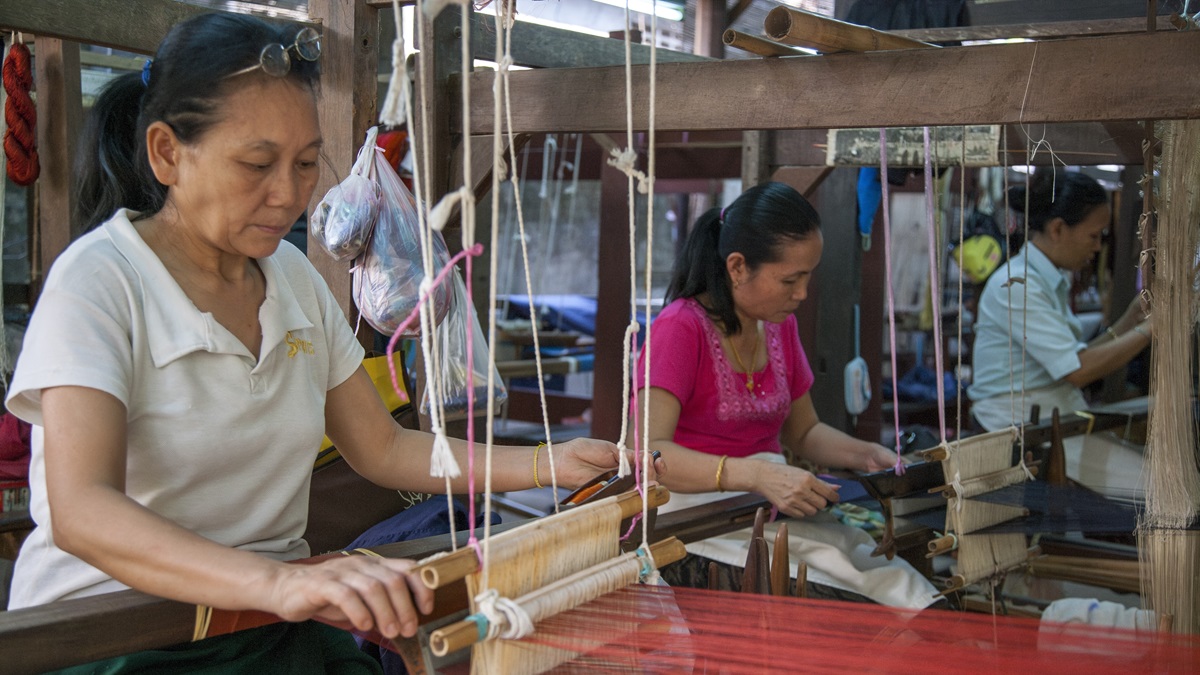
© Shutterstock/Andrew Linscott | Vientiane, Lao PDR.
Lao People’s Democratic Republic (Lao PDR) graduated from the least developed countries (LDCs) category on 24 November 2026, following gains in income, health and education.
It’s the first country in Southeast Asia and the ninth worldwide to reach this development milestone.
The next priority is to turn growing investment and trade opportunities into a more diversified economy, productive jobs and better livelihoods.
UN Trade and Development (UNCTAD) has supported the country through work on productive capacities and trade policy.
Its Vulnerability Profile of Lao PDR examines the country's development challenges and identifies policy priorities to drive long-term growth beyond graduation.
Enhancing productive capacities
UNCTAD’s Productive Capacities Index (PCI) helps identify where investment and reforms are most needed, from skills and infrastructure to institutions and enterprise development.
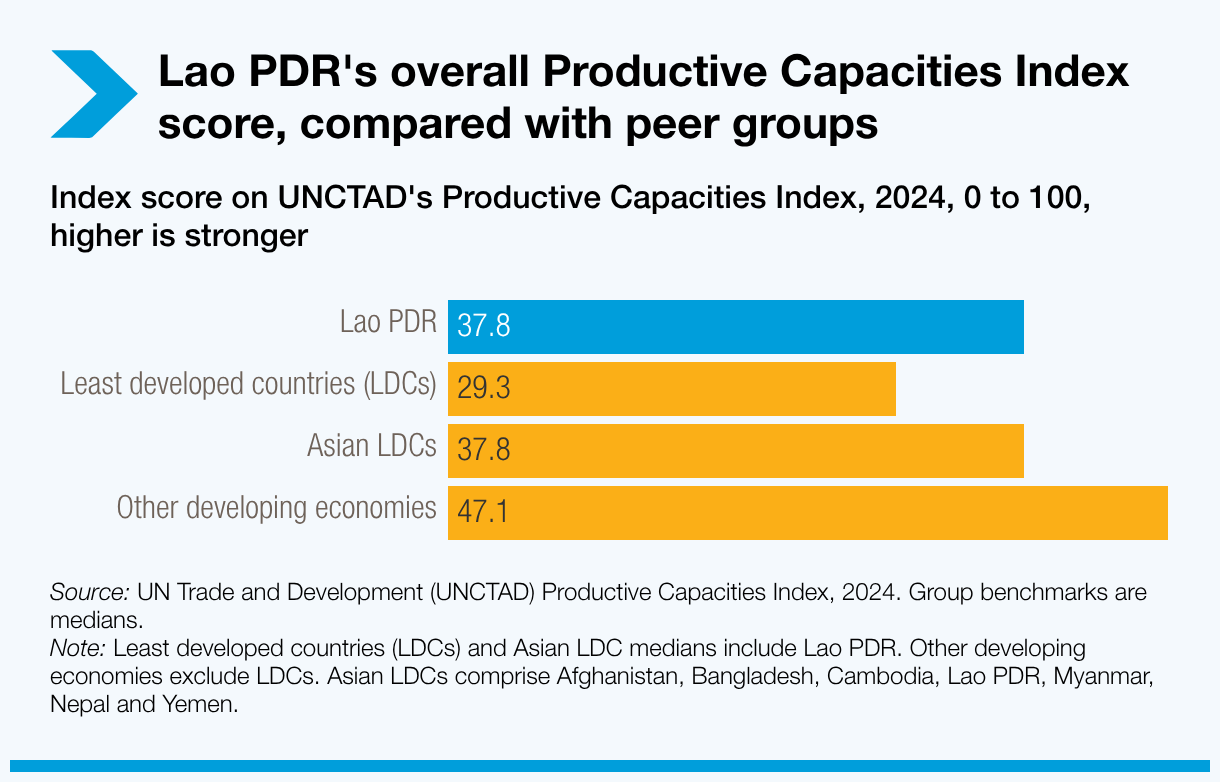
In 2024, Lao PDR scored 37.8 on the index, above the LDC median of 29.3 and equal to the Asian LDC median, but below the median of 47.1 for developing economies excluding LDCs.
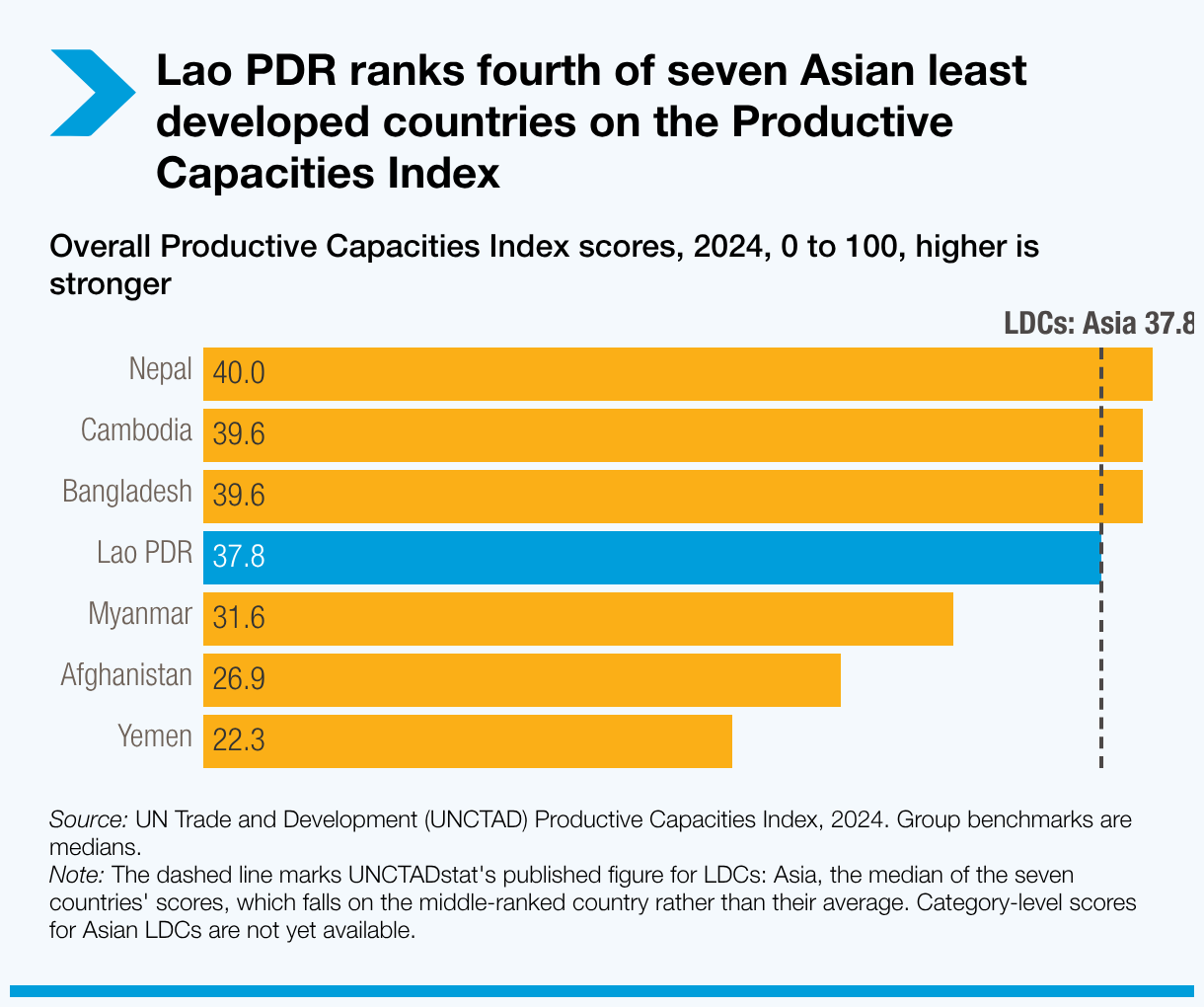
It exceeded the LDC median in six of the index’s eight components, notably in energy, information and communication technology, and structural change.
However, private sector development lagged behind all three comparison groups, while human capital remained below the Asian LDC and other developing-economy medians.
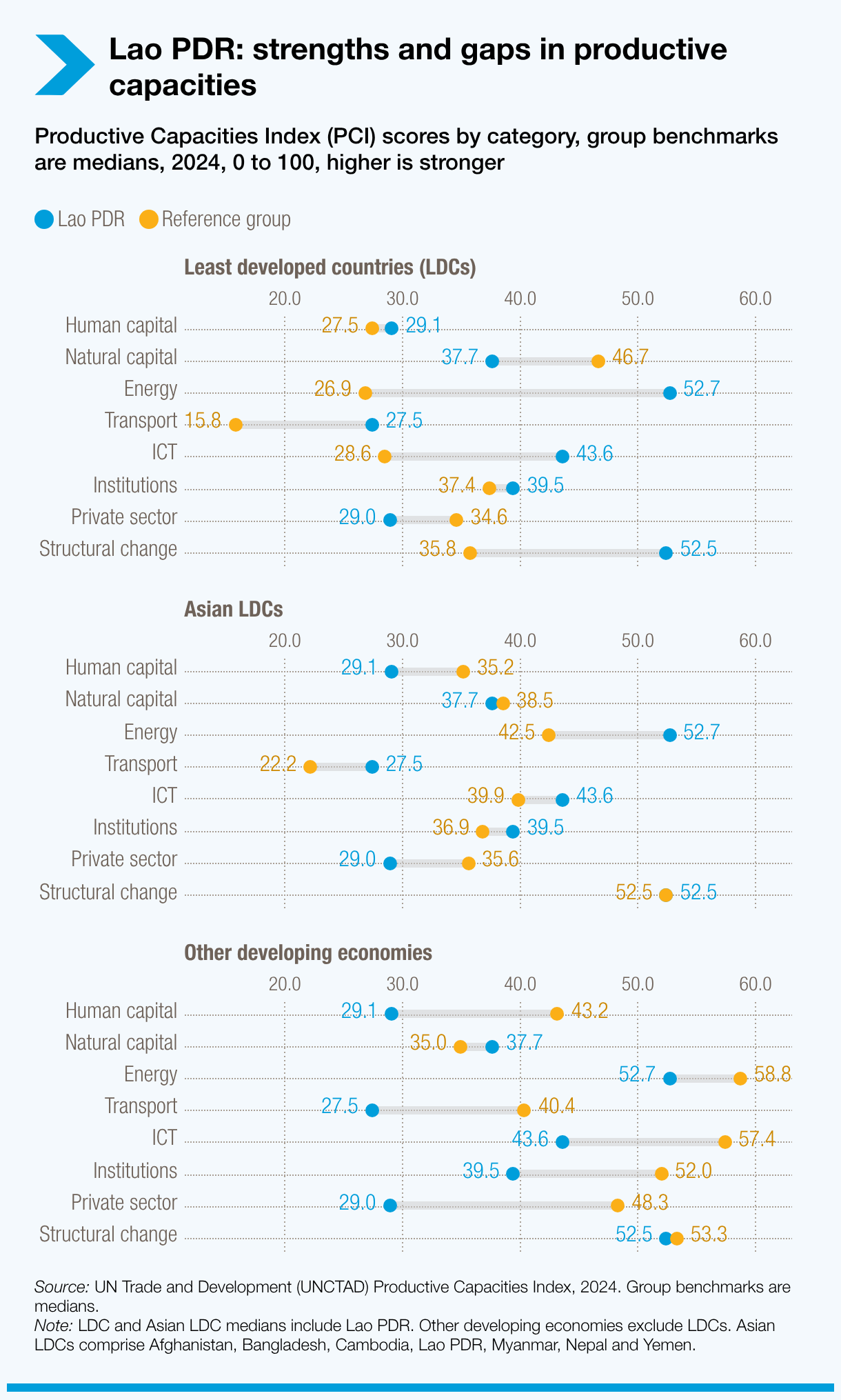
Strengthening domestic enterprises and investing in education and skills will be key to addressing these gaps.
Economic pressures threaten development gains
Lao PDR’s economy grew by 4.8% in 2025, while average inflation eased to 7.7%. The World Bank’s October 2026 outlook projects growth of 4.1% and inflation of 8.3% for 2026.
Higher fuel, transport and logistics costs, partly driven by the Middle East conflict, are adding to business expenses and eroding household purchasing power.
High public debt further constrains the government's ability to invest in development.
Public and publicly guaranteed debt was estimated at around 87% of GDP in 2025. Interest payments absorbed 16% of public spending that year, compared with 10% for health and education combined.
Stronger revenue collection and more effective public spending can help protect investment in people.
Supporting a smooth transition
UNCTAD’s Vulnerability Profile calls for a fresh approach to natural resource-based development, supported by industrial policy and structural reforms, to diversify the economy and create more productive jobs.
Supporting local suppliers, improving access to finance and helping firms meet export standards can turn resource investment into broader economic opportunities.
Better logistics and digital technologies can also help businesses participate in regional value chains and benefit from the Regional Comprehensive Economic Partnership.
These efforts must also strengthen resilience to climate risks, including floods and other hazards affecting agriculture, infrastructure and livelihoods.
Continued international assistance will also remain important as LDC-specific trade preferences and other support measures change.
Graduation does not automatically end access to development assistance or concessional finance, but arrangements vary across partners and programmes. Preparing businesses and securing appropriate transition arrangements can help safeguard development gains.
UNCTAD stands ready to support Lao PDR in putting these priorities into practice through policy analysis, technical assistance and productive capacity diagnostics tailored to the country’s needs beyond graduation.