


The rules governing global trade are under increasing strain, raising questions about whether the international trading system can continue to support development in an era of geopolitical rivalry and policy uncertainty.
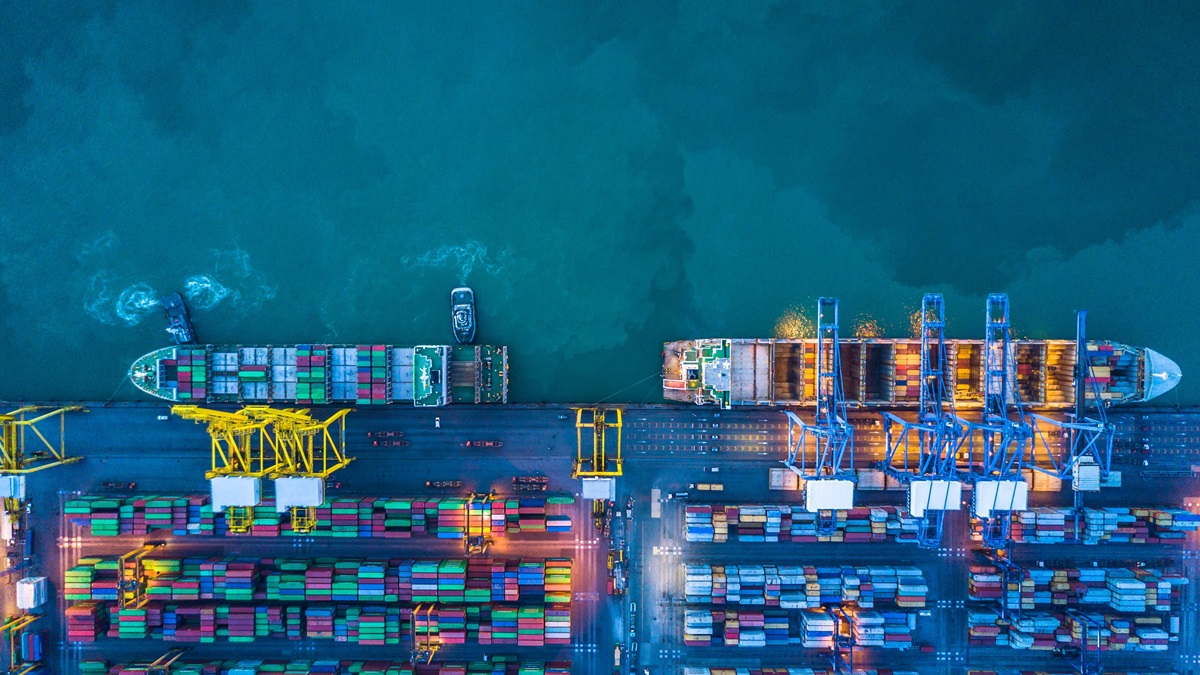
© Adobe Stock
In the March edition of the Global Trade Update, UN Trade and Development (UNCTAD) warns that rising policy volatility and fragmentation in the global trading system risk undermining the stable conditions many developing countries rely on to expand exports, attract investment and diversify their economies.
The findings come as members of the World Trade Organization (WTO) prepare for discussions on reform ahead of the organization’s 14th Ministerial Conference (MC14), where governments are expected to examine how the multilateral trading system can better respond to today’s evolving economic realities.
While the report focuses on structural challenges in the global trading system, UNCTAD notes that it continues to monitor the trade implications of ongoing geopolitical developments and disruptions affecting shipping and energy markets, including those linked to tensions in the Strait of Hormuz.
Rising volatility in global trade
The report finds that the guardrails that once provided long-term stability for global trade are weakening, with certainty increasingly giving way to persistent policy volatility.
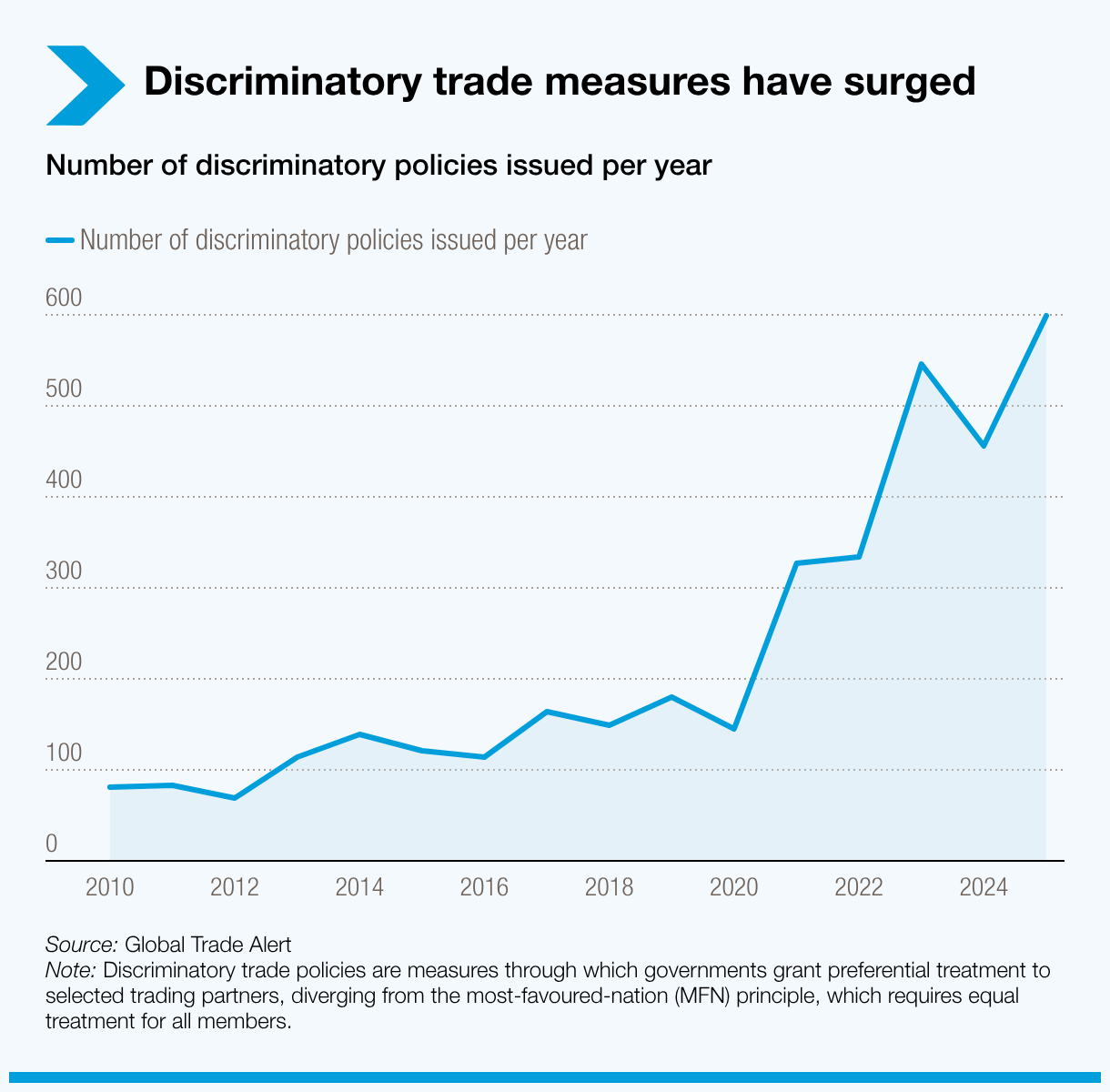
For developing economies, which often depend on a limited number of export sectors and operate with tighter fiscal space, such uncertainty can raise costs, weaken competitiveness and deter long-term investment.
Developing countries have the most at stake
Trade remains a powerful engine of development for many economies in the Global South. Export earnings support employment, finance imports of capital goods and energy, and help maintain macroeconomic stability.
Trade between developing countries has expanded dramatically, growing from about $500 billion in 1995 to $6.8 trillion in 2025, now accounting for more than a quarter of global trade.
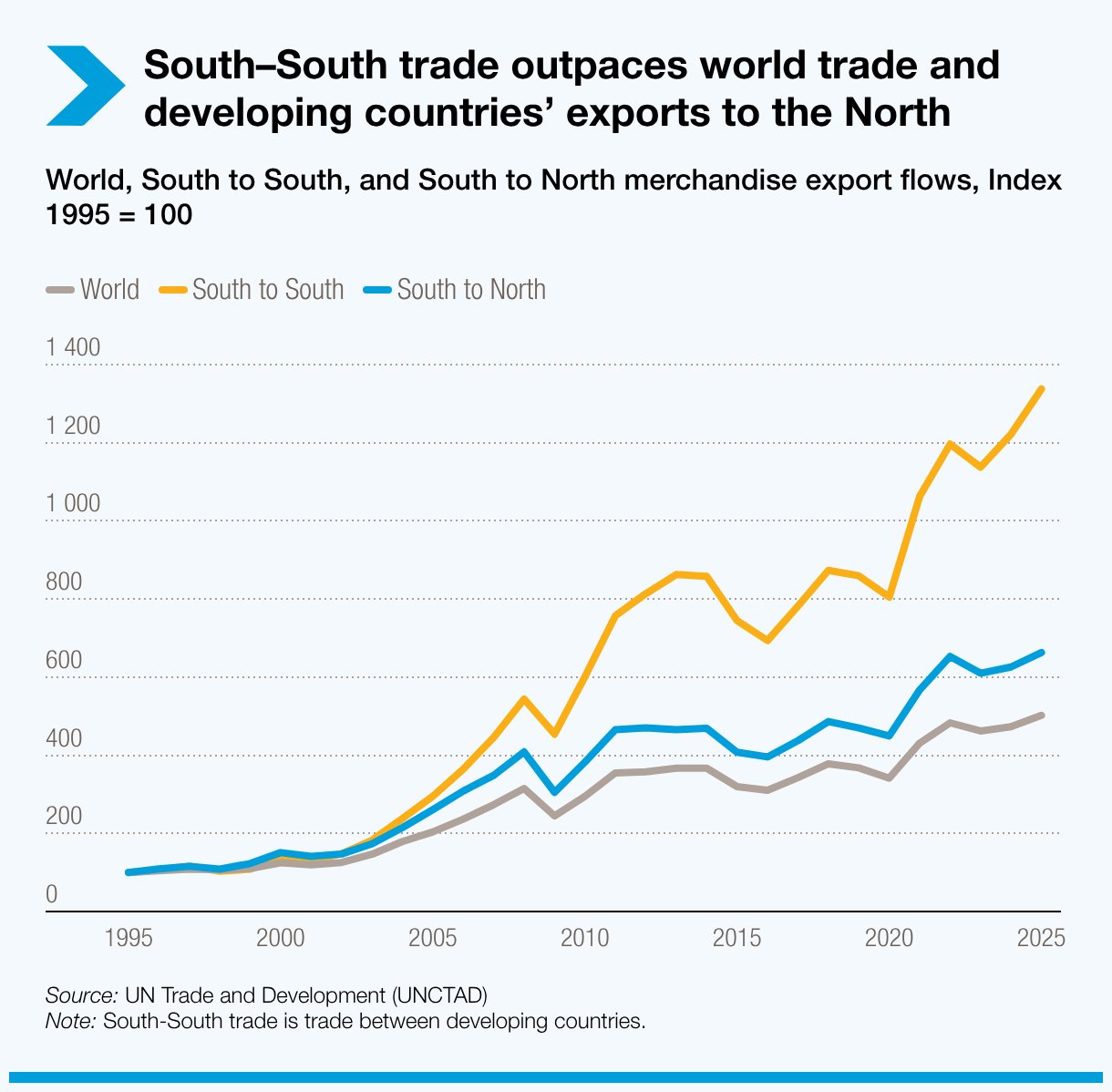
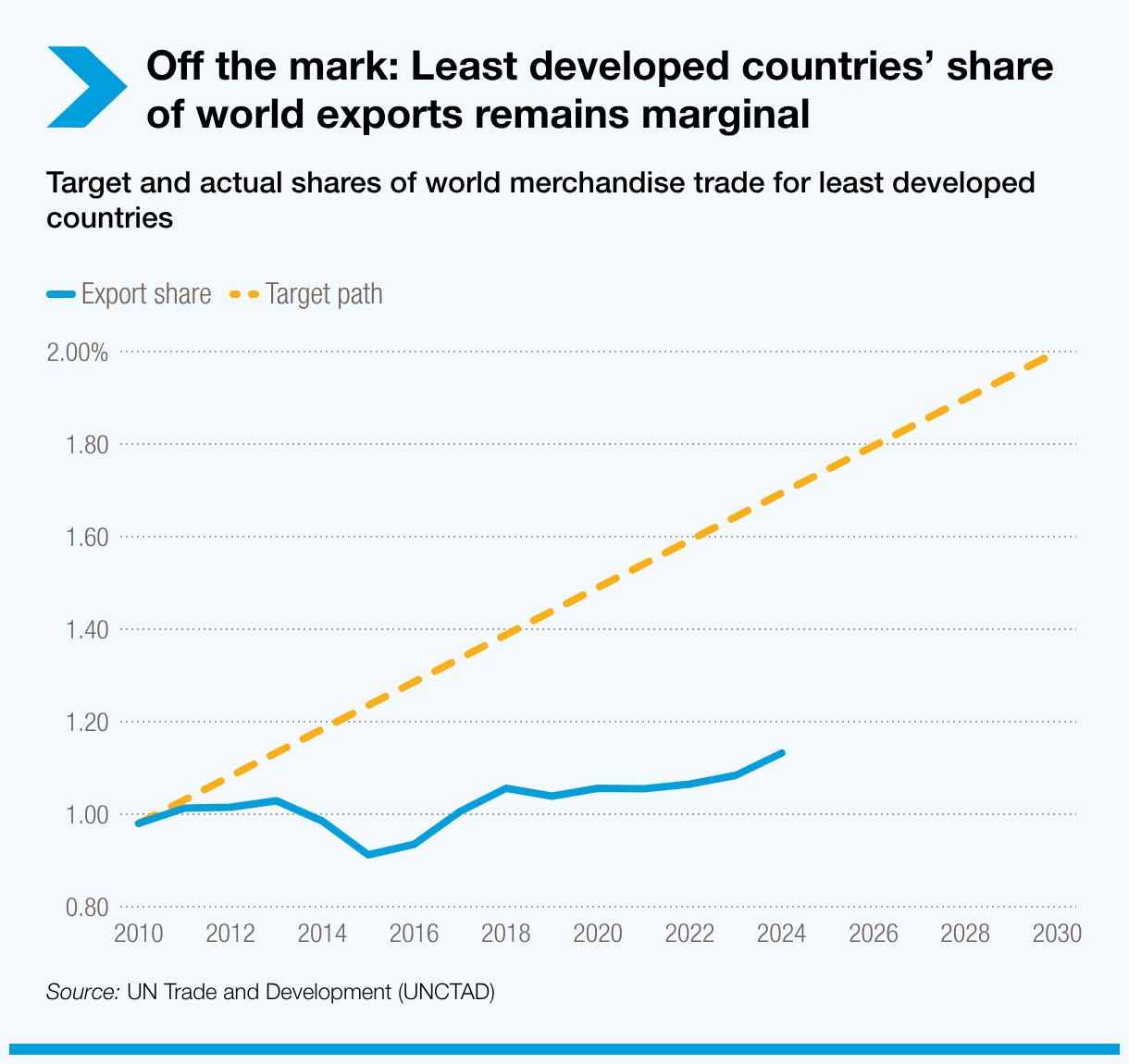
Yet participation remains uneven. Least developed countries (LDCs) account for only about 1.1% of global exports, far below the 2% target set under the Doha Programme of Action for LDCs by 2030.
Restoring certainty in trade rules
Against this backdrop, the report stresses that reform of the WTO must restore certainty and predictability in international trade rules.
Clear and stable rules are particularly important for smaller economies seeking to integrate into global value chains and attract investment.
Dispute settlement protects smaller economies
A fully functioning dispute settlement system is also critical to ensuring fairness in global trade.
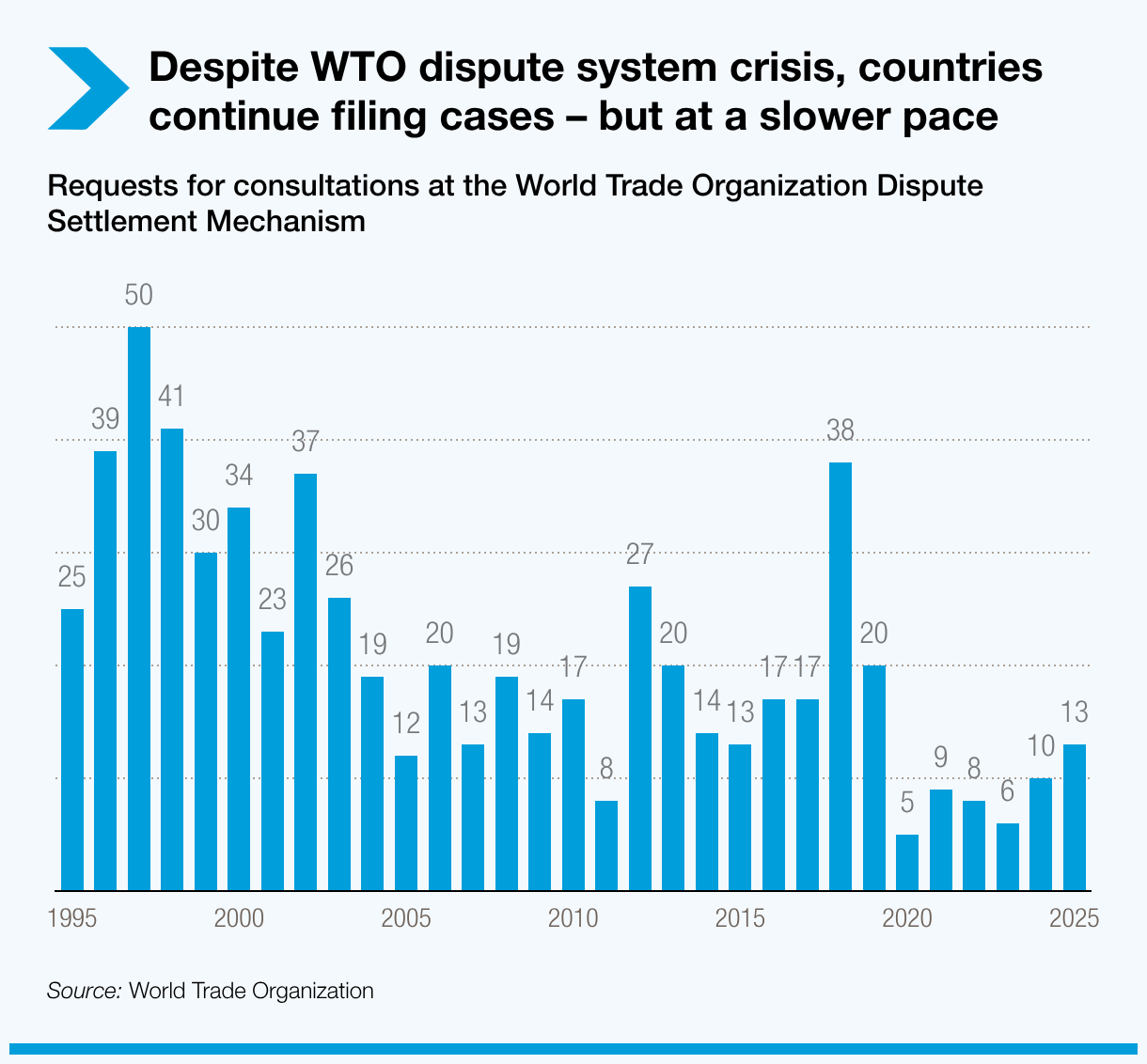
Since its creation in 1995, WTO members have brought 644 disputes and established 378 panels, highlighting the system’s central role in resolving trade conflicts.
For developing countries with limited market power, the mechanism provides an essential legal framework to challenge discriminatory trade measures.
A rules-based system for development
Ultimately, the report underscores that a rules-based international trading system remains fundamental to ensuring that trade supports inclusive and sustainable development.
Strengthening multilateral cooperation and enabling developing countries to participate fully in emerging areas of trade will be key to sustaining global growth and expanding economic opportunities worldwide.