

By Luz María de la Mora, Director of UNCTAD's division on international trade and commodities
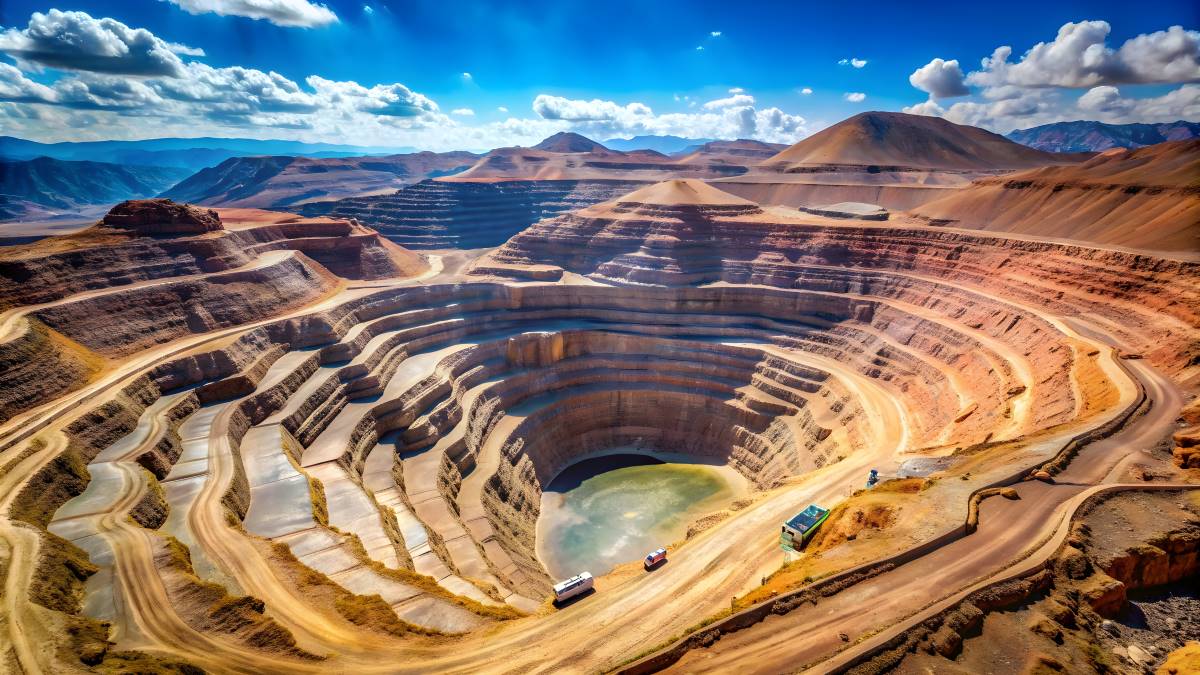
© Adobe/Von suwatthana | A copper mine in Chile.
As the world marks International Women’s Day 2026, attention turns to how global transformations can translate into tangible economic opportunity for women and girls. Few transformations are unfolding as rapidly – or as consequentially – as the expansion of critical energy transition minerals.
Copper, lithium, cobalt, and nickel have become strategic assets of the 21st century. They are indispensable to electric vehicles, renewable energy systems, battery storage, and the digital infrastructure powering artificial intelligence (AI).
For mineral-rich regions such as Latin America, which accounts for more than 40% of global copper production and nearly one-third of lithium output, this shift presents a significant opportunity. Governments across the region are seeking to move beyond raw extraction into processing, refining and other higher-value-added activities. Similar dynamics are unfolding across Africa and parts of Asia, where downstream industrialization is increasingly central to development strategies.
As value chains expand and upgrade, labour markets are evolving alongside them – creating scope to broaden women’s participation in the sectors driving the transition.
Rising demand, evolving labour markets
Women are already active across mineral value chains. They contribute to artisanal mining, environmental monitoring, laboratory analysis, logistics, corporate management and regulatory institutions. In some artisanal and small-scale mining communities, women represent a substantial share of the workforce.
Yet globally, women account for only about 14% of the industrial mining workforce, and their presence in engineering, geology and executive leadership roles remains limited.
As mineral production becomes more technology-intensive – incorporating automation, digital monitoring systems and advanced refining processes – demand for technical and vocational capabilities is rising. This evolution creates an opportunity to broaden participation in higher-value segments of the industry, including processing, engineering, environmental management and supply-chain coordination.
However, realizing this opportunity will depend on policy choices.
Embedding inclusion in mineral value chains
Rules shape who participates in mineral value chains and who advances within them. When training systems are aligned with industrial policy, and when regulatory frameworks encourage inclusive hiring and enterprise development, participation patterns can shift.
Emerging practices illustrate what is possible. In Chile, the state-owned mining company Codelco has committed to significantly increasing women’s participation in its workforce, combining local hiring targets with partnerships with technical training institutions to expand pathways into operational and skilled positions.
In the lithium sector, companies operating in the Salar de Atacama have launched community technical training programmes, with women representing most participants in some courses focused on maintenance, equipment operation and digital skills.
Such initiatives show how industrial expansion can be aligned with efforts to broaden participation in emerging mineral value chains.
The global competition for critical minerals is often framed primarily in geopolitical terms – as a contest over supply security and strategic positioning. It is also a development moment. Natural endowments do not determine social outcomes; governance frameworks do.
By embedding inclusion within industrial strategies from the outset, countries can ensure that the growth of mineral value chains supports broader economic upgrading. Expanding access to technical qualifications, strengthening representation in regulatory institutions and supporting women-led suppliers within mineral ecosystems are practical steps that can help translate mineral wealth into more diversified and resilient growth.
Turning transition into opportunity
The strategic minerals transition offers a concrete arena in which those principles can be advanced through economic policy. The choices being made today – in trade negotiations, industrial planning and workforce development – will shape labour markets and value chains for a generation.
Critical minerals will power the green and digital transitions. With deliberate governance, they can also help expand opportunity, ensuring that women are positioned to advance within the minerals economy.
This article was first published by Trade Finance Global.